Sclerophrys Mauritanica: Unveiling the Enigmatic Mauritanian Toad#
In the twilight tranquility near a North African stream, subtle rustlings break the stillness. Under moonlight filtered through rustling leaves, an alluring yet curious figure emerges—Sclerophrys mauritanica, affectionately known as the Mauritanian Toad. This seemingly modest amphibian, cloaked in camouflage, holds fascinating ecological significance and remarkable adaptive prowess that belie its humble appearance.
Though often overlooked compared to its vibrant and exotic amphibian cousins, Sclerophrys mauritanica possesses a quiet resistance to environmental extremes and occupies a crucial niche in North African ecosystems. This remarkable frog exemplifies the resilience, adaptability, and ecological connectedness characteristic of many robust amphibian species.
Taxonomy and Classification#
Sclerophrys mauritanica belongs to Bufonidae, commonly known as true toads, distinguished by their dry, wart-covered skin and wide-ranging habitats. The genus Sclerophrys, which encompasses a rich diversity of African toads, was formerly grouped under the larger genus Bufo. Following a taxonomic revision informed by genetic analysis, the species was rightly reclassified as Sclerophrys, underscoring its unique evolutionary path.
This particular species is closely related to Sclerophrys regularis, another widespread African toad, yet Sclerophrys mauritanica maintains discrete morphological and behavioral characteristics, affirming its classification as a distinct and compelling member of the Bufonidae family.
Natural Habitat#
Geographic Range and Distribution#
The Mauritanian Toad inhabits a broad yet ecologically specific region predominantly within Northwest Africa, stretching from Morocco and Algeria toward Tunisia and parts of Libya. Its name, derived from Mauritania, reflects more broadly its North African origin, rather than being restricted solely to the modern nation’s borders.
These robust, adaptable amphibians thrive in habitats ranging from semi-arid coastal scrublands and river valleys to mountainous regions characterized by Mediterranean climates. This broad range demonstrates their ecological flexibility, blending resilience to dry spells with reliance on intermittent water sources and moisture-rich microhabitats.
Preferred Microhabitats#
Primarily nocturnal, Sclerophrys mauritanica congregates near temporary pools, slow-moving streams, freshwater springs, and seasonal wetlands essential for reproduction. During daytime, sheltered beneath leaf litter, rocks, tree roots, or burrowing underground, this toad conserves critical moisture reserves within the cool refuge of its carefully chosen hiding spots.
The Mauritanian Toad’s close connection with water resources underscores not only its importance as an indicator of environmental quality, but also the vulnerability posed by climate-driven habitat changes and human disturbances along waterways.
Physical Characteristics#
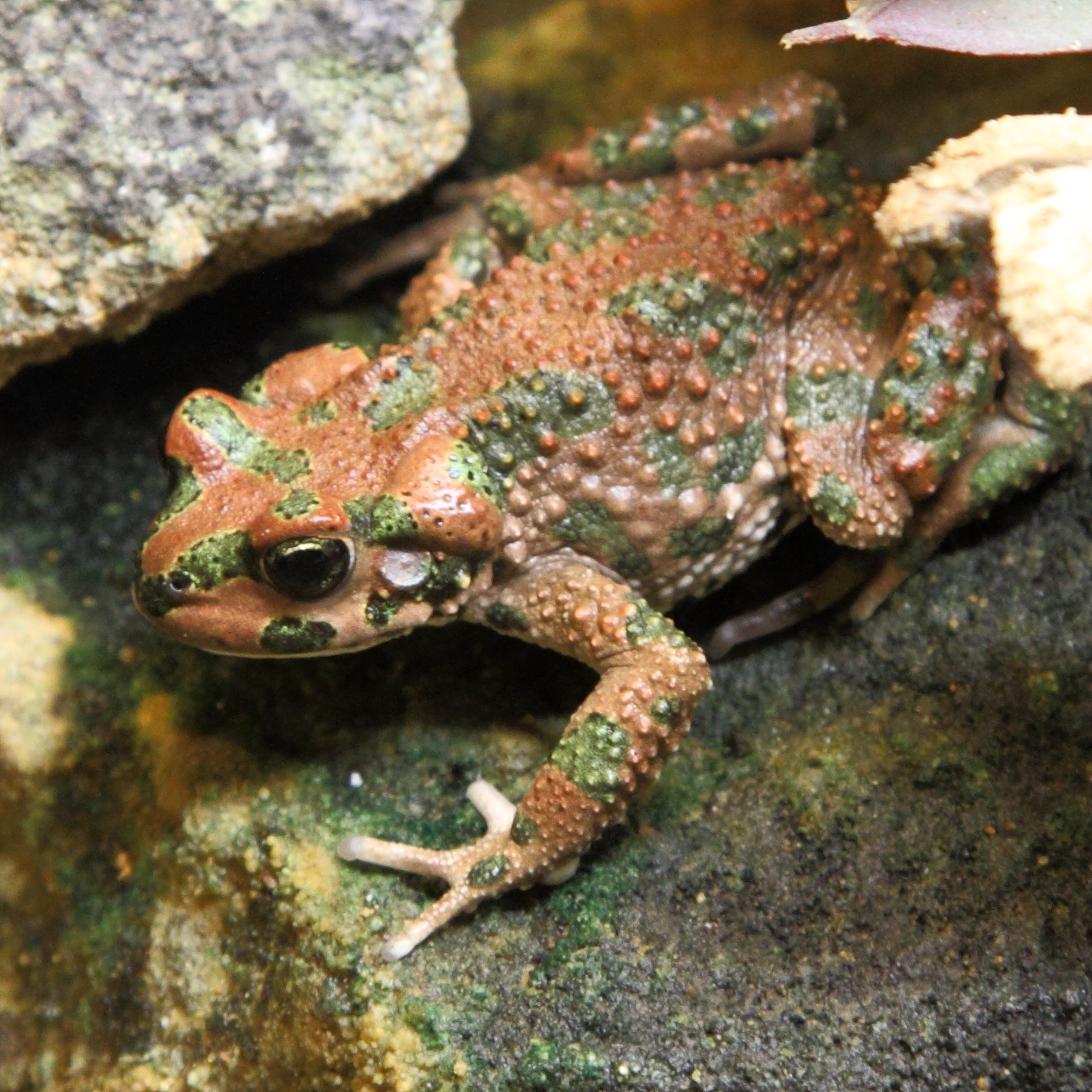
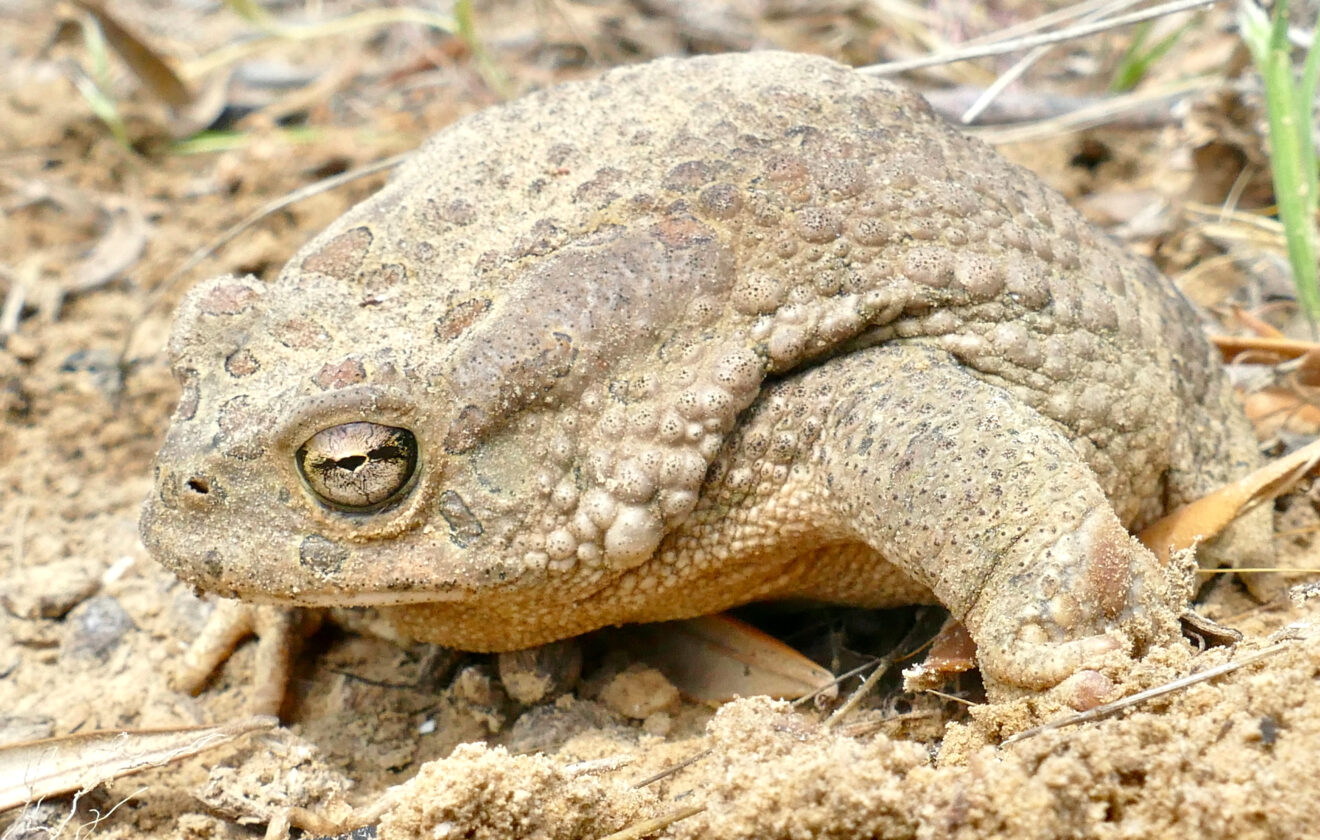
Sclerophrys mauritanica is relatively robust, typically measuring approximately 8–13 centimeters in length, with females tending slightly larger than males. Its characteristic dry, warty skin—a hallmark of true toads—boasts varying shades of brown, tan, grey, or olive-green hues, adorned with darker blotches or mottling that facilitate effective camouflage.
The toad’s underside is usually pale, ranging from creamy white to greyish tones. Large, golden or copper-colored eyes, horizontally elliptical pupils, and pronounced cranial ridges lend it an almost philosophical air, providing visual fascination alongside superior nocturnal vision.
Parotoid glands, prominent behind the eyes, exude toxic secretions when threatened, delivering a potent chemical defense profuse enough to deter predators. Its skin secretions, while not fatal to humans under typical circumstances, are an adept and evolutionary reminder to predators that even seemingly inconspicuous creatures stand resolute in their survival strategies.
Behavior and Life Cycle#
Nocturnal Predation and Foraging Habits#
The Mauritanian Toad emerges predominantly after sunset, venturing from daytime shelters into cooler, moister night air. It feeds opportunistically, typically targeting insects, arachnids, worms, and sometimes smaller amphibians. Its voracious appetite positions this species as an important biological control agent limiting populations of potential pest organisms.
Employing strategic ambush and driven by remarkable vision and sensitive auditory cues, Sclerophrys mauritanica patiently waits for prey to venture close before expertly deploying its sticky tongue for precise capture. Such ecologically-driven behaviors exemplify the adaptive prowess of the species in maintaining energy conservation in demanding climates.
Reproduction and Parental Strategies#
With the arrival of seasonal rains marking an annual pilgrimage, male Mauritanian Toads congregate near suitable breeding pools, emitting distinctive advertisement calls to attract receptive females. These resonant, melodious calls create nocturnal choruses that orchestrate nightly soundscapes, echoing far beyond intimate ecosystems.
Post courtship, the fertilized eggs are deposited in gelatinous strings or clumps within still, temporary aquatic habitats. Rapid hatching ensures survival in unpredictable climates, with larvae (tadpoles) metamorphosing rapidly into juvenile terrestrial toads following weeks of development.
Although absent of direct parental care post egg-laying, adults rigorously select suitable, predator-scarce temporary waters, providing juveniles optimal chances of reaching adulthood. These cyclic terrestrial-aquatic adaptations reflect evolutionary precision refined across millennia within precarious North African ecological balances.
Ecological Role#
As both predator and prey, the Mauritanian Toad occupies pivotal trophic positions within its ecosystems. Amphibians like Sclerophrys mauritanica reflect environmental health, acting as sentinel species sensitive to ecological degradation, thus indicative of biodiversity and habitat stability.
These toads regulate insect populations effectively, indirectly nurturing plant life by reducing herbivorous insects capable of widespread defoliation. Simultaneously, their vulnerability to attack by larger predators including birds, snakes and mammals, positions the Mauritanian Toad firmly within the fabric of the food web, emblematic of nature’s interconnected dependencies.
Threats and Conservation Status#
Although the International Union for Conservation of Nature (IUCN) lists Sclerophrys mauritanica currently as Least Concern due to its relatively widespread range and adaptability, threats loom nonetheless that could drastically challenge future populations.
Human-driven habitat destruction due to escalating urbanization, agricultural encroachment and modification of natural wetlands, combined with diminished freshwater resources exacerbated by climate-related droughts, present critical concerns. Additionally, increasing pesticide contamination from agricultural runoff and potential diseases, such as chytridiomycosis affecting worldwide amphibian populations, constitute serious risks.
Targeted conservation efforts include protecting vital breeding habitats, public education initiatives promoting ecological awareness, and regional monitoring programs to ensure population stability amid future ecosystem uncertainties.
Cultural and Scientific Significance#
Historically overlooked, North African amphibians possess intriguing yet subtle cultural significance. Local communities near breeding sites recognize these amphibians as heralds of seasonal rains, symbolic messengers signaling the agricultural timing central to traditional livelihoods.
Scientifically, the adaptation strategies of Sclerophrys mauritanica inform broader ecological research relating to climate resilience, amphibian survival mechanisms, and environmental indicator roles. With amphibian declines recognized globally, understanding robust species like the Mauritanian Toad helps illuminate potential adaptation pathways for more vulnerable counterparts elsewhere.
Conclusion – Preserving the Silent Guardians of North Africa#
Through its impressive adaptive capabilities, elegant ecological balance, and quiet cultural reverberation, the Mauritanian Toad symbolizes strength amid fragility, resilience amid ecological challenges, and beauty within biological intricacy.
While the Mauritanian Toad may currently dwell beyond the brink of immediate extinction threats, proactive vigilance, deeper appreciation, and dedicated conservation actions remain essential. Each ripple of awareness created by conscious connection—from research to community-focused education—strengthens our collective ability to secure the future of remarkable amphibians like Sclerophrys mauritanica.
By exploring, learning from, and safeguarding the ecosystems this humble North African amphibian calls home, we nurture not only local biodiversity but sustain an intrinsic part of our global natural heritage. Let the spirited call of the Mauritanian Toad inspire us toward harmonious stewardship of our shared earthly home.