- Sclerophrys superciliaris: Secrets of Africa’s Enigmatic Frog Species
- Taxonomy and Classification
- Natural Habitat: A Life in the Shadows of Rich Forests
- Physical Characteristics: Earthly Beauty and Adaptations
- Behavior and Life Cycle: Harmony with the Forest Floor
- Ecological Role: Guardians of Equilibrium
- Threats and Conservation Status: Preserving a Fragile Legacy
- Cultural and Scientific Significance: Silent Messengers of Nature
- Conclusion: Cherishing Amphibians, Protecting Our Future
Sclerophrys superciliaris: Secrets of Africa’s Enigmatic Frog Species#
Beneath the dense canopy of lush African forests, amid intricate webs of roots and shady leaf-littered soils, a small yet distinctive amphibian finds its home. Sclerophrys superciliaris, commonly known as the Cameroon Toad, is not merely a humble inhabitant of its ecosystem—it’s a mesmerizing character whose remarkable adaptations and unique behaviors craft an enchanting narrative of survival and resilience. With bulging eyes and distinctive patterns, this often-overlooked species quietly carries a powerful story about ecological interconnectedness, evolution, and conservation.
Join us as we journey deep into the verdant heartlands of Africa to unravel the biology, life history, and conservation significance behind the fascinating creature known scientifically as Sclerophrys superciliaris.
Taxonomy and Classification#
Sclerophrys superciliaris belongs to the extensive Bufonidae family, an incredibly diverse group commonly known as “true toads.” Within the Bufonidae, the genus Sclerophrys represents species primarily native to Africa, characterized by their rugged, wart-covered skin and stout bodies ideally adapted to terrestrial lifestyles. Previously categorized under the genus Bufo, recent phylogenetic studies have repositioned it into Sclerophrys, highlighting the importance of modern genetic methods in better understanding amphibian biodiversity.
Its closest relatives, including Sclerophrys maculata and Sclerophrys regularis, share morphological and ecological characteristics, yet Sclerophrys superciliaris retains distinct traits setting it apart and warranting unique conservation attention.
Natural Habitat: A Life in the Shadows of Rich Forests#
Native primarily to Central and West Africa, Sclerophrys superciliaris inhabits the diverse tropical and subtropical forests of countries such as Cameroon, Nigeria, Equatorial Guinea, Gabon, and the Democratic Republic of Congo. These lush rainforests, vibrating with life, offer the perfect blend of moisture, temperature stability, and adequate shelter essential for this amphibian’s existence.
Equipped to linger in underbrush and leaf litter, the Cameroon Toad thrives within areas of dense vegetation and moist soils. The intricate forest floor, with its fallen leaves, decomposing organic matter, moss-covered logs, and quiet streams tucked within shadows, becomes a perfect sanctuary where the tumultuous cycles of life proceed silently. Their nocturnal nature keeps them calmly hidden by day, emerging only after sundown to explore their darker habitat cloaked by the moonlight.
Physical Characteristics: Earthly Beauty and Adaptations#
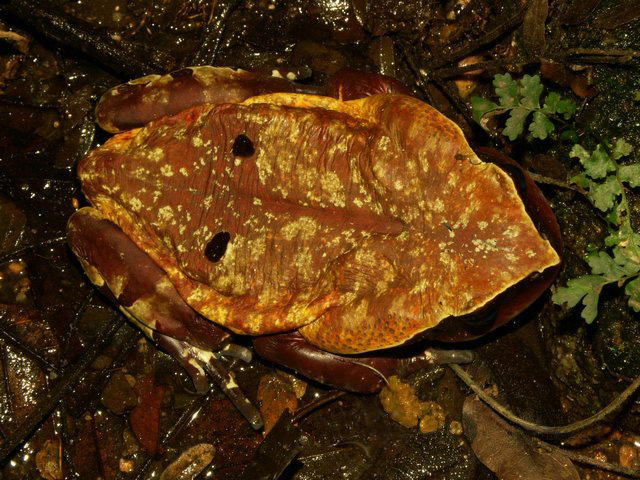
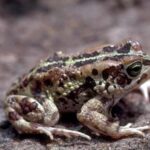
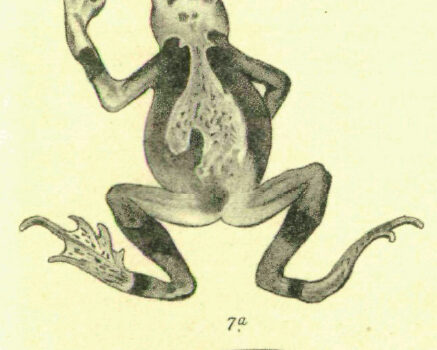
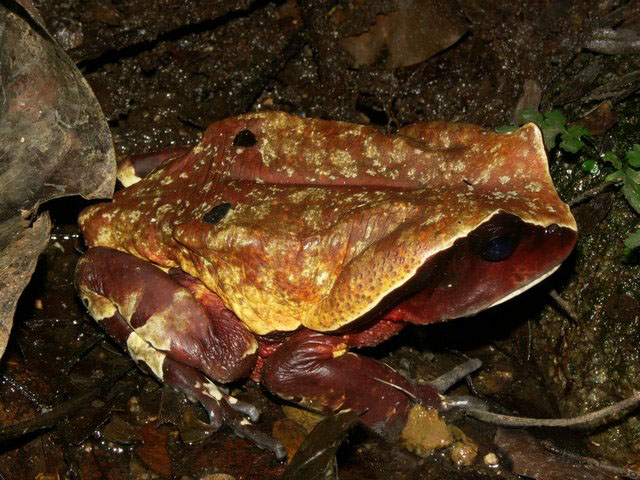
The Cameroon Toad ranges from moderate to small sizes, typically reaching about 45-65 mm in adult length. Its skin displays earthy shades of rich brown, olive green, and greyish hues, adorned by unique darker patches or intricate patterns that provide excellent camouflage against predators. A distinctive trademark—arched prominent supraorbital ridges situated just above its eyes—gives the species its scientific epithet “superciliaris,” meaning “above the eyebrow.”
Its skin, often described as rough and wart-like, is not merely aesthetically unique but serves crucial survival purposes. These characteristic “warty” textures actually contain specialized glands producing mild toxins. When threatened, the glands secrete substances deterring potential predators, such as birds, snakes, and small mammals. While these toxins pose little harm to humans, their mere presence significantly elevates the animal’s defense toolkit, enabling them to maintain a safe niche within a predator-rich habitat.
Behavior and Life Cycle: Harmony with the Forest Floor#
A Quiet Hunter: Feeding Habits#
Sclerophrys superciliaris primarily feasts on a variety of insects and small arthropods, such as beetles, ants, termites, and even spiders. Rather than actively pursuing prey, they rely on a sit-and-wait hunting strategy. Remaining incredibly still amongst leaf litter or beneath vegetation, they effortlessly blend into their surroundings. With senses sharply tuned to the slightest vibrations, they patiently await unsuspecting prey strolling within reach. Suddenly, their muscular tongues flick expertly outward, swiftly snatching meals before the prey can register trouble.
Courtship Under Moonlight: Breeding and Life Cycle#
Reproductive rituals of Sclerophrys superciliaris add an enchanting dimension to their life history. Typically coinciding with heavy rains, breeding occurs within temporary forest pools or slow-moving streams in the lowland rainforest regions. Attracted by males’ soft, rhythmic mating calls echoing through the nighttime forest, females carefully select their partners, ritualistically joining together for amplexus—the amphibian embrace.
Females deposit eggs in lengthy gelatinous strings submerged beneath the water’s surface, safely secured amidst plant debris and submerged branches. Upon hatching, tadpoles emerge, dark-hued with streamlined, vigorous little bodies swimming energetically underwater, reliant initially on microscopic algae and detritus for nourishment. Over subsequent weeks, gradual metamorphosis transforms them; limbs sprout, the tail retracts, and aquatic features fade, finally ushering forth a fully terrestrial juvenile poised to navigate hidden forest paths.
Ecological Role: Guardians of Equilibrium#
Each animal woven into nature’s tapestry assumes critical roles fundamental to overall ecosystem health, and Sclerophrys superciliaris is no exception. As avid insect predators, these amphibians significantly reduce pest populations, curbing potential damage to native flora and related ecosystem stability. They also serve as valuable prey for numerous predators, re-establishing delicate food web dynamics intrinsic to pristine forest habitats.
Notably, like other amphibians, they act as environmental “bioindicators”—their sensitive skins readily absorb toxins, pollutants, or environmental imbalances within their habitats. Declines in their populations can therefore signal early warnings of broader ecological distress, highlighting the influence these humble creatures hold within nature.
Threats and Conservation Status: Preserving a Fragile Legacy#
Although currently designated by the International Union for Conservation of Nature (IUCN) as “Least Concern,” this status is not to be taken lightly. Indeed, continued advances of human encroachment, deforestation, habitat fragmentation, intensive agriculture, and the looming threat imposed by climate change all exert increasing pressures on amphibian populations globally, including those like the Cameroon Toad.
Forest degradation significantly impacts this species by eliminating critical breeding pools and changing ecological conditions that disrupt their delicate existence. Additionally, susceptibility to emerging diseases such as chytridiomycosis—a fungal pathogen decimating amphibians worldwide—adds a layer of urgency to ongoing conservation monitoring efforts. Local and international efforts in sustainable land-use policies, habitat restoration, educational initiatives, and active monitoring are essential tools to safeguard the survival of Sclerophrys superciliaris and its fragile ecological niche.
Cultural and Scientific Significance: Silent Messengers of Nature#
In many African cultures, amphibians hold symbolic importance, sometimes associated with rain, fertility, renewal, or even spiritual messengers bridging realms visible and unseen. While sparse cultural documentation exists specifically around the Cameroon Toad, amphibians overall enjoy respect within folklore and traditions, reminding local communities of environmental stewardship.
Scientifically, continued studies on species like Sclerophrys superciliaris yield critical insights about amphibian biology, evolutionary mechanisms, and climate resilience. Their subtle innovations—from skin secretions to adaptations enabling survival within challenging habitats—provide invaluable discoveries beneficial for biomimicry, medicine, and conservation strategies.
Conclusion: Cherishing Amphibians, Protecting Our Future#
Unveiling the life of Sclerophrys superciliaris reveals much more than just another unusual amphibian. It highlights the complexities and delicate interdependencies within ecosystems, underscores the urgency of conservation, and enhances appreciation for nature’s quieter inhabitants, whose lives unfold silently, integral to the quiet rhythms of wild spaces.
As stewards of nature, our curiosity, understanding, and advocacy will ensure future generations can also marvel at creatures like this enigmatic toad. Explore further, support local conservation actions, and remain ever-vigilant—protecting even the smallest amphibian means safeguarding life’s rich tapestry as a whole.