- Sclerophrys buchneri: Exploring the Secretive Life of Buchner's Toad
- Taxonomy and Classification: Understanding the Place of Sclerophrys buchneri
- Natural Habitat: Life Amid Africa’s Forested Heartlands
- Physical Characteristics: The Adaptive Beauty of Subtlety
- Behavior and Life Cycle: Subtle Yet Fascinating Lifestyles
- Ecological Role: Guardians of Ecosystem Balance
- Threats and Conservation Status: Navigating a Fragile Existence
- Cultural and Scientific Significance: A Frog’s Contribution to Identity and Knowledge
- Conclusion: Our Collective Duty to Buchner's Toad and Its World
Sclerophrys buchneri: Exploring the Secretive Life of Buchner’s Toad#
Amid the lush forests and vibrant wetlands of Central Africa resides a quiet amphibian whose presence often goes unnoticed. Cloaked beneath the shadowy understory, hidden within leaf litter and camouflaged by earthy patterns, Sclerophrys buchneri, commonly known as Buchner’s Toad, weaves its subtle existence through the tapestry of forest life. Though it rarely garners the same limelight as its brighter, more flamboyant amphibian cousins, Buchner’s Toad has its own colorful story to tell—one steeped in adaptation, ecological importance, and intriguing behaviors.
Named in honor of Otto Buchner, the species was first described by naturalist Gaston-François de Witte in 1930. Its scientific classification not only sheds light on its lineage within the diverse family Bufonidae—the true toads—but also underscores an often-overlooked ecological significance: amphibians like Buchner’s Toad serve as vital indicators of ecosystem health, signaling to scientists subtle changes in forest wellness long before they become apparent to human eyes.
Yet, many enthusiasts, students, and conservation advocates remain relatively unaware of this elusive creature’s life story. Here, in the spirit of natural curiosity and admiration for the delicate balance of rainforest ecosystems, we journey into the enigmatic world of Sclerophrys buchneri, uncovering the complex web of biology, behavior, threats, and conservation efforts surrounding a creature small in stature but grand in ecological importance.
Taxonomy and Classification: Understanding the Place of Sclerophrys buchneri#
The intricate classification system of amphibians offers important clues to their evolutionary origins, relationships, and ecological niches. Sclerophrys buchneri belongs to the family Bufonidae, commonly known as the true toads. Within this large amphibian family, known for their robust physiques, drier skin, and distinct parotoid glands, Sclerophrys represents a genus primarily distributed across Africa.
Previously classified under the larger genus Bufo, revisions in amphibian taxonomy warranted a separation, resulting in the new genus Sclerophrys—underscoring unique morphological and genetic differences among African toads. Closely related species within this genus, such as Sclerophrys regularis and Sclerophrys funerea, share similarities, though the Buchner’s Toad maintains distinct characteristics that set it apart, demanding careful scientific scrutiny and conservation attention.
Natural Habitat: Life Amid Africa’s Forested Heartlands#
Buchner’s Toad thrives in a biome characterized by abundant moisture, dense foliage, and rich biodiversity. The species predominantly occupies equatorial African rainforests, particularly in regions of Cameroon, Equatorial Guinea, Republic of the Congo, Gabon, and parts of the Democratic Republic of the Congo. This region, renowned for its biodiversity, shelters Sclerophrys buchneri in its dense understory where humidity remains consistently high, providing ideal conditions for amphibian survival.
Preferred Habitats and Microhabitats#
Unlike some highly arboreal or entirely aquatic frog species, the Buchner’s Toad favors terra firma—the forest floor blanketed in decaying leaves, fallen tree limbs, and damp mosses. Here, concealed beneath layers of decomposing vegetation and partially submerged in moisture-rich soil, these toads find both refuge and resources. Leaf litter serves as a sanctuary wherein humidity is maintained, essential for their semi-permeable skin which requires constant moisture for effective respiration.
Their affinity to moist terrestrial habitats also explains their preference for areas adjacent to forest streams, swamps, and slow-moving ponds. While not permanently aquatic, proximity to freshwater resources is necessary for their reproductive cycle, indicating sensitivity to habitat perturbations, particularly due to deforestation or environmental degradation.
Physical Characteristics: The Adaptive Beauty of Subtlety#
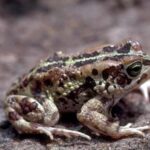
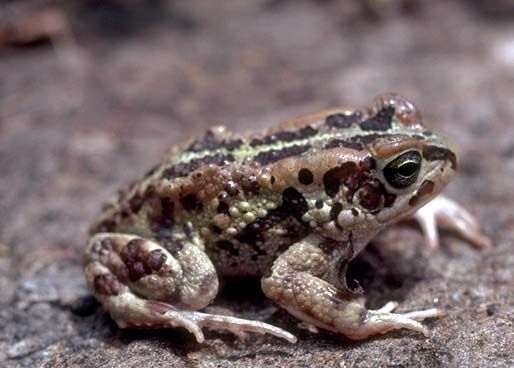
Sclerophrys buchneri exemplifies nature’s nuanced beauty, adapted more for function and survival than dazzling display. Though not brightly colored, their muted earthy hues—ranging from deep brown to olive or greenish-grey—allow them impeccable camouflage on forest floors and among woodland debris. This coloration serves as critical protection from predators—birds, snakes, small mammals—each adapted to detect movement and discern prey
Size and Morphology#
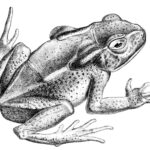
Adult Buchner’s Toads typically measure between 4 to 6 centimeters in length, a compact size ideal for their cryptic lifestyle. Their stout bodies, characterized by robust limbs and pronounced parotoid glands behind the eyes, further distinguish them from other forest amphibians. These glands secrete bufotoxins, potent defensive substances imparting a bitter taste to potential predators, thereby offering a significant survival advantage.
Adaptations for Forest Life#
Adapted to life hidden among the leaf litter, these toads possess skin textures incorporating various warts and ridges that help break up their outline against the uneven forest floor. Additionally, specialized membranes and toes designed for digging—an essential adaptation allowing them to burrow into soft substrates—facilitate effective sheltering during dry spells or excessive heat, ensuring their survival through challenging climatic conditions.
Behavior and Life Cycle: Subtle Yet Fascinating Lifestyles#
The behaviors of Sclerophrys buchneri reflect the rhythms of their habitat. Primarily nocturnal, these toads become active as dusk settles, emerging from daytime shelters within leaf litter, burrows, or fallen logs to hunt. Their night-time ventures provide minimal exposure to predators and optimal humidity required by their sensitive skins.
Diet and Feeding Behavior#
With a diet rich in insects, arachnids, and various small invertebrates—often abundant in rainforest soils—Buchner’s Toads thrive within their ecological niche. Stationary ambush hunters, they patiently wait, concealed against the backdrop of the forest floor, until prey venture near, striking swiftly with sticky tongues to capture unsuspecting insects.
Reproduction and Parental Care#
Each rainy season signals the initiation of intricate mating rituals. Male Sclerophrys buchneri emit soft yet persistent calls from breeding territories, their chorus echoing through nighttime jungle soundscapes. Females selectively respond, assessing mates based partly on their vocal prowess and territorial vigor. Following successful mating, the females deposit gelatinous strings of eggs into shallow waters, carefully choosing secluded pockets where developing tadpoles face lower competition from predators and other amphibian species.
Remarkably, there’s minimal direct parental care; instead, strategic site selection during breeding indirectly ensures offspring survival. Tadpoles rapidly develop, dispersed within temporary forest pools, quickly maturing to froglets to evade desiccation as waters recede with seasonal changes.
Ecological Role: Guardians of Ecosystem Balance#
Buchner’s Toad significantly influences its ecosystem in nuanced but impactful ways. As both predator and prey, these amphibians regulate the population dynamics of forest insects, contributing to insect control and indirectly protecting plant communities from excessive herbivory by leaf-consuming insects. Moreover, they provide vital sustenance to a variety of forest predators, connecting multiple ecological tiers within forest food webs.
Furthermore, as sensitive bioindicators, their presence—or absence—signals critical environmental health insights. Because amphibians possess permeable skins and complex life cycles, they exhibit noticeable vulnerability to habitat disturbances, pollutants, and climatic fluctuations, offering early alerts for conservationists monitoring ecological shifts within critical rainforest ecosystems.
Threats and Conservation Status: Navigating a Fragile Existence#
While officially classified by the IUCN Red List as “Least Concern,” localized threats loom over Sclerophrys buchneri populations, requiring consistent vigilance. Habitat destruction, primarily from deforestation due to logging activities and agricultural expansion, poses significant long-term risks. Forest fragmentation further compounds these dangers, isolating populations and impairing breeding capabilities. Climate change presents additional uncertainties—altering rainfall patterns critical for breeding, potentially disrupting amphibian life cycles.
Consequently, ongoing conservation efforts prove vital—protecting intact forests, establishing ecological corridors, and comprehensive monitoring programs—to ensure sustained populations protected from escalating anthropogenic pressures.
Cultural and Scientific Significance: A Frog’s Contribution to Identity and Knowledge#
Though culturally elusive compared to more vivid species like poison dart frogs, Buchner’s Toad quietly enriches local biodiversity narratives, inspiring respect among communities acknowledging its role in healthy forest ecosystems. Scientifically, continued research into bufotoxin composition and amphibian response to environmental factors reinforces their biological and environmental importance, driving advancements in ecological understanding and conservation science.
Conclusion: Our Collective Duty to Buchner’s Toad and Its World#
Sclerophrys buchneri, though modestly sized and subtly colored, embodies the hidden complexities of rainforest life. Protecting Buchner’s Toad means safeguarding the very forests where intricate ecological communities flourish, underscoring humanity’s inherent obligation toward environmental stewardship.
As nature enthusiasts, conservationists, and informed global citizens, understanding species like Buchner’s Toad inspires action. Our informed appreciation can galvanize conservation, protect biodiversity, and ensure that future generations inherit ecosystems vibrant not only with flashy charismatic fauna but the understated beauty of creatures quietly enriching our world beneath fallen leaves.