Centrolene sanchezi: Discovering the Enigmatic Sanchez’s Glass Frog of the Andean Cloud Forests#
Hidden among dripping leaves and moss-laden branches in the mist-covered cloud forests of the Andes, a remarkable inhabitant often escapes the untrained eye. Known to science as Centrolene sanchezi and colloquially as Sanchez’s Glass Frog, this compelling amphibian enchants those fortunate enough to witness its elusive beauty. With translucent skin that offers a mesmerizing glimpse into its very anatomy, this small frog embodies the ethereal splendor of its environment, acting as both a delicate jewel of the forest and a sensitive ambassador for conservation.
Imagine peering through its verdant skin, observing intricately pulsating veins or even its tiny, thumping heart—each heartbeat a subtle but potent reminder of life’s delicate interdependence within these lush highland realms. Indeed, Sanchez’s Glass Frog is far more than an interesting anatomical curiosity. This unassuming amphibian is vital not only to the biodiversity of its niche ecosystem but is also a whispered indicator of ecological health amidst the misty canopies of the Andes.
Taxonomy and Classification#
Belonging to the family Centrolenidae, Centrolene sanchezi shares its lineage with other fascinating species collectively known as glass frogs—named for their remarkable translucent ventral skin that reveals a window into their internal organs. Within its genus, Centrolene, around 40 closely related species coexist, each with unique characteristics and environmental preferences.
First described by scientists Ruiz-Carranza and Lynch in 1991, Centrolene sanchezi is recognized not only for its rarity but also due to its specificity in terms of habitat and distinctive physical traits, clearly separating it from its close relatives. As taxonomic studies evolve and meticulous genetic analyses continue, researchers further develop our understanding of this remarkable amphibian and its delicate role within the broader tapestry of global biodiversity.
Natural Habitat#
A Jewel of the Andean Cloud Forests#
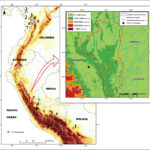
Centrolene sanchezi inhabits a narrow ecological niche within the tropical cloud forests along the eastern slope of the Andes Mountains. Its distribution is primarily within Colombia and, potentially, nearby regions of Ecuador, though the exact extent of their geographic range remains under continuous study amid concerns regarding habitat fragmentation.
This habitat is characterized by persistent mist, towering canopies, and a mosaic of lush epiphytes—where orchids bloom silently amidst dangling vines. Here, nature thrives in nuanced rhythms, orchestrated by humidity and altitude, temperature and rainfall. It is in these cloaked mountain heights, typically between 1,500 and 2,400 meters above sea level, that the glass frog finds its idyllic niche, thriving within the foliage layers that blanket rapidly flowing streams and waterfalls.
Centrolene sanchezi prefers life at heights, frequenting vegetation above flowing streams that serve as critical breeding sites. Its reliance on pristine aquatic environments and an abundance of leaves for shelter speaks volumes about the complexity and purity of its cloud forest homeland. Indeed, these habitats must remain relatively undisturbed and uncompromised, amplifying the fragility and vulnerability of this species amid ongoing environmental changes.
Physical Characteristics#
Ethereal Beauty and Intricate Engineering#
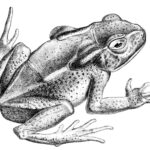
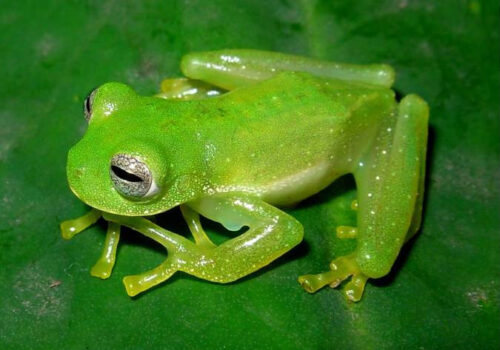
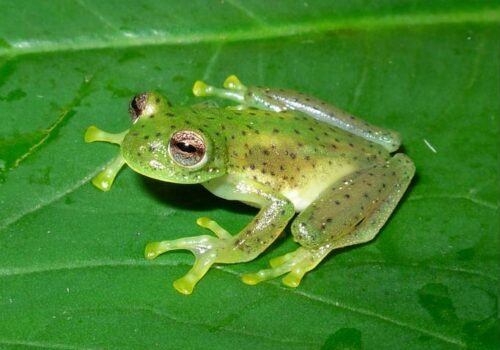
The Sanchez’s Glass Frog exhibits a delicate, diminutive form, typically measuring no more than 2.5 centimeters in length, comfortably nestled atop vibrant foliage. Visually striking, its dorsal side displays vivid green hues, allowing near-perfect camouflage among leaf and lichen. But what profoundly captivates observers is the translucent ventral side, revealing internal structures and organs visible through its semi-transparent skin.
The ability to see blood vessels, bones, and a beating heart is more than merely novel—it is an evolutionary marvel. This translucency, shared prominently among relatives within the glass frog family, functions ingeniously as camouflage under certain conditions. Bathed in moonlight or dappled sunlight passing through leaves, predators scanning from below see only muted outlines, the frog’s transparency disguising its presence in these vertically complex ecosystems.
Slick skin and webbed digits enhance its arboreal adaptations, enabling the glass frog to cling effortlessly onto wet surfaces and leaves overlooked by rushing waters. Large, forward-facing eyes crowned with horizontal pupils grant this creature unparalleled vision, suited perfectly for nocturnal life hunting tiny insects and navigating complex foliage at night.
Behavior and Life Cycle#
Life Above the Torrent: Breeding Habits and Survival Tactics#
Nocturnal by nature, Centrolene sanchezi awakens into vibrant life once sunlight relinquishes control over the mountainsides. It thrives on a diet primarily composed of insects and small arthropods—prey captured with precision, aided by excellent vision and swift reflexes. Eyes glimmering in the darkness, the frog ventures into nightly foraging excursions, lightly hopping or gliding amidst branches, leaves, and moss-covered twigs, each bout of hunting contributing to the delicate balance of insect populations within its habitat.
Mating rituals unfold amidst humid foliage above rushing streams, mixing gentle vocalizations and elaborate courtship displays. Male frogs emit a series of distinctive high-pitched trills, alluring potential mating partners from distances cloaked in fog—forming an ephemeral chorus resonating through the nighttime forest like music etched invisibly into the cloud mist itself.
After delicate, carefully choreographed pairings, female frogs meticulously deposit clutches of eggs on underside leaves overhanging turbulent streams. Eggs remain guarded, often by males who valiantly protect them against predators and potential fungal invasions. When hatching occurs, tiny tadpoles gracefully fall into the running waters below, thrust suddenly into an aquatic existence.
The transformation from aquatic tadpole to terrestrial juvenile is a remarkable chapter in its development. The ability of tadpoles to navigate rushing streams and survive in competitive riverine habitats shapes their juvenile resilience. Those lucky enough to endure ultimately ascend vegetation, returning again to spend adulthood nestled amidst leaves, repeating the captivating cycle anew.
Ecological Role#
An Essential Link Within a Sensitive Web#
As with many amphibians, Centrolene sanchezi holds critical roles within its ecosystem, acting simultaneously as predator and prey. Its insectivorous diet helps maintain population control among arthropods, effectively assisting ecological balance within forest canopies. Conversely, its delicate size positions the glass frog as prey for certain nocturnal mammals, birds, and even larger amphibians and reptiles.
Moreover, Centrolene sanchezi serves as an exceptionally sensitive indicator species, alerting conservationists to environmental changes that might otherwise go unnoticed. Highly sensitive to fluctuations in water quality, habitat disturbances, temperature shifts, and moisture levels, it offers an irreplaceable perspective into the health of mountain ecosystems it calls home.
Threats and Conservation Status#
A Fragile Future Hanging in the Balance#
Currently listed as “Near Threatened” by the International Union for Conservation of Nature (IUCN), Centrolene sanchezi faces mounting pressures from habitat loss, environmental disturbances, climate change, and even emerging diseases like chytridiomycosis. These intertwined threats combine to form a daunting outlook for a species so sensitively adapted to such specific environmental conditions.
Conservation efforts increasingly emphasize habitat protection, maintaining buffer zones around streams critical for reproduction, and monitoring water quality and climate impacts. Collaborative initiatives involving local communities, governmental agencies, and conservation organizations strive to safeguard not only Centrolene sanchezi, but the broader biodiversity inherent within these vital cloud forests.
Cultural and Scientific Significance#
Although lesser-known culturally, Centrolene sanchezi carries substantial scientific worth in herpetological research and conservation biology. Its stunning adaptations and highly specialized ecological role enhance our understanding of evolutionary biology, ecosystem dynamics, and climate vulnerability. Studies inspired by species like Sanchez’s Glass Frog continue to inform and guide sustained conservation strategies.
Conclusion#
In the misty embrace of the Andean cloud forests, Centrolene sanchezi symbolizes the intimate link between ecosystem integrity and species resilience. Its extraordinary biology and sensitivity offer a beautiful yet sobering reflection of nature’s fragile balance.
Therefore, safeguarding Sanchez’s Glass Frog is not solely about preserving one species—it is about protecting entire ecosystems, countless other creatures, and our shared planetary future. Let this extraordinary amphibian inspire us towards deeper appreciation and concerted conservation efforts, ensuring our forests and wildlife endure for generations to come.