Discovering the Cloud Forest Jewel: A Deep Dive into the Enigmatic Centrolene sabini#
In the lush forests, veiled in thick mist, a ghostly presence blends almost imperceptibly into the foliage. Cloaked in emerald green translucence and delicate as tarnished glass, Centrolene sabini, known commonly as Sabin’s Glass Frog, clings gently to the undersides of leaves along forest streams. This creature embodies both beauty and mystery, offering glimpses of its inner workings through translucent skin that evokes awe and fascination among nature enthusiasts and scientists alike. Although small and elusive, Centrolene sabini plays a profound role in ecological balance, its life intricately interwoven with its delicate habitat—mist-laden cloud forests high in the Andes.
Taxonomy and Classification#
The scientific odyssey of Centrolene sabini begins within the they embrace of taxonomy—our system for classifying and understanding biodiversity. This remarkable amphibian belongs to the family Centrolenidae, commonly termed glass frogs due to their mesmerizing transparent skin. Within this family, Centrolene sabini finds its place in the genus Centrolene, a group characterized by unique morphological features, including partially transparent bellies that expose their internal organs in a windowed glimpse of their biology.
Verified and described first by specialists in 1980, Centrolene sabini was named to honor Andrew Sabin, who notably funded numerous expeditions and scientific initiatives dedicated to amphibian conservation. Closely related species within the genus Centrolene share similar habitats and visual traits, yet Sabin’s Glass Frog remains distinctly identifiable due to subtle nuances in physical appearance and vocalizations, emphasizing the incredible diversity of the glass frogs and the fragile ecosystems that sustain them.
Natural Habitat#
The High-Altitude Shroud of the Andes#
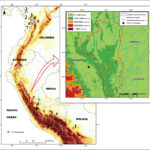
Centrolene sabini makes its home primarily within humid montane cloud forests situated at altitudes ranging from approximately 1,800 to 2,800 meters (5,900–9,200 feet) above sea level. Its geographic range encompasses specific isolated regions in the Andes Mountains of Peru and Ecuador. Discrete populations persist in areas renowned for frequent cloud cover, light rainfall, and consistent moisture—conditions critical for maintaining their delicate skin hydration and reproductive strategies.
The habitat’s visual appeal is captivating: thick mist hanging over emerald trees draped in moss, bromeliads, and ferns, streams trickling gently beneath a perpetual grey-green twilight. These streams and their nearby low-hanging vegetation play a central role in the ecological niche of this frog, providing essential breeding grounds and food supply. The lush canopy, abuzz with diverse insect life and high moisture content, creates ideal living conditions uniquely suited to Centrolene sabini’s physiological needs.
Physical Characteristics#
Small in Stature, Remarkable in Detail#
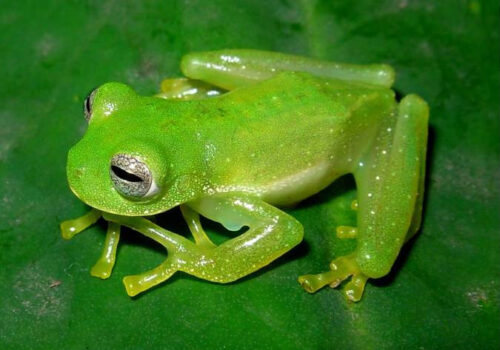
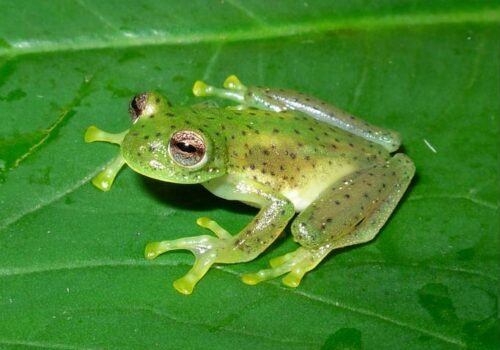
Cloaked in an array of green tones ranging from vibrant lime to deep forest hues, the coloration of Centrolene sabini is perfectly tuned to blend among lightly illuminated foliage. Adult individuals typically measure between 26–32 mm in body length, small enough to sit comfortably on a finger’s tip, yet profoundly adapted to their environment. The most captivating feature of Centrolene sabini—and indeed its entire family—is its translucent abdominal skin. A fascinating evolutionary trait, this transparency allows observers to witness the rhythmic beating of their hearts, delicate organs delicately outlined beneath glass-like skin.
The eyes of Centrolene sabini are strikingly large and forward-facing, indicative of nocturnal habits adapted for exceptional sensitivity in dim environments. Their pupils contract into narrow horizontal slits during periods of high illumination, affording them precise control of vision under shifting light conditions. Such adaptions do more than add wonder—they are critical survival mechanisms, facilitating predator avoidance and hunting success.
Behavior and Life Cycle#
The Nocturnal Song and Delicate Caregiving#
Centrolene sabini, like its fellow glass frogs, is predominantly nocturnal, resting inconspicuously during the day and awakening with sunset’s approach. As darkness blankets the cloud forests, males congregate around pristine streams, calling melodically and persistently into the night air—a gentle chorus reverberating through the forest canopy. Each frog emits unique vocalizations that, despite their subtlety, resonate and combine into a rhythmic symphony guiding prospective females toward suitable mates.
Following successful courtship, females deposit gel-like egg clusters onto leaves overhanging or adjacent to clear, flowing streams. These gelatinous translucent clusters, carefully positioned above water, benefit from constant moisture; development occurs suspended among thick vegetation. Uniquely, male Centrolene sabini display vigilant parental behavior, carefully defending the developing eggs from potential predators like insects and arachnids, and occasionally ensuring moisture by actively hydrating their offspring with minute droplets carried from nearby water sources.
Upon hatching, tadpoles gracefully drop into the underlying streams below, transitioning seamlessly into aquatic life. They continue their development sheltered among submerged leaf litter and rocks until their metamorphosis into fully terrestrial juveniles. These early life stages illustrate clearly how Centrolene sabini’s life cycle intricately ties to its sensitive habitat—each stage necessitating harmonious environmental conditions that, even minutely altered, risk devastating impacts to continued species survival.
Ecological Role#
Though diminutive, the little-known frog Centrolene sabini occupies crucial ecological niches within Andean cloud forests. Primarily insectivorous, their voracious appetite for diverse insects contributes significantly toward insect population balance in ecosystem stability. Moreover, they themselves comprise important dietary components for native predators—birds, reptiles, and even certain large arthropods.
Furthermore, Centrolene sabini and its relatives act as indicator species—fragile sentinels whose declining presence warns of potential environmental degradation. The current health of this frog reflects directly upon water purity, forest integrity, and climate stability. Its presence, abundance, or absence provides invaluable signals to conservation biologists regarding impending ecological pressures or habitat disruptions.
Threats and Conservation Status#
Facing Fragility: A Fight for Survival#
Despite their discreet existence, Centrolene sabini populations, according to the International Union for Conservation of Nature (IUCN), face continuous threats categorized currently as “Vulnerable.” Habitat loss and alteration constitute primary pressures, notably driven by deforestation for agriculture, logging, expanding human settlements, and construction activities. Such disturbances not only remove essential vegetation but also disrupt hydrological cycles crucial to the successful breeding and survival of amphibians.
Climate change compounds these issues further, altering precipitation regimes, increasing stream water temperature fluctuations, and reducing the cloud cover essential to the humid microclimate these frogs rely upon. Additionally, the insidious fungal disease chytridiomycosis, which devastates amphibians worldwide, poses a mounting risk.
In response, multidisciplinary conservation efforts—which integrate habitat restoration, pathogen monitoring, local community education, and legal protection of habitats—are essential to preserve surviving Centrolene sabini populations. Conservation organizations focus intensively on habitat preserves, ecological corridor establishment, and citizen awareness campaigns aimed at highlighting the species’ plight and broader ecosystem benefits.
Cultural and Scientific Significance#
Centrolene sabini transcends scientific intrigue; its ethereal appearance and enigmatic behaviors captivate local cultural imaginations within its Andean range. Indigenous communities often regard these creatures with respect, associating glass frogs symbolically with forest health and vitality. Local folklore sometimes attributes mystical or medicinal significance, underscoring the cultural importance amphibians can hold alongside biodiversity values.
Scientifically, Centrolene sabini provides critical insights into amphibian physiology, ecosystem health assessment, evolutionary biology, and conservation genetics. Each new knowledge fragment about this elusive frog expands human comprehension regarding delicate ecosystems, adaptive evolution, disease mitigation strategies, and ecological resiliency to climate change impacts.
Conclusion#
Centrolene sabini symbolizes more than mere biodiversity—it embodies ecological interconnectedness, resilience, and the delicate equilibrium inherent to rainforest ecosystems. Its transparent body, tender parental care, and ethereal nocturnal calls impart powerful impressions about nature’s fragility and wonder. Today, safeguarding Centrolene sabini’s fragile habitat in the majestic Andean cloud forests becomes paramount—essential both for preserving biodiversity and for eliciting inherent human appreciation for these obscure ecological treasures.
You, too, can help protect this invaluable species. Support local and global conservation initiatives, become informed about habitat preservation, and spread awareness. After all, saving the ghostly wonder hiding silently atop the Andes ultimately safeguards an entire ecosystem, glowing subtly beneath the clouds.