- Sclerophrys steindachneri: Unveiling the Hidden World of Steindachner's Toad
- Taxonomy and Classification: Understanding its Roots
- The Natural Habitat of Steindachner's Toad
- Physical Characteristics: Master's Blend of Form and Function
- Behavior and Life Cycle: Rituals Beneath African Skies
- Ecological Significance: Balancing the Web of Life
- Threats and Conservation Status: Preserving Harmony in Fragile Ecosystems
- Cultural and Scientific Significance: Beyond Ecological Impact
- Conclusion: Celebrating and Protecting Steindachner's Toad
Sclerophrys steindachneri: Unveiling the Hidden World of Steindachner’s Toad#
In the secret realms beneath tall grass and amidst the thick undergrowth of wooded savannas and grasslands, one amphibian quietly flourishes, largely unnoticed by human eyes. Meet Sclerophrys steindachneri, commonly known as Steindachner’s toad—a unique and enigmatic amphibian sculpted by evolution to harmonize exquisitely with its environment. This intriguing toad, bearing the scientific name that honors the acclaimed Austrian ichthyologist Franz Steindachner, is both an ecological cornerstone and a charismatic inhabitant of sub-Saharan ecosystems.
Despite its modest appearance, punctuated by muted earth tones and diminutive stature, Steindachner’s toad embodies a wealth of fascinating behaviors, adaptations, and ecological significance. Its presence echoes the stability and balance of its habitat, providing tangible proof of ecological vitality. Before delving deeper into the remarkable world of this amphibian, imagine yourself on an early evening stroll in the Ethiopian or Kenyan grasslands. As the sun dips beyond the horizon, a gentle chorus punctuates the twilight—a resonant reminder of the thriving life masked within the landscape. Hidden in plain sight, the gentle yet persistent croak of Steindachner’s toad affirms its role in the rhythm of wildlife symphonies nightly breathing life into the African savannas.
Taxonomy and Classification: Understanding its Roots#
Sclerophrys steindachneri belongs to the Bufonidae family, widely known as true toads. Established taxonomically within the genus Sclerophrys, this particular group contains robust, adaptable toads well-suited to Africa’s varied ecosystems. The taxonomic placement of this species emerged from a detailed morphological and genetic exploration of African bufonids, ascertainable by distinctive features such as glandular skin secretions, cranial structure, and vocalization characteristics.
Within its genus, Steindachner’s toad shares kinship with similarly adapted species, yet subtle morphological distinctions, vocalization patterns, and ecological preferences carve out its unique evolutionary niche. Systematic analysis continues to help scientists better understand relationships between closely related species such as Sclerophrys maculata and Sclerophrys regularis, highlighting fascinating insights into evolutionary divergence within Bufonidae lineages across Africa.
The Natural Habitat of Steindachner’s Toad#
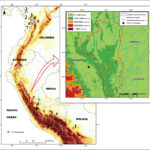
A true miracle of adaptation, Sclerophrys steindachneri boasts an expansive geographical distribution across Eastern Africa, stretching from Ethiopia and Kenya to scattered pockets in Uganda, Rwanda, Burundi, Tanzania, and Malawi. It mostly inhabits subtropical or tropical environments, thriving in savannas, rocky grasslands, wooded grasslands, moist shrublands, and occasionally venturing into agricultural landscapes and disturbed habitats.
The Ideal Environment: Shelter and Moisture#
Steindachner’s toad reveals a preference for habitats endowed with adequate moisture and terrestrial shelters, often choosing areas interlaced with thick vegetation, leaf litter, and rocky crevices. Amidst these sheltered micro-habitats, it finds protection from the scorching sun and potential predators, and—most critically—it maintains essential moisture levels in its permeable skin. Here, awaiting the evening shadows, the toad rests, conserving precious energy and water during the heat of the day.
When rains usher in temporary water sources, seasonal ponds, and shallow streams, these amphibians emerge en masse, drawn by the irresistible call of breeding. Their seasonal movements illustrate the profound sense of synchronicity they hold with annual rains, promoting their reproductive success in a landscape defined by temporal shifts.
Physical Characteristics: Master’s Blend of Form and Function#
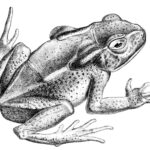
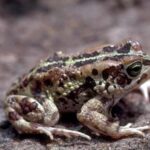
Steindachner’s toad, though relatively small in size—typically measuring about 40-60 millimeters—is robust in physique. Its compact, rounded form and muscular limbs grant it remarkable agility, allowing maneuverability through dense vegetation and rocky terrains. Complex patterns of dark, irregular blotches adorn their granular skin, a mosaic of muted greens, browns, and earthy hues that serve as impeccable camouflage amidst the dappled shadows of their habitat.
Skin as a Survival Tool: Camouflage & Defense#
Like other members of the Bufonidae family, their conspicuous parotoid glands located near the shoulders secrete a mild toxin when threatened, an ingeniously evolved deterrent keeping most predators at bay. This adaptation combined with cryptic coloration makes this humble creature a formidable survivor, deftly balancing concealment with defensive warnings.
Behavior and Life Cycle: Rituals Beneath African Skies#
The nocturnal life led by Steindachner’s toad paints a vivid portrait of survival strategies shaped by evolutionary pressures. As twilight envelops the landscape and predators grow sluggish, these amphibians actively forage amidst the undergrowth for a diversity of insects. With precision leaps and exceptional tongue dexterity, they capture moths, beetles, ants, and spiders, stabilizing insect populations and underscoring their ecological role as valuable pest controllers.
Mating Season: Chorus Beneath the Moon#
With the advent of seasonal rains comes the anticipated high point of the toad’s life cycle. Male toads congregate near temporary ponds and wetlands, unleashing vocalizations that resonate across grasslands, a melody chorus aimed at attracting likewise-oriented females. Each evening, these vocalizations—unique rhythmic calls and deep, rolling trills—create a vocal tapestry intertwined with the calls of crickets and night birds.
Once a female approaches, males embark on fierce yet brief competitive interactions, vying for the right to propagate their genes. Successful males embrace receptive females in an amplexus position, facilitating external fertilization. The female then disperses thousands of tiny eggs into shallow ponds, carefully ensuring future generations’ survival. Tadpoles emerge remarkably quickly, shaped and adapted to thrive temporarily within these ephemeral pools. Within weeks, metamorphosis magic reshapes these aquatic larvae into miniature terrestrial versions of their mature selves, completing a remarkable lifecycle shaped by the transient rhythms of their world.
Ecological Significance: Balancing the Web of Life#
Steindachner’s toad is undeniably integral to the intricate food web of its habitat. As both predator and prey, it helps maintain ecosystem health and equilibrium. While it keeps insect populations in check, it simultaneously serves as an essential food source for numerous birds, reptiles, small mammals, and even larger amphibians. Their population fluctuations echo through the food chain, subtly influencing the health of entire ecosystems.
Threats and Conservation Status: Preserving Harmony in Fragile Ecosystems#
The steady resilience of Sclerophrys steindachneri makes it currently classified as Least Concern on the IUCN Red List. However, complacency would be misguided. Habitat degradation through agricultural expansion, urban encroachment, deforestation, and climate fluctuations threaten many populations. Moreover, contamination from pesticides and chemical runoffs can devastate localized populations quickly, undermining their natural defenses. Vigilant conservationists monitor trends closely, prepared to mitigate emerging threats and ensure that neither human activity nor climate disturbances threaten the delicate balance maintaining this amphibian’s survival.
Cultural and Scientific Significance: Beyond Ecological Impact#
For local communities, Steindachner’s toad contributes symbolically to agricultural prosperity, reflecting environmental health and heralding seasonal rains. In scientific circles, it represents a crucial indicator species—an organism whose survival status can inform us profoundly about the health and stability of entire ecosystems. Researchers continue employing these amphibians in important studies focusing on climate change impacts, habitat fragmentation, conservation strategies, and ecological health indices.
Conclusion: Celebrating and Protecting Steindachner’s Toad#
Sclerophrys steindachneri’s presence in Africa’s grassland savannas and wooded habitats highlights the exquisite balance in nature’s tapestry. While its conservation status currently provides optimism, ensuring it continues playing its integral ecological role requires sustained protection and awareness. Understanding and valuing the toad’s intricate interaction with its ecosystem ultimately fosters a deeper human connection with our natural world—a crucial step towards environmental sustainability.
Each gentle croak beneath the African moonlight whispers a lesson in resilience and ecological interconnectedness, championing conservation advocacies and inviting humanity to cherish biodiversity. Let us honor this compelling amphibian by preserving its habitat, respecting biodiversity, and recognizing its understated yet irreplaceable place in the vast symphony of life.
“`