- Exploring the Enigmatic World of Rhinella azarai: South America's Unsung Amphibian Treasure
- Taxonomy and Classification
- Natural Habitat: Riverbanks, Grasslands, and Forest Edges
- Physical Characteristics: Master of Subtlety and Survival
- Behavior and Life Cycle: From Tadpole to Terrestrial Hunter
- Ecological Role: A Crucial Link in Biodiversity
- Threats and Conservation Status: Positioned on the Environmental Frontlines
- Cultural and Scientific Significance
- Conclusion: Protecting our Amphibian Allies
Exploring the Enigmatic World of Rhinella azarai: South America’s Unsung Amphibian Treasure#
Hidden among the shadowy rivulets, leafy forest floors, yet resilient enough to inhabit changing landscapes, a humble creature endures largely unnoticed. This is the Rhinella azarai, colloquially known as Azara’s toad, a species steeped in ecological importance and quiet charm. Named in tribute to Félix de Azara, the renowned Spanish naturalist who significantly contributed to our understanding of South American fauna, Rhinella azarai represents an intriguing facet of the continent’s biodiversity. With a resilience befitting creatures accustomed to the subtropical realms of Paraguay, Argentina, Brazil, and Uruguay, Azara’s toad exemplifies adaptability amid ecological flux.
Few realize that beneath its modestly colored exterior lies a species crucial to ecosystem health – a voracious competitor in the insect sphere, an indicator of environmental quality, and an integral link in the food web. Yet, it remains overshadowed by more brightly hued amphibians in conservation outreach. Indeed, Rhinella azarai captivates through subtlety rather than spectacle—a true testament to the understated beauty of evolutionary adaptation.
Taxonomy and Classification#
Understanding Rhinella azarai begins with appreciation of its lineage, nestled within the expansive family Bufonidae. This family is renowned for its diversity, encompassing species commonly termed “true toads.” The genus Rhinella, once categorized under the Bufo genus, distinguishes a grouping of uniquely adapted neotropical toads.
Classified scientifically as Rhinella azarai, this species shares its genus with notable South American counterparts, differing subtly in morphology, vocalizations, and environmental preferences. In examining the species’ scientific heritage, researchers have noted genetic and morphological proximity to Rhinella schneideri and Rhinella fernandezae, reflecting a fascinating evolutionary narrative of divergence shaped by geography and climate.
Natural Habitat: Riverbanks, Grasslands, and Forest Edges#
Azara’s toad is primarily distributed across the subtropical and temperate regions of southern Brazil, Paraguay, northeastern Argentina, and Uruguay. Preferring humid environments, it favors habitats close to freshwater sources—often found near slow-flowing rivers, streams, ponds, and marshy grasslands where insect prey abound and aquatic nurseries for tadpoles are plentiful.
The species’ adaptability becomes evident in its diverse choice of dwelling sites. Rhinella azarai thrives on the intersection of forest and open country—environments offering ample hiding spaces beneath logs, leaf litter, and demurely beneath the grassy flora of moist, shaded terrains.
Yet, what truly encapsulates its ecological endurance is its capacity to flourish on agricultural fringes, provided that suitable breeding pools and damp, sheltered retreats persist. Such adaptability has allowed Azara’s toad to populate habitats relatively close to human settlements, provided those areas maintain minimal environmental quality and biodiversity.
Physical Characteristics: Master of Subtlety and Survival#
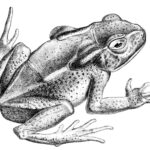
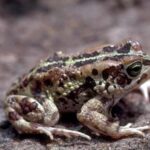
At first glance, Rhinella azarai may seem to lack the flamboyance of brighter tree frogs or poison dart species. Measuring between five and nine centimeters on average, its skin tones range from earth-toned browns to grays, often mottled subtly with darker blotches. This muted coloration serves as nature’s effective camouflage—soft dappled patterns mimic the shifting shadows of fallen leaves or pebbled riverbanks, rendering them nearly invisible to predators and prey alike.
One cannot discuss its identity without mentioning the iconic features of true toads—the prominent parotoid glands located directly behind the eyes, secreting toxins when threatened. While Rhinella azarai is not dangerously toxic to humans, these defensive glands become a formidable deterrent to potential predators, signaling clearly that this humble-looking toad harbors hidden chemical defenses.
Behavior and Life Cycle: From Tadpole to Terrestrial Hunter#
The life cycle and behavior of Azara’s toad offer a fascinating glimpse into amphibian survival tactics. With the return of seasonal rains, adult toads commence their nocturnal chorus, as males stake out aquatic territories calling for mates. These low-pitched trills and gentle croaks ripple softly through humid nights, resonating in complex harmony with insect sounds and rustling grasses, crafting an auditory landscape unique to their habitats.
Females, drawn to the vocalization symphony, carefully select suitable mates, engaging in a breeding ritual known as amplexus—a posture essential for successful fertilization of the numerous gelatinous eggs laid in shallow water.
From Larva to Legged Amphibian – The Remarkable Transformation#
Once eggs hatch, Rhinella azarai tadpoles begin their aquatic chapter, feeding voraciously on algae and microscopic organisms populating their freshwater nurseries. Demonstrating impressive adaptability, tadpoles mature relatively quickly—a crucial evolutionary adaptation to ephemeral pools that may evaporate swiftly under the subtropical sun.
Metamorphosis reveals a monumental physiological realignment as aquatic larvae restructure entirely into terrestrial juveniles. Newly metamorphosed toads measure scarcely more than a fingernail, venturing onto land as diminutive, insect-hunting predators. As they grow, their diet diversifies, encompassing beetles, flies, spiders, ants, and various woodland invertebrates.
Ecological Role: A Crucial Link in Biodiversity#
In exploring the role of Rhinella azarai within its environment, we witness an essential ecological interplay unfolding daily beneath forest canopy and field margins. As agile predators, Azara’s toads control insect populations effectively, keeping ecological balance within delicate margins. Without such predators, unchecked insect outbreaks could lead to profound agricultural and ecological consequences.
Simultaneously, Azara’s toads themselves constitute vital prey for birds of prey, snakes, larger amphibians, and certain small mammals, forming a robust energy transfer ring within their ecosystem. Their presence also serves as a sensitive marker of environmental health, reflecting the quality of water bodies and soil health while quickly responding negatively to pollution and habitat degradation.
Threats and Conservation Status: Positioned on the Environmental Frontlines#
Despite being relatively stable compared to other endangered amphibians, the ongoing pressures of rapid habitat change compel conservationists to remain watchful. Fortunately, according to current evaluations by the International Union for Conservation of Nature (IUCN), Rhinella azarai holds the status “Least Concern,” commonly serving as a testament to the resiliency of amphibian populations capable of thriving even under substantial landscape modifications. Yet complacency remains inadvisable, especially given looming uncertainties related to climate change, habitat destruction, pesticide pollution, emerging diseases like chytrid fungus, and global biodiversity loss.
Even this hardy species faces repercussions from diminished wetland habitats and water pollution, underscoring the fragility inherent to all ecosystems. Proactive conservation, heightened public awareness, habitat protection measures, and scientific monitoring thus remain paramount strategies in assuring continued populations across the species’ native ranges.
Cultural and Scientific Significance#
Rhinella azarai not only embodies ecological importance—it also inhabits cultural imagination and scientific curiosity. To indigenous communities and local cultures, these toads represent resilience, seasonal transitions, fertility symbols deeply embedded within traditional folklore. Their subtle nighttime choruses mark the arrival of rains and the synchronization of crop planting calendars, underpinning their emblematic role in both tradition and practical agriculture.
Scientific researchers find Azara’s toads equally compelling for their biochemical secrets contained in their glandular secretions, potentially yielding insights into novel antimicrobial or pharmaceutical applications. Furthermore, Azara’s toad serves as a vital bioindicator species, its health reflecting ecosystem stability—an invaluable asset in gauging environmental responsibility and guiding conservation management.
Conclusion: Protecting our Amphibian Allies#
Though Rhinella azarai may seldom garner mainstream spotlight compared to crimson-hued frogs and vividly patterned salamanders, its story highlights the extraordinary capacity for subtle species to sustain extraordinarily crucial ecological roles. Behind its understated appearance lies intricate biology, ecological significance, and unique adaptive brilliance.
To safeguard Rhinella azarai and countless other subtle yet indispensable species, it is critical we foster greater appreciation for these amphibian allies. Supporting habitat conservation, participating in citizen science projects, reducing pollution, and advocating responsible agricultural practices collectively ensure that future generations will continue to discover, understand, and admire the quiet presence of Rhinella azarai—an understated yet essential character in our planet’s natural epic.