Unveiling Rhinella sclerocephala: The Intriguing Life of a Resilient Amazonian Toad#
Within the mysterious cauldron of life that is the Amazon rainforest, countless creatures weave secrets into the tapestry of biodiversity. Among these lesser-known wonders lies Rhinella sclerocephala, a toad species whose fascinating adaptations, behavior, and ecological role make it an essential yet understated guardian of its lush habitat. Known for its robust appearance and remarkable resilience, this amphibian’s very essence represents both the vulnerability and tenacity of life in the world’s greatest tropical forest.
Even seasoned nature lovers might find themselves astonished by this toad’s array of adaptations. From its cryptic coloring that rivals any jungle master of disguise to its crucial ecological role as a biological indicator, Rhinella sclerocephala embodies the intertwined beauty and fragility of rainforest ecosystems, making it a compelling symbol and ambassador for biodiversity conservation.
Taxonomy and Classification#
Belonging to the family Bufonidae, known generally as the “true toads,” Rhinella sclerocephala resides within the diverse genus Rhinella. This genus comprises numerous species distributed widely across Central and South America, particularly noted for their hardy nature and incredible adaptability. Rhinella species share several characteristic features, such as stocky bodies, warty skin texture, and conspicuous parotoid glands.
First scientifically described by Mijares-Urrutia and Arends in 2001, Rhinella sclerocephala immediately caught scientific attention due to its distinct cranial structure, a robust skull after which it is named (“sclerocephala” literally meaning “hard head”). The species’ relatively recent classification underscores the ever-evolving understanding of Amazonian biodiversity and highlights the importance of continued exploration and documentation efforts in understudied ecosystems.
Natural Habitat#
Geographic Range and Distribution#
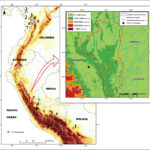
Primarily found within the humid tropical and subtropical rainforests of the northern regions of South America, Rhinella sclerocephala is notably prevalent within Venezuela and adjacent countries. Its preferred habitats center around wet, dense, lowland evergreen forests, especially in areas near streams, ponds, and slowly flowing wetlands, where humidity is consistently high and leaf-litter layers are deep and stable.
The Amazonian realm of this species brims with intricate ecological niches. Thick foliage overhead creates twilight-like conditions beneath towering trees, and the forest floor forms a capacious patchwork of decomposing leaves, fallen logs, and hidden pools of water—a paradise for amphibians adapted to moisture and concealment. Within this dynamic landscape, Rhinella sclerocephala thrives, its behavior tuned delicately to the rhythms of rainfall, humidity changes, and shifting rainforest seasonal patterns.
A Habitat Tailored to Survival#
The essential elements of the species’ existence stem from microhabitats beneath the heavily shaded understory. Here, amid layers of damp fallen leaves and decomposing organic matter, these amphibians find ideal conditions for moisture retention, protection from predators, and availability of diverse prey. Slow-moving streams and standing pools provide both breeding sites and vital hubs of aquatic life sustaining their larvae.
Moreover, the specialized structure of leaf litter layers supports a thriving arthropod community, a staple dietary resource for this fascinating toad. Thus, the rhythm of rainfall synchronized with rainforest productivity shapes the world inhabited by Rhinella sclerocephala, making the amphibian not just adapted to but deeply interwoven within its habitat.
Physical Characteristics#
Unmistakable at first glance, Rhinella sclerocephala projects an image of resilience and hardiness. Adult individuals are considered moderate-sized, typically measuring between 60 and 85 mm in length, with females often slightly larger than their male counterparts.
Adaptations and Distinctive Traits#
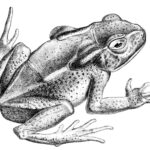
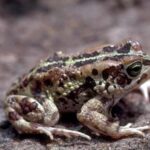
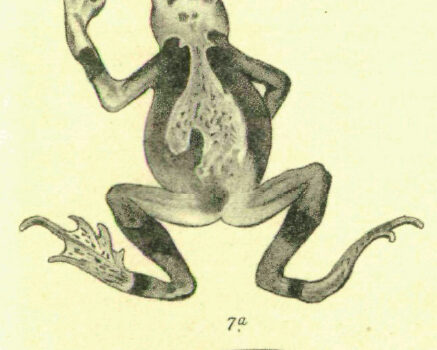
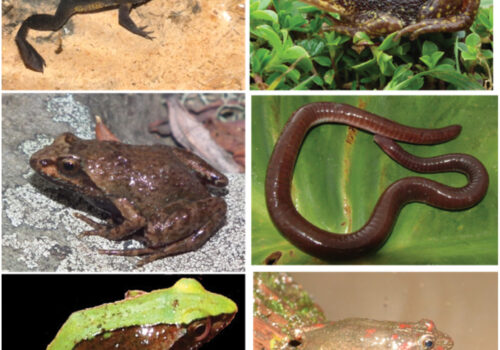
The species owes its name to its notably strengthened, hardened head, an adaptation likely serving as protection from both predators and environmental hazards. Ridges and prominences adorn the skull, integrating seamlessly with a stocky, muscular body draped in skin speckled and patterned subtly in hues of brown, olive, grey, and occasionally reddish-brown. Dark blotches and warty textures enhance camouflage against the backdrop of leaf litter on rainforest floors.
Large, pronounced parotoid glands, positioned behind each eye, release toxins suitable for repelling would-be predators. While not dangerously poisonous to humans, these toxins are potent deterrents in the complex food web of the jungle floor. The toad’s broad, powerful hind limbs are finely tuned for short leaps and rapid escapes, while front limbs featuring well-developed digits aid digging and maneuvering through dense leaf detritus.
Behavior and Life Cycle#
Feeding and Foraging#
Nocturnal by nature, Rhinella sclerocephala emerges from its daytime hideouts beneath dead wood or leaf litter to hunt under cover of darkness. Meticulously moving across moist ground, the toad consumes a broad range of invertebrates, including ants, beetles, spiders, worms, and small crustaceans. Thanks to its powerful jaws and sticky tongue, it swiftly captures prey with calculated precision.
Breeding Rituals and Tadpole Development#
Rainfall cues mark the onset of breeding season, prompting males to assemble near shallow pools and slow-flowing streams in vocal choruses. Their calls—a rhythmic series of notes—fill the humid air, attracting receptive females to suitable breeding sites. After successful mating in the aquatic medium, females release long gelatinous strands containing eggs, which are fertilized externally by the males.
Tadpoles develop rapidly into aquatic larvae, initially relying on nutrient-rich algae and detritus. As metamorphosis proceeds, legs sprout, lungs form, and tails gradually disappear, signaling readiness for terrestrial life. This transition phase symbolizes a dramatic shift from vulnerability in open water to life concealed on the rainforest floor.
Ecological Role#
Rhinella sclerocephala occupies multiple crucial niches within Amazonian ecosystems. As efficient insectivores, they regulate populations of small invertebrates, contributing actively to the delicate balance within their territory. Conversely, their own populations support predators such as snakes, large insects, birds, and mammals, sustaining a healthy, interconnected web of fauna in the forest.
Moreover, as sensitive amphibians, they serve as vital indicators of ecological health. Amphibians’ semi-permeable skin and lifecycle dependence on both water and land environments make species like Rhinella sclerocephala particularly vulnerable to environmental changes. Thus, healthy populations signal a stable habitat, while declining numbers may indicate underlying ecological concerns.
Threats and Conservation Status#
Despite its resilience and adaptations, Rhinella sclerocephala is not immune to the growing suite of threats impacting Amazonian biodiversity. Habitat destruction ranks among primary concerns, driven primarily by logging, agricultural expansion, mining, and infrastructure development. Deforestation and fragmentation disrupt breeding habitats, food availability, and suitable microhabitats vital for survival.
Climate change represents a less tangible but powerful looming threat, altering rainfall patterns and raising uncertainty about reproductive success and survival rates. Currently, comprehensive IUCN assessments specific to this species remain limited, reflecting the critical need for further targeted research to better understand population trends and implement mitigation strategies.
Cultural and Scientific Significance#
Indigenous communities have long revered Amazonia’s rich amphibian diversity, attributing mystical and medicinal values to many species. Although specific cultural narratives about Rhinella sclerocephala remain lesser-known, broader cultural respect and spirituality towards amphibians underline potential importance in indigenous traditions and practices.
From a scientific perspective, studying species like Rhinella sclerocephala continues to enhance our understanding of amphibian resilience, ecosystem health indicators, defensive secretions (potentially harboring novel bioactive substances), and conservation benchmarks.
Conclusion: Championing the Unseen Guardians#
In revealing the compelling details and unique beauty of Rhinella sclerocephala, we highlight a critical reality: the need to shed greater light on species that often exist quietly beyond popular conservation focus. Your enhanced understanding and appreciation for these lesser-known wonders serve as essential motivation to protect their environments.
Together, by supporting continued research, conservation programs, and sustainable practices, we can ensure that the call of Rhinella sclerocephala continues to echo throughout the lush corridors of the Amazon for generations to come.