- Introduction: A Hidden World Beneath Forest Leaves
- Taxonomy and Classification of Pelophryne penrissenensis
- Natural Habitat: The Mountain Forests of Borneo
- Physical Characteristics: A Masterclass in Camouflage
- Behavior and Life Cycle: Intricate Lives Among the Leaves
- Ecological Role: Small Creature, Large Impact
- Threats and Conservation Strategies: Protecting an Overlooked Treasure
- Conclusion: Celebrating Nature’s Subtle Wonder
Introduction: A Hidden World Beneath Forest Leaves#
In the depths of the Bornean rainforest, under the lush green canopy that blankets Mount Penrissen, there exists a tiny inhabitant rarely seen by human eyes—the Penrissen dwarf toad (Pelophryne penrissenensis). Home to an extraordinary variety of amphibians, insects, mammals, and birds, Borneo is well-known as a biodiversity hotspot, but few species illustrate the intricate balance of this ecosystem as enchantingly as this elusive frog. First described by scientists with excitement and wonderment only in recent decades, Pelophryne penrissenensis offers compelling insights into nature’s subtle mysteries.
Hidden expertly among leaf litter and moss-covered rocks, this diminutive amphibian can slip past the attention of all but the most meticulous of observers. And yet, despite its secretive nature, it holds a wealth of ecological importance and reveals much about our understanding of rainforest ecosystems. With its fascinating adaptations, discrete movements, and specialized niche, the Penrissen dwarf toad is a remarkable representative of amphibian diversity.
Taxonomy and Classification of Pelophryne penrissenensis#
Understanding any species, particularly one as specialized as the Penrissen dwarf toad, begins with its scientific classification. Pelophryne penrissenensis belongs to the family Bufonidae—the true toads—and is one of several species within the genus Pelophryne, a group of small-bodied, cryptic amphibians. First documented officially by Das, Jankowski, Makmor, and Haas in 2017, the species takes its name from its specific habitat around Mount Penrissen.
This relatively recent discovery attests to both its elusive nature and the rich, yet incompletely explored biodiversity of Borneo. Closely related species in this genus inhabit similar microhabitats, thriving in highly specialized ecological niches thanks to remarkable adaptations to their cryptic lifestyles. Such specialized living conditions have led to subtle physical and behavioral differences that allow each species to coexist in these dynamic landscapes with minimal direct competition.
Natural Habitat: The Mountain Forests of Borneo#
Pelophryne penrissenensis is uniquely adapted to its lush mountainous habitat, largely centered around Mount Penrissen, near the border between Sarawak (Malaysia) and Kalimantan (Indonesia) on the island of Borneo. In these upland tropical rainforests, the frog occupies a very distinct ecological niche, typically preferring elevations between 800 and 1200 meters above sea level. Here, intricate mats of moss, leaf litter, and scattered rocks provide shelter, sustenance, and the ideal microclimate.
The region’s climate is characteristically humid, receiving significant rainfall year-round. Mist frequently clings to the forest, enveloping the trees in a veil of moisture that maintains damp conditions essential to amphibian survival. The Penrissen dwarf toad’s habitat is often found on the fringes of small streams or damp depressions, the air resonant with the constant, gentle trickle of water. These exceptionally stable conditions ensure that moisture-dependent organisms can thrive, offering precisely the kind of environment that has enabled the evolution of unique amphibians such as Pelophryne penrissenensis.
Physical Characteristics: A Masterclass in Camouflage#
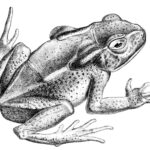
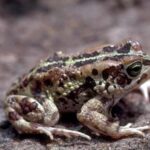
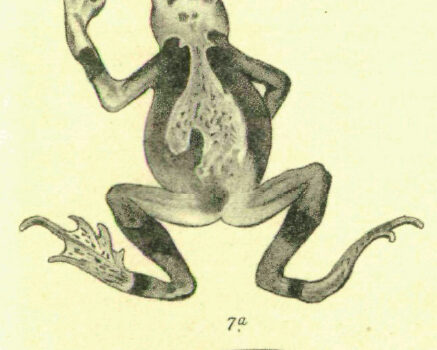
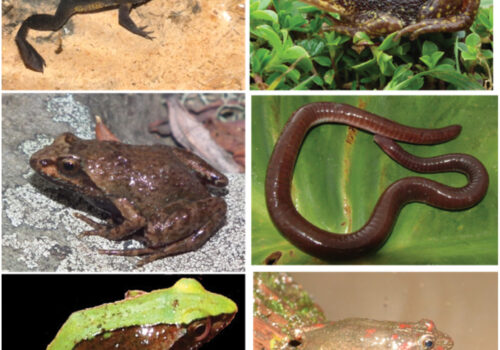
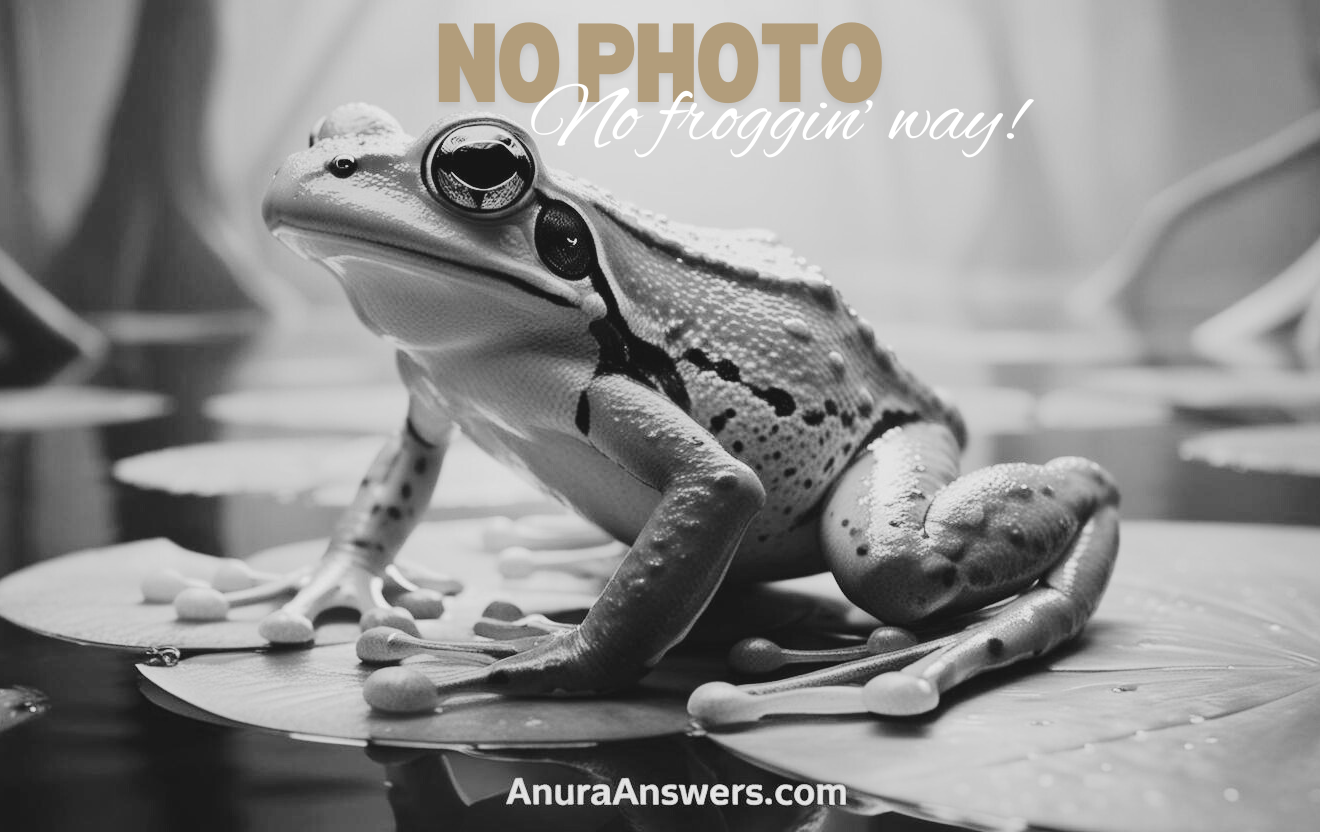
Nature has tailored every aspect of Penrissen dwarf toad’s physical features to conceal it from predators and unwelcome observers alike. Adult individuals measure a mere 20 to 25 millimeters in length, making them one of the smaller frog species found in Borneo. Their diminutive size allows them to effortlessly hide within forest debris. The rough, granular texture of their skin, combined with coloration varying between browns, greys, and subtle mossy greens, effectively mimics the surrounding leaf litter, lichens, and moss-covered rocks.
Perhaps one of the most notable features of Pelophryne penrissenensis is its irregular patterning, which disrupts its silhouette against the complex forest floor backdrop. Other adaptations, such as relatively large eyes positioned slightly toward the sides of their head, enable heightened vigilance against predators. Their limbs, perfectly suited for navigating their habitat, are slender but strong, ideal for clambering slowly over uneven terrains, moving almost silently through their hidden world.
Behavior and Life Cycle: Intricate Lives Among the Leaves#
Feeding Strategies and Survival Tactics#
As creatures of cryptic habits, Penrissen dwarf toads engage in largely nocturnal and crepuscular activities, emerging from natural shelters such as leaf litter and mossy cover at twilight, to forage discreetly through their environ. Their keen eyes and excellent sense of movement detection allow them to hunt minute invertebrates, such as ants, mites, springtails, and small beetles—all crucial elements of the forest’s diet web.
The toad hunts predominantly with sit-and-wait ambush tactics, staying motionless for extended periods. When prey crosses its sight, it swiftly captures it with a rapid flick of a sticky tongue, then instantly returns to its camouflage strategy. This efficient feeding method is energy-conservative, crucial for survival in the demanding and competitive environment of the rainforest floor.
Reproduction and Parental Care#
During the breeding season, males of Pelophryne penrissenensis produce distinctive yet subtle calls to attract female mates. These calls, quiet and insect-like, perfectly blend into the ambient sounds of the forest, further emphasizing their cryptic nature. After a female selects her mate, the pair engages in amplexus—the mating embrace characteristic of all frogs and toads—to fertilize eggs externally.
Unlike many frogs, Pelophryne penrissenensis lays only small clusters of eggs, typically sheltered beneath leaves near shallow, slow-moving water sources. Tadpoles hatch promptly after rains, their development dependent on water abundance yet subtle enough to avoid attracting larger predators. Through clever timing and careful choice of egg deposition sites, adults ensure that their offspring have the greatest chance of surviving the delicate early life stages.
Ecological Role: Small Creature, Large Impact#
Though small and secretive, the Penrissen dwarf toad plays significant roles within its ecological community. As predators of small invertebrates, they help regulate insect populations, maintaining delicate ecological balances within microhabitats. Conversely, the frogs themselves serve as vital prey for various creatures such as centipedes, larger insects, snakes like the Bornean keeled pit viper, and occasionally birds.
Moreover, Pelophryne penrissenensis, like many amphibians, acts as a sensitive indicator species. Amphibians are often among the earliest species to indicate environmental degradation such as pollution or habitat disturbance. Observing their population trends can, therefore, provide researchers with critical insights into environmental health, raising alerts if conditions begin to degrade long before larger, more resilient species show signs of trouble.
Threats and Conservation Strategies: Protecting an Overlooked Treasure#
Currently, little explicit data exists on the precise population sizes or dynamics for Pelophryne penrissenensis. However, like many amphibians occupying such specialized niches, habitat loss poses a persistent and growing threat. Borneo faces rapid deforestation driven by logging, agricultural expansion (notably palm oil plantations), and human development. Climate change further exacerbates these threats, altering rainfall and temperature patterns crucial to this species’ survival.
At present, Pelophryne penrissenensis does not yet have a definitive listing by the International Union for Conservation of Nature (IUCN), given its relatively recent scientific recognition and paucity of quantitative research. However, proactive conservation strategies are critical, including habitat preservation through protected areas designation, biodiversity inventories, and fostering local stewardship to raise public awareness and scientific understanding.
Conclusion: Celebrating Nature’s Subtle Wonder#
The Penrissen dwarf toad, Pelophryne penrissenensis, serves as a vivid emblem of Borneo’s exceptional biodiversity—small species with vast ecological significance. Understanding and safeguarding its subtle existence offers a vital window into appreciating and preserving the complex interactions maintaining our rainforest ecosystems. By valuing and protecting this elusive amphibian, we enhance the resilience and vibrancy of the extraordinary forests it calls home. Let us embrace curiosity, conservation, and awareness to ensure that such hidden wonders continue to enrich our natural world for generations to come.