- Peltophryne armata: Discovering the Enigmatic Caribbean Armored Toad
- Taxonomy and Classification: Where Does the Armored Toad Fit?
- The Natural Habitat: A Forest Fortress on a Tropical Island
- Physical Characteristics: Beauty in the Armor
- Behavior and Life Cycle: An Amphibian's Journey
- The Ecological Importance of Peltophryne armata
- Threats and Conservation Status: Protecting a Fragile Jewel
- Cultural and Scientific Significance
- Final Thoughts: Preserving Peltophryne armata’s Forest Home
Peltophryne armata: Discovering the Enigmatic Caribbean Armored Toad#
Gently nestled among lush foliage in the damp, shadowy forests of the Caribbean islands, a humble yet fascinating creature goes largely unnoticed by human eyes. Quietly charismatic, intriguingly armored, and bearing a scientific name hinting at hidden strength—Peltophryne armata, commonly known as the Armored Toad or Hispaniolan Crest Toad, is anything but ordinary. While not as famously resplendent as birds-of-paradise nor as immediately captivating as big cats, this amphibian hero harbors a wealth of unique adaptations, enchanting behaviors, and ecological secrets worthy of appreciation and careful protection.
A member of the Bufonidae family—known colloquially as ‘true toads’—the Armored Toad stands out for its peculiar defensive armor-like skin textures, earning its place among nature enthusiasts’ hidden gems. Beyond its unique physical attributes, understanding the life history, challenges, and ecological role of Peltophryne armata provides essential insights into amphibian conservation and environmental health in Caribbean ecosystems.
Taxonomy and Classification: Where Does the Armored Toad Fit?#
As we dive into understanding the Armored Toad, taxonomy offers a thrilling archway into unraveling evolutionary relationships. The scientific name Peltophryne armata belongs to the Bufonidae family, a robust group known for terrestrial adaptations, defensive toxins, and distinctive physical traits that enable life beyond water-saturated realms.
The genus Peltophryne, to which armata proudly belongs, includes a captivating assortment of toads mostly found across Caribbean islands, underscoring the principle of island-endemism—isolated evolutionary journeys shaping unique biodiversity. Its closest taxonomic relatives include several Caribbean island endemics, each uniquely sculpted by their island habitats. However, no species in this genus summon quite the awe and fascination afforded by Peltophryne armata—a fascinating representative embodying delicate balance and evolutionary resilience.
The Natural Habitat: A Forest Fortress on a Tropical Island#
Hidden in the dense, leafy embrace of the Greater Antilles—particularly within Hispaniola, the shared island home of the Dominican Republic and Haiti—Peltophryne armata claims territory amid humid rainforests, shaded agricultural groves, and subtropical woodlands. Hispaniola, a tropical safehouse of biodiversity afloat in the Caribbean Sea, hosts a rich medley of lifeforms evolving in harmony and competition alike.
Habitat Preferences and Adaptations#
The Armored Toad is not one to bask openly in sunlit patches; rather, it wears the forest’s protective shade as an ally, sheltering beneath fallen logs, amid damp leaf litter, or nestled against moss-covered rocks near small freshwater streams and pools. Moist and shaded microhabitats provide ideal conditions supporting its delicate, permeable amphibian skin. These secondary and primary forests offer a haven abundant with prey, shelter, breeding resources, and fewer predators, making them the ideal citadel for these enigmatic amphibians.
More remarkably, the terrestrial nature of Peltophryne armata highlights its evolutionary adaptability. Unlike many strictly aquatic amphibians, the Armored Toad navigates land-based environments adeptly, relying upon intermittent freshwater habitats only seasonally or during critical breeding cycles, highlighting versatility precisely attuned to Hispaniola’s dynamic seasonal rhythms.
Physical Characteristics: Beauty in the Armor#
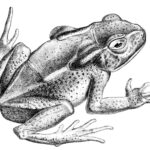
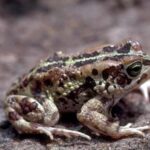
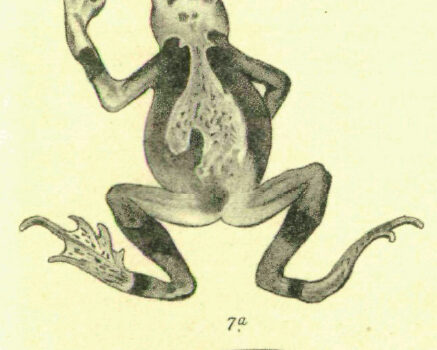
Upon encountering your first Armored Toad, your immediate reaction would likely pertain to its curious appearance. Measuring around 4–6 centimeters, the species showcases a modest stature; however, its vividly textured and robust appearance more than compensates. The skin of Peltophryne armata is rough, adorned with prominently raised dome-shaped glands and ridges lending credibility to its evocative armored name.
Coloration ranges subtly through shades of earthy brown, creamy gold, muted olive-green, and rust-orange. This palette is no coincidence, seamlessly camouflaging it against the mosaic patterns of rotting leaves, mud-packed stones, and decaying timber of the forest floor. Such cryptic coloring, coupled with tactile, wart-ridden textures, offers remarkable concealment against predators—a vital survival strategy among sharp-eyed birds and hungry mammals inhabiting the same forests.
More intriguing is its parotoid gland structures, secreting defensive toxic compounds—chemical protection evolved to discourage would-be predators. A brilliant evolutionary narrative unfolds in each gland, as challenges from countless generations carved these toads into armored vessels of survival, gentleness wrapped in unaffectionate splendor.
Behavior and Life Cycle: An Amphibian’s Journey#
Despite their delicate disposition, these diminutive inhabitants thrive through nuanced behaviors adapted intricately to their native ecosystems. Beginning at dusk, under twilight’s shielding veil, Peltophryne armata emerges to undertake their nocturnal exploits, pursuing invertebrate prey actively. Beetles, ants, termites, small snails, and other vulnerable targets constitute this toad’s nightly culinary traditions, ambushed quietly with their rapid, adhesive tongues.
A Charming Courtship#
Pronouncing its presence through rhythmic seasonal choruses, males vocalize delicate, trilling calls amid freshwater breeding pools, signaling prospective mates and marking territorial stakes. Following successful courtship, females deposit gelatinous strands of fertilized eggs intertwined with submerged vegetation, ensuring stable conditions for developmental safety.
As tadpoles hatch, delicately navigating waters rich in algae and microscopic food sources, they embark on an amphibian rite—metamorphosis. Through weeks of gradual transformation, limb development, and re-adaptations, they exit from waters, heralding adulthood’s terrestrial voyage, meticulously evolved to survive arduous transitions between watery genesis and forest maturity.
The Ecological Importance of Peltophryne armata#
Every species plays a crucial ecological role, harmoniously knitted within intricate habitat webs. Peltophryne armata serves both as predator and prey, maintaining balanced ecosystem integrity. It curtails insect populations, preventing outbreaks harmful to forest vegetation and human agriculture alike, becoming nature’s quiet pest manager pursuing insects abundant in warmth and humidity.
Equally, as prey, this toad supports survival of predatory birds, reptiles, and small mammals, critically sustaining local biodiversity balance. Few human observers might glimpse this modest amphibian ambassador at its nightly chores, but its biodiversity contributions reverberate unmistakably, accentuating its irreplaceable role across Hispaniola’s delicate ecosystems.
Threats and Conservation Status: Protecting a Fragile Jewel#
Amphibian populations globally grapple challenges, and Peltophryne armata remains no exception. Considered Vulnerable by the International Union for Conservation of Nature (IUCN), the species exemplifies vulnerability to pronounced anthropogenic pressures. Chief amidst these threats is habitat destruction due to deforestation and agriculture encroachment—modern-pressures accelerating habitat fragmentation and degradation across Haiti and the Dominican Republic.
Climate-driven anomalies exacerbating droughts or altering precipitation cycles equally imperil breeding success, dramatically impacting survival outcomes. Thankfully, local conservation groups and regional networks actively initiate restoration projects, develop protected habitat corridors, and engage communities toward sustainable resource management strategies, diligently safeguarding this amphibian gem.
Cultural and Scientific Significance#
Historically undervalued due simply to their modesty or peculiar appearances, today amphibians like the Armored Toad are fast gaining recognition as ecological barometers. Researchers increasingly spotlight their sensitivity toward environmental contaminants, climate variations, and emerging diseases; their health symbolizes ecosystem vitality—a pulse check indicating larger environmental trends humans cannot ignore.
Culturally, while myths and folklore surrounding this toad remain scant compared to more conspicuous fauna, its subtle charisma quietly permeates local communities, championed by conservation educators instilling respect and admiration among populations sharing their island homes. Promoting amphibians among students and nature enthusiasts nurtures valuable stewardship ethics extending to broader ecological awareness—a victory for society and amphibians alike.
Final Thoughts: Preserving Peltophryne armata’s Forest Home#
From the quiet understory to hidden freshwater pools by Hispaniola’s moonlight, every subtle maneuver of Peltophryne armata sings silently of ecological balance, habitat interdependence, and evolutionary grace. Protecting this toad and the environments they inhabit propagates not simply amphibian wellbeing, but the rich tapestry of biodiversity sustaining human and natural communities intertwined.
Join the journey by supporting local conservation, advocating habitat preservation, and embracing amphibians’ quiet greatness. In such devotion lies hope, woven harmoniously between human hearts and amphibian songs, ensuring this armored sentinel thrives resiliently for generations yet unborn.