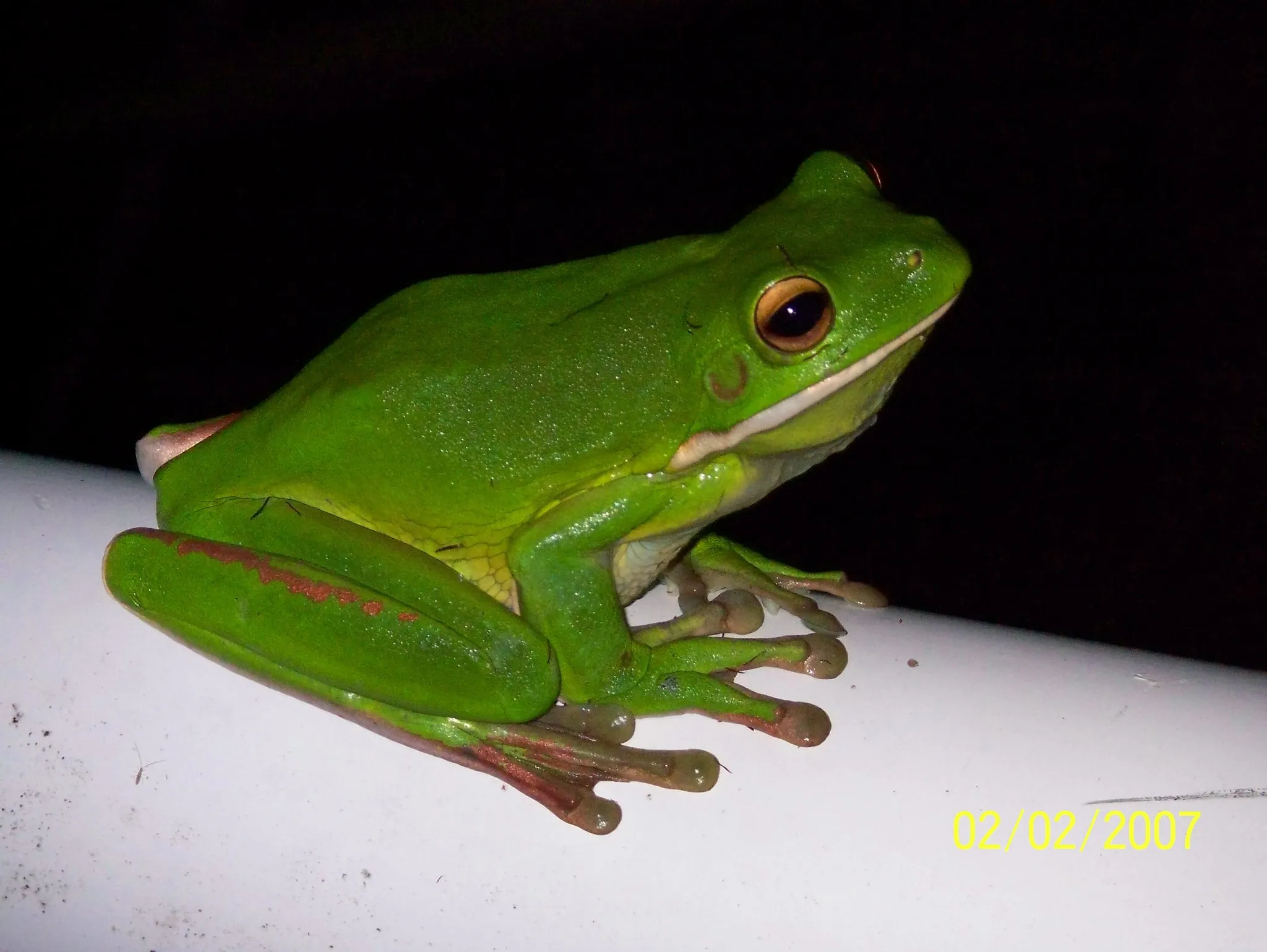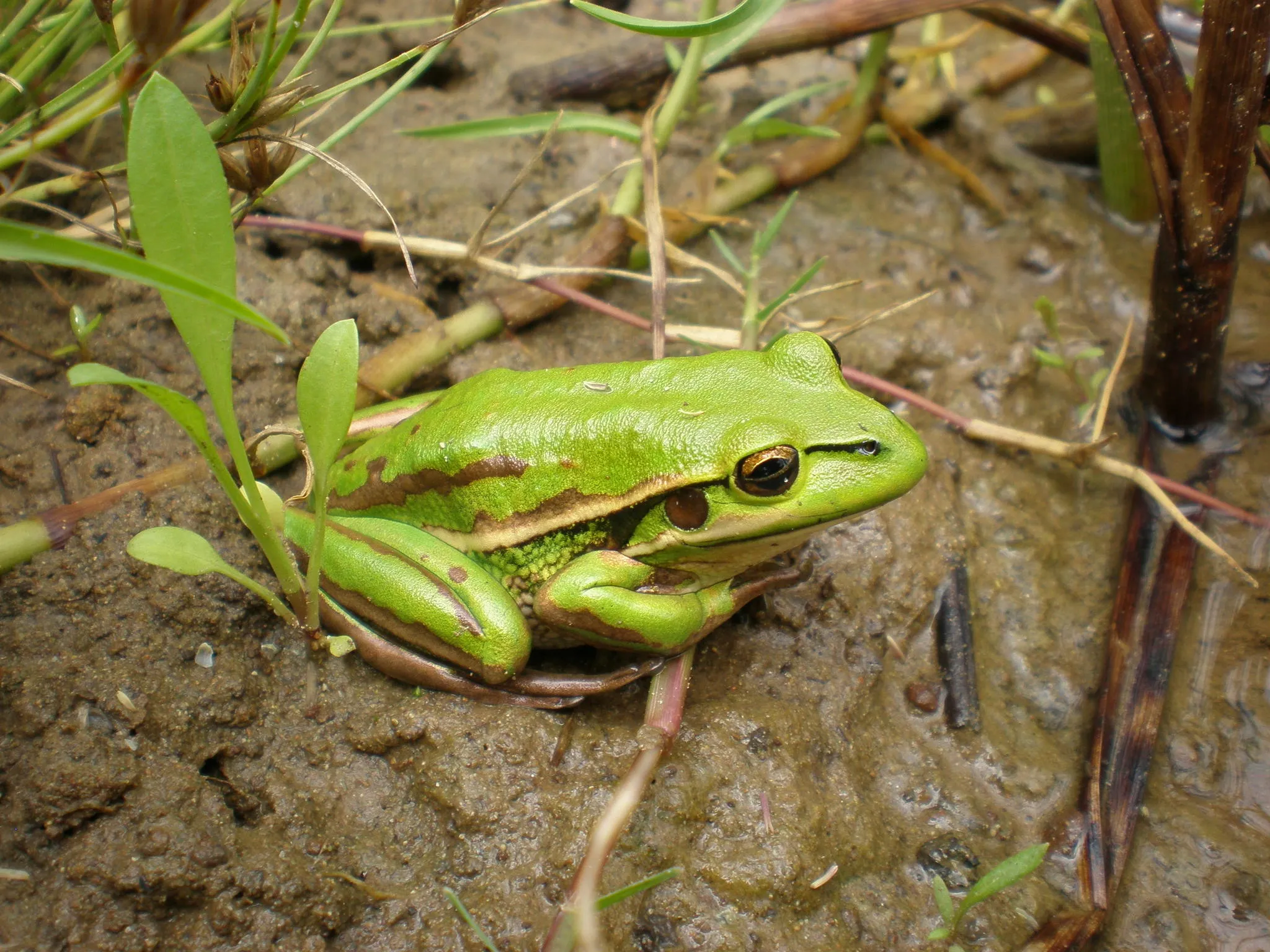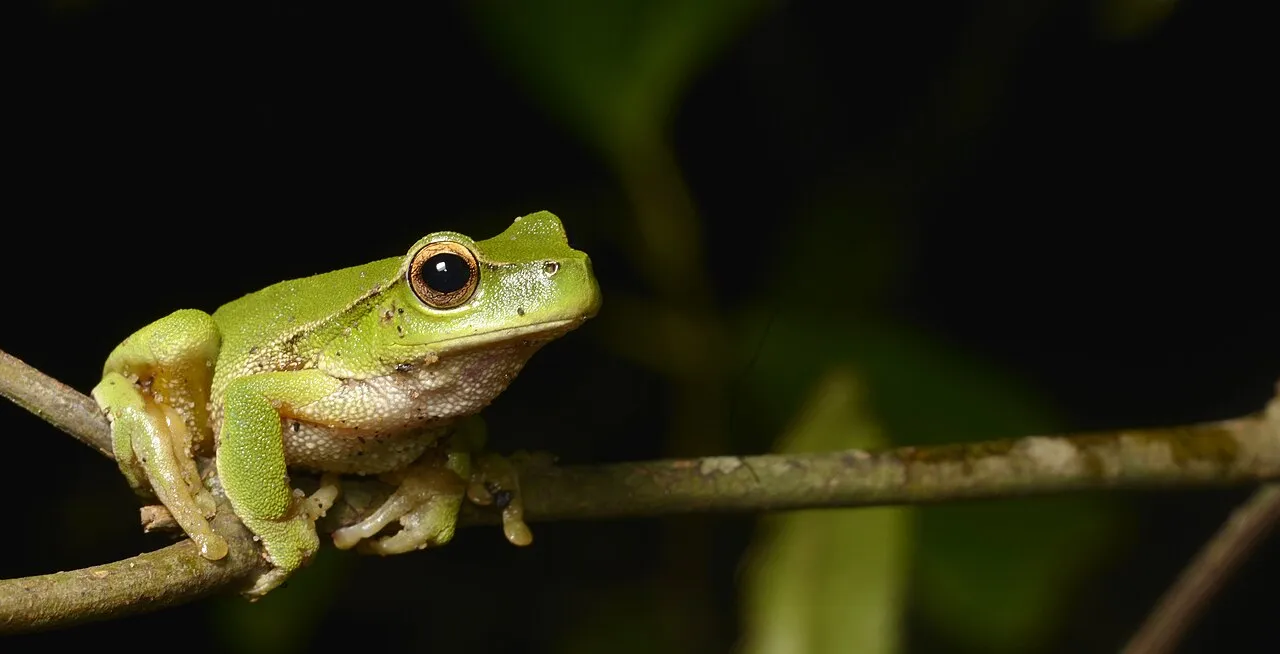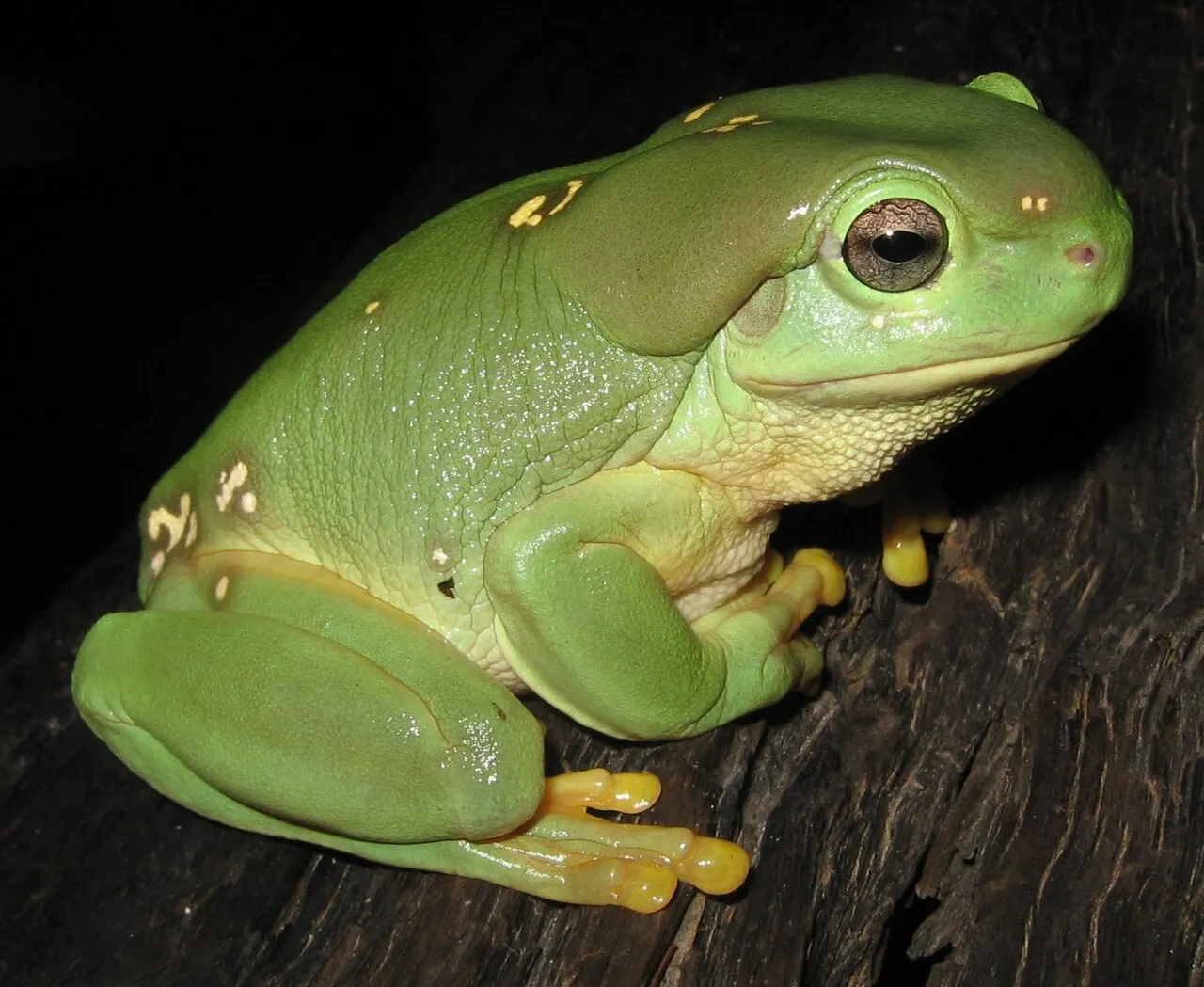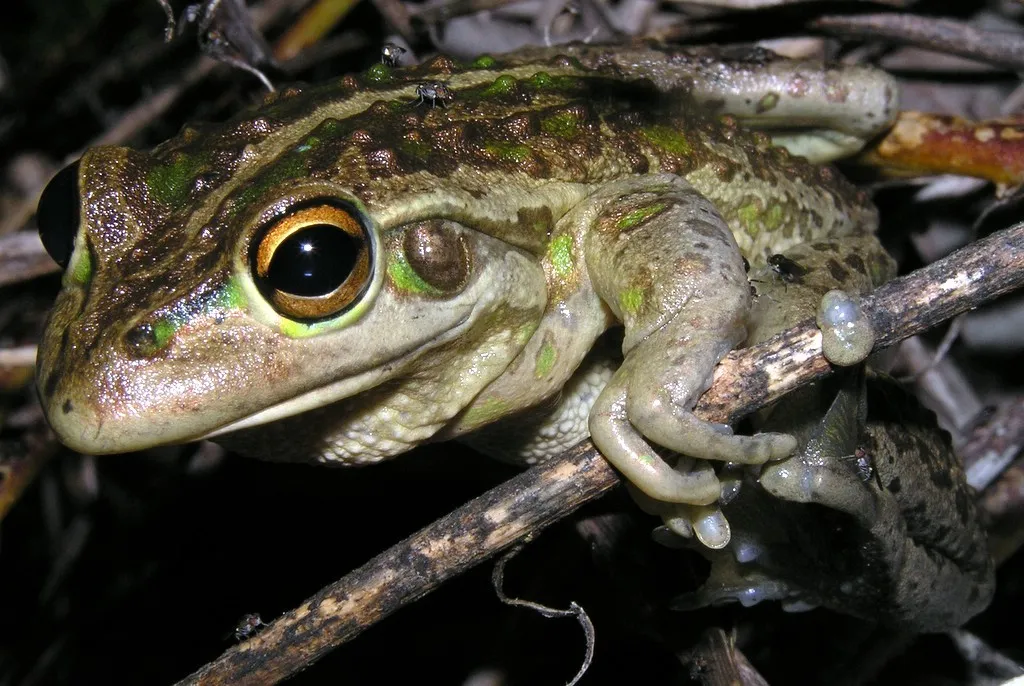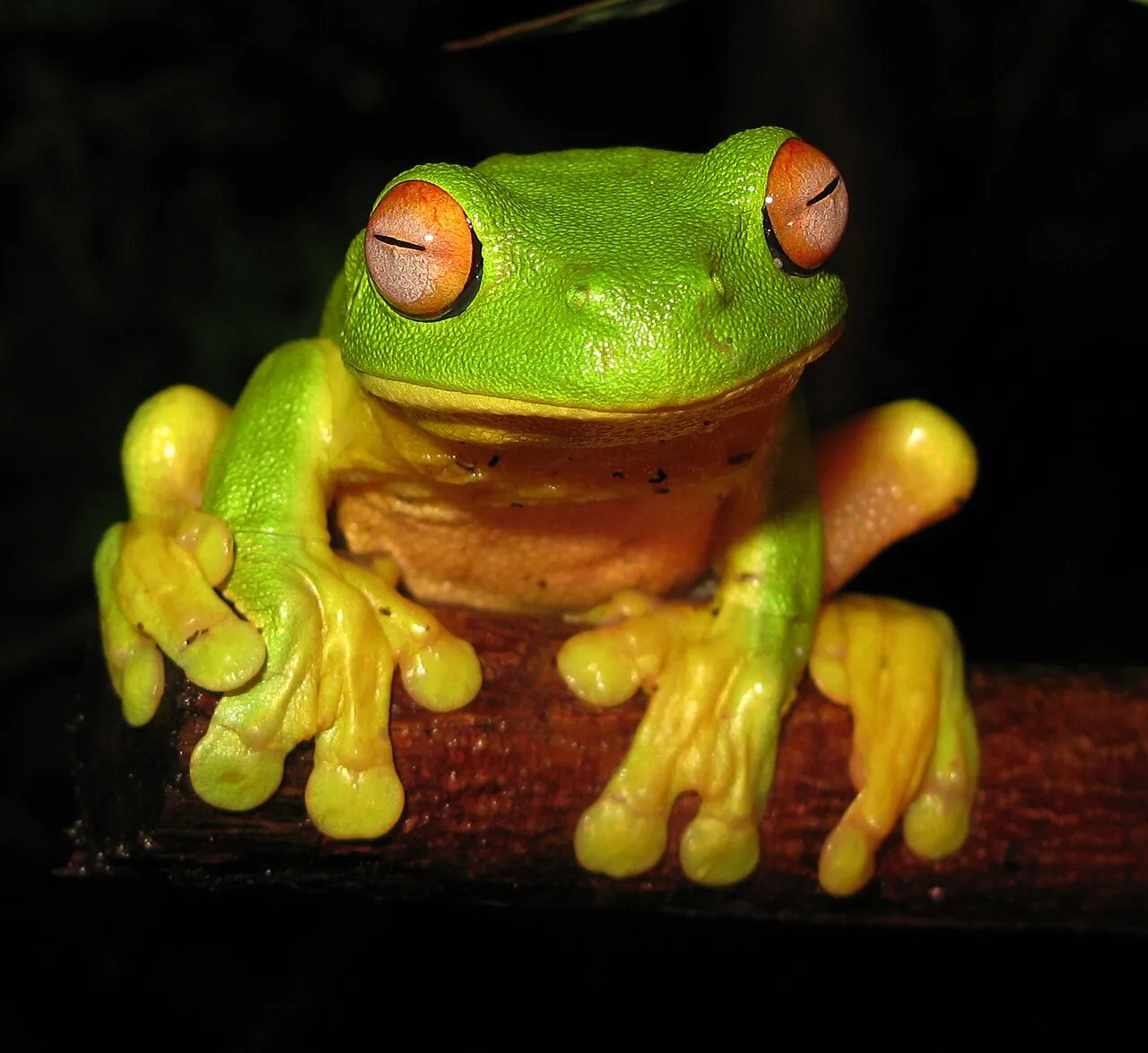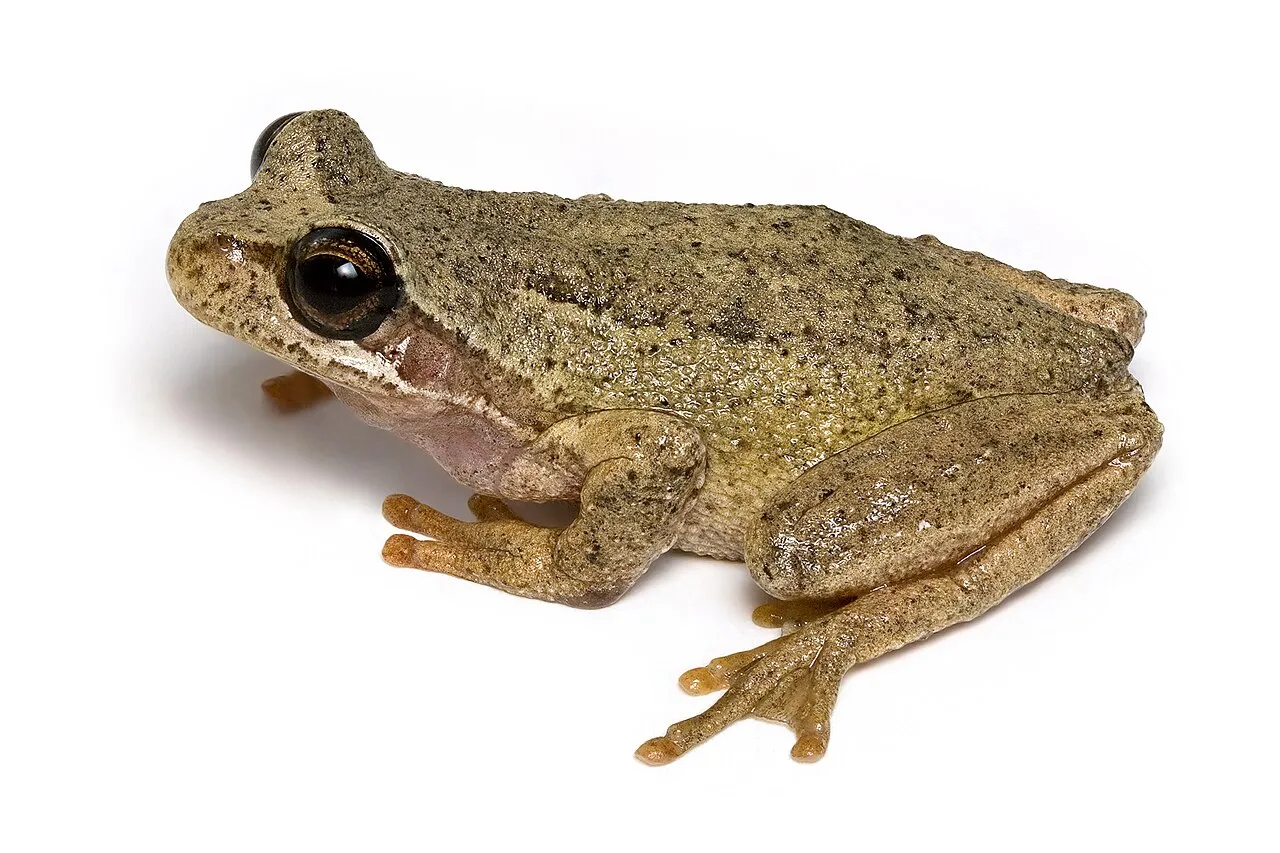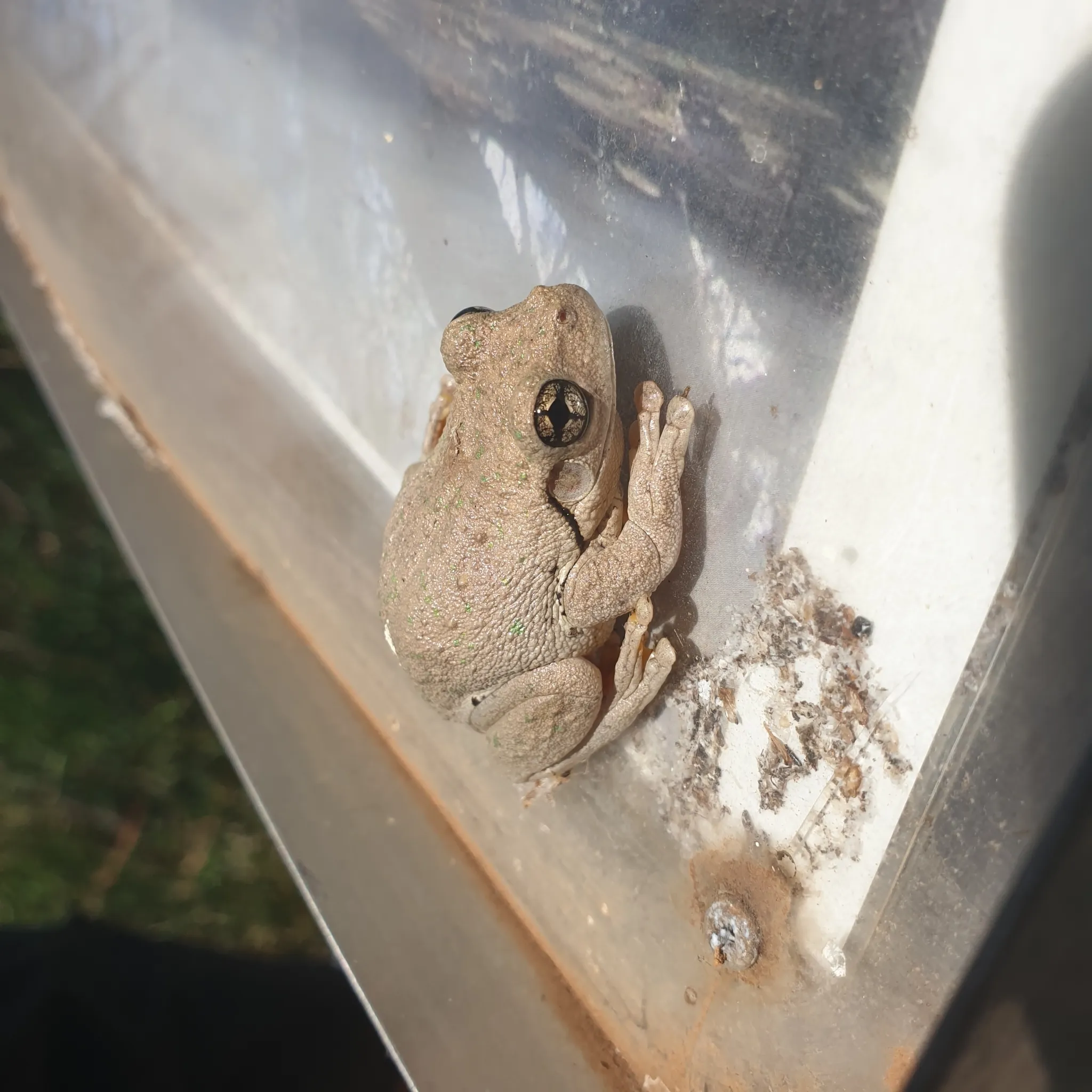
Litoria peronii, Peron’s tree frog, is a tree frog of the family Pelodryadidae that is endemic to Australia. Its other names include emerald-speckled tree frog, laughing tree frog and maniacal cackle frog. The specific name honours François Péron, a French naturalist and explorer1. The Australian Museum places it in southeast QLD, coastal and inland NSW, and in the ACT, southeast SA and most of VIC2.
Identification
Males measure about 44–53 mm in head-and-body length and females 46–65 mm1.
It is one of the most variably coloured frogs in Australia, able to change colour in less than one hour. The back is grey or light brown, with or without darker mottling, and carries several to many tiny emerald-green spots2, which increase in number with age1. NSW National Parks describes a shift from pale green-grey by day to reddish brown with emerald green flecks at night3.
A thin black line runs along the skin fold from behind the eye to the top of the arm. The pupil appears cross-shaped and the iris is silver, a pupil shape uncommon in the family Pelodryadidae1. The thighs are bright yellow, with black patches. The belly is cream coloured, and the male has a yellow throat. Fingers are half webbed and toes are fully webbed2, both with large discs.
Tadpoles reach a total length of up to 8.5 cm and are gold in colour, with three dark longitudinal stripes2.
Habitat and range
Within New South Wales the frog is found right across NSW, in forests, woodlands and shrublands. It also uses forests, woodlands, shrublands, and open areas, often far from a water source1. The NSW Department of Education adds open grassland, farmland, gardens and urban areas4 where there is suitable shelter and water nearby. NSW National Parks names parks where it is found, among them Bundjalung, Eurobodalla and Georges River national parks3.
Most of its niches are predominantly arboreal: tree hollows, cracks, and beneath flaking bark. By day it rests in tree hollows, fallen logs and beneath bushes3, and it may also shelter in pipes, gaps, under bark or beneath low plants4. It is commonly found near civilisation, suburban Sydney among such places, where it uses ponds as its breeding-water source1.
Behaviour and breeding
The frog is active at night and forages in trees and shrubs near creeks and lagoons, but it will venture further afield into open grasslands in search of insects3. Adults eat insects and other small invertebrates. It can often be seen on windows or near lights at night1, hunting the insects drawn to them. The frog is itself food for larger animals such as birds, reptiles and mammals. Large toe pads help it climb trees, shrubs, reeds, rocks and smooth surfaces, and its toes are strongly webbed4, which helps it move in water.
The call is a high-pitched cackle1, the source of the names laughing tree frog and maniacal cackle frog. NSW National Parks calls it drill-like, heard during spring and summer3, when males gather near water for the breeding season. Males sometimes call from pipes or drains4, where the hard surface can make the sound seem even stronger.
The species breeds during spring to summer after rain. Eggs are laid in small groups or singly, attached to twigs or vegetation under the surface of the water in dams, ponds, creek pools, swamps, and even in abandoned swimming pools. The tadpoles often swim near the surface and take around three to four months to develop into frogs2.
Conservation
The 2022 IUCN Red List lists the species as Least Concern5. Within New South Wales, NSW National Parks gives its conservation status as Protected3. In Australia it may be kept in captivity/zoo with the appropriate permit1.
For anyone who finds one, the NSW Department of Education advises to watch it quietly and do not handle it: frogs have sensitive skin, and sunscreen, insect repellent, soap or chemicals on human hands can harm them. The same fact sheet suggests keeping waterways and stormwater drains clean and leaving logs, rocks, bark, leaf litter and native plants in place4 as shelter.