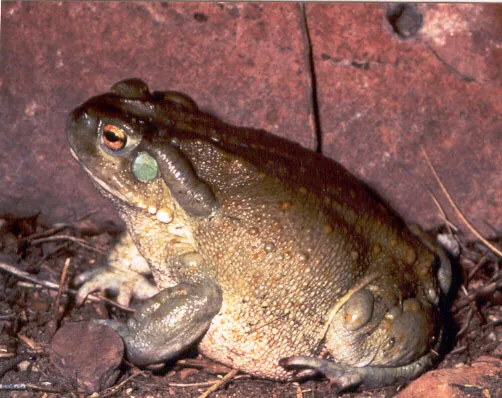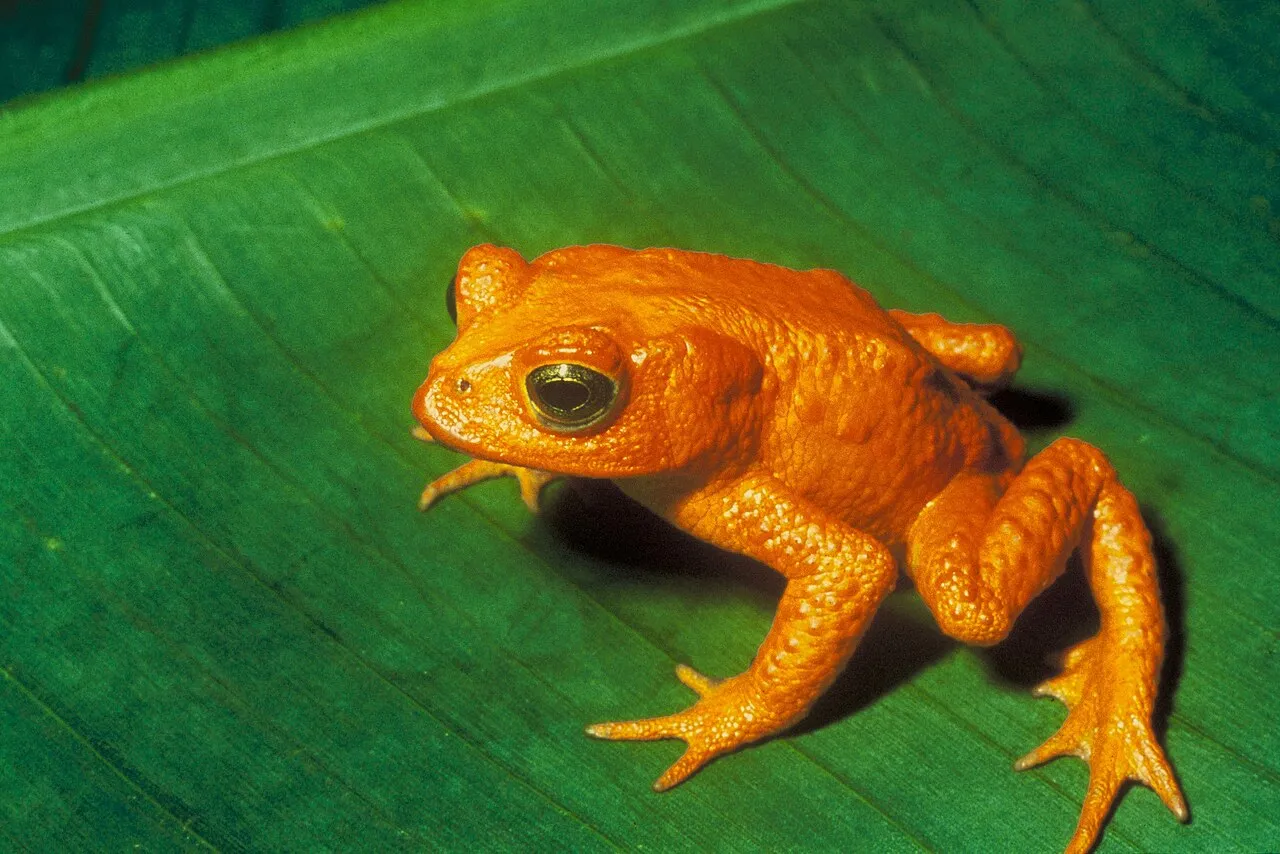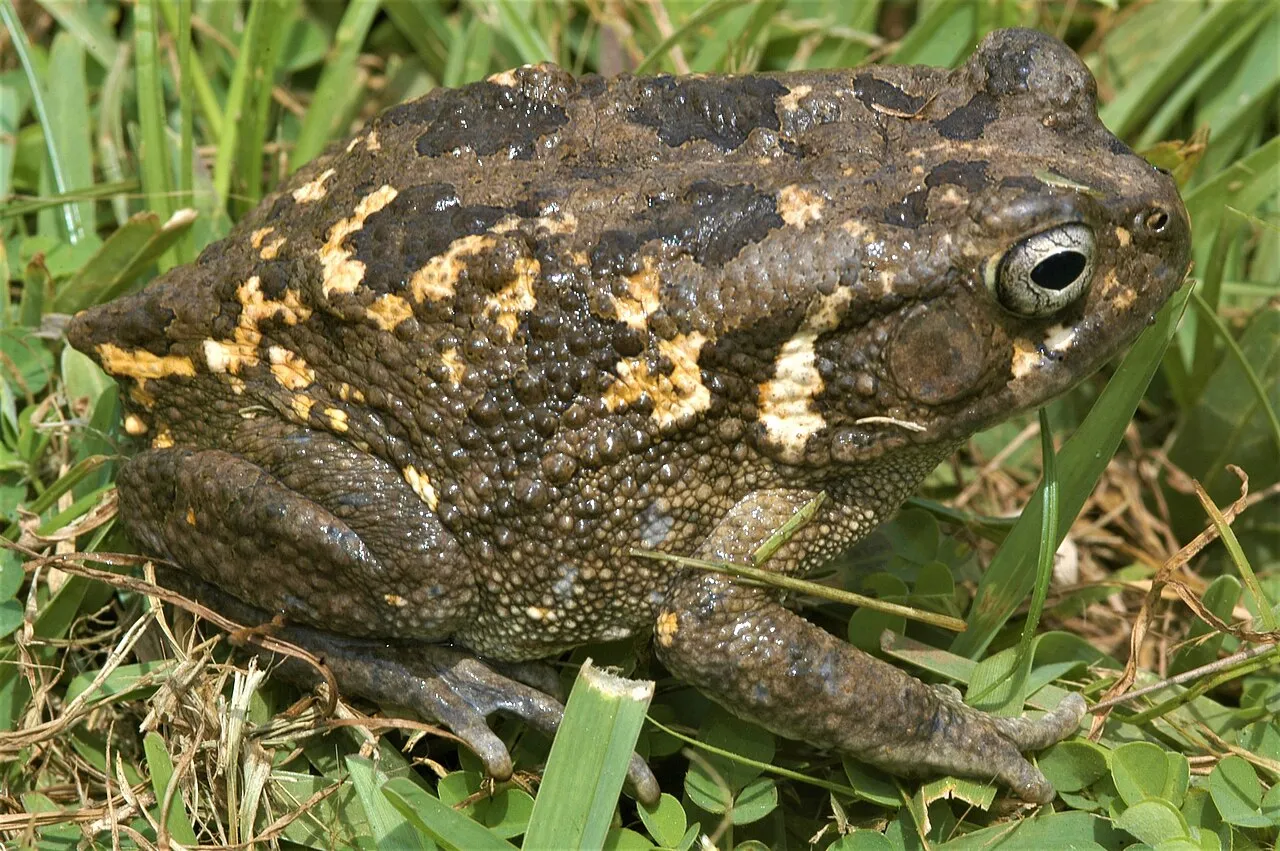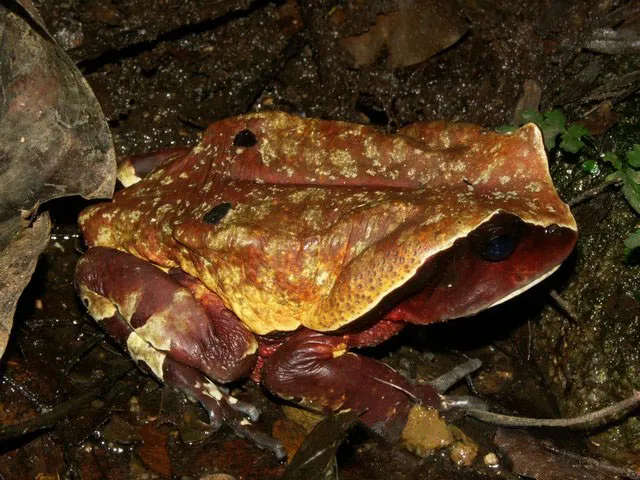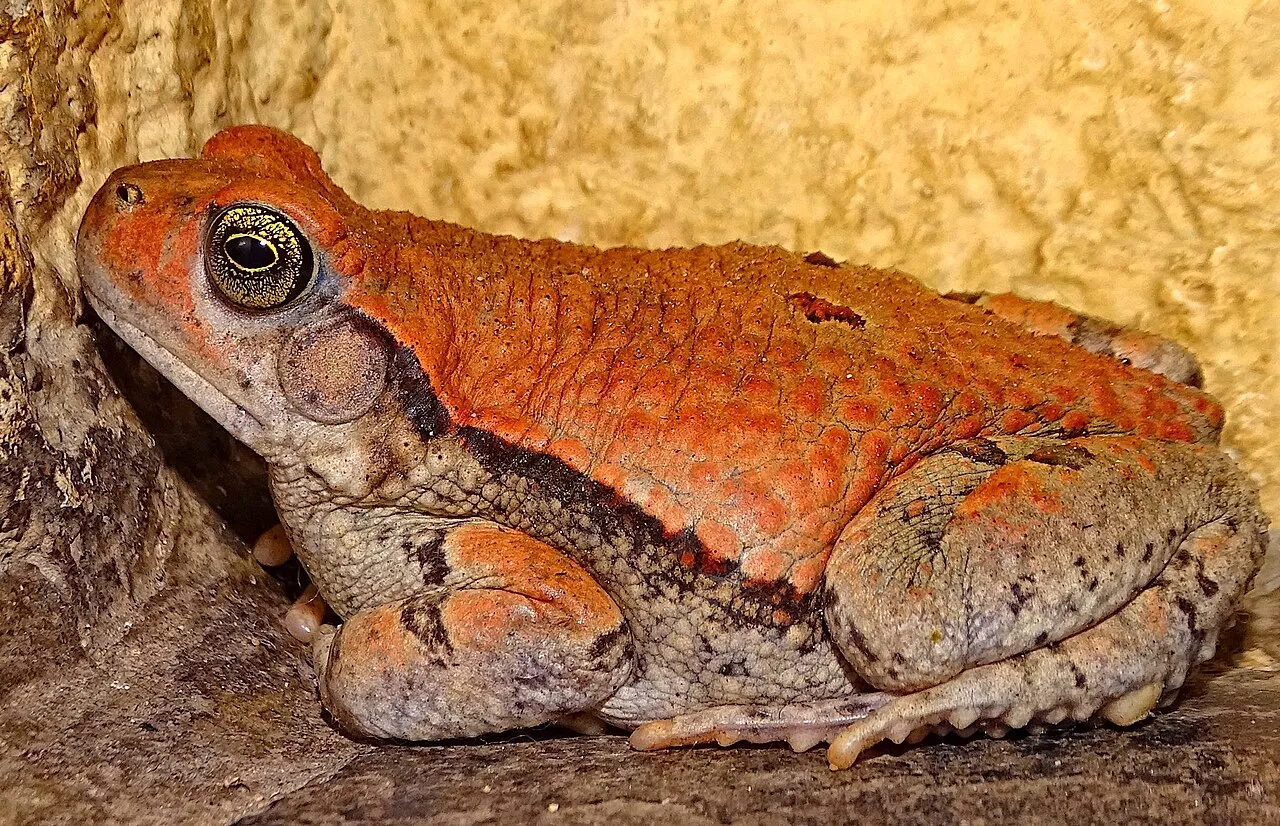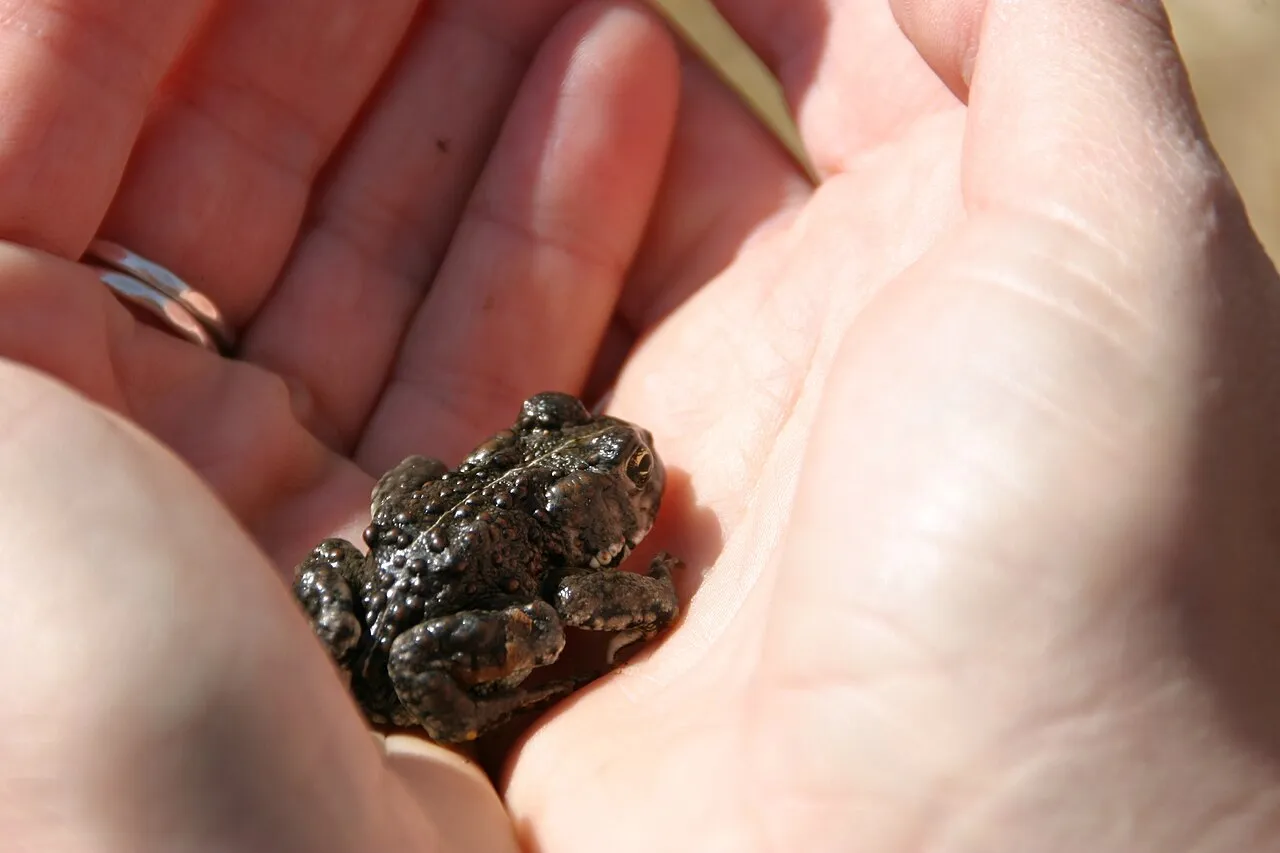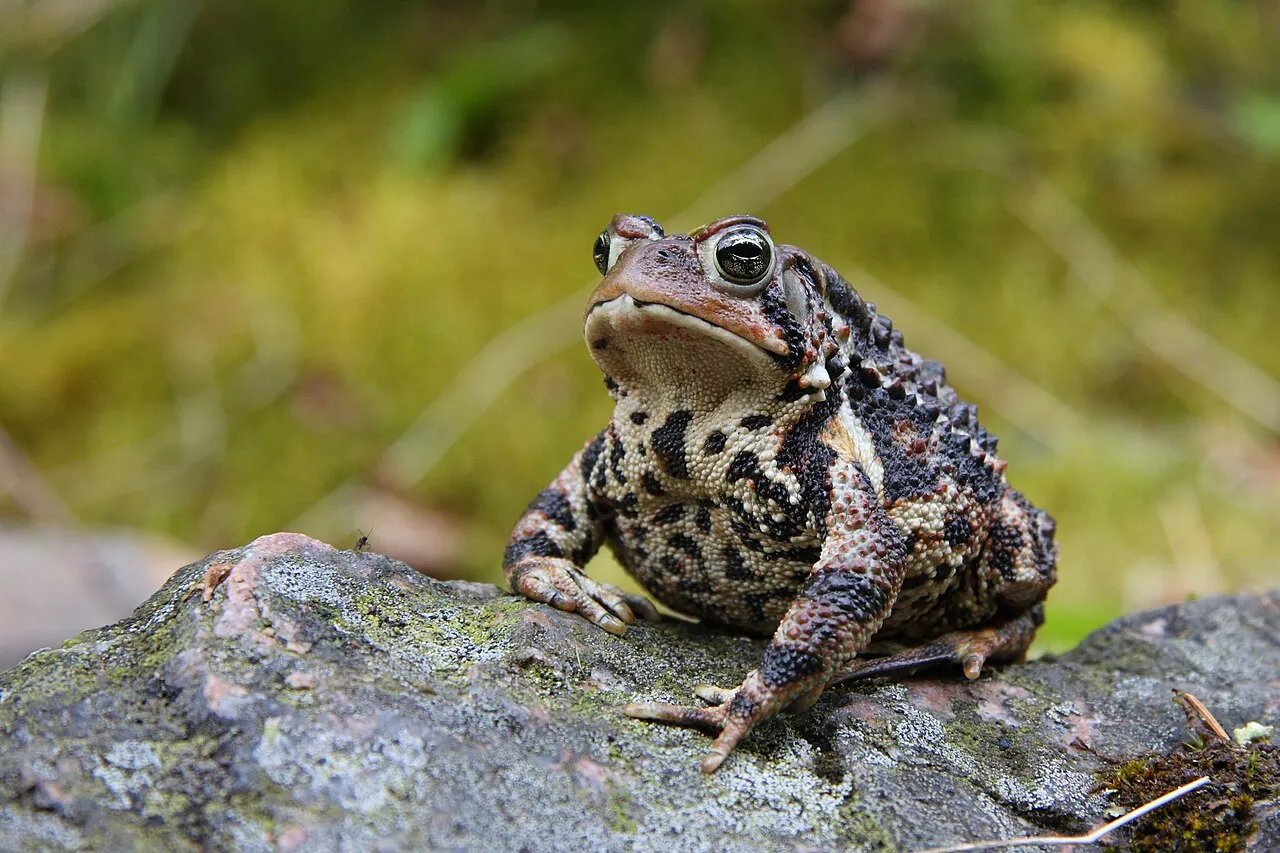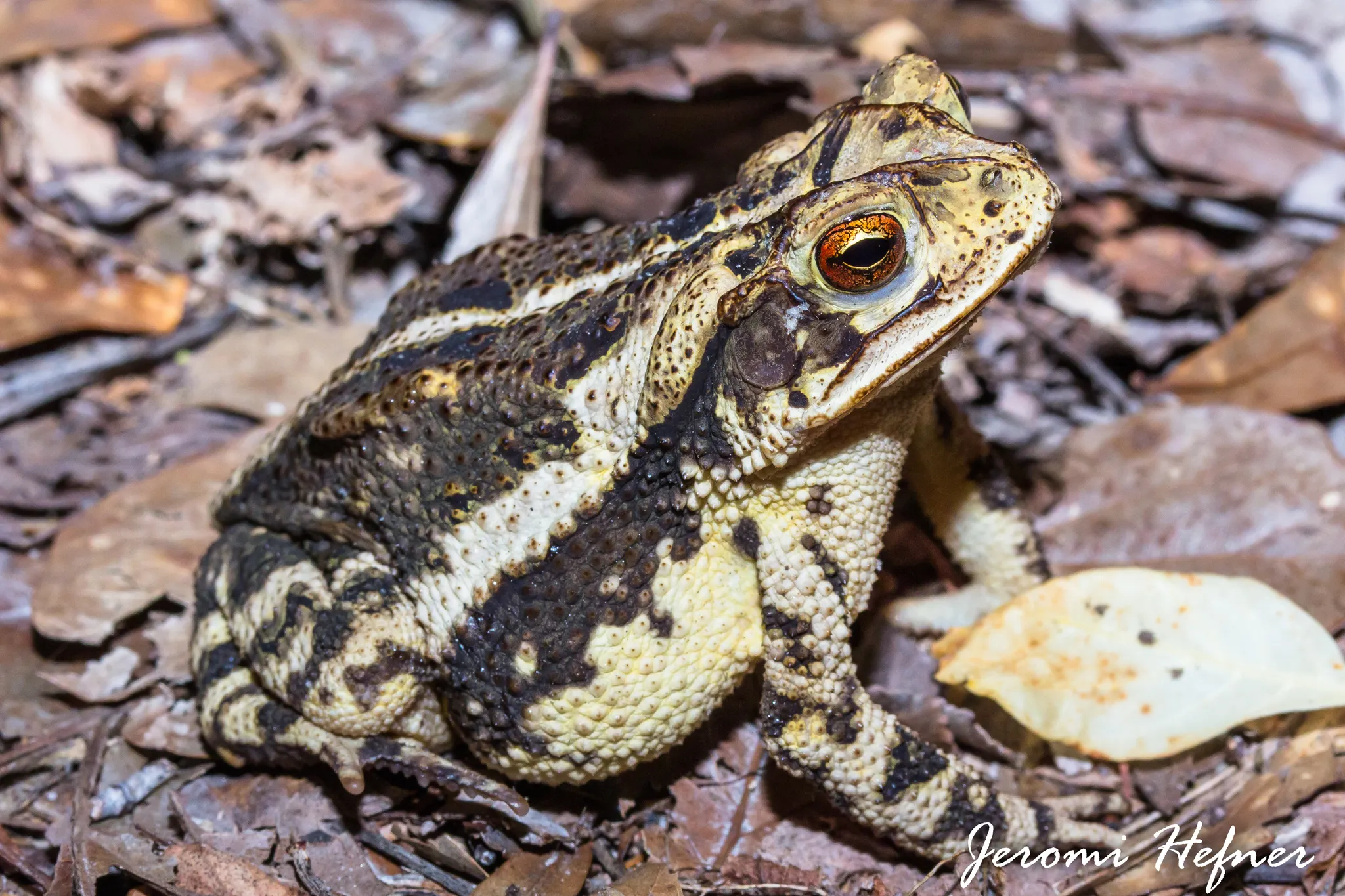
The Gulf Coast toad, Incilius nebulifer, also called the coastal plains toad, is a toad of the family Bufonidae. It lives on the coast of the Gulf of Mexico from Veracruz in Mexico to Mississippi1 in the United States. A 2015 review in Zootaxa calls it an abundant and widespread species2 within its range in the United States and Mexico.
Identification
It is a large toad: the same review gives females up to 125 mm and males to 98 mm3 snout-vent length. As a true toad it produces bufadienolides, which are made in granular skin glands and often concentrated in two conspicuous parotoid glands on the top of the head; these compounds aid in its antipredator defense. A study of lab-raised toadlets detected only three bufadienolide compounds4 in them.
Habitat and range
The toad uses a wide range of habitats, both natural and human-altered1, among them coastal prairies, barrier beaches and towns. A paper in Frontiers in Ecology and Evolution describes it as native to central and eastern Texas and northeast Mexico, with noteworthy range expansions to the north and east in the United States. The same paper states that these expansions are strongly associated with disturbed habitats such as urban areas, but could also be due to warmer temperatures, and its results suggest the toads are using urban areas as dispersal pathways4.
Behaviour and breeding
Breeding takes place in various kinds of pools, including roadside and irrigation ditches1. That study collected its egg strands in San Marcos, Texas, on 26 March 2020 and 7 April 2020; in the lab the eggs hatched 1–2 days after collection and the tadpoles were free-swimming after a week. The developmental thermal tolerances it cites for the species run from a low of 18–22°C to a high of 34–38°C. Tadpoles raised in warmer water developed more quickly and were smaller in mass after metamorphosis. When disturbed, the toad’s initial response is crypsis rather than fleeing4.
Conservation
The IUCN lists Incilius nebulifer as Least Concern5 in Red List version 2022.2, and the species is described as widespread and common1 and not threatened. While most amphibian populations are declining, its populations are increasing, as stated in 2023. Studies in Louisiana found that its tadpoles decrease the fitness of native amphibian tadpoles4 where it has spread, which makes the toad a conservation concern.
Similar species
Incilius valliceps was once treated as the same species: I. nebulifer was removed from the synonymy of Incilius valliceps in 20001. The Zootaxa review lists only those records and publications referable to I. nebulifer2, to help researchers tell work on it from work on I. valliceps, with which it formerly was considered to be conspecific.