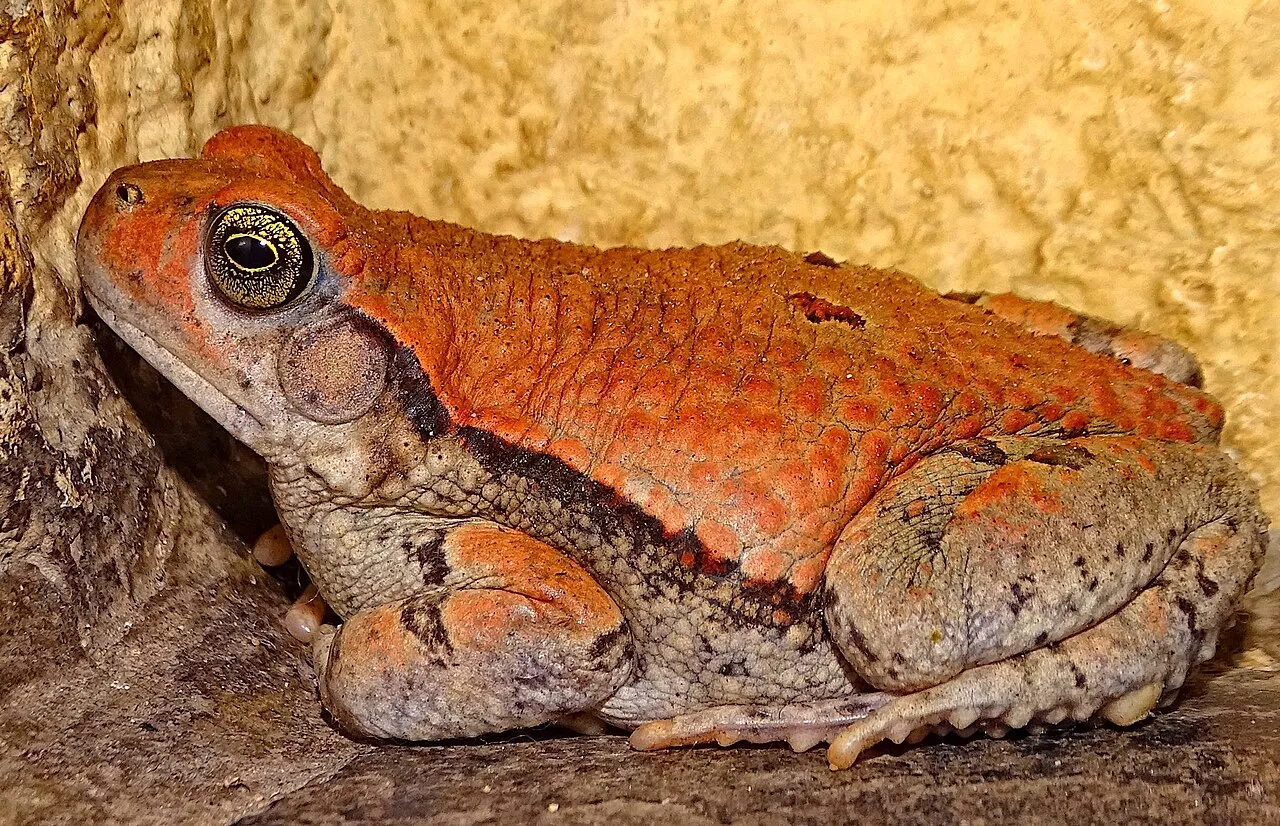
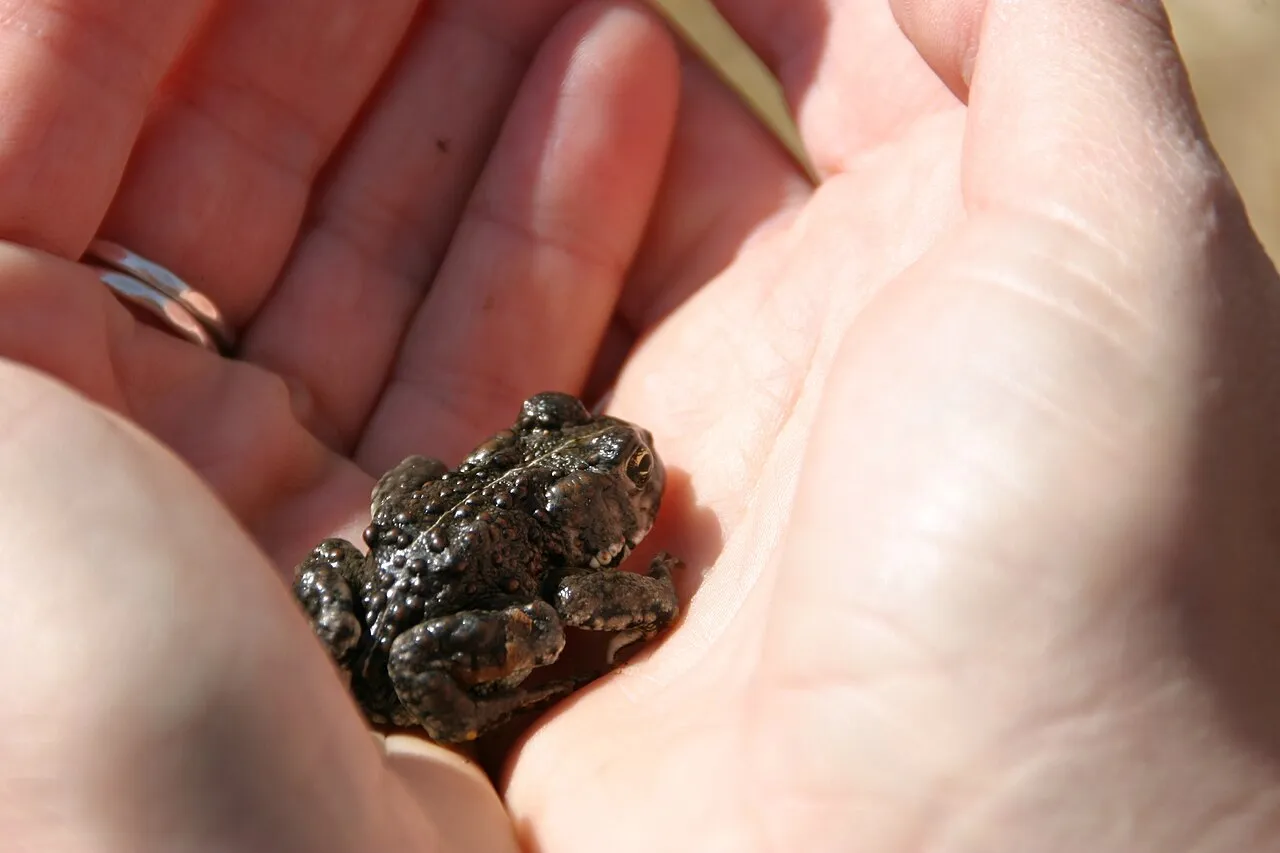
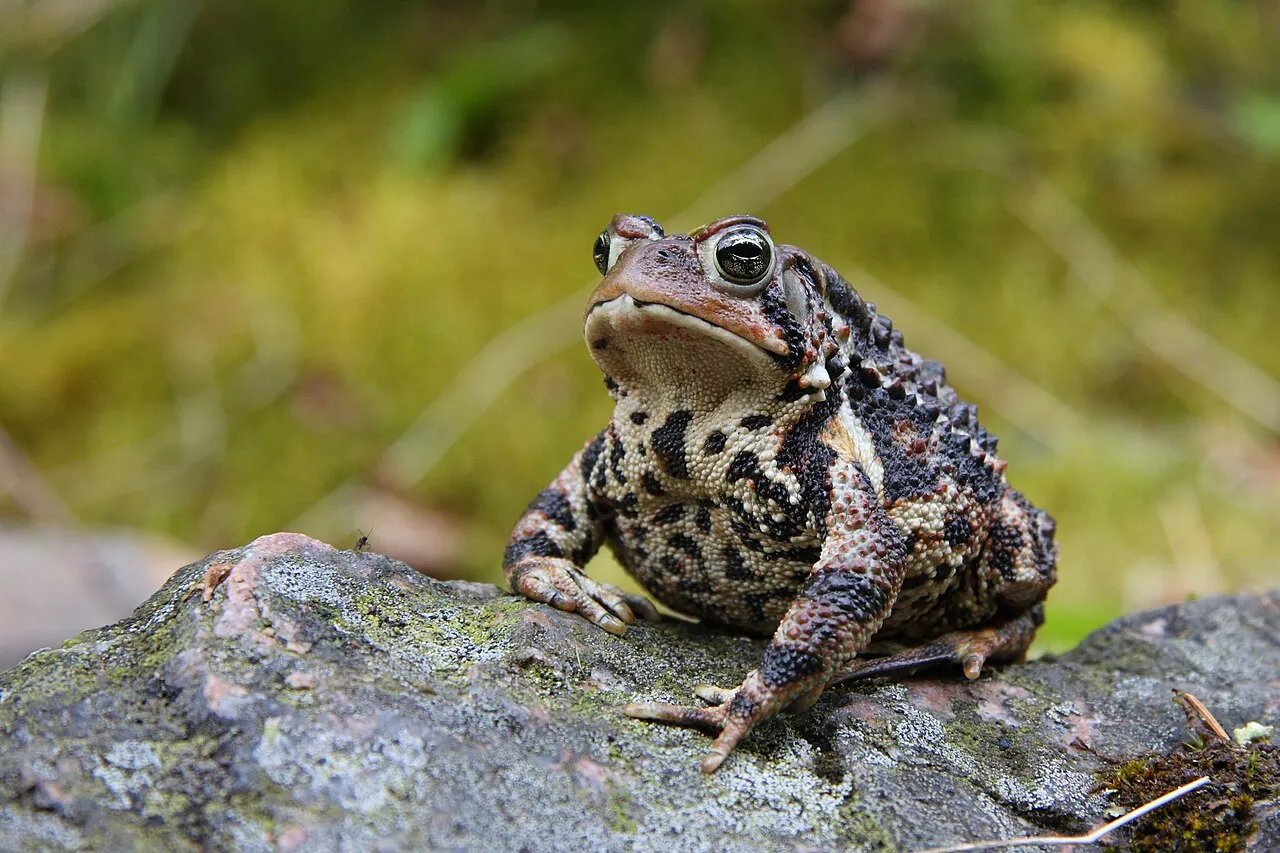
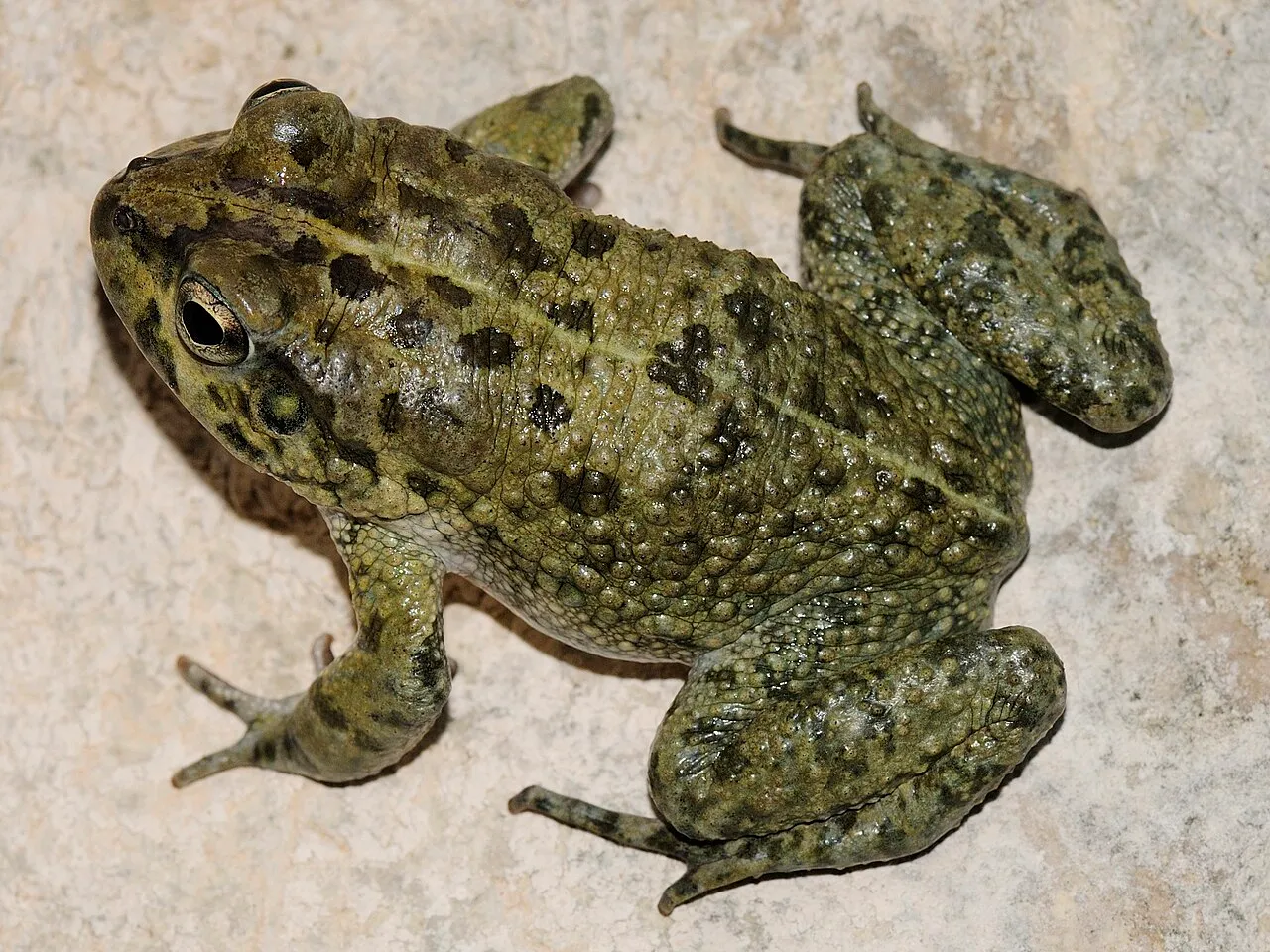
Incilius ibarrai, the Jalapa toad, is a large bufonid toad confined to the highlands of central and southern Guatemala and adjacent western Honduras, recorded in Honduras from the departments of Intibucá, Lempira and Ocotepeque. It belongs to a cluster of Mesoamerican toads once lumped together as forms of a single species and later split apart in a 2005 revision based on specimens from across the region3; within that group, Incilius ibarrai is the largest species. Stuart described it in 1954 from a holotype held under catalogue number UMMZ 1080002, and it takes its name from Jorge Alfonso Ibarra (1921-2000)1, a former director of Guatemala’s National Natural History Museum.
Identification
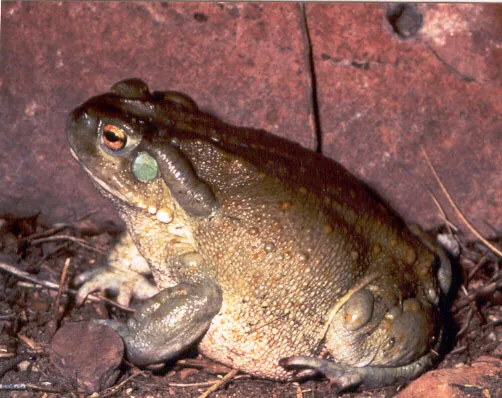
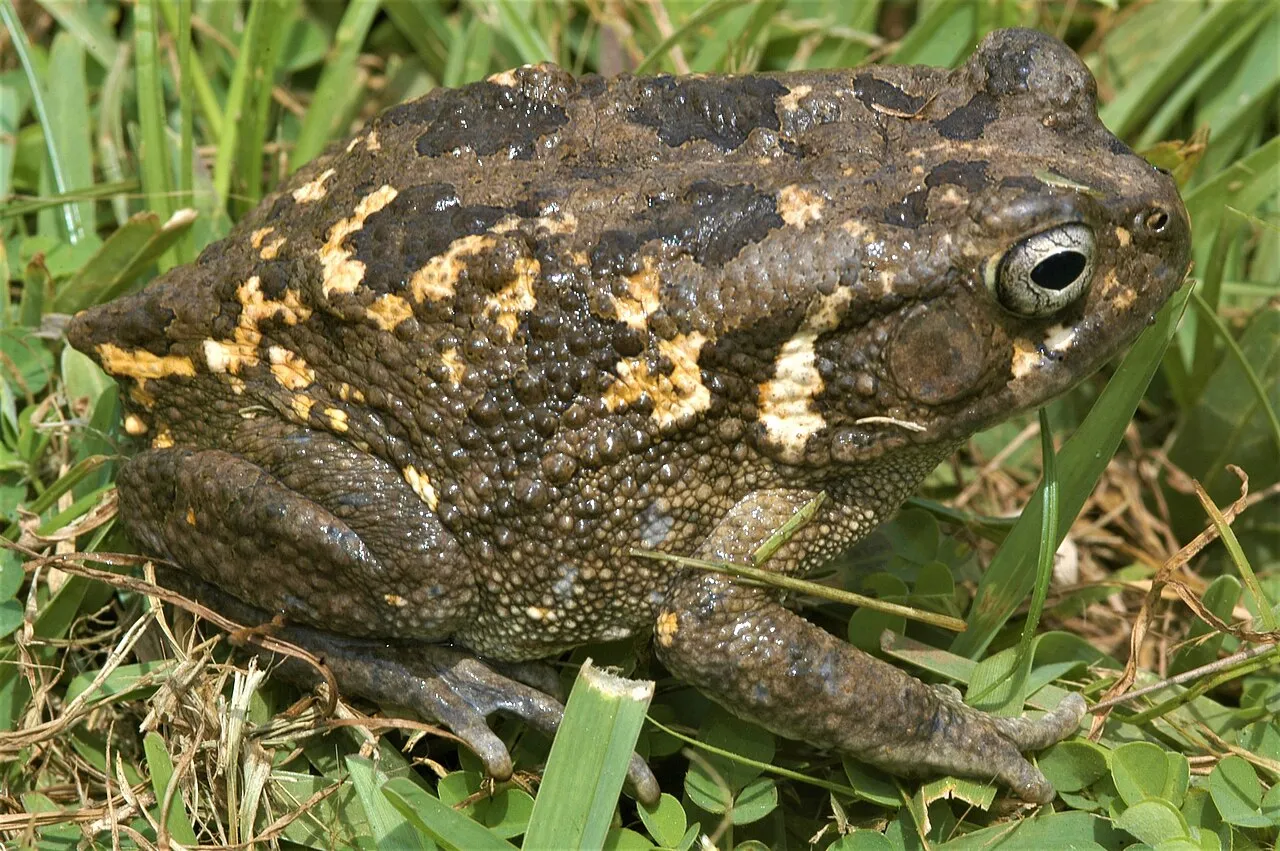
Snout-vent length runs 43 to 82 mm in males and 61 to 94 mm in females, matching the maxima of 82.4 mm and 94.4 mm given in the 2005 revision. The snout is weakly pointed from above and rounded from the side, and the head carries well-developed cranial crests, the parietal crests low, thin and sharply angled toward the midline and the supra-tympanic crest large and bulbous. The tympanum itself measures about 45% of the orbit’s diameter in males and 40% in females. The parotoid glands are enlarged, described in the 2005 revision as ovoid and roughly twice the length of the eyelid2. The toes are one-third to one-half webbed1.
Skin texture differs between the sexes: the middorsal tubercles are sparse and rounded in males, becoming spine-tipped toward the flanks in females2. In preservative, the toad is pale yellowish-gray along the back, becoming more yellow toward the sides, fading to pale yellow on the underside1.
Habitat and range
Incilius ibarrai lives in pine-oak forest and premontane to lower montane moist forest, at elevations the 2005 revision puts at 1,360 to 1,980 m in Guatemala2, extended to 1,360-2,020 m1 once the higher Honduran localities are counted.
Behaviour and breeding
The toad breeds in highland ponds, marshes and wet meadows1. Its advertisement call differs from its relatives in the same group: call recordings made by earlier researchers and tabulated in the 2005 revision3 give the call of Incilius ibarrai a lower dominant frequency and a slower pulse rate than those of its closest relatives. Its tadpole was described separately in 20012, ahead of the 2005 account of the adult.
Conservation
A 2020 IUCN Red List assessment lists Incilius ibarrai as Least Concern4. Even so, it is threatened by habitat loss, and chytridiomycosis, a fungal disease, is a possible further threat that may have caused the decline of some once-robust populations1 in the Sierra de las Minas biosphere reserve.
Similar species
Incilius ibarrai is the largest member of its species group and is diagnosed against its closest relatives mainly by size and by its cranial crests. Against Incilius coccifer, the 2005 revision3 describes I. ibarrai as larger, with more massive cranial crests and a distinctly bulbous supra-tympanic crest that I. coccifer lacks, and with parotoid glands 1.5 to 2 times the eyelid’s length, against 1 to 1.5 times in I. coccifer. Its closest look-alike by that account is Incilius porteri, separated mainly by size, males of I. porteri reaching only about 55 mm SVL against 82 mm in I. ibarrai, and by the tadpole, whose tail muscle is uniformly pale brown in I. ibarrai, against cream heavily flecked with brown2 in I. porteri.