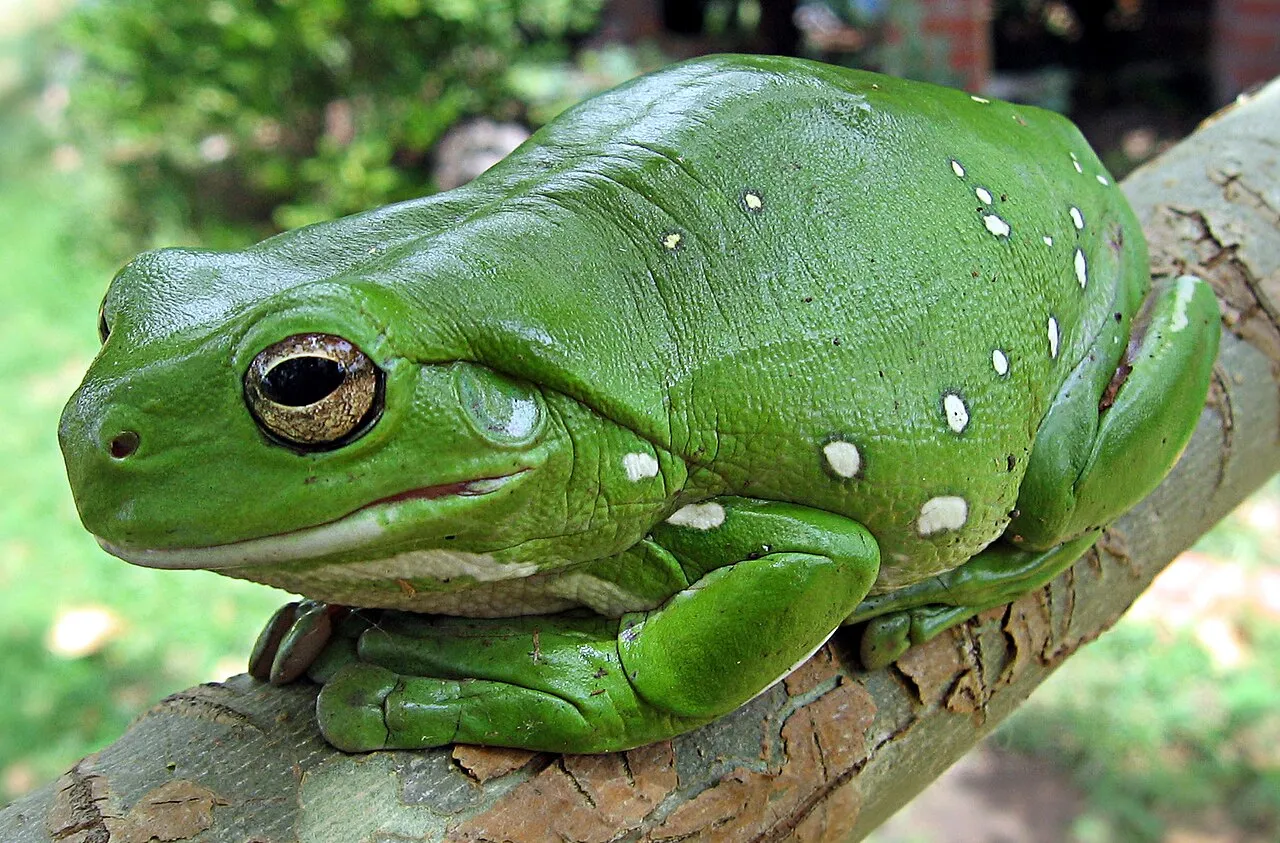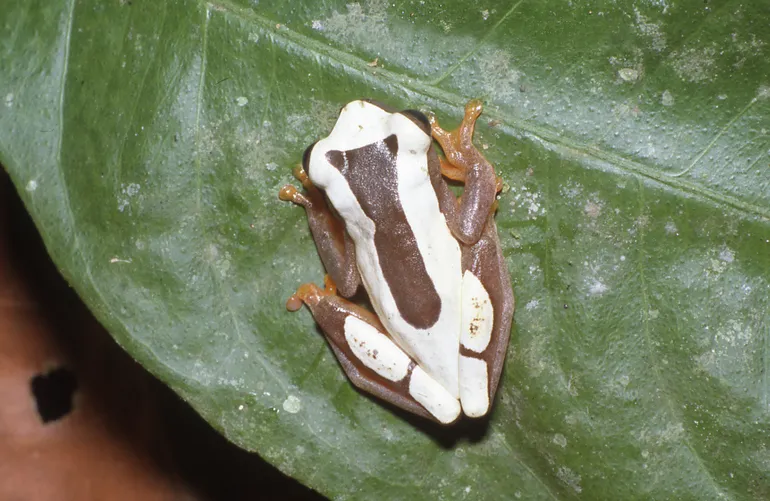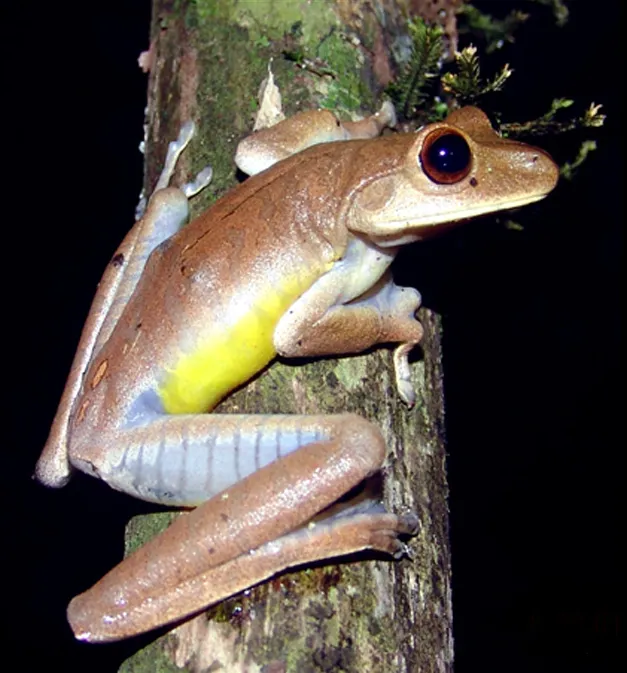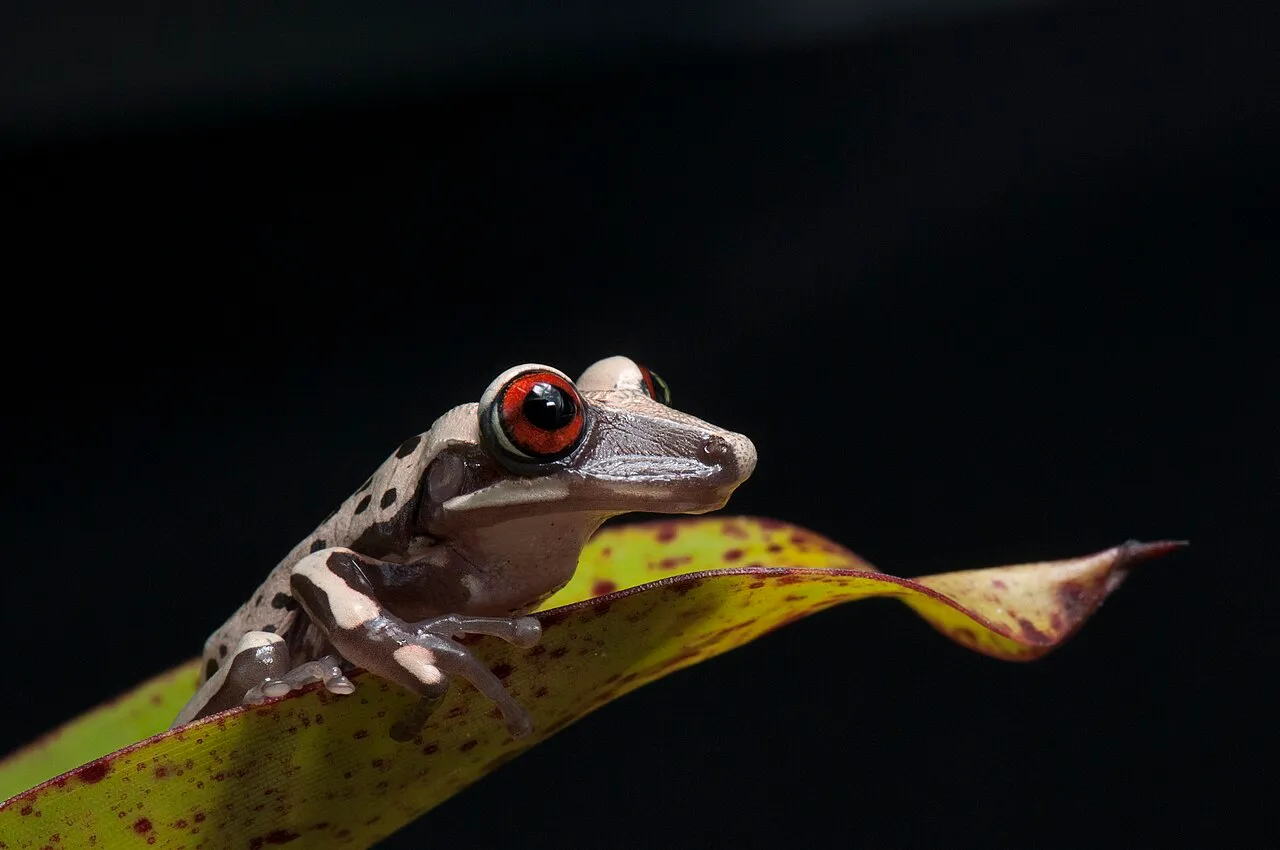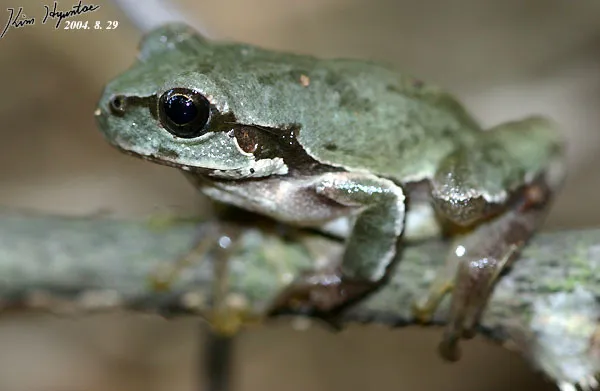
Dryophytes japonicus, the Japanese tree frog, is a species of anuran native to Japan, China and Korea, often listed under the synonym Hyla japonica in the family Hylidae. A 2014 study of its choruses calls it one of the commonest frog species in Japan2. It can survive extreme cold: some individuals showed cold resistance as low as −30 °C for up to 120 days1.
Genetic data published in 2016 suggested that the frog may actually be two separate species, with evolutionarily distinct groups in Japan, the Korean peninsula and eastern Russia. In 2025, populations in Japan east of Kansai and on Sakhalin were reclassified as Dryophytes leopardus1. Albert Günther named the species from a specimen potentially collected in 1826 by Philipp Siebold and Heinrich Bürger, whose collecting locality was recorded only as “Japan”3.
Identification
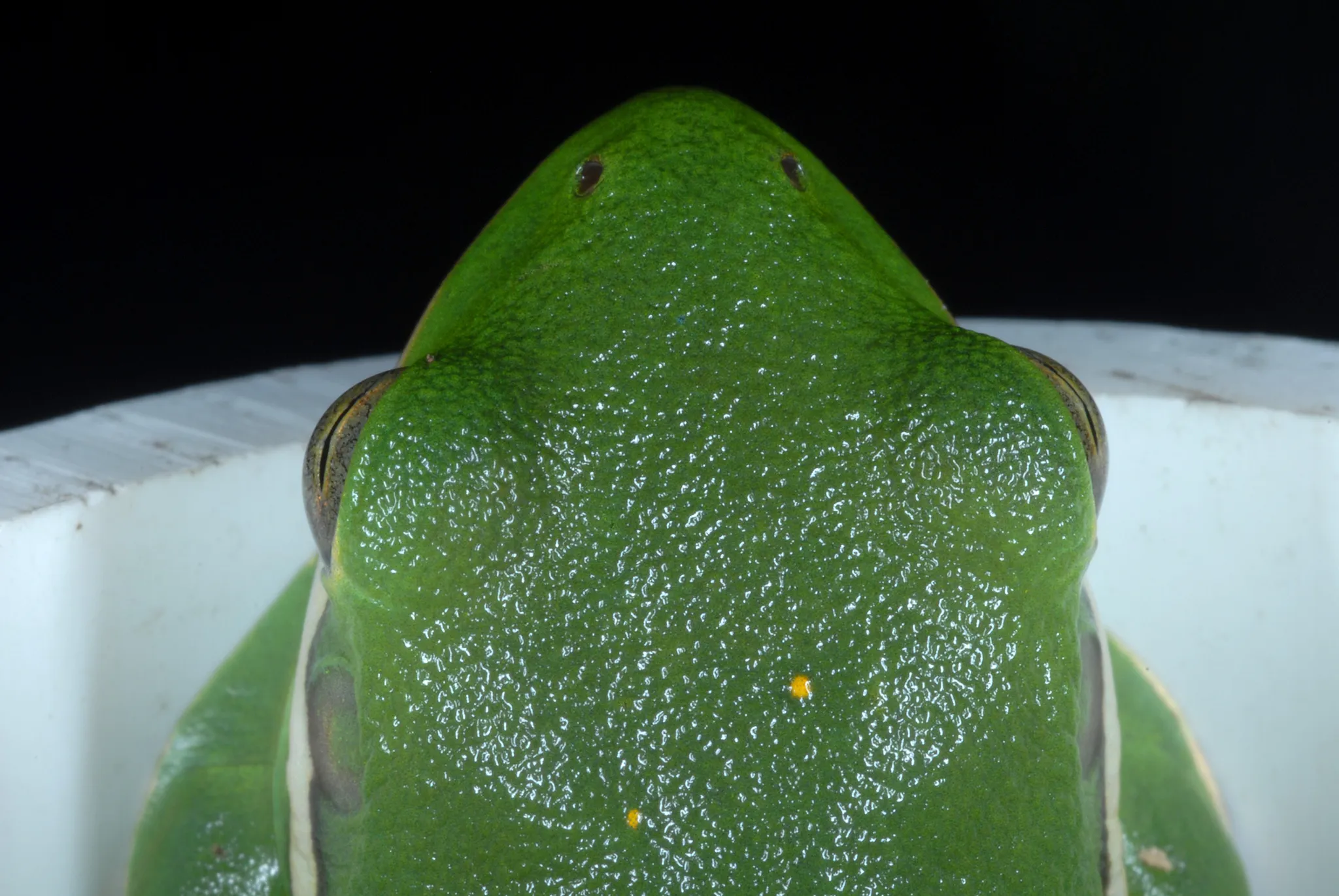
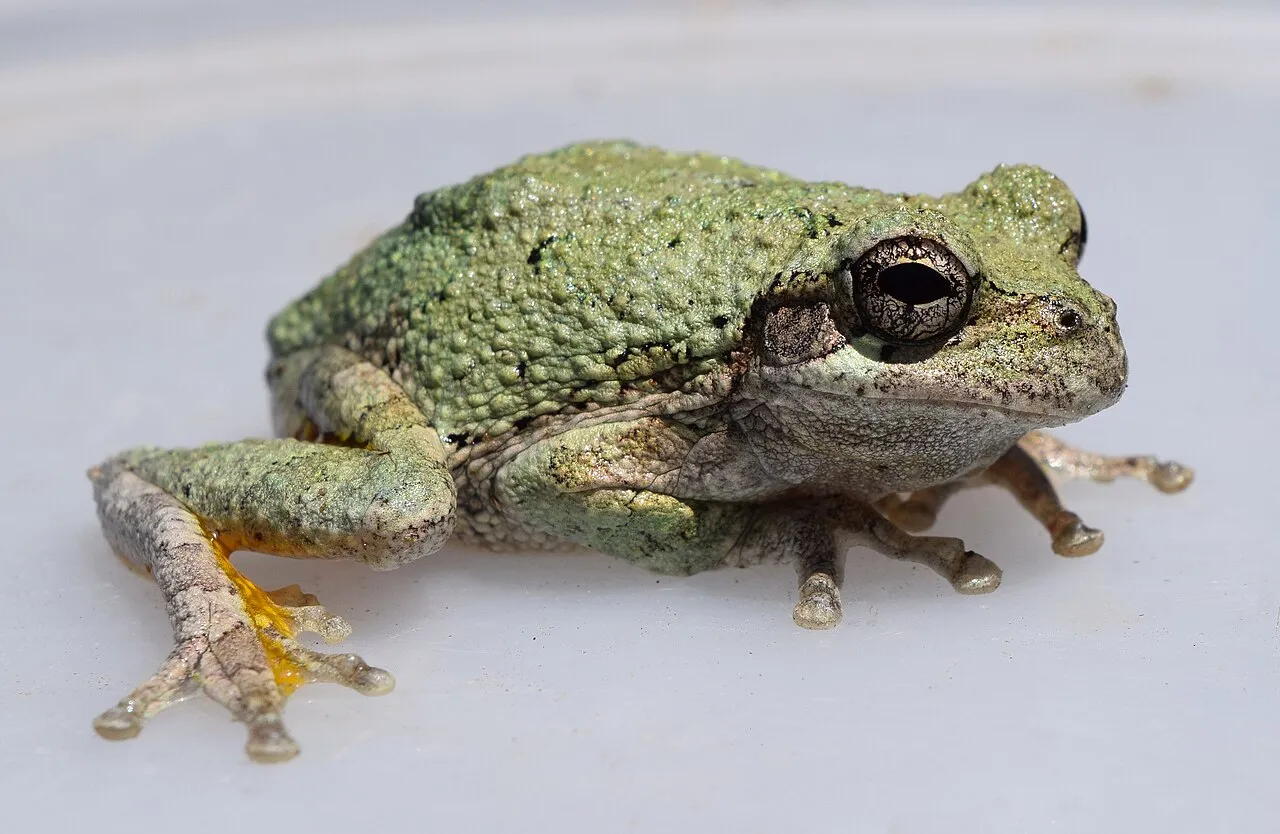
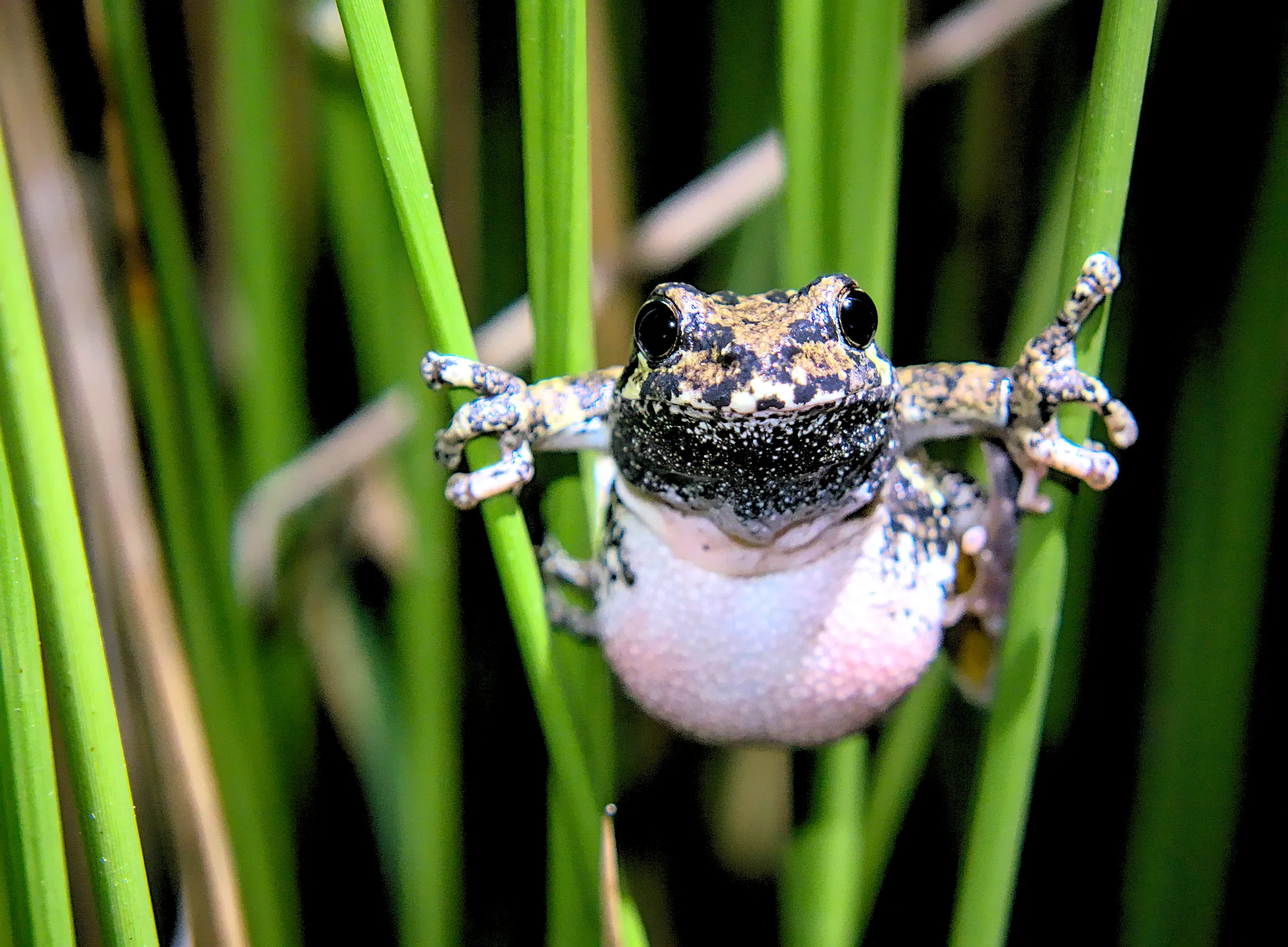
Adults average 32.81±0.96 mm in length in one study, and females are on average larger than males. The back is green or brown, the belly white, with a dark spot on the upper lip below the eye, and it has a dark vocal sac. Some frogs in South Korea were found entirely blue, others yellow with green patterns on the back, and a blue frog from Russia, kept for observation, returned to green or brown; as of 2026 the cause of such colours is unexplained1.
In a laboratory study of a population from Niigata, Japan, the eggs were about 1.3 mm in diameter, the larvae are of a nektonic type in external appearance, and full-grown larvae reached a total length of 47 mm on average. Newly metamorphosed frogs measured 14.5 mm on average4.
Habitat and range
The frog is found in Japan, China, Korea, Mongolia and Russia, in forests, bushland, meadows, swamps and river valleys1 with both water and land. Where its native habitat has changed, rice paddies have served as its lodging, and there it shows a preference for sites high in vegetation. A 2016 report on its genetics gives the range as throughout Japan, the Korean peninsula, eastern China, and eastern Russia. That report describes two likely routes by which the frogs’ ancestors travelled into or out of Japan: from the North on a chain of islands between Russia and Japan, and from the South along a land bridge3 between South Korea and Japan.
Behaviour and breeding
The Japanese tree frog is an opportunistic predator1 of ants, beetles, caterpillars, flies and spiders, with no apparent significant difference in diet between the sexes; in the breeding season, males are more likely to have an empty stomach.
Choruses of males are heard at night mainly along edges of paddy fields, between early spring and late summer. An isolated male calls about 4 times per second, and in a paddy field more than about 20 individual frogs called at the same time. Laboratory experiments have found antisynchronization of two individual frogs, and tri-phase synchronization of three individual frogs. The paddy fields studied had edges with a perimeter of typically more than 100 m. In field recordings of these choruses, two-cluster antisynchronization was more frequently realized2. The notes are made of fine pulses at a frequency of mainly 1.7 kHz. Males gather in leks1, which seem to form preferentially at spots with significant water resources.
For breeding the frogs prefer more shallow and smaller bodies of water, such as oxbow lakes. The Niigata population was collected from a paddy field in the breeding season (May). The average clutch is around 340–1,500 eggs. Eggs and embryos were reared in the laboratory at 24 °C, the larvae later at 24–29 °C; they began feeding 4.4 days after fertilization and metamorphosed at the age of 32 days4. Lifespan is usually around six years1.
Conservation
The Japanese tree frog is assessed as Least Concern in the 2022 IUCN Red List5. Its population is listed as stable and non-fragmented; the potential threats named are primarily pollution and other environmental factors. The American bullfrog is an exotic predator1 of the species.
Similar species
- Dryophytes suweonensis, a closely related species, is generally smaller and more slender1; head measurements such as the distance between nostril and upper lip can be used to tell the two apart.
- Dryophytes leopardus is the name given in 2025 to the populations in Japan east of Kansai and Sakhalin1, formerly counted in this species.