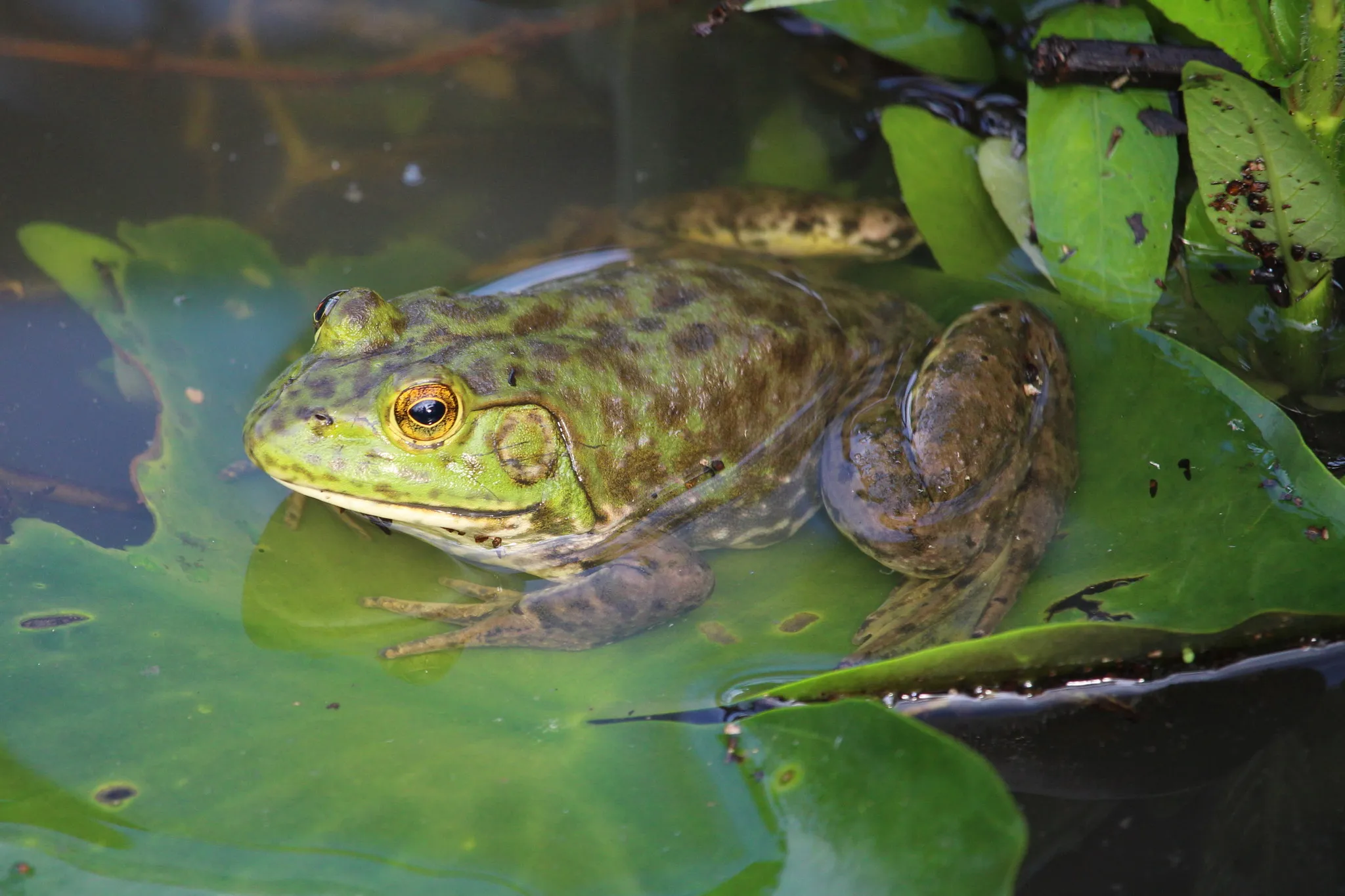
Lithobates catesbeianus, the American bullfrog, is the largest true frog found in North America, a member of the family Ranidae. It is native only to the Nearctic, from Nova Scotia to central Florida and across the Great Plains to the Rockies1. Its use as food led to introductions outside that range, and it has been introduced in more than 40 countries2.
Identification
Typical adults measure 90 to 152 mm in length, with a recorded maximum of 203 mm; the Savannah River Ecology Laboratory gives 9–20 cm3. Animal Diversity Web gives a weight of up to 0.5 kg1.
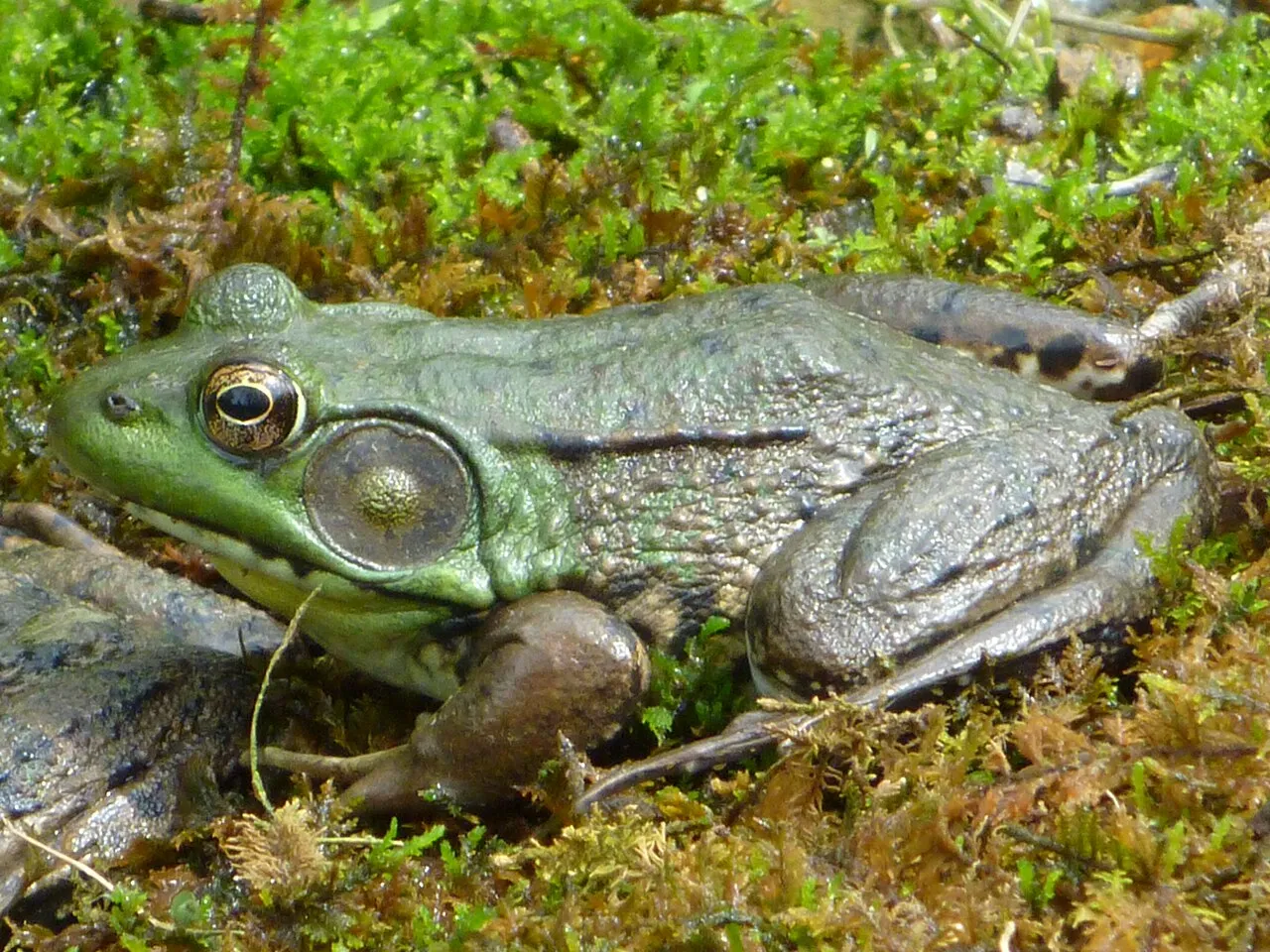
The colour varies from brownish to shades of green, often with darker spots or blotches about the back. Frogs in the Southeast may be heavily patterned with dark gray, brown, or black above, and the belly is whitish with gray mottling3. The hind feet are fully webbed1.
The sexes differ at the eardrum, the round tympanum beside the eye. In males it is much larger than the eye; in females it is as large or smaller than the eye. In the breeding season the male’s throat is yellow, the female’s white1.
The male’s call is often described as a low rumbling “jug-o-rum” that can be heard for over one kilometer1. A bullfrog seized by a predator may let out a loud, piercing screech3.
Habitat and range
Animal Diversity Web (2002) notes that bullfrogs must live in water and are usually found near a lake, pond, river, or bog; warm, still, shallow waters are preferred. In Georgia and South Carolina the species is common, inhabiting nearly any aquatic environment, and it is more tolerant of fish than most southeastern amphibians3. In 2002 Animal Diversity Web reported that it was becoming increasingly common in areas modified by humans1.
Its native range reaches from the eastern Canadian Maritime Provinces west as far as Idaho and Texas. Bullfrogs were introduced to areas of California and Colorado in the early 1900’s, and the species has also been introduced, accidentally or on purpose1, into southern Europe, South America and Asia. In Europe it has been on the list of Invasive Alien Species of Union concern since 20162.
Behaviour and breeding
The bullfrog hunts in a ‘sit and wait’ style, grabbing passing prey with a flash of the tongue. It is active both during the day and at night, most of all in moist, warm weather, and in cold weather it hibernates and may bury itself in mud. Animal Diversity Web says bullfrogs usually eat snakes, worms, insects, crustaceans, frogs, tadpoles and aquatic eggs, and the Savannah River Ecology Laboratory adds small mammals, birds, and even other bullfrogs3. Bullfrog tadpoles mostly graze on aquatic plants1.
Adult males are very aggressive and defend 3 to 25 meters of shoreline by wrestling other males. Breeding runs from May to July in the north and from February to October in the south. Fertilization is external, and Animal Diversity Web says the female lays as many as 20,000 eggs in a foamy film in quiet, protected water; the Savannah River Ecology Laboratory gives 15,000–20,000 eggs per season3. Tadpoles emerge about four days after fertilization1.
Tadpole development is slow, and the change into a frog may take between one to three years to begin. Time to metamorphosis ranges from a few months in the south to 3 years in the north2, where colder water slows development. Adults reach sexual maturity after 3 to 5 years. A wild bullfrog lives on average seven to nine years, and the record in captivity is 16 years1.
Conservation
The species is listed as Least Concern4 on the IUCN Red List (version 2022.2). In its native range it is abundant with no major threats other than wetland loss, and it is harvested in some areas for food3.
Where it was introduced, it is considered an invasive species3 because its predation has led to declines of native amphibians and reptiles. The bullfrog is relatively immune to the fungal infection chytridiomycosis2, and conservationists are concerned it may spread the fungus to more susceptible native frogs as an asymptomatic carrier.
Similar species
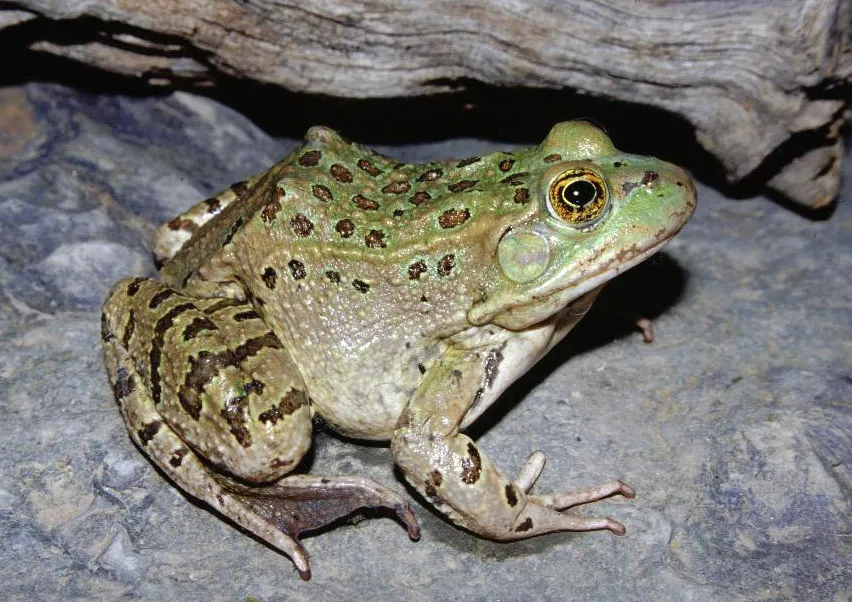
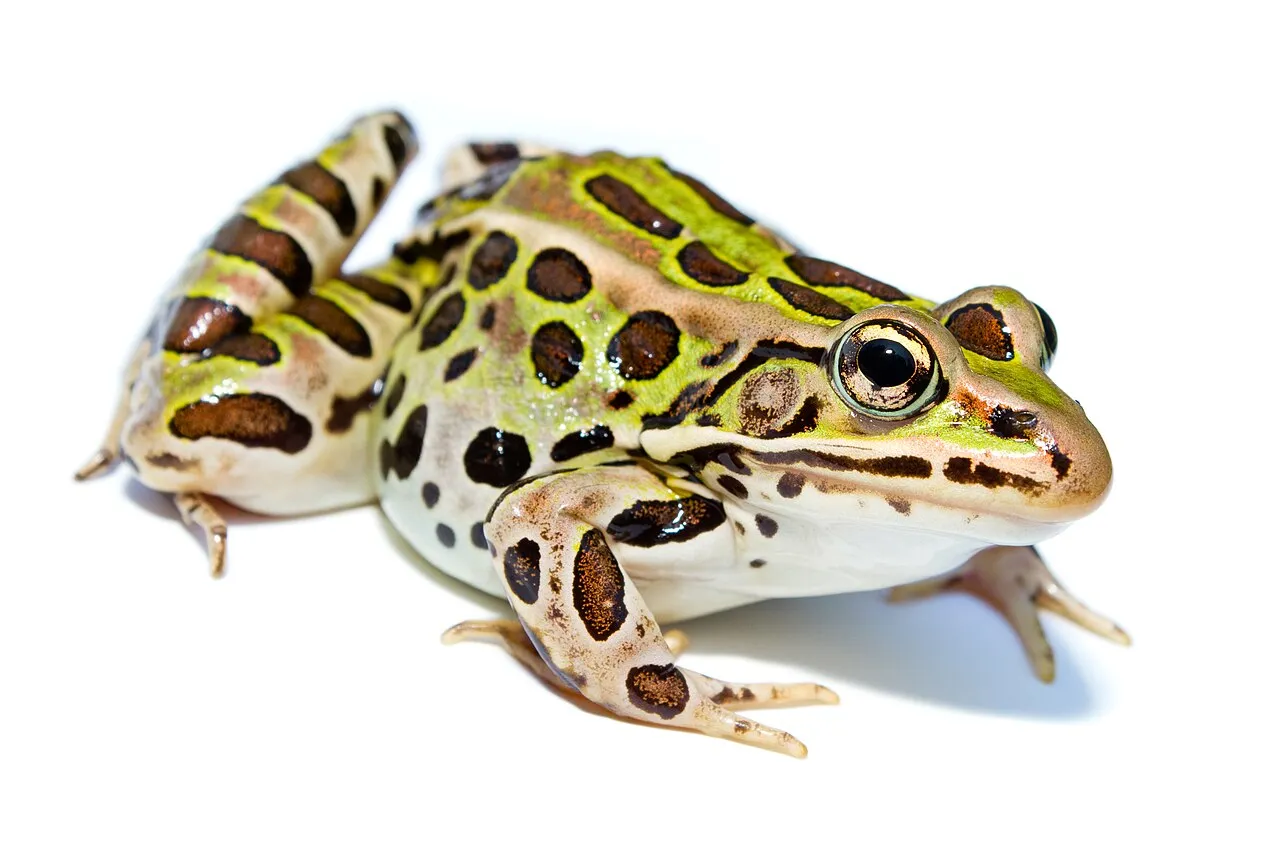
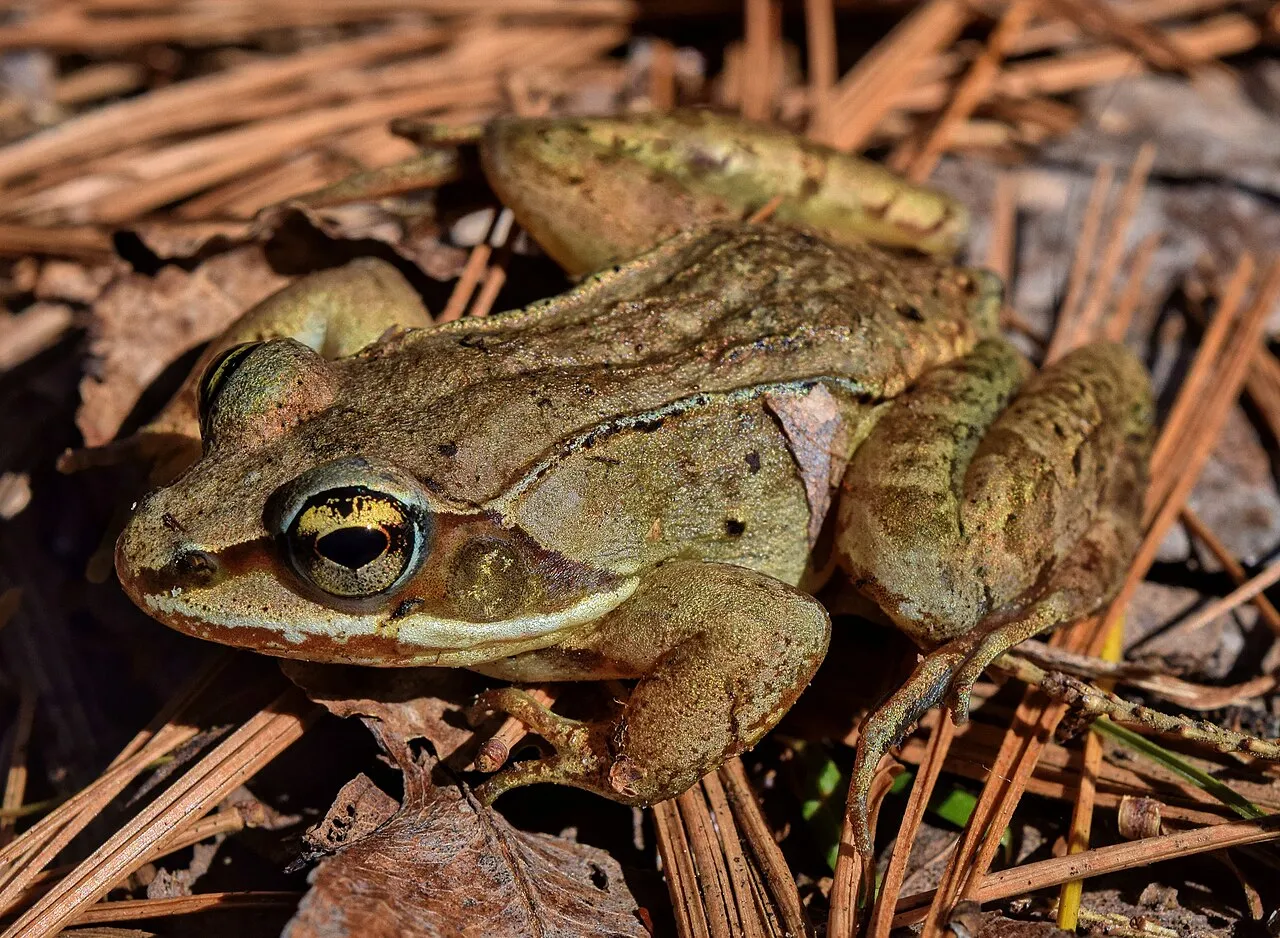
- American green frog, Lithobates clamitans: has dorsolateral ridges, which the bullfrog lacks3.
- Pig frog, Lithobates grylio: the bullfrog has a broader snout and shorter toe webbing3 that does not reach the toe tips.