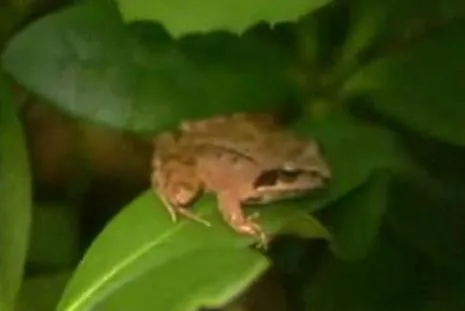
Rana chensinensis, the Asiatic grass frog, also known as the Chinese brown frog, is a member of the true frog family Ranidae, found in China and Mongolia.
Identification
A reliable, openly reachable size figure for this species could not be confirmed this run: published snout-vent length measurements exist, but only on hosts not yet cleared as sources for this guide or as text that could not be opened, so this guide leaves the figure out rather than guess. It will be added once a readable primary source is on file.
Habitat and range
Within China and Mongolia, the Asiatic grass frog occupies a broad spread of habitats: temperate forests, intermittent rivers, swamps, freshwater lakes, intermittent freshwater marshes, arable land, pastureland and irrigated land. Its presence on farmed and irrigated land as well as in natural wetland and forest habitat means it overlaps heavily with areas of human cultivation, which also threatens it through habitat loss.
Behaviour and breeding
That overlap with farmland has a documented upside for growers: the species is noted in Chinese agriculture for its strong preying performance on pests, and a study carried out in Qingyuan County between 1982 and 1983 found that breeding these frogs decreased both the use of pesticides and the pollution in the environment. Specific facts about its calls, clutch size or tadpole development are not available from the open sources this guide can reach; this entry will be updated if an openly reachable source becomes available.
Conservation
The facts box above carries the species’ current IUCN Red List category, Least Concern. Alongside its role in pest control, the frog also has a long-standing use in Chinese tradition: fatty tissue near its fallopian tubes is used to make hasma, a dessert ingredient and a traditional medicine within China. Whether this harvesting pressure affects wild populations is not addressed in the sources available to this guide.
Similar species
Rana chensinensis belongs to the same genus as the common frog, Rana temporaria, the widely distributed European species after which the true frog genus Rana is best known outside Asia. The two are not close neighbours geographically — one centred on China and Mongolia, the other on Europe and northwestern Asia — and the sources available to this guide do not describe field marks that separate Rana chensinensis from any particular look-alike within its own range.