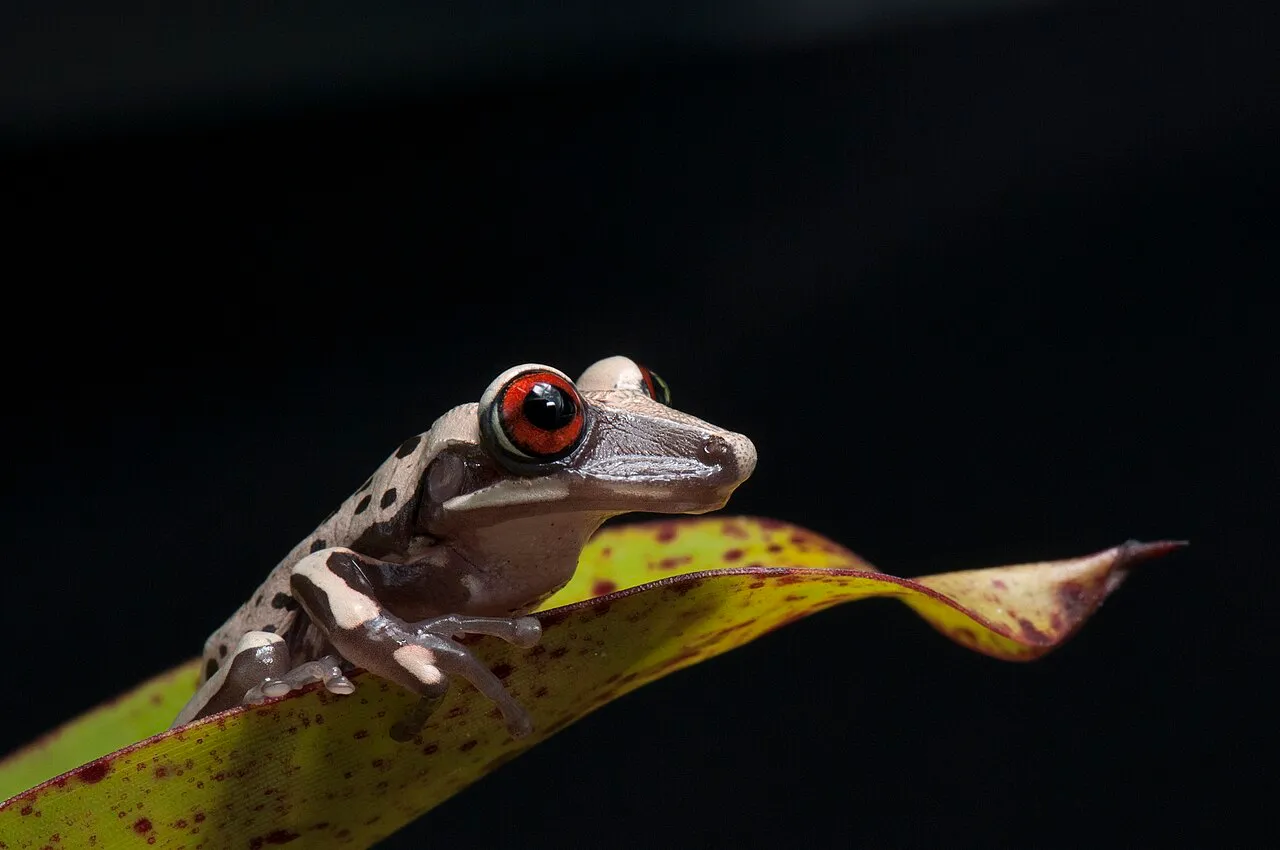
Bruno’s casque-headed frog, Aparasphenodon brunoi, is a hylid tree frog endemic to southeastern Brazil, where it is best known for using its bony, shield-like head to plug the entrance of the tight spaces it shelters in. The casque gives the species its common name and sets it apart from most other tree frogs sharing its coastal forests.
Identification
The species shows a marked size difference between the sexes: males measure 49-62 mm and females 56-81 mm in snout-vent length, making females noticeably the larger of the two. Its most distinctive feature is the bony casque on top of the head, which the frog uses to seal itself into a hollow or crevice, a defensive habit known as phragmotic behaviour that is shared by only a handful of other hylids.
Habitat and range
Bruno’s casque-headed frog is endemic to southeastern Brazil, found along the coastal region from the state of Bahia south to the northern part of São Paulo state, at elevations up to about 1,600 feet (490 m). Within that range it lives in forests and forest edges, where it shelters by day in water-filled tree or bamboo hollows and in the water-filled rosettes of bromeliads, sealing the entrance with its casqued head to keep out predators and hold in moisture.
Behaviour and breeding
The casque-sealing habit that shelters this species by day also protects it from predators and desiccation. Beyond that bony-headed defence, open-access sources document little else about its breeding biology.
Conservation
The facts box carries the species’ current IUCN Red List category, Least Concern, reflecting its presence across a stretch of coastal southeastern Brazil rather than a single isolated site.
Similar species
Within its range, Bruno’s casque-headed frog belongs to a small group of Brazilian hylids that share the casque-headed, hollow-sealing habit, including other members of the genus Aparasphenodon and the related genus Corythomantis. It is told apart from unrelated tree frogs of the same forests mainly by its bony, shield-like head and its habit of using that head to close off tree hollows and bromeliad rosettes rather than simply hiding inside them.