- Sclerophrys xeros: Unveiling the Remarkable Adaptations of Africa's Desert-Adapted Toad
- Taxonomy and Classification
- Natural Habitat: Life in an Arid Domain
- Physical Characteristics: Beauty Born of Adversity
- Behavior and Life Cycle: Survival through Adaptability
- Ecological Role: Vitality in Fragile Ecosystems
- Threats and Conservation Status: A Species at Risk
- Cultural and Scientific Significance: Symbolism and Discovery
- Conclusion: Celebrating the Wilderness of Adaptation
Sclerophrys xeros: Unveiling the Remarkable Adaptations of Africa’s Desert-Adapted Toad#
Among the remarkable creatures inhabiting the parched Savannahs and semi-arid landscapes of Africa, few can match the tenacity, fascinating behaviors, and adaptability of the toad species known as Sclerophrys xeros. Commonly referred to as the Desert Toad or Savannah Toad, its very existence defies expectations—a delicate amphibian thriving in some of the continent’s driest environments.
Amphibians are often associated with lush rainforests, misty swamps, and bubbling streams. Yet Sclerophrys xeros has defied convention through a striking evolutionary journey to occupy terrains that challenge survival with their unpredictability, sparse water availability, and temperature extremes. Its resilience serves as an intriguing testament to the wonders of adaptability, evolution, and the intricate relationship between species and habitat.
Let us enter the sun-scorched domain of Sclerophrys xeros and unearth its secrets—from its physical attributes and behaviors to the critical ecological roles it fulfills, offering vivid insights that showcase just how extraordinary nature’s adaptations can be.
Taxonomy and Classification#
Sclerophrys xeros belongs to the Bufonidae family—a vast and diverse group commonly known as “true toads.” First described scientifically by the naturalist Boulenger in 1901, this toad has undergone careful taxonomic refinement over the decades, previously being classified under the genus Bufo until recent molecular studies led to its reclassification into the genus Sclerophrys.
Today, the species Sclerophrys xeros stands as a clear member of its specialized genus, a testament to its distinctive evolutionary history. Closely aligned with similar species such as Sclerophrys regularis, it differs in critical aspects adapted specifically to cope with extreme conditions, setting it apart as a true marvel of amphibian evolution.
Natural Habitat: Life in an Arid Domain#
Across the Sahel Belt and savannah regions stretching from Senegal and Mauritania through Niger, Burkina Faso, Cameroon, Nigeria, and Sudan, the Desert Toad manages existence in landscapes typically inhospitable to amphibians. While the word “desert” evokes vast sandy dunes devoid of life, Sclerophrys xeros finds its niche in semi-arid grasslands, dry savannas, bushlands, and even human-modified croplands and gardens.
Characterized by extended dry periods punctuated by intense seasonal rains, these habitats demand survival strategies specifically attuned to periods of drought and flood alike. Beneath cracked soils, near temporary pools, or burrowed amidst roots and leaf litter, Sclerophrys xeros awaits patiently, entering periods of aestivation—a physiological state of dormancy designed to withstand prolonged dryness until the rains return as a life-giving impetus.
Physical Characteristics: Beauty Born of Adversity#
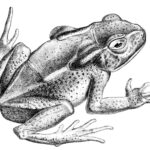
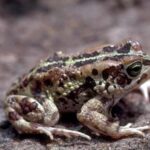
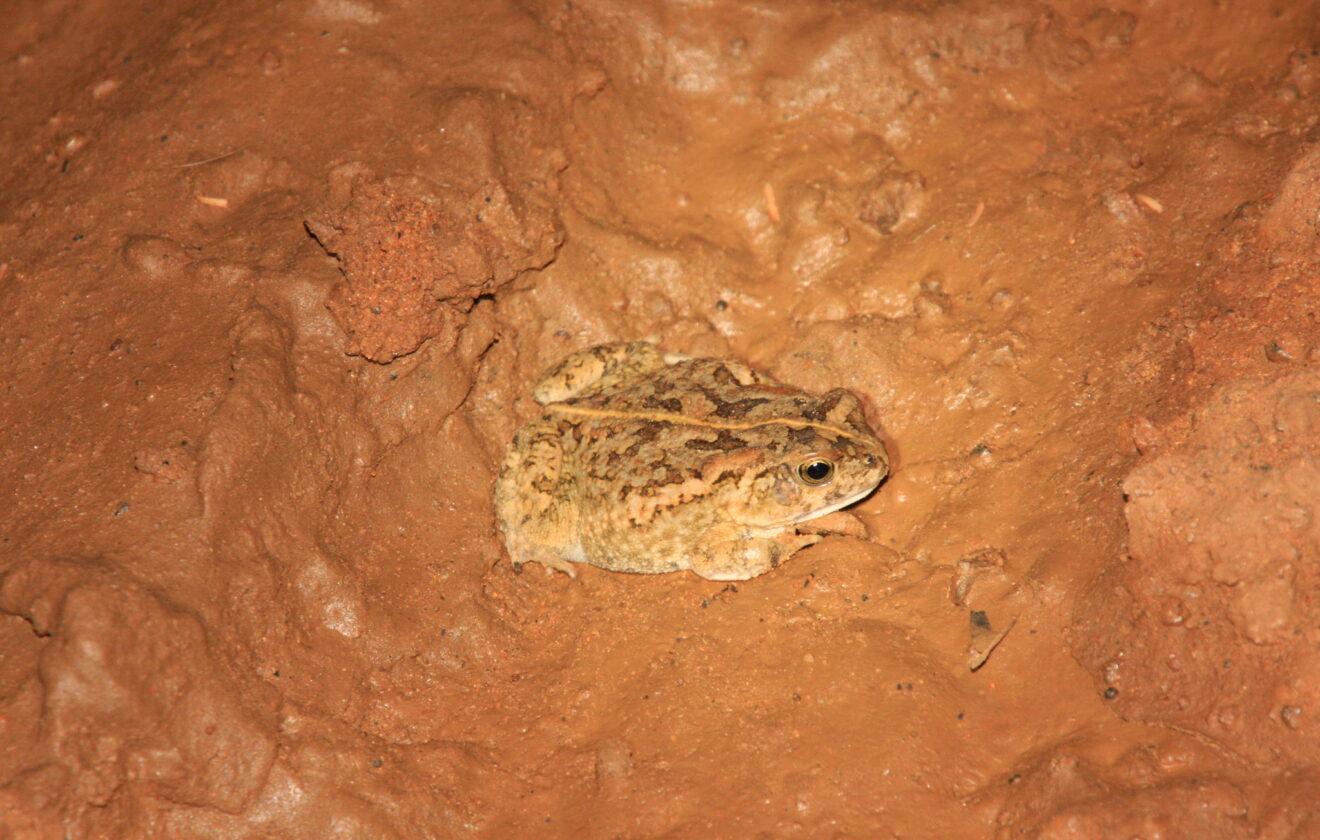
At first observation, the Savannah Toad might seem modestly colored, its earthen tones—shades of beige, brownish-gray or sandy-yellow hues—readily blending with the parched surroundings. Yet closer inspection reveals a beauty rooted in practicality. Adults measure approximately 60–85 mm (2.4–3.3 inches), their robust bodies appearing almost bulbous yet streamlined for burrowing and minimizing water loss.
A distinguishing feature is the presence of raised, wart-like glands on the skin. These are not simply ornamental but vital to survival, secreting toxins that protect the toad from predators. Alongside these, prominent parotoid glands situated behind the eyes exude a milky poison—a formidable chemical defense mechanism deterring potential attackers.
The skin of Sclerophrys xeros is rugged and resilient, uniquely evolved to drastically reduce evaporation. This minimized water loss is especially crucial in environments where regular hydration is uncertain, ensuring the toad persists remarkably over extended dry spells.
Behavior and Life Cycle: Survival through Adaptability#
Feeding and Hunting#
When conditions are favorable, especially during rain events, the Desert Toad emerges to forage with unwavering determination. An opportunistic predator, its diet includes insects, spiders, beetles, termites, and whatever small arthropods venture too close. Utilizing a strategic foraging behavior, it ambushes prey swiftly with a flick of its sticky, muscular tongue, demonstrating an agility remarkably unexpected for such a hardy creature.
Breeding and Development#
Perhaps nowhere are the remarkable adaptations of Sclerophrys xeros more visible than in its reproductive behavior. Mating aligns meticulously with the arrival of seasonal rains, when temporary pools and flooded grasslands provide vital nursery habitats for tadpoles. Males issue rapid, resonant calls—a guttural chorusing that echoes into the night—to attract eager females. Arrivals of rains set off these nighttime symphonies, turning barren lands momentarily vibrant with aquatic life.
Once mating occurs, females lay extensive, gelatinous strings containing hundreds or even thousands of eggs. The sheer number of offspring reflects evolutionary pressure; rapid reproduction is essential due to the fleeting availability of suitable habitats for larvae to mature. Tadpoles develop at staggering speeds—transforming into functional juveniles within weeks—to ensure they enter terrestrial life before pools dry completely.
Ecological Role: Vitality in Fragile Ecosystems#
Though small, Sclerophrys xeros exerts considerable influence on ecosystem health. As a key predator of invertebrates, the toad controls insect populations, including potential agricultural pests and disease vectors like mosquitoes. Indeed, their presence is indicative of ecosystem integrity; healthy amphibians generally signal relatively healthy environments, lending them status as critical indicator species.
Furthermore, the toad provides a sustaining food source for larger predators such as snakes, lizards, birds, and small mammals. Within this intricate, interconnected food web, Sclerophrys xeros contributes both upward and downward through ecological cascades, underlining its crucial role in sustaining biodiversity across arid and semi-arid habitats.
Threats and Conservation Status: A Species at Risk#
Sclerophrys xeros is currently assessed by the International Union for Conservation of Nature (IUCN) as a species of Least Concern. This relatively stable status, however, belies increasing challenges. Habitat degradation from agriculture, infrastructure development, pesticide use, and overgrazing by livestock threatens its natural landscape, diminishing suitable water bodies used for breeding.
Climate change presents an especially worrisome threat. Rising temperatures, prolonged droughts, and increasingly unpredictable rainfall regimes stress amphibian populations that rely heavily upon rhythmic seasonal patterns. Additionally, amphibians as a global group continue to face threats from diseases such as chytridiomycosis. Surveillance and long-term monitoring thus remain paramount to detect emerging threats early and implement timely conservation action.
Cultural and Scientific Significance: Symbolism and Discovery#
Sclerophrys xeros holds subtle yet notable significance in cultural contexts locally. Though not particularly famed as folklore entities, toads across many African cultures symbolize adaptability, resilience, and transformation—qualities notably apt for this resilient species.
Scientifically, Desert Toads continue providing insights into amphibian adaptations to arid environments, offering valuable data about physiological limits, drought resilience, and potentially even medical and agricultural innovations from their chemical secretions.
Conclusion: Celebrating the Wilderness of Adaptation#
The story of Sclerophrys xeros is one that compels fascination and respect. Its existence within severe landscapes offers powerful lessons about biodiversity’s capacity to adapt, innovate, and thrive. Protecting this toad and its Sahelian habitats stands as an imperative—not simply to safeguard one exceptional amphibian species, but to sustain entire ecosystems and the incredible diversity of life that depends on them.
Let the tale of the Desert Toad inspire us as conservation stewards, encouraging mindful advocacy aimed at protecting these resilient, remarkable creatures for generations yet unborn.