- Introduction
- Taxonomy and Classification
- Natural Habitat: The Misty Realms of Ecuador's Cloud Forests
- Physical Characteristics: Transparent Wonders of Nature
- Behavior and Life Cycle: An Aquatic Ballet
- Ecological Role: Guardians of Streamside Harmony
- Threats and Conservation Status: Fragile Beauty, Urgent Concerns
- Cultural and Scientific Significance: Treasures Beyond Transparency
- Conclusion: Protecting Ecuador's Living Jewels
Introduction#
Beneath the night-time canopy of Ecuador’s enchanting cloud forests, invisible symphonies emerge from streams and hidden ravines. Here, among delicate mist and emerald silhouettes, lies an ethereal creature whose transparent grace captivates all who witness its presence—Nymphargus colomai, commonly known as Coloma’s glassfrog.
Named scientifically in honor of famed Ecuadorian herpetologist Luis Aurelio Coloma, Nymphargus colomai proudly wears its heart—and nearly every organ—on its sleeve. A member of the Centrolenidae, or glassfrog family, this species enchants not only scientists but nature enthusiasts worldwide with its delicate translucence and vital role within its habitat.
But who exactly is Nymphargus colomai? Beyond its glass-like skin lies intricate biology, complex behaviors, profound ecological influences, and an urgent need for conservation awareness. Let’s embark together on a journey through cloud-misted foliage and babbling streams, exploring the deeply fascinating life of this remarkable amphibian.
Taxonomy and Classification#
Nymphargus colomai belongs within the fascinating amphibian family known as Centrolenidae. These remarkable frogs, characterized by semi-transparent skin, reveal the secrets beneath their delicate epidermis—a window into their beating hearts and flowing blood vessels.
The species was described formally in 2006 by Guayasamin and Hutter, recognizing the unique distinctions that set it apart from related species. Originally placed within the genus Cochranella, later molecular research clarified its alliance with the genus Nymphargus, emphasizing the importance of DNA analysis in modern herpetology and taxonomy.
This taxonomic clarity is more than scholarly nitpicking; it allows scientists and conservationists to better assess ecological needs, evolutionary pressures, and strategies crucial for the protection of this captivating glassfrog.
Natural Habitat: The Misty Realms of Ecuador’s Cloud Forests#
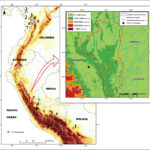
Nymphargus colomai is endemic to a series of isolated localities along the eastern Andean slopes of Ecuador, specifically thriving within the country’s lush subtropical cloud forests. The frog’s most significant populations have been observed at elevations between 1,000 and 2,000 meters above sea level, where cloud-covered mountains nurture biodiversity hotspots teeming with life.
Close your eyes and picture the habitat of our translucent protagonist: swirling mist cascading through verdant vegetation, moisture-rich leaves glistening beneath the gentle moonlight, and hidden streams whose crystalline waters narrate a timeless melody amid foliage-covered limbs. The frog selects pristine ecosystems, particularly near slow-moving streams and small waterfalls, favoring sites where water droplets bead gently on broad, waxy leaves.
Within this intricately balanced ecosystem, Nymphargus colomai remains perfectly adapted—a species evolved through millennia to match precisely this dripping, humid environment. These cloud forests don’t merely shelter them; they offer a host of microhabitats essential at every life stage, from egg laying through adulthood.
Physical Characteristics: Transparent Wonders of Nature#
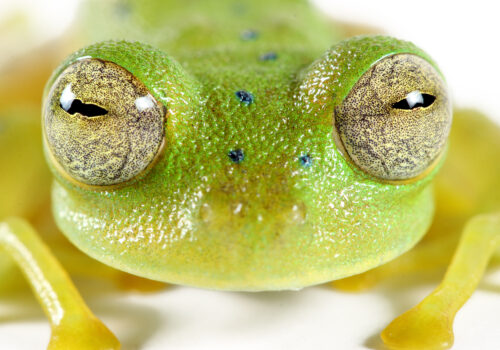
The most mesmerizing traits of Nymphargus colomai emerge from its stunning physical appearance. Adults typically measure between 20-25 millimeters, their petite frames accentuated by glassy translucence that has become a signature of the glassfrog lineage.
The dorsum, or upper surface, displays varying shades of subdued green flecked occasionally with subtle yellow or blue tones, providing a sophisticated camouflage that helps the frog blend seamlessly with moist leaves. Even more astonishing is the ventral side—completely transparent, allowing a clear view of internal organs, as if rendered deliberately by mother nature to reveal her intricate craftsmanship.
This transparent underside serves more than simply aesthetic delight; scientists hypothesize it might aid in concealment from predators by diffusing shadow and blurring outlines. Observing their delicate frame, one sees not merely a frog but an elaborate evolutionary puzzle piece perfected by centuries of adaptive refinement.
Behavior and Life Cycle: An Aquatic Ballet#
Under darkness’s cloak, Nymphargus colomai awakens into vibrant nocturnal activity. Adult males typically position themselves strategically on moist leaves overlooking gentle streams, crooning subtly distinct melodic trills to attract females. Such callings resonate through nighttime air, forming a symphony that orchestrates courtship rituals unique to the glassfrog family.
Following successful mating, females delicately deposit egg clusters on carefully selected leaves suspended above flowing water. The placement is purposeful, orchestrated with precision—when tadpoles emerge, gravity assists their drop into life-sustaining streams below, immediately ushering these newborns into the next phase of their lifecycle.
Tadpoles develop within clear pools or slow-moving waters, consuming algae and organic debris, until metamorphosis occurs. As these juveniles grow lungs, legs, and a newfound terrestrial agility, they gradually abandon aquatic life for arboreal habitats above, thus completing an extraordinary and delicate cycle of renewal.
Ecological Role: Guardians of Streamside Harmony#
The ecological narrative woven around Nymphargus colomai is subtle yet captivating. These diminutive amphibians serve critical ecological roles, acting simultaneously as predator and prey in dynamic forest systems. Due to their precise sensitivity towards environmental change, frog populations act as bio-indicators, alerting ecologists to subtle ecological disturbances often invisible to human observers.
In their ongoing hunt for small insects—flies, mosquitoes, ants—frogs like Nymphargus colomai actively help balance pest populations, indirectly preserving forest vegetation and wellness. Conversely, they provide essential nutrients for predatory birds, snakes, and mammals, helping transfer critical energy up through food webs, maintaining ecosystem equilibrium throughout the delicate cloud-forest cycle.
Threats and Conservation Status: Fragile Beauty, Urgent Concerns#
Despite its immense biological intrigue and integral ecological contribution, Nymphargus colomai faces formidable threats. Paramount among these is habitat destruction—primarily deforestation practices like agricultural expansion, cattle ranching, and indiscriminate timber harvesting. Erosion and pesticides entering once pristine streams degrade water quality, directly jeopardizing tadpole survival.
Moreover, global climate shifts increasingly alter rainfall and temperature patterns, disrupting breeding cycles and habitat availability. While currently listed as Data Deficient by the International Union for Conservation of Nature (IUCN), the lack of comprehensive observational data breeds heightened concern. Conservationists therefore advocate extensive field studies, habitat monitoring, local conservation initiatives, and public engagement campaigns urgently required to preserve this species.
Cultural and Scientific Significance: Treasures Beyond Transparency#
Glassfrogs, including Nymphargus colomai, occupy revered positions within indigenous beliefs, symbolizing fertility, purity, and ecological health. Locally, their vocalizations signal seasonal transitions, guiding indigenous communities in their symbiotic interaction with the ecosystems harboring these frogs.
Simultaneously, scientists derive insights crucial not only for amphibians but broader biodiversity care. These frogs’ transparent skins offer invaluable insight into physiological processes, disease resistance studies, and even potential insights into skin permeability useful in medical research. Thus, Nymphargus colomai presents scientists with opportunities far greater than mere biological fascination.
Conclusion: Protecting Ecuador’s Living Jewels#
The story of Nymphargus colomai reflects far more than amphibian biology; it’s a narrative of interconnectedness, delicate equilibrium, and human responsibility toward nature’s wonders. As we venture deeper into understanding the intricate connections within our natural world, recognizing and championing such extraordinary species becomes paramount.
With your awareness, curiosity, and support, we have opportunities to ensure that generations continue to experience the enthralling presence—and unparalleled transparency—of Coloma’s glassfrog. Consider supporting local conservation initiatives, advocating responsible forest stewardship, or simply nurturing awareness. Ecuador’s cloud forests, and the delicate lives they nurture, depend significantly on our collective actions for sustainability, appreciation, and preservation.