- Sclerophrys turkanae: Uncovering the Secrets of Kenya's Mysterious Turkana Toad
- Taxonomy and Classification: A Closer Look at the Turkana Toad's Lineage
- The Natural Habitat: Life Around Lake Turkana's Shoreline
- Physical Characteristics: Adapted for Survival in Harsh Environments
- Behavior and Life Cycle: Meeting Nature’s Challenge with Flexible Responses
- Ecological Role: A Keystone Species of Turkana's Wetlands
- Threats and Conservation Status: Surviving Amidst Challenges
- Cultural and Scientific Significance: Beyond Biological Beauty
- Conclusion: Celebrating and Safeguarding an Ecological Gem
Sclerophrys turkanae: Uncovering the Secrets of Kenya’s Mysterious Turkana Toad#
In the starkly beautiful region surrounding Lake Turkana, where Kenya’s arid lands meet the shimmering blue expanse, exists a fascinating amphibian whose rugged charm and intriguing biology has captivated scientists and nature enthusiasts alike. The Turkana toad, scientifically known as Sclerophrys turkanae, is a resilient survivor adapted uniquely to one of East Africa’s most challenging habitats. Relatively unknown beyond specialized herpetological circles, this elusive amphibian carries with it a compelling ecological narrative, illuminating the delicate balance of the ecosystem it inhabits.
Discovered in the harsh environs of northern Kenya, the Turkana toad has adapted seamlessly to its surroundings—a testament to evolution’s creative resilience. Yet, this species is far from common knowledge, making it an exciting gem hidden within the vast tapestry of African wildlife. Today, we’ll journey together into the arid given the vibrant wetlands hugging Lake Turkana, exploring everything from its intricate biology and unique adaptations to its ecological role, conservation challenges, and cultural significance.
Taxonomy and Classification: A Closer Look at the Turkana Toad’s Lineage#
Classifying species is crucial for conservation, scientific research, and ecological understanding. Sclerophrys turkanae belongs to the family Bufonidae, commonly known as true toads—one of amphibian biology’s most prolific families. This group is famously diverse, including over 600 known species worldwide, often characterized by their dry, “warty” skin, distinct parotoid glands, and terrestrial habits.
Within this vast family, Sclerophrys represents a prominent genus in Africa, exhibiting remarkable adaptability across varied habitats like dry savannas, humid forests, and mountainous terrains. Formerly grouped within the genus Bufo, DNA and morphological studies prompted a reclassification, elevating Sclerophrys as its own genus. This revision underscores science’s ever-evolving nature as we uncover more about these fascinating amphibians. Among this genus, Sclerophrys turkanae is distinguished primarily by its unique habitat and morphological adaptations tailored to the Lake Turkana ecosystem.
The Natural Habitat: Life Around Lake Turkana’s Shoreline#
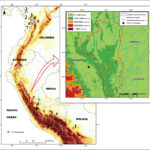
Lake Turkana, sometimes called the “Jade Sea” for its mesmerizing greenish-blue waters, defines northern Kenya’s rugged landscapes. The world’s largest permanent desert lake, Turkana is surrounded by arid plains, savanna scrublands, and volcanic rock formations—conditions hardly evocative of lush amphibian habitats at first glance.
Yet, subtly hugging the lake’s perimeter exist small ecosystems comprising marshy fringes, temporary seasonal pools, and patches of vegetation nourished by intermittent rainfall and groundwater seepage. Precisely here, amidst this mosaic of delicate microhabitats, the Turkana toad uniquely thrives.
The Turkana toad’s ability to endure such conditions reveals fascinating insights into its biology. The species remarkably capitalizes upon fleeting moments of resource abundance, skillfully synchronizing its lifecycle to unpredictable rainfall events. Rare rains transform the dry plains dramatically, creating temporary waters suitable for breeding, feeding, and survival. During extended arid periods, the Turkana toad employs impressive strategies, such as burrowing into moist subterranean retreats, waiting patiently for favorable conditions to return.
Physical Characteristics: Adapted for Survival in Harsh Environments#
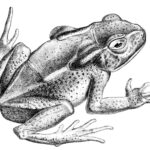
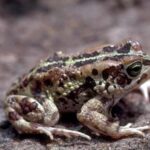
At first glance, Sclerophrys turkanae captivates attention with its stout, rounded body and distinctive warty skin texture. Its coloration, typically muted shades of sandy brown, olive, or gray, offers impeccable camouflage against the sun-bleached soils and rocky substrates around Lake Turkana. Females generally grow larger than males, measuring around 70–85 millimeters in length.
Among their most recognizable physical features are the prominent parotoid glands behind the eyes, secreting potent toxins to deter predators—a critical defensive adaptation. These glands, characteristic of true toads, provide chemical protection against opportunistic predators such as birds, reptiles, and mammals.
Their rough-textured skin reduces water loss, an essential adaptation in their xeric environment. Also noteworthy are their robust hind limbs enabling short but powerful leaps, suited ideally for negotiating rough terrain and quickly escaping threats. Exceptional nocturnal eyesight and sensitive hearing equip these amphibians to navigate their habitats effectively, hunt prey efficiently, and evade predators adeptly.
Behavior and Life Cycle: Meeting Nature’s Challenge with Flexible Responses#
Nocturnal Hunters Under the Stars#
The Turkana toad is predominantly nocturnal, emerging at dusk as daytime scorching temperatures subside. Hidden in subterranean retreats or shaded, moist microhabitats during daylight hours, these amphibians take advantage of the cooler night to actively forage. They feed mainly on insects and other small invertebrates, capturing prey with swift, sticky tongues.
A Strategy Defined by Rainfall#
Perhaps the most fascinating aspect of their biology is reproductive flexibility shaped by the region’s erratic seasonal rainfall. Following rains, male Turkana toads congregate at temporary pools, vigorously calling with distinctive, resonant vocalizations to attract females. Mating occurs swiftly, with females depositing strings of eggs entwined around aquatic vegetation or submerged debris. Rapid development ensures that their tadpoles mature and metamorphose hastily—sometimes in mere weeks—before temporary pools inevitably evaporate under the relentless sun. This astounding biological agility underscores their evolutionary mastery of their unpredictable environment.
Ecological Role: A Keystone Species of Turkana’s Wetlands#
Amphibians fulfill numerous critical roles within their ecosystems—and the Turkana toad is no exception. Primarily insectivorous, they significantly impact insect populations, controlling numbers of potentially harmful insect species and maintaining ecological balance. Conversely, as prey, they represent an invaluable food source for various predators like snakes, raptors, and mammals. Their impressive sensitivity to environmental changes further elevates their importance; amphibians often serve as “bio-indicators,” alerting biologists to subtle changes in ecosystem integrity, pollution levels, or habitat degradation.
Threats and Conservation Status: Surviving Amidst Challenges#
Despite their impressive adaptations, Turkana toads face genuine threats, driven chiefly by rapidly transforming landscapes. Expanding human populations pose challenges through habitat alteration, pollution, and freshwater extraction. Agricultural development and livestock grazing can disrupt or degrade essential breeding habitats, impairing the toads’ reproduction cycles.
Climate change further compounds these challenges, rendering rainfall even less predictable and exacerbating drought conditions. While Sclerophrys turkanae is currently classified as “Least Concern” by the International Union for Conservation of Nature (IUCN), continued vigilance is essential. Conservationists emphasize monitoring populations closely, arguing that proactive conservation—protecting critical breeding sites, sustainably managing lands surrounding Lake Turkana, and engaging local communities—is vital for preserving this unique species long-term.
Cultural and Scientific Significance: Beyond Biological Beauty#
In Turkana culture, like many communities living intimately connected to their environment, amphibians often symbolize resilience and adaptation. Although documentation of specific traditional beliefs tied explicitly to the Turkana toad is limited, Indigenous knowledge holders recognize this amphibian’s appearance as signaling seasonal changes, weather patterns, and ecosystem health—guiding pastoral and agricultural practices.
Scientifically, the Turkana toad has piqued interest as an ideal subject for examining ecological adaptation, arid-zone biodiversity, and climate resilience. As climate studies expand, amphibians like Sclerophrys turkanae can provide invaluable insights, helping science anticipate and manage future ecological challenges.
Conclusion: Celebrating and Safeguarding an Ecological Gem#
The Turkana toad embodies nature’s incredible resilience, capable of thriving amid adversity around Lake Turkana’s shores. Scientifically fascinating and ecologically invaluable, its continued presence serves not only as a testament to biological ingenuity but also as a clarion call to protect the fragile ecosystems supporting countless unseen lives. By enhancing understanding, fostering appreciation, and championing conservation efforts, we can collectively ensure that captivating species like Sclerophrys turkanae persist and enrich our shared natural heritage into the future.
Together, through education, research, and belief in a sustainable coexistence, we guarantee that future generations may also enjoy discovering the mysteries of Turkana’s remarkable toad and the precious ecosystem it calls home.