- Introduction: A Jewel in the Forest's Crown
- Taxonomy and Classification: Understanding an Enigmatic Species
- Natural Habitat: A Secretive Dweller of Misty Forests
- Physical Characteristics: Nature’s Transparent Artwork
- Behavior and Life Cycle: An Intriguing Existence Among the Leaves
- Ecological Role: Hidden Guardians of Forest Balance
- Threats and Conservation Status: Protecting a Vulnerable Transparency
- Cultural and Scientific Significance: Symbols and Insights
- Conclusion: Championing the Hidden Treasures of Our World
Introduction: A Jewel in the Forest’s Crown#
Alta Verapaz, Guatemala—a dense cloud forest sprawls beneath a swirling mist, vibrant greenery peppered with droplets of morning dew. Hidden amongst the lush foliage, camouflaged expertly against glistening leaves, lies Cochranella mache. Commonly known as the Mache Glass Frog, this elusive amphibian captivates naturalists and herpetologists alike with its mesmerizing translucent skin, astonishing arboreal agility, and cryptic lifestyle.
Named for its remarkable abdominal transparency, Cochranella mache belongs to a mesmerizing group of frogs whose vital organs are charmingly visible beneath their glassy exterior—offering a literal window into life’s fragile mechanics. Discovered in remote and once-impenetrable rainforests, this intriguing creature symbolizes nature’s hidden treasures and underscores urgent conservation messages of biodiversity protection and habitat preservation.
Taxonomy and Classification: Understanding an Enigmatic Species#
Cochranella mache belongs to the family Centrolenidae—one of the most striking amphibian families, renowned for the distinctive transparency of their skin. Within Centrolenidae, the genus Cochranella comprises several species distributed throughout Central and northern regions of South America. This specific species, Cochranella mache, was scientifically described relatively recently, highlighting the ongoing need for diligent biological research in tropical ecosystems.
Closely related to other glass frogs like Cochranella granulosa and Cochranella euknemos, Cochranella mache shares similar physical traits and natural histories but maintains its own unique ecological niche and behavioral characteristics distinct enough to warrant separate recognition. Groundbreaking genetic studies continue to unfold its evolutionary journey, unraveling fresh insights into amphibian biodiversity and lineage adaptations across these biologically diverse habitats.
Natural Habitat: A Secretive Dweller of Misty Forests#
Encountering Cochranella mache typically requires an adventurous trek into lush cloud forests spanning regions of Central America, primarily Guatemala, Honduras, and parts of southern Mexico. It thrives in pristine tropical and subtropical habitats, often inhabiting mountainous elevations ranging between 500 to 1,700 meters above sea level. These regions feature dense foliage, shaded streams, and persistent humidity—a curate’s egg for a delicate amphibian reliant on moisture and precise environmental conditions.
A Forest Canopy’s Jewel: Microhabitat Preferences#
With a strong affinity for moist, shaded areas near forest streams and cascading water bodies, these frogs exhibit an arboreal lifestyle rarely venturing down onto the forest floor. Even their eggs are carefully deposited on the undersides of leaves suspended gracefully over slow-moving streams, ensuring safety from terrestrial predators. This curious breeding strategy highlights the species’ intricate dependence on stable hydrological cycles and extensive canopy coverage, emphasizing the criticality of intact forest ecosystems.
Physical Characteristics: Nature’s Transparent Artwork#
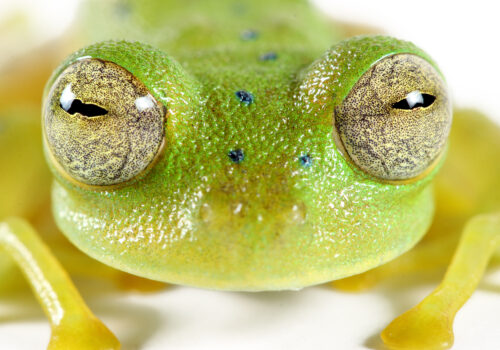
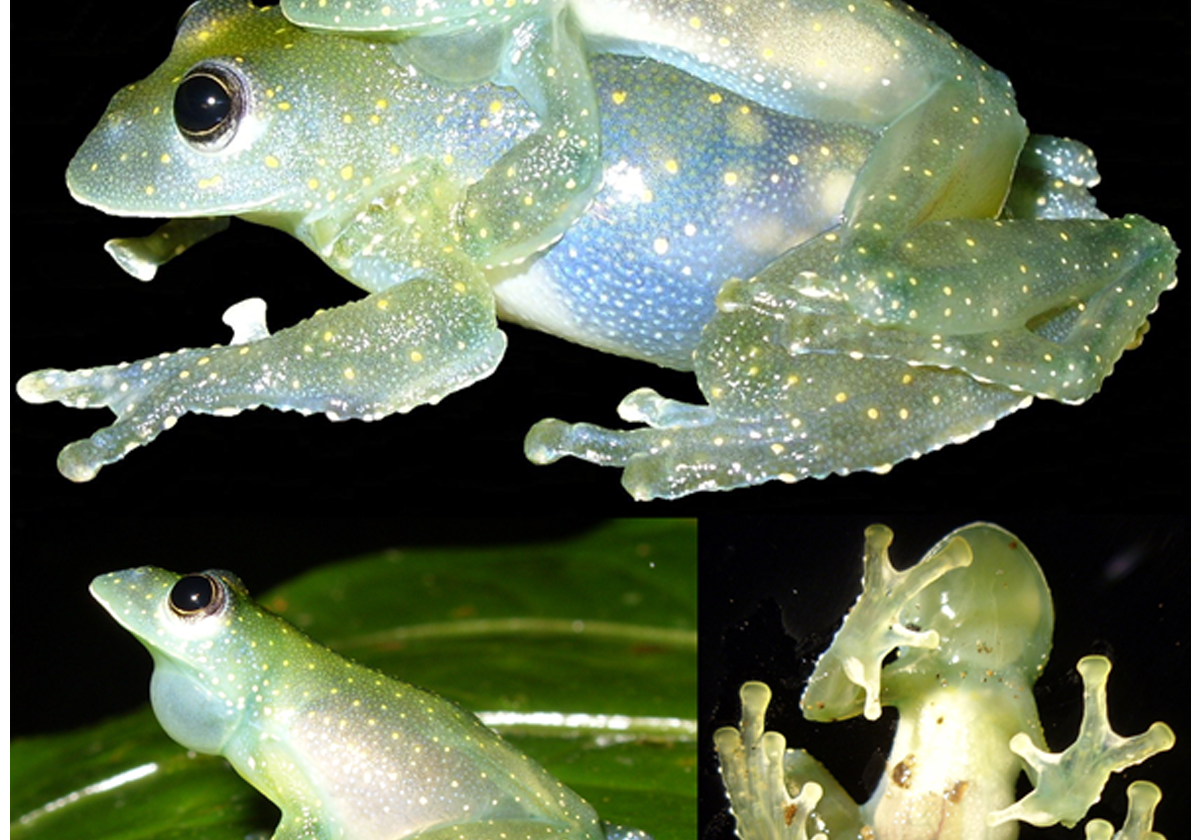
At first glance, the most captivating feature of Cochranella mache indeed remains its glass-like skin, richly green on the dorsum yet intriguingly translucent underneath. This transparent abdominal flesh reveals a uniquely clear view of its beating heart, pumping veins, and other internal organs delicately ensconced within its slender frame. On its back, an emerald to olive-green pigmentation serves as perfect camouflage, echoing the delicate leaves on which they reside.
Adaptations for Survival through Camouflage#
This striking translucency serves an important ecological purpose. While complex chemical defenses characterize many aggressive frog species, Cochranella mache utilizes sophisticated crypsis for survival. The subtle interplay of transparency, coloration, and nocturnal habits forms a unique evolutionary adaptation, drastically reducing visibility to predators like snakes, birds, and even other amphibians. It is nature’s way of balancing survival and vulnerability—a marvel helping this fragile, petite creature remained undetected within densely populated forest ecosystems.
Completing their elegant appearance, males typically measure around 24-27mm while females may reach slightly larger proportions. Their lightly webbed fingers and toes, topped with small adhesive disks, facilitate remarkable agility among branches and foliage, providing enhanced maneuverability critical for hunting and escaping danger within their arboreal realms.
Behavior and Life Cycle: An Intriguing Existence Among the Leaves#
Cochranella mache emerges from its leafy hideouts predominantly at nightfall. Adorned in subtle nocturnal attire and sheltered from daylight’s harsh exposure, they hunt diligently among branches or on the undersides of leaves. Feeding predominantly on small invertebrates—including soft-bodied insects such as moths, beetles, and flies—the glass frog boasts a rapid tongue-projection method, efficiently capturing prey wandering unsuspectingly close.
Melodic Courtship: The Symphony Amidst the Foliage#
One of the marvels of Cochranella mache—and perhaps its most poetic—is found not merely in body, but in voice. Male frogs emit a subtle yet distinctive call, often described as thin melodious notes intertwined with the gentle murmurs of forest streams. These vocalizations purposefully attract females while simultaneously asserting territorial boundaries against rival males. Each mating call resonates delicately through the cool nighttime air, weaving auditory lace that threads through damp foliage, serving as pivotal channels of amphibian communication.
Reproduction and Parental Adaptations#
Following successful courtship, female Cochranella mache deposits several egg clutches onto leaves suspended strategically over forest streams. These masses—gelatinous clusters containing approximately 15-30 fertile eggs—represent nature’s precise recipe for tadpole preservation. As tadpoles hatch, gravity guides them into water below, where they assume autonomous aquatic development, feeding on organic material and small aquatic organisms until metamorphosis draws them back towards canopy-bound adulthood.
Ecological Role: Hidden Guardians of Forest Balance#
Though diminutive in size and secretive by nature, Cochranella mache fulfills a reserved yet critical ecological role. Acting simultaneously as predator for many forest insects and serving as prey for larger forest dwellers, it contributes subtly but significantly to overall forest health, influencing insect populations and feeding higher trophic animals such as reptiles and birds.
Additionally, amphibians like Cochranella mache serve as essential bioindicators. Their sensitivity to environmental conditions—particularly moisture levels, temperature changes, and water quality—makes them excellent sentinels to environmental stressors, alerting scientists to subtle yet significant ecosystem changes, pollution, or habitat degradation threats.
Threats and Conservation Status: Protecting a Vulnerable Transparency#
Unfortunately, despite its adaptability, Cochranella mache faces increasing threats from habitat destruction due to expanding agriculture, illegal logging, and human encroachment. Climate change looms as an additional menace, altering rainfall patterns, temperatures, and stream habitats that this delicate species requires for survival.
Currently classified as “Least Concern” by the International Union for Conservation of Nature (IUCN), this precarious categorization remains contingent upon cautious monitoring and active conservation initiatives. Protecting this frog demands urgent actions aimed at habitat conservation, community education, and robust policies safeguarding remaining forest canopy networks indispensable to the sustainability of Cochranella mache and countless associated species.
Cultural and Scientific Significance: Symbols and Insights#
Amphibians throughout Central America, including Cochranella mache, frequently appear in traditional local folklore, symbolizing fertility, renewal, rain-bringing relief, and nature’s intimate rhythms. Beyond cultural significance, the remarkable physical features of these frogs inspire substantial scientific interest, offering captivating insights into evolutionary biology, ecological interactions, and sensory adaptations.
Continued research into these glass frogs contributes vital understanding towards broader conservation strategies and climate mitigation efforts, affirming Cochranella mache’s value extends far beyond its physical charm, profoundly captivating human curiosity, sympathy, and responsibility towards nature.
Conclusion: Championing the Hidden Treasures of Our World#
The enchanting world of Cochranella mache, encased within its delicate frameworks of green translucency and arboreal secrecy, reminds humanity of unparalleled biodiversity thriving beside us. As we glimpse its mysterious existence and concealed routines, let us renew our commitment to conservation, advocating passionately for habitat protection, responsible stewardship, and active efforts towards preserving our fragile, wonder-filled natural world.
By safeguarding species like Cochranella mache, we enact lasting legacies—simultaneously preserving Earth’s diverse tapestry and honoring the unseen guardians whispering quietly amidst nature’s sacred symphony.