Sclerophrys taiensis: Exploring the Secret Life of Tai National Park’s Enigmatic Amphibian#
In the dense, mist-filled rainforests of Ivory Coast, where ancient trees stretch their canopy towards the sky, a small yet charismatic amphibian thrives, largely unseen and unknown to the world beyond its humid haven. The Sclerophrys taiensis, commonly known as the Tai Forest toad, is no ordinary frog. With its fascinating blend of characterful traits and ecological significance, this species embodies all the wonder and complexity of Africa’s vibrant yet vulnerable rainforest ecosystem.
Quite unlike the stereotypical frogs we might find splashing around ponds or singing symphonic choruses on a rainy night, the Tai Forest toad lives tucked safely within one of West Africa’s last wild refuges—the UNESCO-listed Tai National Park. While overshadowed by more charismatic wildlife such as elephants, chimpanzees, and leopard, Sclerophrys taiensis quietly plays a crucial role within its ecosystem. With every moist hop, every subtle croak reverberating under the tropical canopies, this toad reminds us about nature’s delicate balance, biodiversity’s nuanced revelations, and the undeniable urgency for conservation.
Embark with me on a narrative expedition deep into the heart of West Africa’s rainforest, through moss-carpeted floors, beneath towering emergent trees and precariously hanging vines, to discover, appreciate, and honor the fascinating life story of Sclerophrys taiensis.
Taxonomy and Classification#
Before immersing ourselves fully into their verdant world, let’s briefly explore the taxonomy of this captivating toad. Sclerophrys taiensis belongs to Bufonidae, one of the most widespread amphibian families known, commonly referred to as true toads, that boasts impressive adaptability across diverse habitats. Within the genus Sclerophrys, the Tai Forest toad shares lineage with cousins broadly distributed across sub-Saharan Africa. Yet, this species remains emphatically localized, confining itself to the West African forest belt—a powerful testament to evolution’s precision and ecological specialization.
First described scientifically in 2000 (Rödel & Ernst), Sclerophrys taiensis still embodies an air of mystery, slowly revealing its secrets as herpetologists, conservationists, and nature enthusiasts continue to explore its hidden corners and habits. Its relatively recent description translates into limited awareness, yet highlights the critical importance of continued biological explorations in preserving Earth’s rich tapestry of life.
Natural Habitat#
The geographic range of Sclerophrys taiensis is intriguingly narrow, anchored primarily within the confines of Tai National Park in Ivory Coast. Extending only slightly beyond park boundaries, this toad remains impeccably adapted to primary, undisturbed rainforests. The region provides an ideal combination of humidity, rich organic substrate, abundant vegetation, and delicate ecological equilibria necessary for the amphibian’s survival.
Imagine winding pathways through ancient, evergreen forests so dense that early morning sunlight barely filters through; this transcendent habitat is where the Tai Forest toad makes its humble home. Rich leaf litter carpets the forest floor, providing camouflage and protection; a mystifying world of fallen logs, creeping vines, and perpetual moisture offer both a sanctuary and hunting ground to a host of wondrous creatures—including our elusive amphibian.
This specific preference for intact, mature rainforest habitat is no random choice. Like many amphibians, Sclerophrys taiensis is highly sensitive to environmental disturbances. Subtle temperature fluctuations, water quality degradation, or changing vegetation patterns caused by human encroachment can profoundly influence its reproductive success, foraging patterns, and even sudden localized extinctions.
Physical Characteristics#
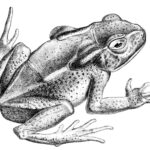
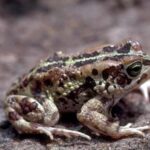
Superficially, Tai Forest toads appear understated compared to flashy rainforest inhabitants, yet a closer encounter illuminates their distinctive elegance. Adults average between 35 to 50 mm in length, fitting neatly within the palm of your hand. Their compact build, short limbs, and rounded features exemplify classical Bufonid traits—adaptive body plans ideal for navigating leaf litter, narrow crevices, and damp, shadowy hideouts.
The coloration of Sclerophrys taiensis varies exquisitely, ranging from earthy browns to gradients of ochre and mossy green, adorned with a nuanced mosaic of darker patterns. This cryptic coloration enables them to perfectly blend into their forest-floor backdrop, providing unsurpassed camouflage against hungry predators. An attentive observer might also note subtle dorsal textures on their wart-covered skin, fascinating adaptations assisting moisture retention and defense against external parasites and fungi rampant in humid rainforest microclimates.
Behavior and Life Cycle#
Though mostly hidden and secretive during daylight hours, Sclerophrys taiensis emerges with the cool twilight, displaying nocturnal activity—a world alive with insect chorus, bat flaps, and nightjar songs setting the auditory tapestry. These toads conscientiously patrol their territories, carefully exploiting abundant insect prey, spiders, and small invertebrates populating the lower forest strata.
Breeding in this species coincides with the rainy season, when dense clouds release torrential rains bringing temporary pools and rivulets into existence, temporary habitats critically important for spawning. Male Tai Forest toads congregate around suitable water bodies, emitting soft yet persistent mating calls which blend harmoniously into the forest’s nighttime symphony. These gently resonating choruses guide receptive females toward the amorous encounter, initiating reproduction cycles vital to perpetuating the species.
Following successful courtship and mating, females lay distinctly gelatinous egg clusters in shallow water, their transparent membranes protecting delicate embryos. Within days, the pools reverberate with subtly squirming tadpoles, gradually transforming through metamorphosis into terrestrial juveniles perfectly prepared to face the complex, often dangerous, adult world of rainforest life.
Ecological Role#
Sclerophrys taiensis—hidden in plain sight—assumes a silent, indispensable role in maintaining ecosystem balance. As an amphibian predator, it efficiently manages insect populations, a subtle yet powerful guardian against potential pest outbreaks and ecosystem imbalances. Equally, its diminutive size and placement within the food web positions it as a vital prey item for snakes, birds, and mammals—illustrating biodiversity’s interconnectedness within Tai National Park.
Critically, Sclerophrys taiensis is a compelling example of an ecological indicator species. Amphibians’ highly permeable skin and biphasic life cycles make them carefully attuned to shifts in air, water quality, or temperature patterns. The continued health and abundance of Tai Forest toads speak volumes about the broader integrity of their rainforest habitat, placing responsibility upon us as stewards to protect, preserve, and respect the delicate balances represented here.
Threats and Conservation Status#
While limited explicit data currently affects formal IUCN listing, the extremely restricted habitat range alone sets the alarm bells ringing regarding conservation priority. Primary threats to Sclerophrys taiensis emerge from habitat destruction—slash-and-burn agriculture, logging pressures, expanding human settlements, and infrastructure development—all profoundly reshaping landscape and fragmenting critical forest corridors required for their survival.
Coupled with habitat concerns, climate change—a global ecological reality—urgently compounds the peril faced by the species. Increased frequency of extreme weather events, changing rainfall patterns, and rising temperatures potentially disrupt the amphibian’s delicate breeding cycles, dramatically reducing their reproductive success rates.
To mitigate threats and preserve this unique herpetological treasure, conservation strategies emphasizing habitat protection, reforestation, reducing anthropogenic pressures, and increasing public awareness constitute must-do tasks for researchers, policymakers, and local communities alike. Collaborative efforts involving scientists, indigenous partners, governments, and NGOs represent the primary hope for safeguarding both species and rainforest ecosystem health well into the future.
Cultural and Scientific Significance#
As elusive as it is, the Tai Forest toad symbolizes nature’s quiet endurance and resilience. Beyond vital ecological roles, amphibians like Sclerophrys taiensis occupy important dimensions within human cultures, triggering fascination, curiosity, symbolism, and appreciation. Locally, Tai National Park’s biodiversity inspires folklore and traditional beliefs honoring nature’s interconnectedness, reinforcing cultural heritage preservation alongside biodiversity conservation.
Importantly, the specificity of Sclerophrys taiensis to Tai National Park exemplifies the intrinsic value and vulnerability of rainforest specialization, making the frog a scientifically fascinating object of study. Insights garnered from this species advance our understanding of rainforest ecosystems, adaptive evolution, and broader global conservation responses. It beckons scientific exploration, much like an ecological ambassador safeguarding our collective future.
Conclusion#
Understanding and appreciating Sclerophrys taiensis transcends mere natural history—it reinforces our collective commitment to biodiversity, awareness, and conservation action. Each hop in the rainforest leaf litter, each nocturnal croak echoing beneath towering trees, reminds us that seemingly inconspicuous organisms hold incredible significance in the intricate web of life.
By unfolding the vibrant, nuanced natural history of this unique amphibian, may we be inspired to amplify our conservation awareness, support protective initiatives, and advocate ceaselessly for Earth’s irreplaceable biodiversity.