Sclerophrys latifrons: Revealing the Hidden Wonders of the Broad-Headed Forest Toad#
Within the lush understory of West Africa’s dense tropical forests, hidden beneath layers of damp leaves and twisted roots, thrives a creature whose quiet presence is integral to ecological balance and fascinating biodiversity—the Broad-Headed Forest Toad, scientifically known as Sclerophrys latifrons. This remarkable amphibian, often overlooked in the shadow of larger fauna, serves as a critical indicator of rainforest health and embodies the delicate intricacies of these increasingly vulnerable ecosystems. Possessing unique biological talents and an astoundingly adaptive persona, this species captivates naturalists and conservationists alike.
Did you know that the call of Sclerophrys latifrons subtly shifts in tone and pitch depending on temperature and humidity? A remarkable form of biological calibration, this sensitivity underscores the toad’s role as a sentient witness to environmental changes. Let’s immerse ourselves into the intriguing world of Sclerophrys latifrons, exploring its taxonomy, captivating behaviors, ecological roles, and the pressing conservation challenges it faces.
Taxonomy and Classification#
Sclerophrys latifrons, previously placed within the genus Bufo, belongs firmly within the Bufonidae family—commonly known as ‘true toads.’ This authoritative family encompasses a wide range of adaptable, terrestrial amphibians famous for their warty skin and robust bodies. Following meticulous morphological studies and sophisticated genetic analyses conducted over recent decades, Sclerophrys latifrons was reclassified, reflecting deeper evolutionary relationships within West African amphibians.
Cousins within the genus Sclerophrys include the widely recognized African common toad (Sclerophrys regularis), which shares similar morphological characteristics but notably different habitat specializations. Such taxonomic precision is more than scientific formality—it helps drive targeted conservation programs, study ecological dynamics accurately, and enhance our understanding of evolutionary adaptations within amphibian biodiversity.
Natural Habitat#
Geographic Distribution and Range#
Sclerophrys latifrons has a fairly narrow distribution, primarily inhabiting the verdant tropical forests of West Africa. Its known range extends across nations such as Nigeria, Cameroon, Gabon, Equatorial Guinea, and parts of western Democratic Republic of Congo. Within these nations, the species prefers humid and densely vegetated forest floors near slow-moving freshwater streams, shaded swamps, and secluded forest ponds—places often veiled by fronds and foliage, concealed from direct sunlight and heat.
Habitat Preferences#
Delving deeper into its preference for certain habitats reveals subtle adaptations. The Broad-Headed Forest Toad favors humid habitats where leaf litter and debris provide optimal shelter, humidity levels, and hunting opportunities. Frequently found nestled beneath overturned logs or partially submerged foliage, Sclerophrys latifrons relies heavily on ambient moisture, not only for hydration and respiration through its permeable skin but also for effectively stalking prey.
These specialized microhabitats are ecological niches finely tuned to the species’ requirements. They facilitate intricate interactions that profoundly contribute to forest nutrient cycling and the feeding ecology of numerous other species. The health and survival of Sclerophrys latifrons thus directly mirrors the status of their rich and vibrant rainforest homes.
Physical Characteristics#
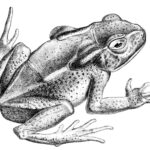
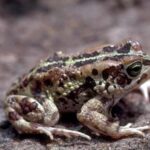
Amid the shady tranquility of its forest domain, Sclerophrys latifrons presents itself as a master of disguise, blending effortlessly amidst shadows, moist soil, and countless fallen leaves. Typically medium-sized, adults measure approximately 50 to 70 mm (about 2–3 inches) in length, with females tending slightly larger than their male counterparts.
Their overall physique appears sturdy, supported by strong limbs tuned to terrestrial locomotion across uneven forest terrain. The ease with which this amphibian traverses moss-covered stones and tangled vines is remarkable. At the front end, reflecting its name, the remarkably broad head houses powerful jaws suited to devouring an array of insects and small invertebrates.
Its coloration—a blend of deep, muted browns, rust-reds, and mild greys—is perfected by patches of darker tones and spots that render exquisite camouflage. Warty protrusions scattered across their body further assist in concealment, breaking their outline against the backdrop of leaf-strewn terrain. This effective camouflage not only provides defense against predators, but also enhances their predatory efficiency—silent, unnoticed approaches become their trademark hunting strategy.
Behavior and Life Cycle#
Feeding Habits#
In quiet twilight and the velvet of early evening, Sclerophrys latifrons ventures forth in pursuit of prey. Their dietary regimen consists primarily of forest-floor arthropods—ants, beetles, termites, and occasionally spiders. Utilizing visual and tactile cues, they employ a “sit-and-wait” ambush strategy, patiently resting until prey unwittingly comes within striking distance. Quick reflexes paired with a sticky tongue assist in swift capture and consumption.
Reproduction and Development#
Annually, triggered by seasonal rainfall, mating rituals captivate the forest nightscape. Male Broad-Headed Forest Toads congregate near water bodies, chorusing in unison. Their melodic yet cryptic calls—medium-pitched croaks punctuated by melodious pauses—attract females toward small but clear aquatic habitats ideal for egg deposition. This period of breeding showcases a gripping natural symphony, where amphibian choruses blend harmoniously with the hum of insect orchestras under moonlit skies.
Female toads produce long strings of gelatinous eggs carefully wrapped around submerged vegetation or gently settled on aquatic plants. After hatching, tadpoles embark on a remarkable metamorphosis from aquatic larvae into terrestrial juveniles—a transformative journey reflecting nature’s incredible adaptability and versatility.
Ecological Role#
A crucial fixture in the intricate tapestry of rainforest life, Sclerophrys latifrons fulfills multiple ecological functions. Acting both as predator and prey, this species helps regulate populations of numerous insect species, contributing significantly toward controlling pest populations and ensuring ecosystem stability.
Additionally, they serve as valuable prey for various predators—including snakes, birds, and small mammals—fitting neatly into interspecies food web dynamics. Their sensitivity to environmental changes makes Sclerophrys latifrons an essential bioindicator species. Their population health can indicate broader ecosystem conditions, spotlighting systemic disturbance or decline long before other, more visibly resilient wildlife.
Threats and Conservation Status#
As human activities expand and forests shrink, the prognosis for many rainforest inhabitants grows increasingly serious. Although currently assessed as “Least Concern” in the global IUCN Red List assessment, Sclerophrys latifrons faces localized threats such as habitat destruction through logging, agriculture, and urban encroachment. These disruptions not only diminish available microhabitats but also affect water quality critical for successful reproduction.
The increased frequency of droughts amid climate change compounded with escalating deforestation jeopardizes amphibian resilience. Furthermore, disease vectors such as chytridiomycosis—a devastating global amphibian fungal disease—remain worrisome threats requiring continued vigilance.
Cultural and Scientific Significance#
Though not widely featured in traditional folklore, Sclerophrys latifrons captures the imagination of local communities through its mysterious calls and subtle appearances. Its scientific significance, however, extends profoundly, offering researchers insights into biodiversity, habitat health, and climate change impacts. Amphibians like Sclerophrys latifrons are increasingly recognized as environmental sentinels whose wellbeing intimately ties to ecosystem vitality.
Conclusion#
Sclerophrys latifrons exemplifies how understanding even the most inconspicuous creatures reveals critical ecological insights, emphasizing intricate relationships between species and their environment. Protecting this species transcends the mission to preserve singular wildlife—it advocates safeguarding entire ecosystems and maintaining the delicate balance of life. By deepening our collective appreciation and reinforcing conservation commitment, we ensure the Broad-Headed Forest Toad’s nocturnal chorus endures, echoing vibrantly through West Africa’s forests for generations to come.