Rhinella justinianoi: Unveiling the Life of a Fascinating Amazonian Toad#
Deep within the lush tapestry of South America’s Amazonian rainforests hides an amphibian that often goes unnoticed by even the sharpest observer. Rhinella justinianoi, a remarkable yet understudied species of toad, quietly contributes to the biodiversity and ecological integrity of its rainforest home. Identified comparatively recently and named by scientists to reflect its subtle distinction, Rhinella justinianoi embodies the mysterious, resilient, and perfectly adapted survivors that thrive in remote habitats.
While it may lack the splashy colors or deadly reputation of poison dart frogs, Rhinella justinianoi captures an entirely different kind of wonder—a quiet charm found in subtler hues, cryptic habits, and a vital ecological role. Before embarking deeper into the shadows and still waters these amphibians prefer, let’s illuminate the classification informed by science, their intriguing habitat and behaviors, and their profound value as environmental indicators.
Taxonomy and Classification#
The toad known scientifically as Rhinella justinianoi belongs to the expansive Bufonidae family, often simply called the “true toads.” This family comprises robust-bodied species, typically characterized by warty skin and a preference for terrestrial life. Within this lineage, the genus Rhinella itself is impressively diverse, encompassing upwards of a hundred distinct species, each uniquely adapted to their particular slice of habitat across Central and South America.
Rhinella justinianoi was formally described relatively recently, in 1994, by renowned herpetologists Harvey and Smith. Its species name “justinianoi” honors Justiniano Torres, a Peruvian naturalist who significantly contributed to amphibian field research in the region. Closely related to other Rhinella species nearby, such as Rhinella margaritifera, it often exists unnoticed, expertly camouflaged against debris-strewn forest floors and the edges of slow-moving waters.
The relative newness of its scientific description echoes its cryptic nature. Indeed, despite increasing herpetological exploration through remote rainforest tracts, Rhinella justinianoi remains remarkably enigmatic, awaiting further revelations from field researchers who dare to explore deeper within the Amazon’s protective green embrace.
Natural Habitat#
The home range of Rhinella justinianoi extends primarily throughout lowland rainforests and subtropical regions within Bolivia, western Brazil, and Peru. In these dense, humid forests, where biodiversity peaks and rainfall is abundant, Rhinella justinianoi showcases its finely-tuned adaptations.
Unlike many amphibians reliant exclusively on bodies of water, Rhinella justinianoi favors terrestrial habitats. Typically, these toads dwell among the leaf litter carpeting the forest floor, amidst layers of fallen branches and decomposing plant matter. Here, shaded from harsh sunlight and buffered by constant moisture, the toads live their secretive lives regulated by humid cycles. They often approach or delve into slow-moving or stagnant water sources for reproduction, such as puddles, temporary pools formed after heavy rains, and shaded forest streams where predators find it more challenging to hunt effectively.
This habitat provides not just shelter but also a hunting ground rich in insect life—an endless buffet concealed under decomposing plant matter and within mossy crevices. In return, Rhinella justinianoi aids in nutrient cycling, pest control, and serves as prey for numerous forest birds, snakes, and mammals, contributing intimately to the Amazonian food web.
Physical Characteristics#
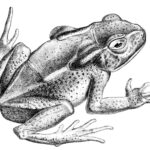
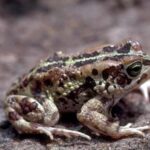
Though not boasting spectacular bright colors, Rhinella justinianoi remains captivating to keen observers thanks to its cryptic, adaptive camouflage. Adults generally measure between 30 to 45 millimeters, a modest size fitting perfectly into their preferred microhabitats. Their bodies appear robust and stocky, characteristic of the traditional “toad-like” build of the Bufonidae family.
Coloration leans toward subdued earth tones, such as variegated browns, tans, olives, greys, and occasionally muted reds. Speckled or mottled patterns across their skin further facilitate blending seamlessly with the patchwork of fallen leaves, damp soil, and dappled shade. Their skin texture ranges from granular to prominently wart-covered, assisting not only in providing protection but also helping blur the line between toad and terrain.
Adaptations extend beyond mere appearance. Rhinella justinianoi has relatively short, powerful limbs enabling both quiet, efficient movement and sudden escapes from predators. Their large, round eyes protrude slightly above the head, allowing excellent peripheral vision to spot threats and prey alike. Behind each eye lies the distinctive parotoid gland, characteristic of true toads, capable of excreting mild toxins—deterring potential predators and safeguarding their survival.
Behavior and Life Cycle#
Rhinella justinianoi is predominantly active at twilight and during humid evenings following torrential tropical downpours. Most hours of daylight, they remain tucked amongst leaf litter and undergrowth, patiently awaiting darkness. Their nocturnal activity involves methodical foraging expeditions targeting small arthropods, ants, beetles, termites, and other forest invertebrates.
Breeding Season and Courtship#
Once the rainforest transitions into its rainy season rhythm, males of Rhinella justinianoi serenade potential mates with a soft, repetitive chorus. The call, much more subtle and gentle than the iconic chorus of some frog species, helps females find willing partners within dense jungle vegetation. After successfully attracting a mate, the breeding pair moves toward shallowly flooded terrestrial depressions, temporary pools, or small shaded streams.
Eggs and Tadpoles#
Females lay egg clusters submerged partially in water, anchoring them to aquatic vegetation or substrate. Once laid, eggs rapidly swell slightly in size, becoming clear gelatinous spheres housing the delicate embryos. Upon hatching, young Rhinella tadpoles begin an astonishing transformation process that lasts a few weeks depending on water availability and temperature. Feeding on algae and organic detritus, they quickly metamorphose into miniature terrestrial toadlets capable of joining the ranks of their camouflaged elders among the leaf-covered forest floor.
Ecological Role#
Despite their often-overlooked presence amidst more conspicuous Amazonian wildlife, Rhinella justinianoi performs crucial ecological duties. They balance insect populations, helping manage pests that might otherwise detrimentally impact forest health. Equally essential, they feature prominently in the diet of larger animals, indirectly feeding mammals, snakes, predatory birds, and even arachnid species.
Moreover, their sensitivity to habitat changes—humidity fluctuations, water contamination, soil degradation—renders this toad species an essential environmental indicator. An abrupt decline or significant shift in Rhinella justinianoi populations could serve as an early warning signal of ecological stress, underscoring their critical conservation importance.
Threats and Conservation Status#
Currently listed as Least Concern by the International Union for Conservation of Nature (IUCN), Rhinella justinianoi appears stable across its localized ranges. Nevertheless, potential threats loom ominously closer. Habitat destruction from expanding logging and mining activities poses a tangible risk to its sheltered woodland habitat. Agricultural encroachment similarly fragments vital terrestrial corridors and disturbs delicate breeding pools scarcely measurable amid remote rainforest expanses.
Additionally, climate change poses indirect dangers through shifting rainfall patterns, temperature variations, and unpredictable drought or flooding events—all critical survival challenges for amphibians reliant on precise, moisture-dependent microenvironments. Conservation measures, therefore, must anticipate these creeping threats through continuous population monitoring and habitat protection programs.
Cultural and Scientific Significance#
Beyond ecological importance, Rhinella justinianoi holds scientific value for researchers studying amphibian resilience, adaptation, and ecological health within Amazonian ecosystems. Further studies of its toxins and chemical constituents could illuminate novel bioactive substances of medicinal or pharmacological interest.
Occasionally, local indigenous communities recognize toads and frogs of the Amazon as guardian spirits or symbols of fertility and renewal, involving them in oral traditions, storytelling, and even shamanic practices. Although explicit cultural reverence specifically to Rhinella justinianoi remains unrecorded, associated species frequently enjoy symbolism reflective of the interconnectedness and harmony necessary within complex rainforest networks.
Conclusion: Guardians of the Leaf Litter#
Though modest in stature and subdued in appearance, Rhinella justinianoi reveals a fascinating story of adaptability, survival, and ecological partnership deeply ingrained within its Amazonian home. Understanding and protecting these humble creatures not only enriches our appreciation of rainforest biodiversity but serves as a fundamental step toward safeguarding vast interconnected ecosystems.
Let us advocate, explore, and always respect the intricate lives beneath our gaze, knowing each subtle amphibian calls urgently for responsible stewardship. After all, hidden within the leaf litter and gently illuminated by moonlight, Rhinella justinianoi quietly embodies the exquisite wonder and importance of wildlife conservation itself.