Sclerophrys camerunensis: Exploring the Enchanting Cameroon Toad#
Beneath the lush canopy of Central and West Africa’s humid forests, amidst the chorus of cicadas and birdsong, dwells a fascinating amphibian that embodies the interconnected wonders of biodiversity. Its name may not yet be widely recognized, but the Cameroon Toad (Sclerophrys camerunensis) carries with it secrets of intricate ecological relationships, profound adaptability, and pressing conservation messages.
A resident of vibrant rainforests and verdant wetlands, this remarkable toad invites us into a world of subtle complexity and quiet charm. With stories hinted in its patterns and behaviors, we explore the life of Sclerophrys camerunensis, gaining insight into its role in nature and our collective responsibility in ensuring it thrives.
Taxonomy and Classification#
To place our amphibian protagonist in scientific context, we begin by exploring its formal classification. Sclerophrys camerunensis falls within the diverse family Bufonidae, commonly known as “true toads.” Members of the genus Sclerophrys are widely distributed across sub-Saharan Africa, each species adapting uniquely to its particular ecological niche.
Established formally as a distinct species in 1903 by renowned zoologist George Albert Boulenger, this intriguing toad has long caught the attention of researchers, revealing evolutionary traits adapted to the lush, tropical regions of Cameroon and its neighboring territories. It closely relates to species such as Sclerophrys regularis, yet its own set of distinguishing characteristics and environmental preferences clearly demarcates its place in the dense, tangled evolutionary tree that connects all life forms.
Natural Habitat#
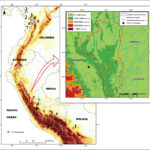
Sclerophrys camerunensis thrives predominantly in the humid lowland and montane tropical forests of Cameroon, Equatorial Guinea, Gabon, Democratic Republic of Congo, and parts of Nigeria. These biodiverse, rain-drenched ecosystems offer an ideal habitat: dense vegetation, abundant moisture, and countless microhabitats suited for reproduction and survival.
Deep Within Rainforest Realms#
Imagine penetrating a dense undergrowth layer, past dripping leaves and over deep-brown, loamy soils textured by decades of fallen leaves and decomposing organic matter. Such a habitat offers a haven to Sclerophrys camerunensis. Near rivers, streams, and ephemeral puddles, these amphibians occupy territories offering both food and protected breeding grounds.
Unlike many Mediterranean or savannah-adapted relatives, this particular toad is attuned to higher moisture environments, a fact evident in its dependence upon continuous water sources and humidity. It is often found near the bases of tree buttresses, beneath large fallen logs, or nestled comfortably within piles of leaf litter, places where moisture abounds, and insects—its primary food source—flourish.
Physical Characteristics#
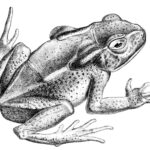
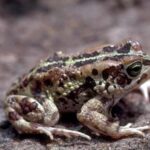
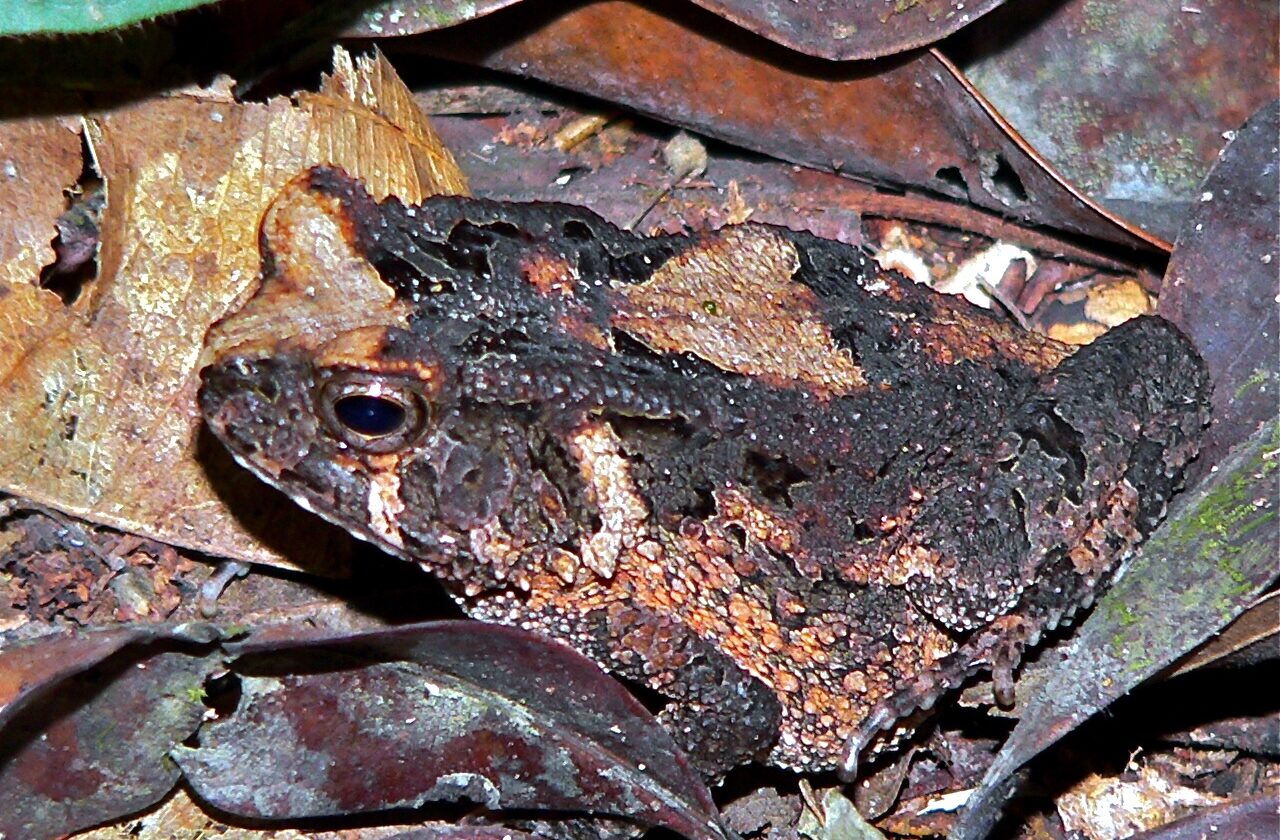
The Cameroon Toad is as striking in appearance as it is elusive in behavior. Adult specimens typically measure between 60-80 mm; their sturdy bodies exude a rugged resilience distinctly suited to their dense forest dwelling. The rough, bumpy skin, characteristic of many bufonids, is adorned with varied patterns ranging in shades of olive to dark brown, helping the animal blend almost seamlessly with decaying foliage on the forest floor.
Perhaps most intriguing are the distinctively raised parotoid glands situated behind its eyes, prominent yet elegantly blending with its overall form. These glands secrete toxins, designed as chemical armor to protect against predators unusually eager for amphibian prey.
Though not vividly marked like some toxic tree frogs, the subtle hues and mottled patterns on Sclerophrys camerunensis create perfect camouflage, an evolutionary adaptation crafted meticulously through millennia of predator-prey interactions. Its horizontal pupils, ringed with specks of gold and black, reflect an alertness to subtle movements in the surrounding shadows, always aware yet hidden to passing observers.
Behavior and Life Cycle#
With the arrival of the rainy season, the forest resonates with the resonant chorus of amphibian courtship—an aural tapestry woven by countless species vying for attention. Among these voices is the deep, resonant croak of the Cameroon Toad, males vocalizing earnestly from pond edges and damp vegetation. Their calls, regular rhythmic pulses, echo into the night, guiding hopeful females toward suitable breeding locations.
Breeding Behaviors and Tadpole Development#
Female Cameroon Toads, responding favorably to the serenading males, lay long strings of eggs wrapped protectively within submerged plants or shallow waters. These gelatinous strings hold hundreds of tiny eggs, each containing potential life that, within mere days, give rise to notably resilient tadpoles. Kapok leaves and fallen branches shelter these tadpoles in their aquatic nursery, offering shelter from various predators.
Tadpole development unfolds rapidly, fueled by nutrient-rich waters and abundant algae. Over several weeks, subtle yet steady morphological transformations take place. Limbs form, tails shorten, lungs emerge as delicate metamorphoses propel juveniles from aquatic realms into terrestrial ecosystem citizenship, eager participants in a dynamic ecological framework.
Feeding and Foraging Strategies#
The mature Cameroon Toad is predominantly insectivorous; ants, termites, beetles, and caterpillars frequent its dietary repertoire. Nightfall initiates a discreet and purposeful foraging strategy, the amphibian leaping deftly or ambushing unsuspecting invertebrates moving upon moisture-laden forest floors.
With pinpoint accuracy, the animal employs a sticky, rapid-fire tongue strike, its victim captured in milliseconds, swallowed whole as it continues quietly along its nocturnal route. Far from indiscriminate, the Cameroon Toad exhibits refined prey preference, adapting to fluctuations in insect abundance and availability shaped by seasonal weather patterns.
Ecological Role#
Amphibians, including Sclerophrys camerunensis, serve as ecological linchpins—central characters in intricate storylines unfolding daily within forest ecosystems. As agents of insect population control, the toad maintains a sensitive balance necessary to overall habitat health, preventing unchecked proliferation of pest insects that might otherwise harm plant life or agriculture.
Simultaneously, they become sustenance for an array of predators—birds, larger amphibians, snakes, and even small mammals rely on toads as a food source. Thus, the Cameroon Toad dutifully occupies a dual role, positioned intricately as both predator and prey.
Threats and Conservation Status#
Despite their resilience, Cameroon Toads face considerable risks. Deforestation—relentless and driven by agriculture, logging, mining activities, and infrastructure—is fragmenting their native ecosystems, leading to population isolation and vulnerability. Habitat loss symbolizes a prolonged death sentence for species dependent upon specific environmental conditions. Climate change exacerbates these threats, altering rainfall patterns and tampering with seasonal breeding cycles.
Presently, Sclerophrys camerunensis is classified by the International Union for Conservation of Nature (IUCN) as Least Concern—a seemingly comforting designation, though one laden with cautious optimism. Continued habitat alteration and destruction demands vigilance and proactive conservation measures to maintain healthy populations and monitor possible declines.
Cultural and Scientific Significance#
In Cameroon and nearby regions, amphibians—often including some toad species—symbolize cleansing rituals or elements of fertility and rebirth in cultural folklore. Traditional practices sometimes venerate amphibians as symbols of water and renewal, reflecting ancient human recognition of their ecological importance.
Scientifically, research into amphibian toxins has opened doorways toward medicine: compounds from toad toxins reveal antibacterial, antifungal, and antiviral potential. Ongoing studies may position the remarkable chemical secrets unlocked by species like Sclerophrys camerunensis to offer breakthroughs in pharmaceuticals and ecological understanding alike.
Conclusion: Protecting a Hidden Treasure#
In the shadows and serenity of tropical forests, Sclerophrys camerunensis endures quietly but profoundly. Conservation of this captivating species requires not only protection of individual toads but preservation of broad ecosystems embracing them. This calls us all—researchers, conservationists, ecological enthusiasts, and engaged citizens alike—to champion biodiversity beyond charismatic flagship species, embracing the essential role every life form plays.
Understanding the Cameroon Toad expands into appreciating the full complexity of natural connections upon which the vitality of our planet depends. Let us nurture curiosity toward these intellectually enriching species, safeguarding their futures by maintaining the habitats they so richly deserve.