- Rhinella truebae: Unveiling the Mysteries of a Hidden Jewel in the Amphibian World
Rhinella truebae: Unveiling the Mysteries of a Hidden Jewel in the Amphibian World#
The Ecuadorian Andes harbor a hidden jewel, a remarkable amphibian whose timid charm and ecological significance remain largely overlooked by mainstream awareness. Rhinella truebae, a splendid yet seldom-seen toad species, is a quiet ambassador of Andean biodiversity, contributing silently yet substantially to its vibrant habitat. Its discovery and the unfolding story of its existence poignantly underscore how much remains undiscovered in the rich tapestry of South American wildlife.
Named and described only in recent decades, Rhinella truebae belongs squarely among its more celebrated brethren, including familiar relatives such as the Cane Toad (Rhinella marina). However, unlike the infamy of some toads, Rhinella truebae embodies quiet grace and subtle ecological connections that beg deeper exploration. Below the canopies, amid damp leaf litter and secretive forest streams, unfolds a drama of adaptation, survival, and conservation—one that deserves far greater recognition.
Taxonomy and Classification#
Rhinella truebae belongs to the Bufonidae family, a diverse and widespread lineage that contains hundreds of toad species. Classified within the genus Rhinella, this species’ relatives span an impressive range of habitats across Central and South America, demonstrating remarkable evolutionary versatility. The species bears tribute to the renowned herpetologist Linda Trueb, highlighting the scientific community’s appreciation of amphibian diversity and the tireless dedication of researchers who unveil nature’s hidden gems.
Close Relatives and Differences#
Within Rhinella, its closest congeners include Rhinella marina, the much-debated Cane Toad, known globally due to its invasive status elsewhere. However, unlike its famously robust cousin, Rhinella truebae retains a far subtler presence, adapted uniquely to the cloud forests and Andean environments. It exemplifies how subtle shifts in climate, elevation, and vegetation fundamentally shape amphibian evolution, creating tiny niches filled by incredibly specialized creatures.
Natural Habitat#
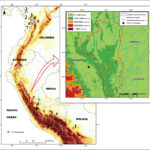
Rhinella truebae inhabits a relatively restricted range, primarily confined to Ecuador’s lush, mist-drenched forests on both slopes of the Andes Mountains. The subtropical and temperate cloud forests, rich with epiphytes, mosses, and a damp, perpetually moist undergrowth, offer this amphibian a secure haven. These secretive habitats, characterized by cool temperatures, abundant rainfall, and perpetual fog, form the ideal home for Rhinella truebae, whose adaptations hinge precisely on this beautiful yet precarious balance.
Environments of Hidden Beauty#
Picture an Andean cloud forest at night: moisture droplets collect on leaves, refracting moonlight into subtle prismatic colors. Moss-covered branches drip with condensation, and the air, cool yet brimming with oxygen-rich freshness, resonates softly with nocturnal wildlife. In this meticulously balanced microhabitat, Rhinella truebae wanders gently through layers of vegetation and leaf litter, seamlessly blending into the rich tapestry beneath feet that rarely come close enough to stir the silent procession of amphibian nightlife.
Habitat Preferences and Microhabitats#
Observational data and careful ecological studies indicate Rhinella truebae favors humid pockets near slow-flowing streams and seepages within forests. These environments provide not just abundant food resources but protection from temperature fluctuations and predators. Essential to their continued survival, the constant humidity helps amphibians maintain their permeable skin, facilitating respiration and hydration directly from their surroundings.
Physical Characteristics#
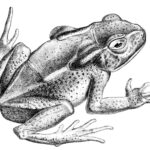
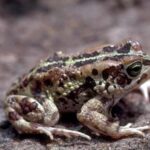
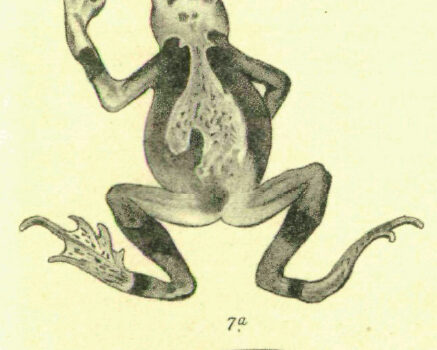
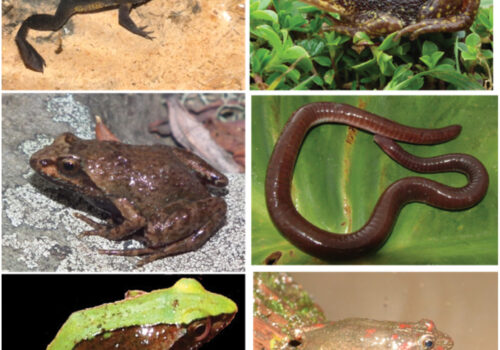
Rhinella truebae is visually modest yet strikingly attractive to those with a discerning eye. Adult specimens typically reach lengths ranging between 35 to 50 millimeters, with females generally slightly larger than males. Their coloration includes earthy shades of browns and greens, with intricate patterning of darker blotches and fine speckles—perfect camouflage against the leaf litter and moss-covered ground these amphibians frequent.
Specialized Adaptations#
Natural selection has favored Rhinella truebae with cryptic coloration and protective, warty skin that deters potential predators from seeing it clearly against complex forest floor backgrounds. Furthermore, the granular texture of their skin aids moisture retention and enhances camouflage. The gentle enlargement of their parotoid glands—though less pronounced compared to many cousins—affords Rhinella truebae a subtle chemical defense against predators, a testament to evolutionary creativity ensuring survival in a competitive environment.
Behavior and Life Cycle#
Rhinella truebae’s life story travels a fascinating trajectory, from inconspicuous eggs nestled among damp vegetation to agile tadpoles already superbly adapted to fastidious stream conditions. Adults exhibit predominantly nocturnal behavior, sheltering during daytime hours under logs, leaf litter, or in humid burrows to escape predators and excessive sunlight. Nightfall brings the toads cautiously into the open to forage, exploiting the cover of darkness to hunt for invertebrates such as insects, spiders, and occasionally small crustaceans.
A Hunter’s Quiet Pursuit#
Attuned to nocturnal signals, these toads practice ambush predation, waiting patiently for prey to come within striking distance. Their sticky tongues, superbly precise and lightning-fast, help Rhinella truebae snatch unsuspecting prey with refined accuracy. Every hunt is quiet; every meal an exemplar of patient adaptation to a delicate ecosystem.
Breeding and Reproduction#
Rainfall, temperature, and humidity intricately regulate their reproductive cycles. During breeding periods, males gather near small streams, producing soft but rhythmic mating calls, distinctive in pitch and cadence—a gentle hum rather than the powerful chorusing seen in lower-altitude species. Females lay strings of eggs concealed within vegetation at water margins, their gelatinous casings safeguarding embryonic development. Tadpoles develop slowly beneath shaded, pristine sections of water, their growth delicately balanced within a secluded aquatic nursery environment.
Ecological Role#
Small amphibians like Rhinella truebae play astoundingly intricate roles in their ecosystems, despite their subtle, humble presence. As both predator and prey, this toad occupies a critical ecological niche, regulating insect populations at the lower levels of the food chain, while offering sustenance for larger predators, including snakes, birds, and small mammals. Furthermore, because of their porous skin and sensitivity to environmental changes, these amphibians serve as excellent bioindicators of environmental health, exposing early warning signs of ecosystem distress.
Threats and Conservation Status#
Sadly, this delicate balance hangs precariously threatened by human-induced pressures, including deforestation, agriculture expansion, climate change, and local pollution. Habitat fragmentation, resulting from road construction or human settlements, poses significant barriers to amphibian movement, limiting genetic diversity and weakening populations. Although Rhinella truebae currently lacks a comprehensive IUCN evaluation, its presence in vulnerable ecosystems underlines the urgent need for monitoring, protection measures, and more thorough ecological assessments.
Conservation Efforts and Future Prospects#
A committed team of researchers and environmentalists in Ecuador continues advocating for expanded protected areas, habitat restoration programs, and policies to limit deforestation. Increasing public understanding about cloud forest ecosystems and the biodiversity they support has become paramount, linking the survival of Rhinella truebae intimately to broader conservation initiatives.
Cultural and Scientific Significance#
While Rhinella truebae lacks the cultural notoriety of more iconic animals, amphibians often hold ceremonial, ecological, and symbolic roles directly or indirectly among local Andean communities, where traditional folklore frequently venerates nature’s subtle miracles. From a scientific perspective, studying Rhinella truebae provides researchers crucial insights into evolutionary adaptation, climate resilience, and ecological fragility, all critical concepts shaping biologists’ understanding of biodiversity in the face of global change.
Conclusion: A Call to Action for a Precious Amphibian#
In Rhinella truebae, we find an important reflection of nature’s nuanced beauty and intrinsic interconnectedness. The quiet resilience and vulnerability it symbolizes invite us all toward greater environmental responsibility, instilling an appreciation not just for charismatic megafauna but for all creatures large and small. By understanding, protecting, and celebrating species like Rhinella truebae, we take meaningful steps toward safeguarding biodiversity and preserving the planet’s wondrous natural heritage.
Now is the moment to step into a brighter future, one guided by curiosity, compassion, and conscientious action—ensuring species like Rhinella truebae continue thriving in wildernesses that inspire awe, admiration, and, above all, understanding.