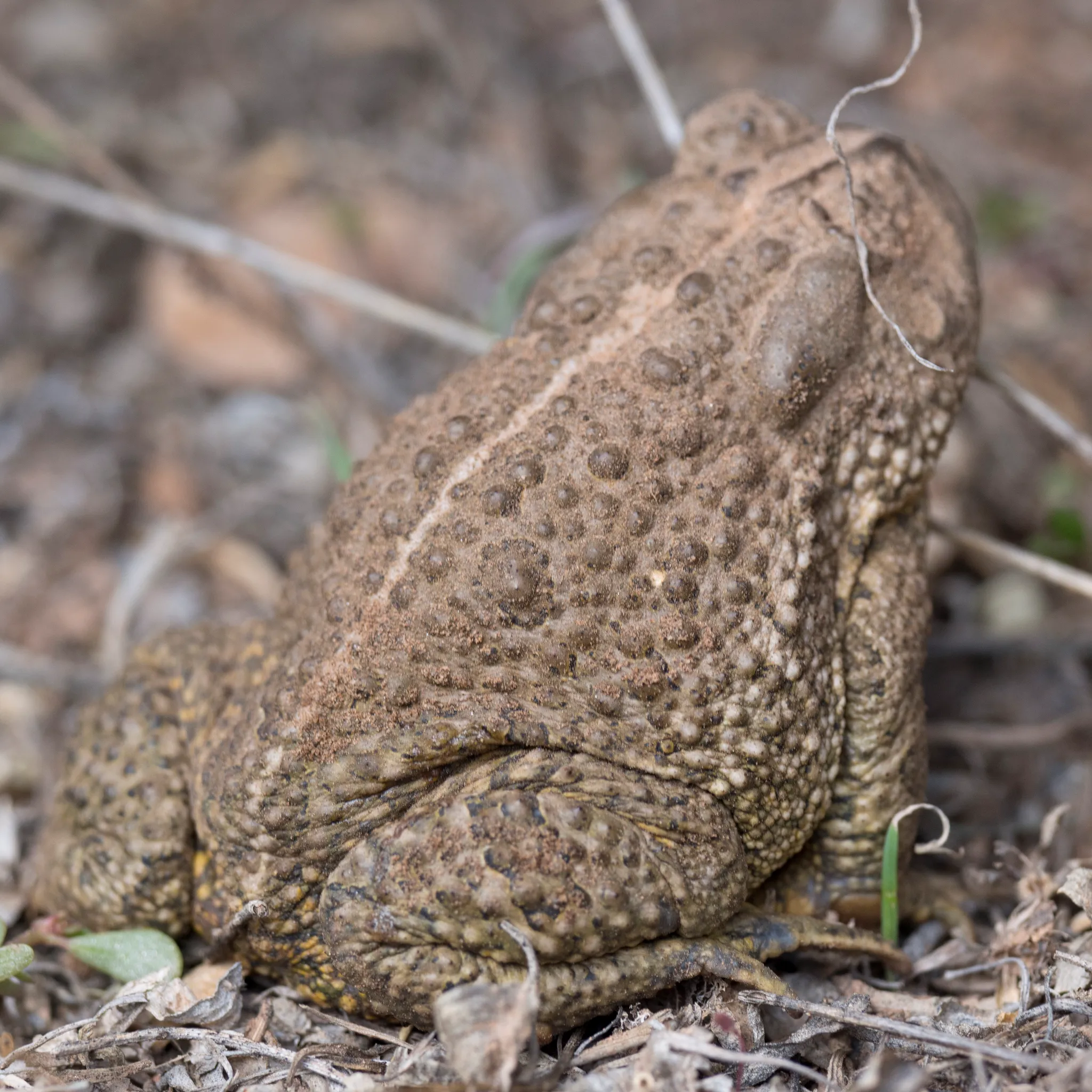
Anaxyrus woodhousii, Woodhouse’s toad, is a medium-sized true toad native to the United States and Mexico. Its range extends from Mexico in the south to Washington in the north, at altitudes of up to 2,500 metres1.
Charles Frédéric Girard described it in 1854 as Bufo woodhousii, in honour of the physician and naturalist Samuel W. Woodhouse (1821–1904), who was part of the Sitgreaves Expedition of the American Southwest. When Bufo was split in 2006, the North American species went to Anaxyrus. There are three recognised subspecies1: the Rocky Mountain toad (A. w. woodhousii), the East Texas toad (A. w. velatus) and the southwestern Woodhouse’s toad (A. w. australis). In Missouri the name Rocky Mountain toad replaced the formerly recognized name Woodhouse’s toad for the local subspecies, and the Missouri Department of Conservation considers it likely that additional taxonomic changes might be warranted2 between the Rocky Mountain and southwestern forms.
Identification
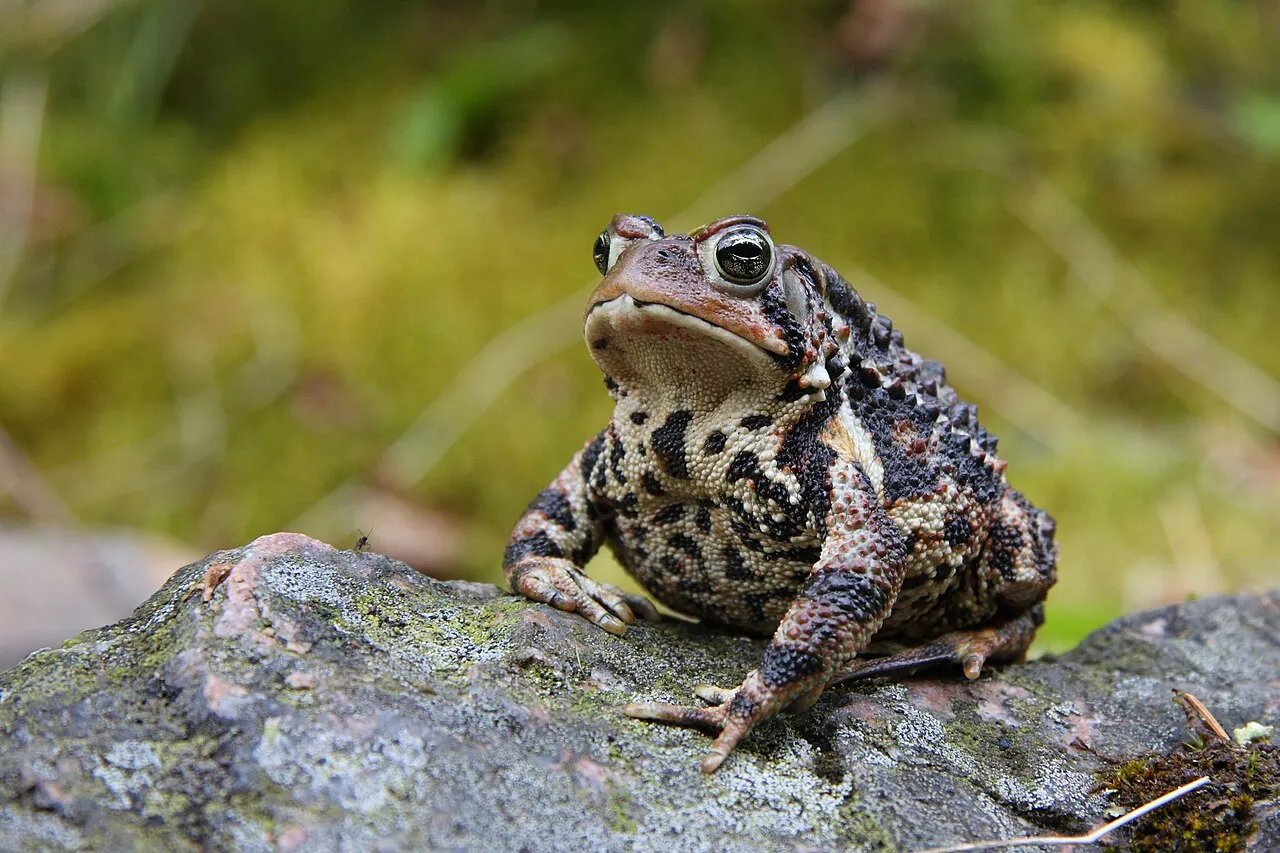
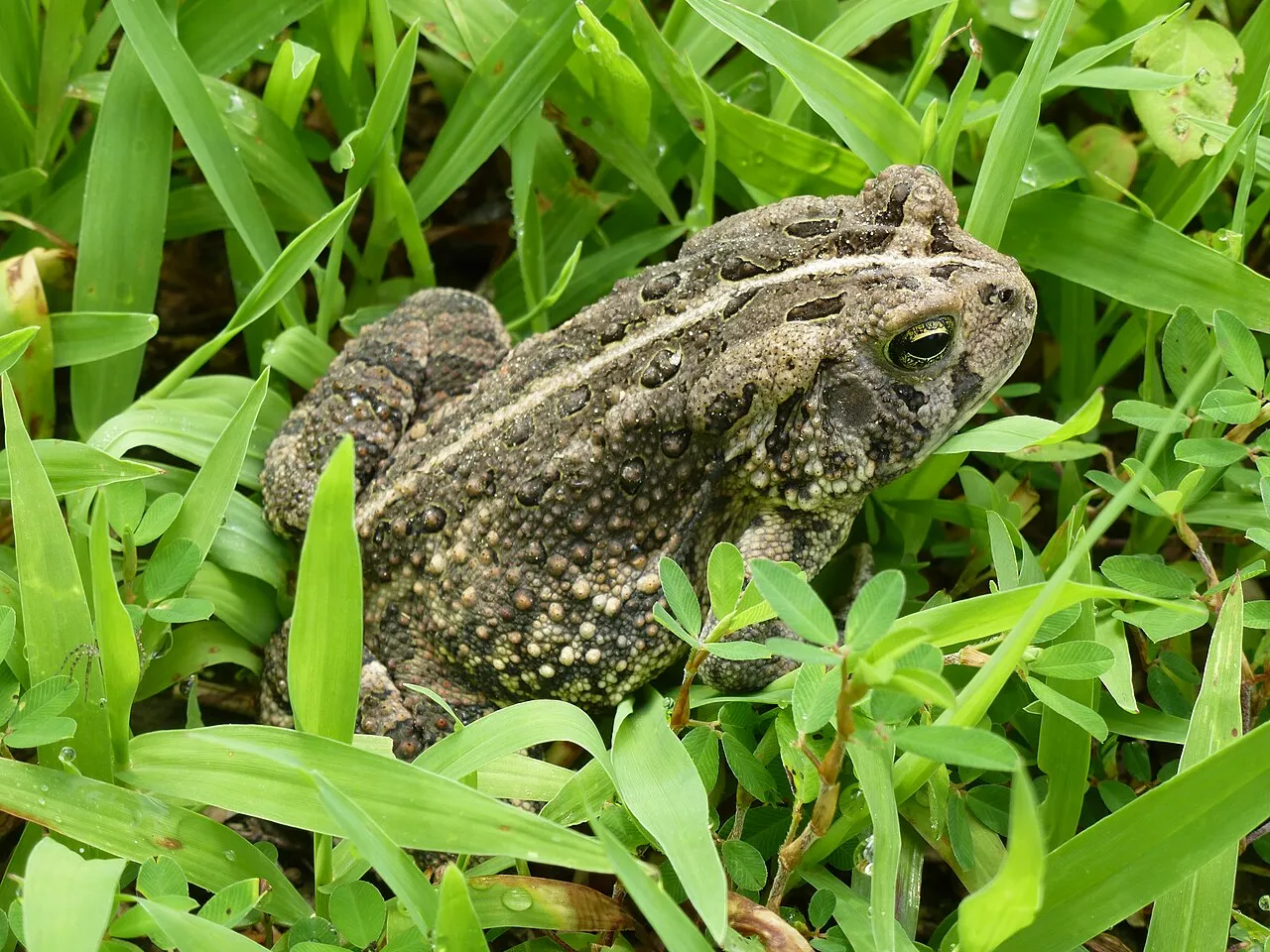
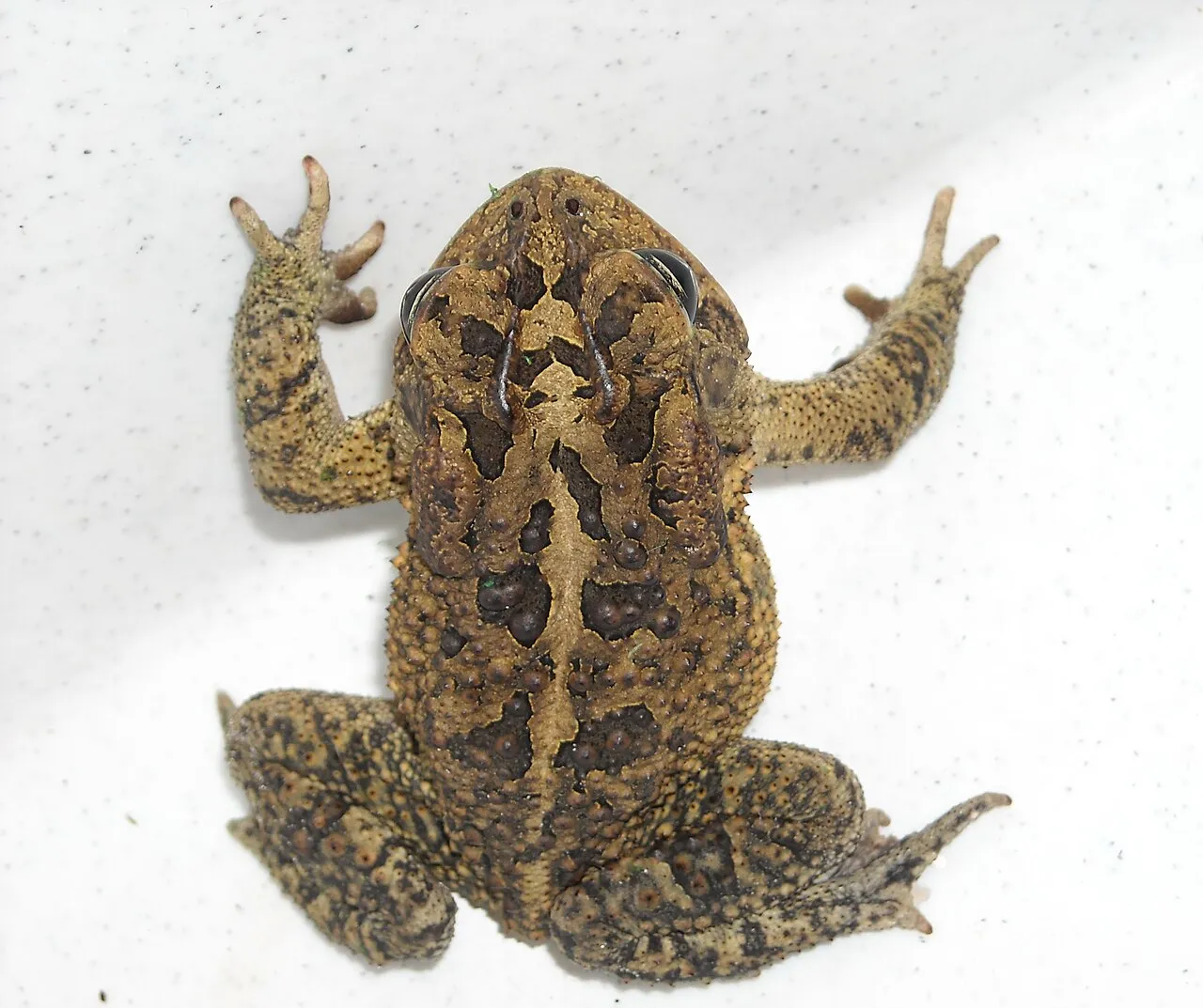
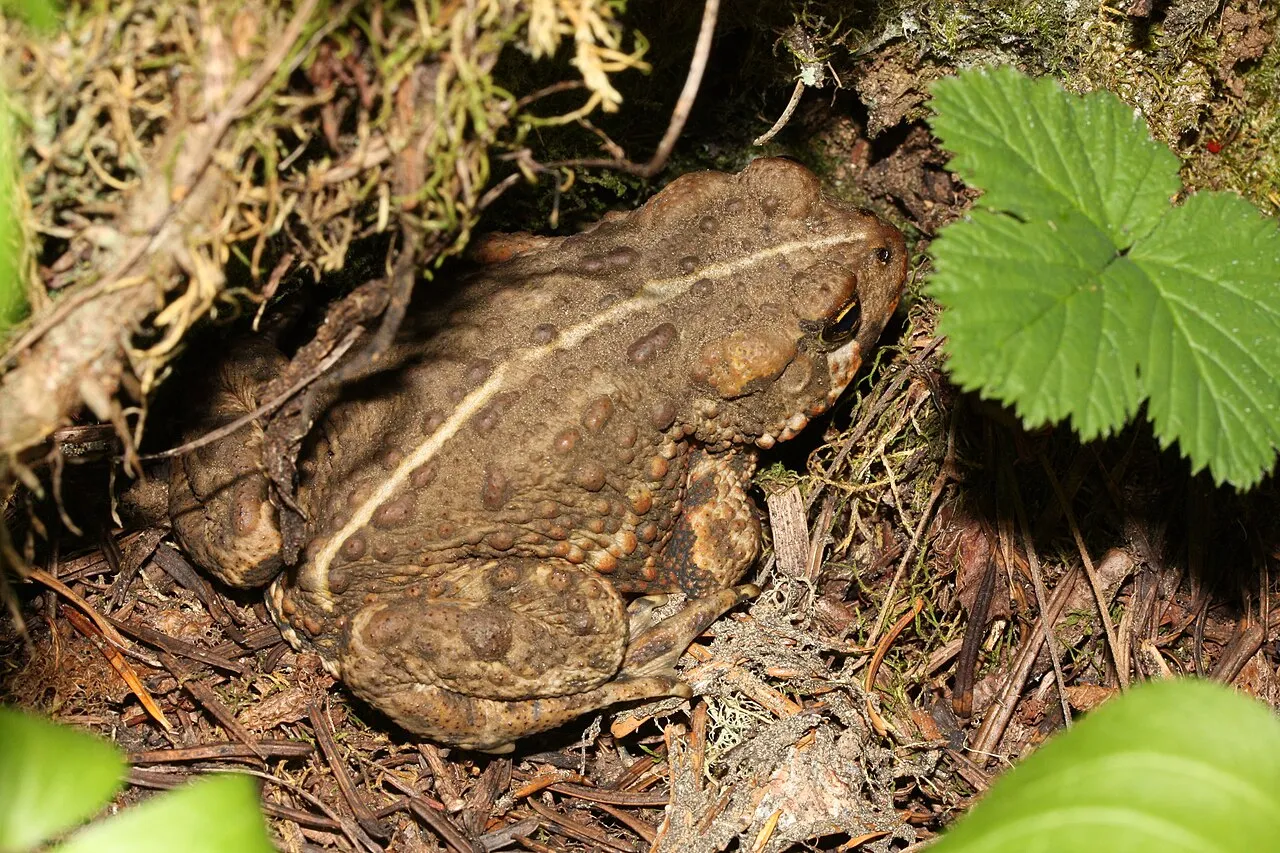
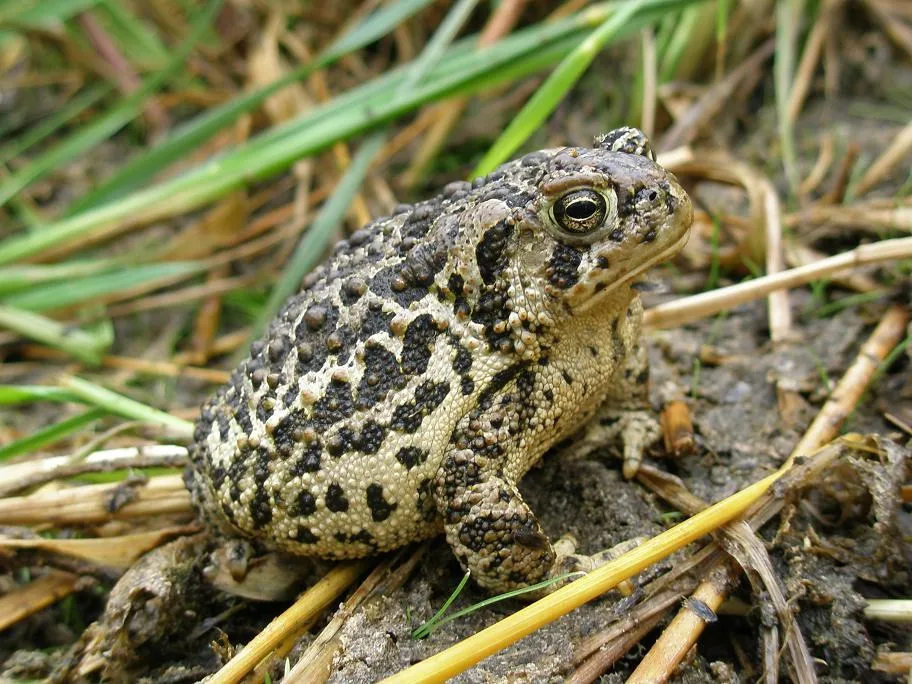
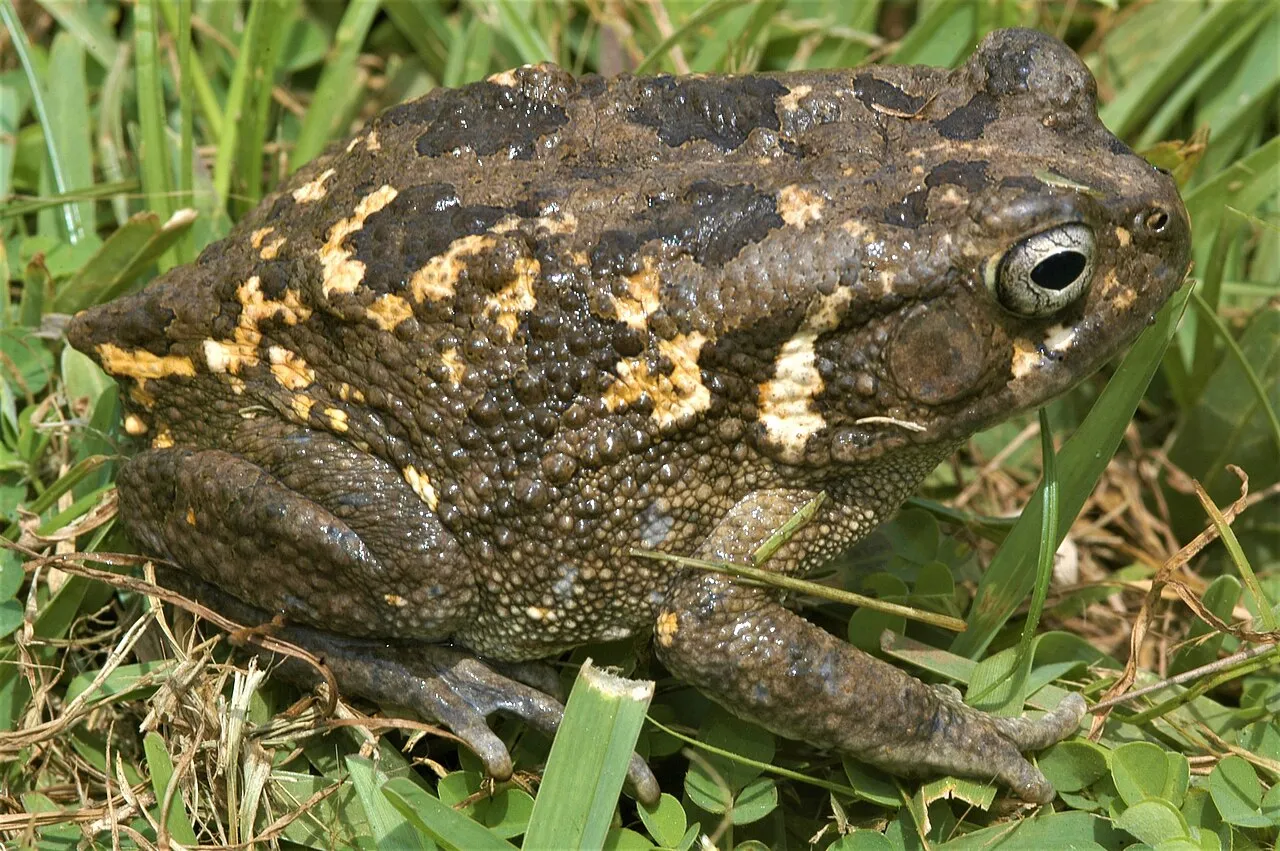
Missouri adults measure 2½ to 4 inches snout to vent, occasionally 5, roughly 64 to 102 mm and rarely 127 mm, and females are larger than males. Washington’s wildlife agency describes a stout toad with a broad waist, short legs, a round head, and a short snout, and prominent L-shaped cranial crests between and behind the eyes3. Each large, oblong parotoid gland behind the eye is connected to the prominent bony cranial crest2 above it.
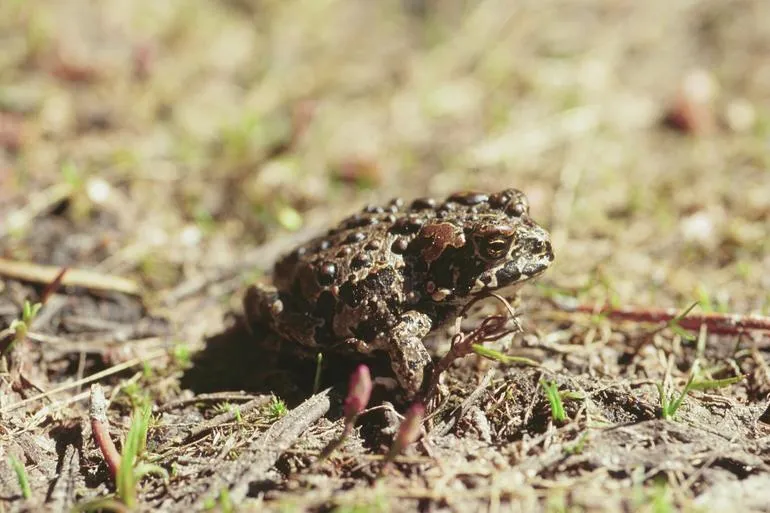
The back may be green, greenish gray, gray, tannish gray, or brown, with irregular dark spots that each hold 1–6 warts, and a tan or white stripe usually runs down the back. The belly is white and usually unspotted, though some individuals carry a single breast spot2; in Washington the toads have a dark speckled light underside. Males have a dark throat3.
The male’s call in Missouri is a short, nasal “w-a-a-ah” lasting from 1 to 2½ seconds; it has also been likened to the bleat of a sheep1. Like other true toads, it has warts that produce skin secretions irritating to a predator’s mucous membranes. Contrary to superstition2, toads do not cause warts on humans.
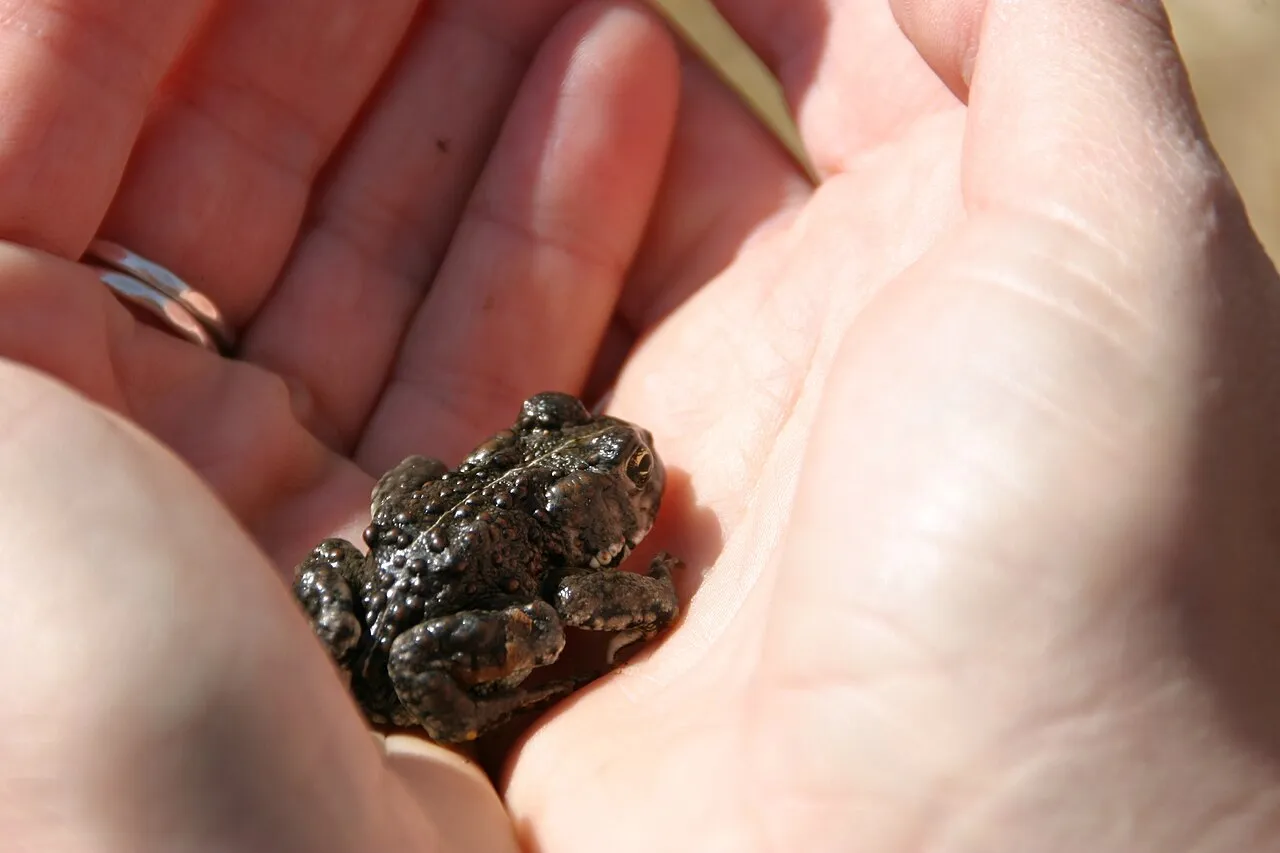
The young stages look different. Eggs are small, black above and white below, with only one layer of gel. The tadpole is less than one inch total length, its body and upper tail musculature darkly pigmented, with golden pigment that appears first near the underside of the tail base. The crests and long parotoid glands are not present in newly metamorphosed toads3 and may not be prominent in juveniles.
Habitat and range
In the United States it is recorded from Arizona, Arkansas, California, Colorado and Idaho, Kansas, Montana, Nebraska, Nevada, New Mexico, North Dakota, Oklahoma, Oregon, South Dakota, Texas, Utah, Washington and Wyoming. In the west of that range it typically lives in lowland riparian corridors, wooded land beside streams and rivers; higher up it uses wet meadows, ponds, reservoirs and lakes, and it also turns up in urban environments, canals, ponds and irrigated agricultural land1.
In Missouri it occurs primarily within the Missouri River floodplain, from the centre to the far northwest of the state, perhaps as far east as St Charles County and western St Louis County. There it prefers sandy lowlands, particularly river bottoms, open dry ground next to marshes, and the surroundings of homes, and it is the most abundant toad in the sandy soils2 of the floodplain.
In Washington it occurs in a small area of the Columbia Plateau Ecoregion, along the Snake River and along the Columbia between Priest Rapids Dam and John Day Dam, with records too from the Eltopia and Wahluke Branch irrigation canals, the Hanford site and Juniper Dunes. Its habitats there are riparian areas, shrubsteppe, and grassland. Soils suitable for burrowing are important3 because the toads spend most of the day underground.
Behaviour and breeding
The toads hide in burrows by day and become active at night, and in Missouri they can be seen in large numbers on roads after warm spring or summer rains2. In Washington, activity starts in late April to early May and continues into October; adults are active from twilight into the night3.
It feeds on insects and other small invertebrates, and near houses it may congregate underneath outside lights1 to catch the insects they draw. These toads can sometimes eat up to two-thirds of their own weight in a single night, and because they eat large numbers of crop pests they are considered economically important. They are themselves eaten by snakes including the northern watersnake, hog-nosed snakes and gartersnakes2.
Breeding takes place at different times of year in different parts of the range1. In Missouri it does not begin until late April or early May, usually peaks in mid-May to early June and continues into July, with males gathering at river sloughs, shallow ditches, ponds, and flooded fields2. In Washington’s Franklin, Benton and Grant counties males chorus from May into July in shallow temporarily flooded sites, ponds, and sloughs3, and sometimes lay eggs in stagnant parts of slow streams.
The eggs are laid in gelatinous strings, often mixed with eggs from other toads. A female typically lays several thousand eggs, which hatch in about a week or less. Tadpoles typically need five to eight weeks1 to reach metamorphosis; Washington’s agency gives approximately two months3. In Missouri the tadpoles begin to change into toadlets by late June or mid-July, and males mature during the first year after metamorphosis2, females in the second.
Conservation
The IUCN category is Least Concern4, from an assessment by the IUCN SSC Amphibian Specialist Group (2021). That rating rests on a very wide range and presumed large total population, a tolerance of some habitat change and no particular identified threats. In central Arizona it seems to be displacing or hybridizing with the Arizona toad1, Anaxyrus microscaphus.
The Washington population is another matter. Washington counts the toad as of conservation concern, citing its small number of populations and a shrubsteppe habitat heavily altered for agriculture and urban development, and lists it as a Species of Greatest Conservation Need. Collecting it there is only permitted under a WDFW Scientific Collection Permit3.
Similar species
- Fowler’s toad, Anaxyrus fowleri: once considered a subspecies of Woodhouse’s toad until genetic analysis and breeding call studies set it apart. Its call is medium-pitched and raspy, where the Rocky Mountain toad’s is similar but with a lower pitch, and its cranial crest is rather shallow5. Where ranges overlap the two probably hybridize, giving intermediate characteristics2 that make identification tricky.
- American toad, Anaxyrus americanus: its bony ridge above each eye usually does not touch the parotoid gland, its breast has dark gray spots, and its call is a sustained, high-pitched trill lasting 6–30 seconds. In Missouri it lives more commonly in upland habitats6 than the Rocky Mountain toad, which occurs more often in lowlands and river floodplains.
- Western toad, Anaxyrus boreas: the L-shaped cranial crests and elongate parotoid glands distinguish Woodhouse’s toad from it. Its eggs have two layers of gel, and its tadpoles appear uniformly black3.