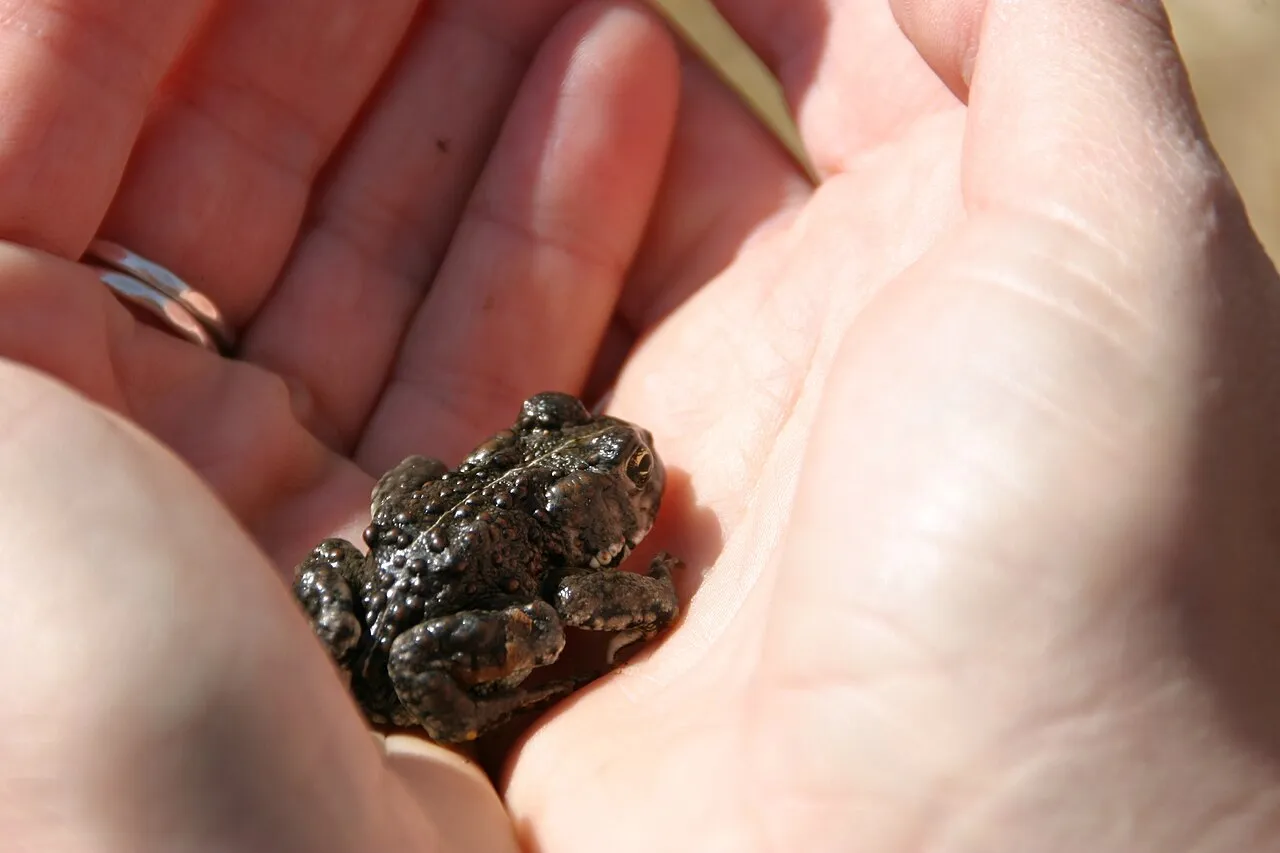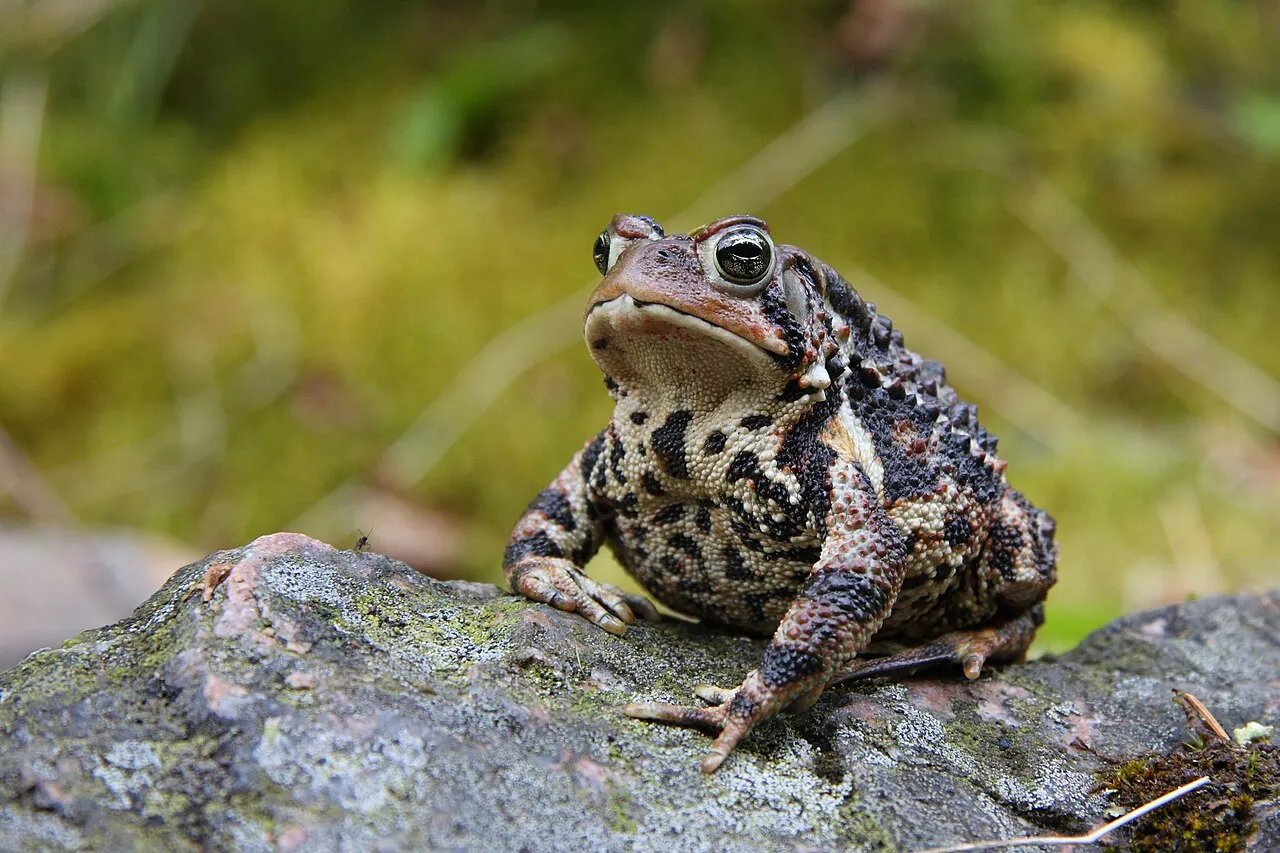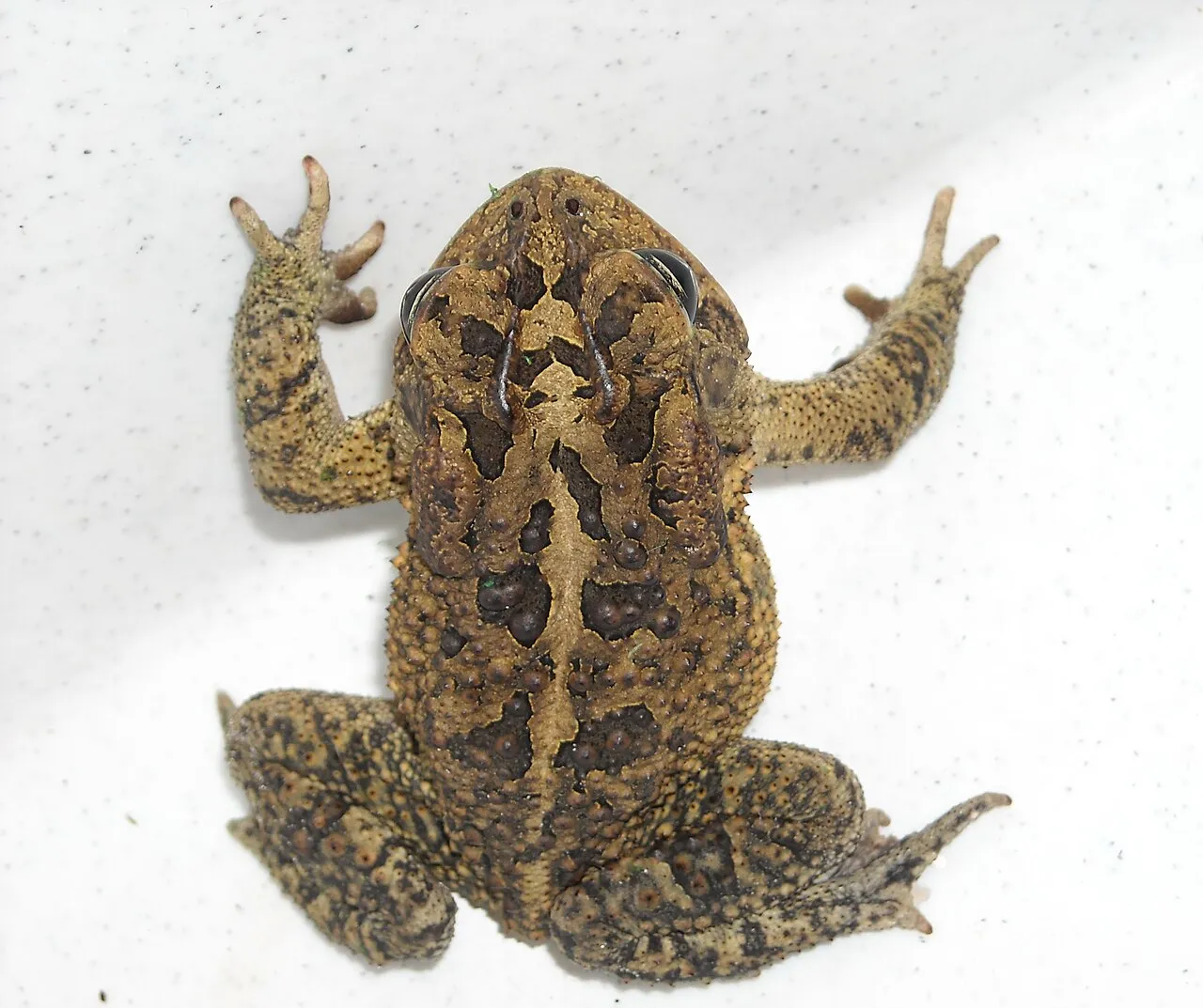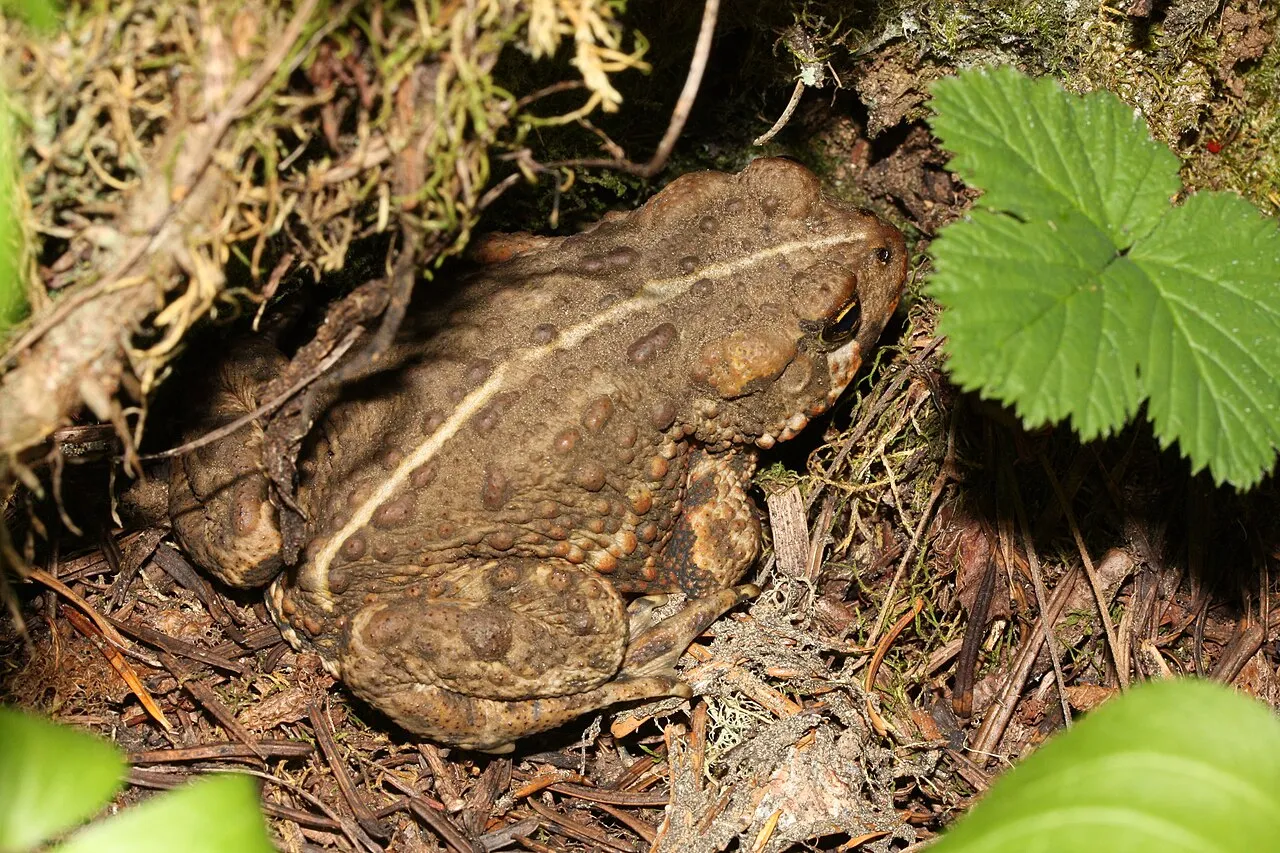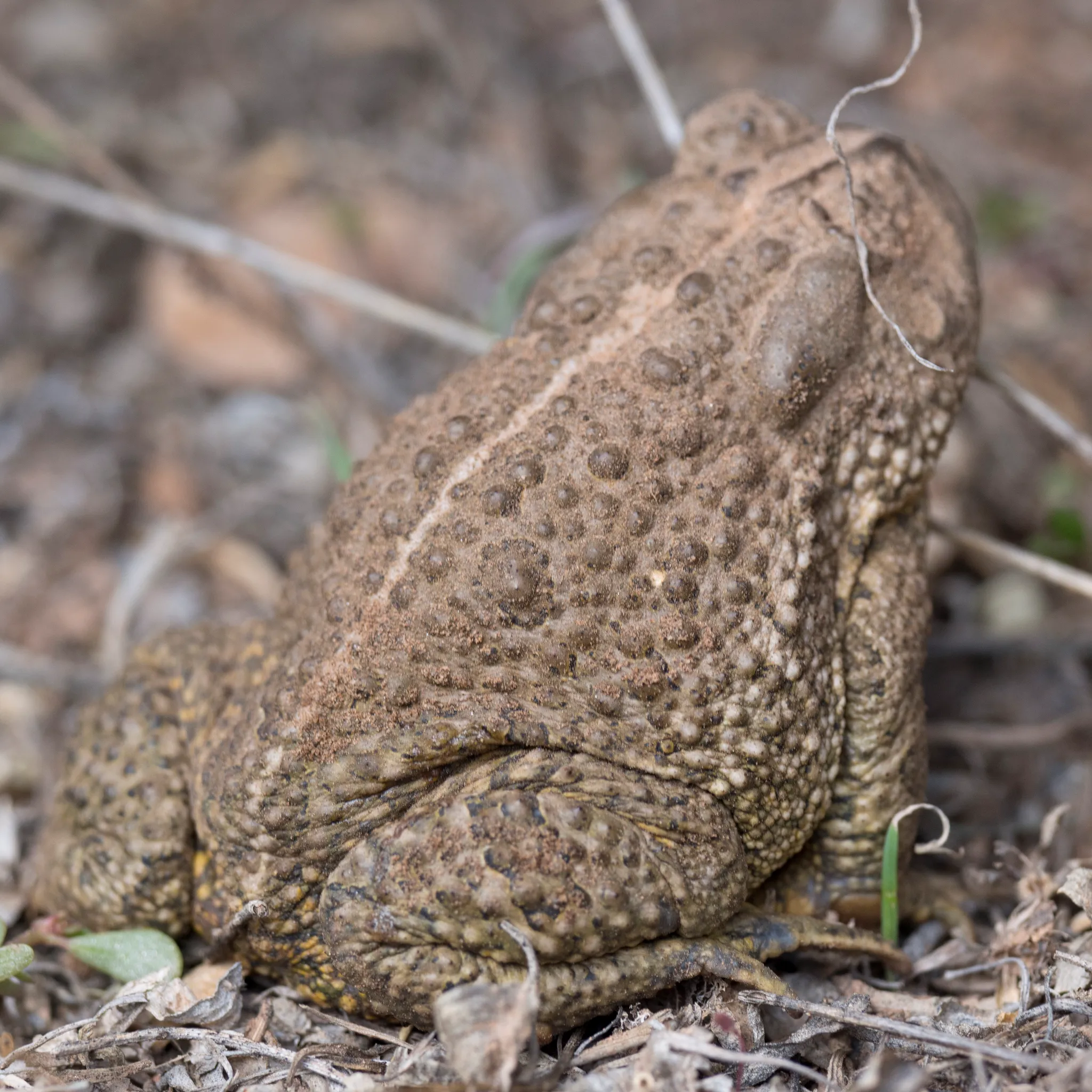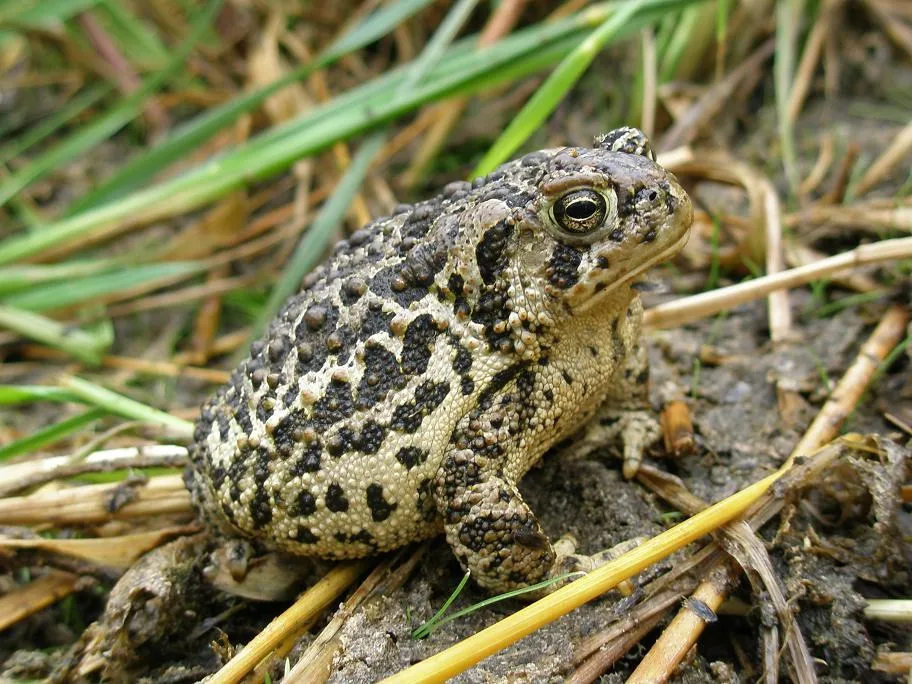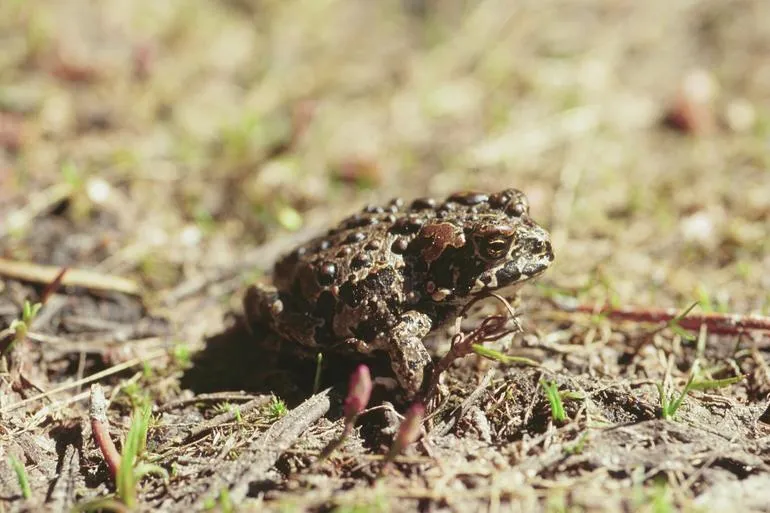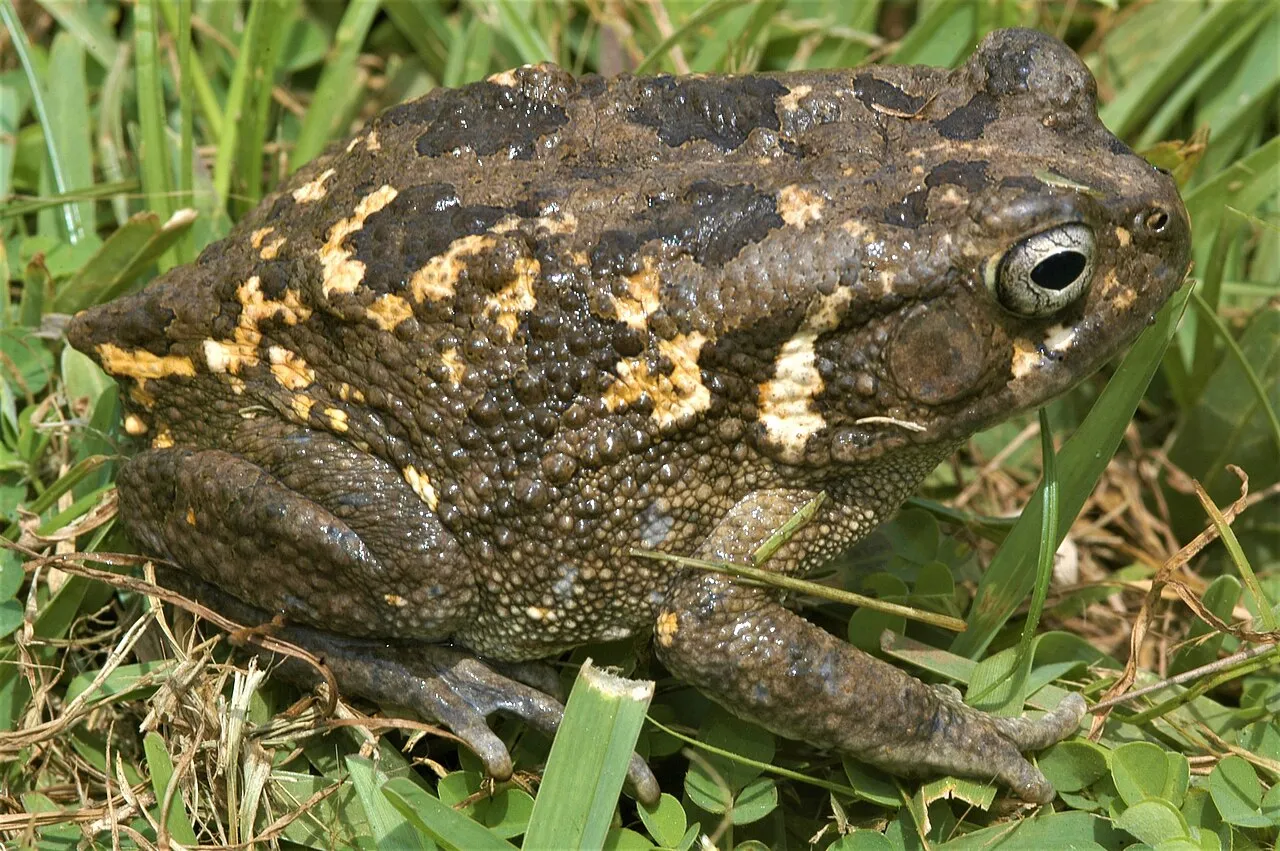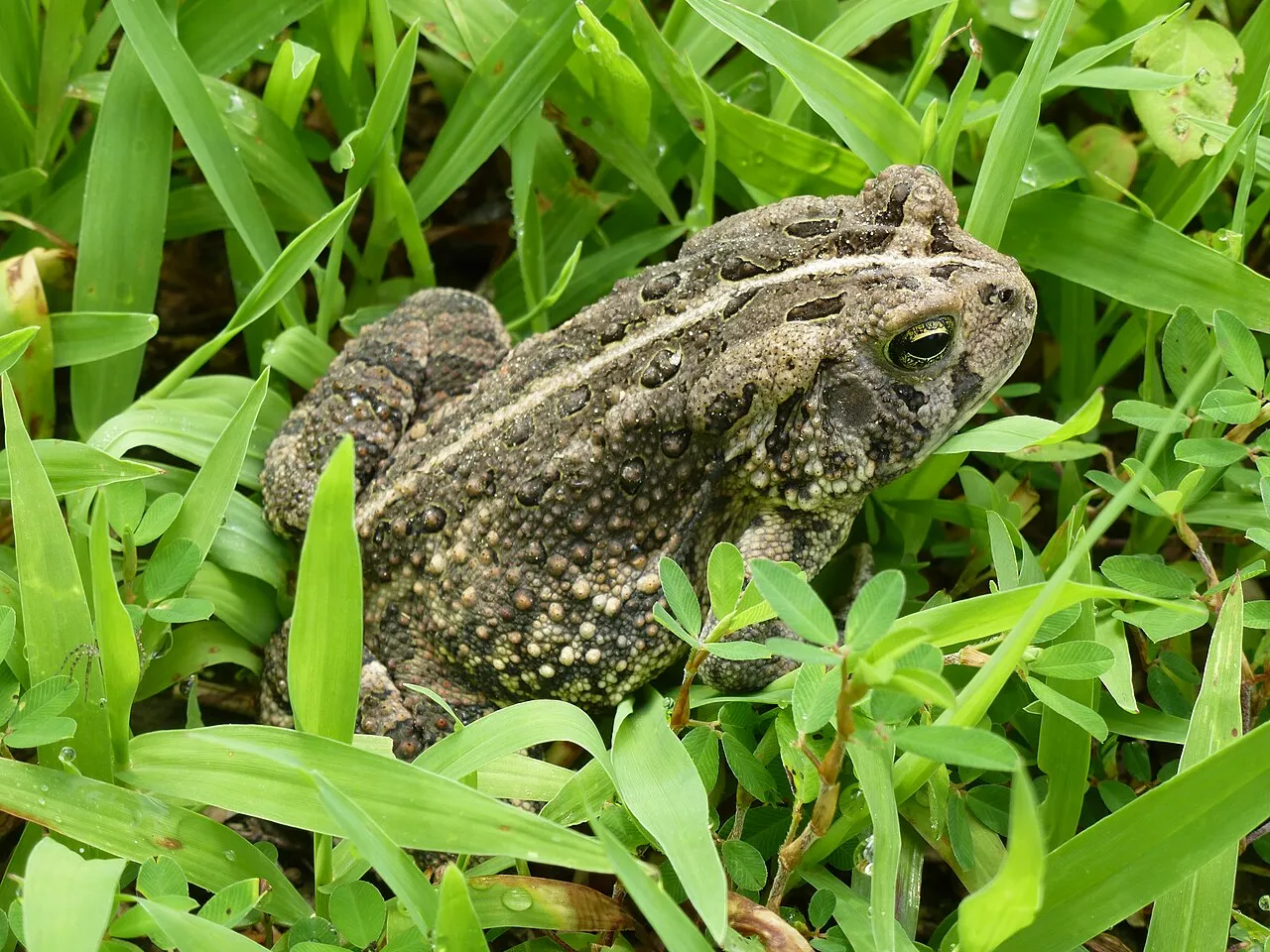
Anaxyrus fowleri, Fowler’s toad, is a true toad of the family Bufonidae1 native to eastern North America2. Its range runs from New Hampshire to eastern Texas, eastern Arkansas, Missouri and southeastern Iowa, east through Ohio and West Virginia to the Atlantic coast, with extensions up the Hudson, Delaware, Susquehanna and Ohio rivers and into southern Ontario, along Lake Erie3.
The toad was first described in 1882 by the Massachusetts herpetologist Mary H. Hinckley, who named it after the naturalist Samuel P. Fowler. It used to be considered a subspecies of Woodhouse’s toad1, until genetic analysis and breeding call studies showed the two are distinct.
Identification
The body measures 5 to 9.5 centimeters in body length; the Missouri Department of Conservation gives a snout-to-vent length of 2 to 3 inches, occasionally nearly 41. The upperside is usually brown, gray, or olive green, with black-edged dark spots on the back and a light stripe down the middle. Each of those dark spots holds three or more warts. Males are often darker in color, females lighter3, and males have a dark throat, females a white one4.
The underside is usually whitish and almost unspotted, apart from a single dark spot3. The large parotoid gland behind each eye is oblong and connected to a rather shallow, bony cranial crest above the eye. The male’s call is a raspy, nasal “w-a-a-a-a-a-h” lasting from 1 to 3 seconds1, which Ontario notes is sometimes described as a muffled scream from a distressed sheep4.
The tadpoles have a short oval body and a long tail with an upper and lower fin, and measure 1 to 1.4 centimeters3.
Body size has shifted over time. A study of museum specimens from 1931 to 1998 found that snout–vent length and mass declined over time, with smaller size at higher values of temperature and precipitation5, and no effect of forest cover.
Habitat and range
Fowler’s toad lives in open woodlands, sand prairies, meadows, and beaches3, and burrows into the ground during hot, dry periods and in winter. In Missouri it occurs especially in open areas with loose or sandy soils and is common on gravel and sand bars along Ozark streams and rivers, and of sandy ground in the Bootheel; it also turns up in open woods, urban and suburban yards, fields and gardens. There it occurs in the northeastern, eastern, and southern portions of the state1.
In Canada the species is restricted to only three localities: Rondeau, Long Point and Niagara. It lives there on open beaches, dunes, sandy shorelines4, rocky pools, creek and stream mouths, backshore wetlands and marshes along the north shore of Lake Erie. At Long Point the toads use shallow marshes and pools for breeding2 but spend the summer months in nearby dune and beach habitats.
Behaviour and breeding
Accounts of its daily rhythm conflict: Animal Diversity Web cites one source calling the toad completely nocturnal3 and another calling it mostly active in the daytime. In Missouri it remains hidden in burrows by day1 and becomes active at night to hunt.
Adults eat insects and other small terrestrial invertebrates but shy away from earthworms, unlike the American toad; the Missouri account, by contrast, lists a variety of insects and earthworms1. The toad has also been shown to eat velvet ants2, a wasp with a painful sting. Tadpoles scrape attached algae from rocks and plants3 with their tooth-rimmed mouths and also feed on bacteria and other organic material.
Its predators include snakes, birds, and smaller mammals. Earth-toned colouring helps it blend in, and the large warts on its back give off a noxious secretion that irritates a predator’s mouth and, if ingested, can be poisonous to smaller mammals. The secretion contains toxic bufadienolides2 and can be lethal to small mammals. In a 2001 account, a roughly handled toad may lie still on its back and play dead3.
Breeding falls in the warmer seasons, usually between May and June, in open, shallow water such as farm ponds, lake edges, marshes and woodland ponds. In southern Missouri it starts in late March into April and May1, elsewhere in the state in May or early June. Males call in intervals that can last up to thirty seconds, and the call draws other males as well as females; a male grabbed by mistake gives a chirping release call3. Females are often able to select the largest available males2 by telling the calls apart.
Clasping the female from behind, the male fertilizes up to 7,000-10,000 eggs, externally; the Missouri account says a female may lay over 8,000 eggs. The eggs hatch in two to seven days, and the tadpoles turn into toadlets thirty to forty days later; Missouri gives 21 to 60 days1. A toad may reach maturity in one growing season3, while slower growers may take up to three years.
Conservation
In the 2022 edition of the IUCN Red List, Anaxyrus fowleri is listed as Least Concern6. Locally the picture differs. Off-road vehicles in beach and dune habitats3 damage the species, and agricultural chemicals share the blame for declines in some areas. Invading common reed has been identified as a threat to some breeding habitats2 of Canadian populations.
Ontario listed the toad as threatened when its Endangered Species Act took effect in 2008 and re-assessed it as endangered on September 28, 2010. The province names habitat loss and degradation4 as the main threat: shoreline development and recreation wear away dunes, beaches and wetlands, and storm water runoff lowers water quality in breeding and tadpole nursery areas.
Similar species
- American toad, Anaxyrus americanus: its dark back spots encircle 1 or 2 warts, not three or more, and its bony ridge above each eye usually does not touch the parotoid gland. Its call is a sustained, high-pitched trill of 6–30 seconds7. The two regularly hybridize2, and hybrids show intermediate characteristics1 that make identification tricky.
- Woodhouse’s toad, Anaxyrus woodhousii: Fowler’s toad was once considered its subspecies, and genetic analysis and breeding call studies set the two apart. Its Missouri form, the Rocky Mountain toad, apparently hybridizes1 with Fowler’s toad in a zone from north-central to central and southwestern Missouri.