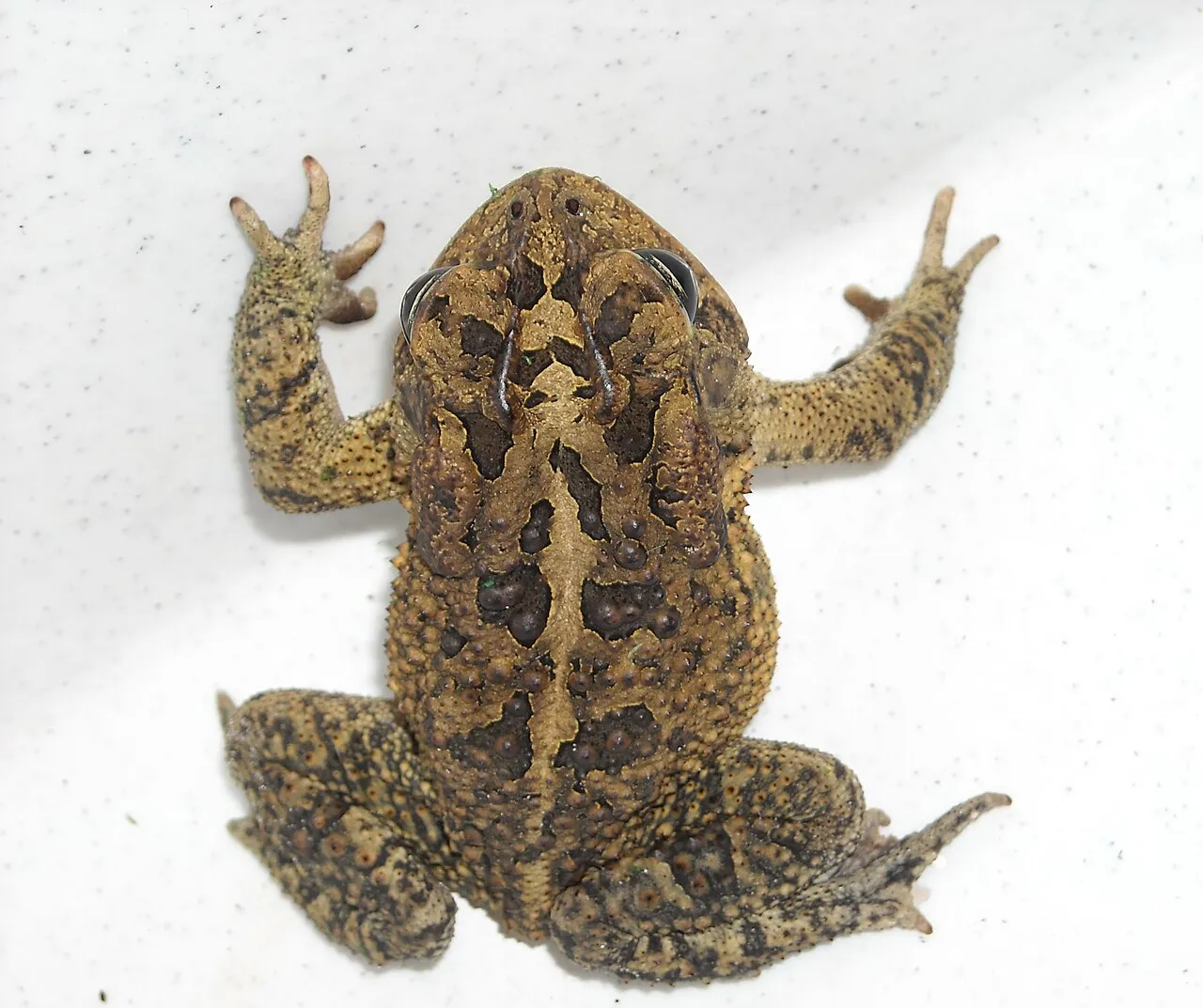
The southern toad, Anaxyrus terrestris, is a warty, sand-loving toad of the American Southeast. It ranges across the Atlantic and Gulf coastal plain from southern Virginia and the Carolinas south through Florida and west to Louisiana, with isolated inland populations in South Carolina’s Piedmont and Blue Ridge.
Identification
Adults are about 40 to 113 mm in length, with females larger than males on average, making this one of the larger true toads within its range. Like other Anaxyrus species it carries paired parotoid glands behind the eyes and dry, warty skin, in shades that typically run from brick-red to brown; the cranial crests and wart pattern are the usual field marks separating it from range-mates, best checked against a current regional guide in the hand.
Habitat and range
The southern toad favours sandy-soil habitats of the coastal plain, including pinewoods, scrub oak and mixed forest, as well as agricultural fields, gardens and suburban areas. By day it burrows into loose soil or shelters under logs and debris, coming out to forage after dark, and it needs freshwater pools for breeding. That combination of loose sand for burrowing and nearby still water for breeding is why the toad turns up as readily in backyard gardens as in open pinewoods across the coastal plain.
Behaviour and breeding
The toad’s burrowing habit shapes much of its daily life: sandy ground lets it dig in quickly to escape heat, cold and predators, re-emerging at night to hunt. Breeding draws adults to the freshwater pools scattered through its sandy-soil range.
Conservation
The facts box above carries the species’ current IUCN Red List category, Least Concern. Its wide coastal-plain range and tolerance of disturbed ground, from farmland to suburban gardens, support that secure status; the clearest risk to local populations would be loss of the sandy soils and breeding pools it depends on for burrowing and reproduction.
Similar species
Within its range, the southern toad can be confused with other Anaxyrus toads of the Southeast, particularly where ranges overlap at the edges of the coastal plain. Its size and sandy-soil habits are useful starting points, but wart pattern and cranial crest shape, checked in the hand against a regional field guide, give the more reliable confirmation.