- The Wondrous World of Centrolene paezorum: Secrets of Colombia's Emerald Glass Frog
- Introduction: An Amphibian Jewel in the Andes
- Taxonomy and Classification: Understanding its Scientific Heritage
- Natural Habitat: Living in the Misty Mountain Forests
- Physical Characteristics: An Intricate Jewel of Nature
- Behavior and Life Cycle: A Symphony of Mountain Nights
- Ecological Role: Guardians of Forest Harmony
- Threats and Conservation Status: Vulnerable Beauty
- Cultural and Scientific Significance: Beyond Biology
- Conclusion: Preserving the Emerald Fragility
The Wondrous World of Centrolene paezorum: Secrets of Colombia’s Emerald Glass Frog#
Introduction: An Amphibian Jewel in the Andes#
Hidden within the lush subtropical forests of the Colombian Andes, a small and delicate creature clings to the leaves above cascading mountain streams. This mesmerizing amphibian, known to science as Centrolene paezorum, commonly dubbed Paez’s Glass Frog, enchants those lucky enough to spot its shimmering emerald form. Glass frogs, named for their distinctively translucent bellies, have long captivated naturalists and wildlife enthusiasts alike with their delicate beauty and extraordinary biology.
One remarkable fact about this distinct frog is that its organs—the heart, liver, and digestive tract—are clearly visible through its transparent belly skin, giving observers an intimate glimpse into the inner workings of life itself. This transparent trait isn’t merely an aesthetic quirk: it’s a sophisticated tool evolved over millennia for survival, helping Paez’s Glass Frog blend effortlessly into its habitat.
Taxonomy and Classification: Understanding its Scientific Heritage#
Paez’s Glass Frog, scientifically classed as Centrolene paezorum, is a member of the family Centrolenidae—popularly known as glass frogs. This family is known for its remarkably translucent skin, lending an almost ghostly beauty to these creatures. The genus Centrolene includes a variety of other glass frog species uniquely adapted to their tropical and subtropical environments across Central and South America.
Named in honor of the Paez indigenous people native to the same Colombian highlands, Centrolene paezorum stands as a testament to the deeply interwoven histories of human societies and nature conservation. This cultural link serves as a subtle reminder of humanity’s role in protecting this rare amphibian’s fragile habitat.
Natural Habitat: Living in the Misty Mountain Forests#
Geographic Range and Distribution#
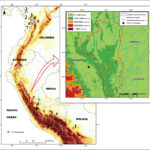
Centrolene paezorum is an endemic species, found exclusively within Colombia. Its distribution is primarily restricted to the western slopes of the Andes, inhabiting dense, mist-shrouded cloud forests between elevations of approximately 1,500 and 2,200 meters (4,900–7,200 feet). These mountain forests are renowned landscapes characterized by their abundant rainfall, dense tree canopies, and perpetually humid air.
A Habitat Rich in Biodiversity#
The quintessential habitat of Paez’s Glass Frog comprises cool, gently flowing mountain streams, whose pristine waters whisper quietly beneath dense foliage. These streams offer essential breeding sites while the thick vegetation provides a wealth of insect prey, countless hiding spots, and optimal climatic conditions.
Beneath towering tree ferns, dangling mosses, and clusters of vibrant orchids, Paez’s Glass Frog finds both shelter and sustenance. The humid microclimate of these forests not only supports amphibian life but also hosts diverse biological communities, making them a vital hub for forest ecology and biodiversity.
Physical Characteristics: An Intricate Jewel of Nature#
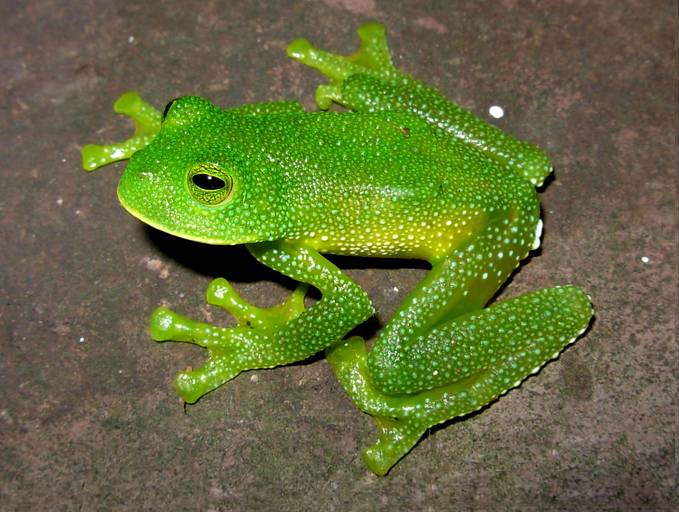
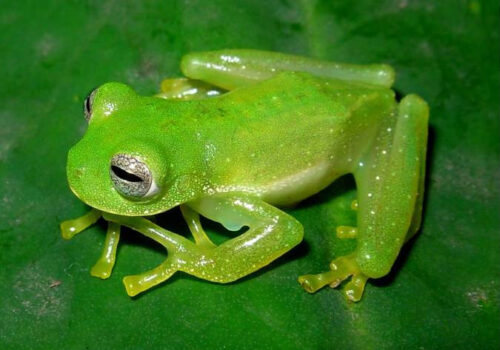
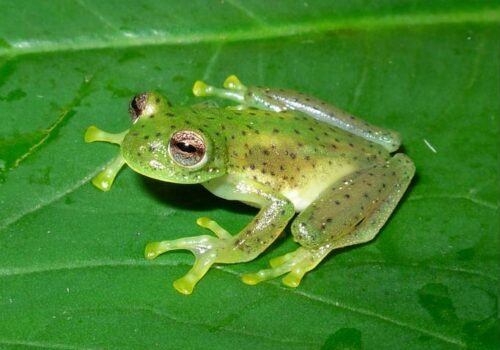
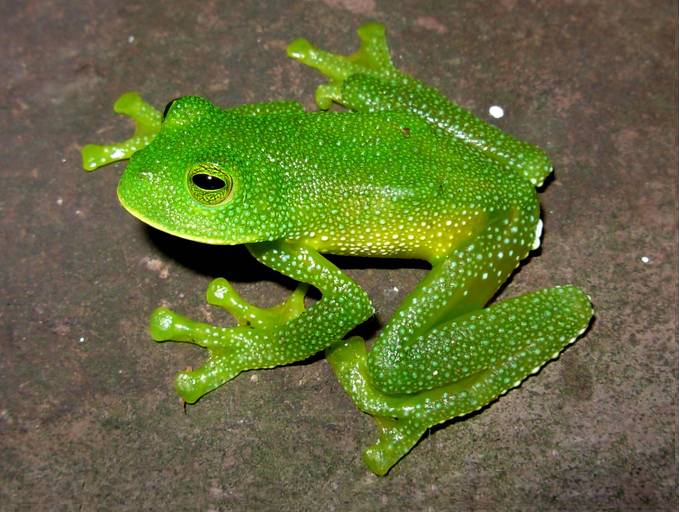
Adults of Centrolene paezorum are relatively small, usually measuring between 20 to 26 millimeters in length. Their captivating emerald-green color distinguishes them instantly, with delicate flecks of yellowish-green demonstrating beautifully nuanced camouflage against leaves and stems.
The frog’s remarkable translucent ventral region allows observers an astounding glimpse of its internal organs in action. This transparency, although fascinating, serves a critical evolutionary purpose. When viewed from below, the amphibian blends seamlessly against illuminated leaves overhead, protecting it from predators lurking beneath the foliage.
Its skin is smooth and slender, a delicate outer layer adept at absorbing moisture and providing oxygen—a critical adaptation necessary for amphibian respiration. Large, forward-facing eyes, golden-green irises with horizontal pupils, and rounded suction cup-like toe pads complete its charm, making its entire physiology custom-built for a life spent clinging to slippery, moisture-rich vegetation.
Behavior and Life Cycle: A Symphony of Mountain Nights#
Nocturnal Activities and Hunting Methods#
Paez’s Glass Frog is primarily nocturnal, becoming active as twilight envelops the mountains. Nighttime echoes of their delicate, high-pitched calls form a subtle, rhythmic chorus in the lush greenery. Guided by keen eyesight and sensitive hearing, these frogs expertly hunt for small insects such as moths, flies, and spiders—prey abundant in the moist environment. Their stealthy, motionless strategy—perfected by millions of years of evolution—allows them to capture unsuspecting insects with remarkable accuracy.
Breeding Rituals and Parental Care#
The rainy season triggers their engaging reproductive rituals. Male glass frogs gather in small groups, forming vibrant breeding choruses on leaves overhanging the mountain streams. Each male produces a soft call—a faint trill or delicate chirp—to serenade females and assert territory. Upon attracting a receptive female, mating occurs in a delicate, aerial embrace termed ‘amplexus.’
Female Centrolene paezorum exhibit astounding parental dedication. They carefully deposit clusters of gelatinous eggs onto the underside of leaves positioned above gently flowing streams. This strategic placement protects developing embryos from aquatic predators, while rainfall and mist maintain necessary hydration levels of the eggs. Once hatched, tadpoles drop directly into the stream below. Beneath watery ripples, tadpoles embark on a hidden aquatic metamorphosis, evolving quietly below the water surface into miniature replicas of their parents—fully equipped to face jungle life above.
Ecological Role: Guardians of Forest Harmony#
Like many amphibians, Paez’s Glass Frog plays a crucial ecological role as both predator and prey. They help regulate local insect populations, indirectly benefiting agricultural lands near their natural habitats. Additionally, they serve as an essential food source for native predators such as birds, reptiles, and small mammals. Remarkably sensitive to environmental change, their presence acts as a valuable indicator of stream and forest health—important clues for ecologists monitoring the overall wellbeing of the ecosystem.
Threats and Conservation Status: Vulnerable Beauty#
Sadly, despite their importance, Centrolene paezorum faces numerous threats. Habitat loss stands as perhaps the most significant hazard, with logging, agriculture expansion, and human settlement fragmenting their cloud forest homes. Additionally, pesticide runoff, water pollution, and climate change-induced shifts in rainfall patterns endanger their survival.
The International Union for Conservation of Nature (IUCN) currently lists Centrolene paezorum as “Vulnerable,” underscoring its increasingly perilous status. Thankfully, conservation initiatives exist, including habitat restoration projects, protected reserves, and education programs aimed at promoting sustainable practices and protecting biodiversity hotspots. Continued vigilance and effective conservation efforts remain vital in ensuring this emerald gem’s enduring place among Colombia’s extraordinary biodiversity.
Cultural and Scientific Significance: Beyond Biology#
Beyond pure biological intrigue, Paez’s Glass Frog symbolizes the precious connections between Colombia’s indigenous communities and their ancestral lands. The species, named after the Paez people, serves as a cultural emblem, reminding us of the importance of respecting traditional ecological knowledge and incorporating indigenous perspectives into conservation planning.
Scientifically, research linked to glass frogs continues contributing significantly to areas including biomimetics—the study of biological structures and their technological applications. The unique transparency mechanism of their skin has inspired studies in optics, medicine, or advanced camouflage materials, showcasing yet another compelling reason to protect and preserve amphibians like Centrolene paezorum.
Conclusion: Preserving the Emerald Fragility#
As we unravel the many mysteries hidden within Centrolene paezorum’s delicate form and fascinating wild behaviors, we are reminded emphatically of how interconnected life truly is. This captivating amphibian stands as testament to the fragility, wonder, and sheer tenacity of nature.
Ultimately, the fate of Paez’s Glass Frog rests in our collective conscience. By championing local conservation, advocating for sustainable land use, and understanding the species’ distinct biology, we share a responsibility to protect the emerald forests they call home. To preserve Centrolene paezorum is not only an act of protecting a tiny resident of Colombia’s cloud forests—it’s an affirmation of our shared responsibility to cherish and protect Earth’s priceless diversity.