Exploring the Hidden World of Rhinella achavali: Uruguay’s Elusive Treasure#
In the verdant, shadow-dappled understory of South America’s subtropical forests, an inconspicuous yet fascinating amphibian lurks quietly—the Rhinella achavali. Known colloquially as Achaval’s Toad, this humble yet captivating species resides primarily within the hushed, leaf-laden forests of Uruguay. Though modest in appearance, this wondrous creature harbors unique secrets and biological peculiarities that enthrall scientists and nature enthusiasts alike.
While frogs and toads often capture human attention with vibrant colors, dynamic leaps, or melodic choruses, Rhinella achavali entices us differently—through subtle beauty, cryptic camouflage, and understated resilience. Deep within the quiet shadows of its habitat, Rhinella achavali exemplifies nature’s magic in its ability to adapt, survive, and contribute vitally to the health of its delicate ecosystems.
Taxonomy and Classification#
To understand Rhinella achavali fully, one must journey first into the world of taxonomy—a place where relationships and identities within nature find clarity through scientific classification. Rhinella achavali belongs to the family Bufonidae, widely known as the “true toads.” This large amphibian family comprises robust, terrestrial species characterized typically by dry, warty skin and conspicuous parotoid glands behind their heads.
Initially described in 2004 by a group of herpetologists, Rhinella achavali received its namesake from the prominent Uruguayan zoologist, Prof. Federico Achával, whose conservation efforts dramatically influenced Uruguay’s understanding of its native fauna. Classified clearly within the Rhinella genus (formerly included in Bufo), this species finds its closest genetic and morphological affinities with toads native to the subtropical forests of southern South America.
Natural Habitat#
Hidden Beneath the Leaf Litter of Uruguay’s Forests#
Amid the subtle mosaic of shadow and filtered sunlight of Uruguay’s subtropical or temperate lowland forests, one finds the secluded kingdom of Rhinella achavali. Unlike some of its brightly colored relatives, Achaval’s Toad prefers secrecy, rarely straying too far from damp, shaded areas where soft leaf litter blankets the forest floor.
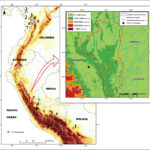
Primarily found within fragments of pristine or relatively well-preserved native forests scattered across low-elevation regions of Uruguay, this elusive toad tends to dwell near gently flowing streams and small permanent water bodies. Its reliance on these water features relates closely to breeding, moisture needs, and predation avoidance. Smaller populations of Rhinella achavali have also occasionally been documented near smaller forested areas within adjacent southern Brazilian territories, highlighting the species’ limited yet remarkable adaptability.
This moist, temperate-forested habitat provides much more than shelter—it supplies ample insect prey, vital nesting grounds, and necessary humidity to support the amphibian’s delicate skin respiration. For Rhinella achavali, this specialized ecological niche acts, quite literally, as its lifeline.
Physical Characteristics#
A Master of Camouflage and Survival#
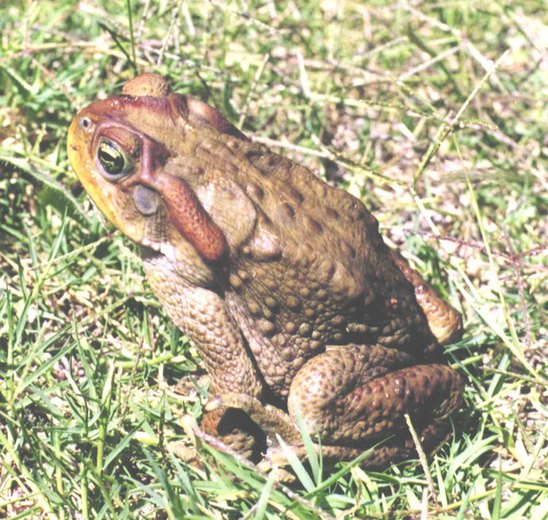
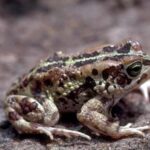
A closer look at Rhinella achavali reveals nature’s ingenuity and evolutionary mastery in astonishing detail. Mature individuals typically measure between 50 and 70 millimeters in length, fitting comfortably within a human palm. Their robust, rounded frame exemplifies typical toad morphology, though slightly more slender than some larger Rhinella relatives.
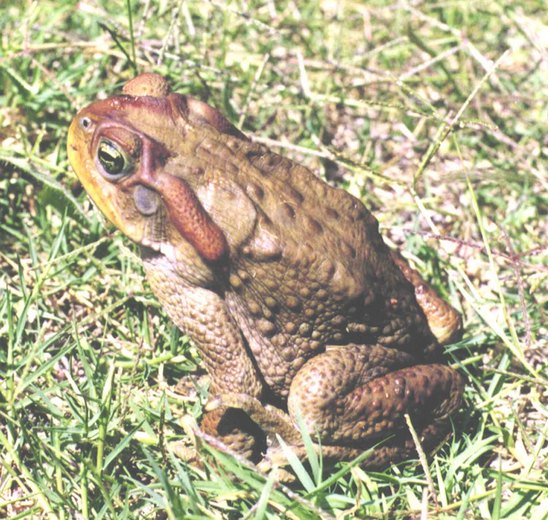
The skin texture is notably dry and warty, characteristic of true toads. Shades of olive, gray, brown, or muted tan cloak their bodies, interspersed with darker spots and subtle patterns, a perfect ‘forest-floor’ mimicry that hides them from predators. Indeed, Rhinella achavali’s coloration and texture represent finely tuned evolutionary camouflage—each wart and mottled marking contributing to its nearly invisible presence among leaf litter and the gentle dapple of forest shadows.
One distinguishing trait setting Rhinella achavali apart from closely related species is the presence of pronounced cranial crests and moderately sized parotoid glands behind the eyes—glands that secrete a mild toxin to discourage predators. Their eyes, a deep golden bronze flecked with black pupils, seem perpetually alert, scanning their surroundings with diligent efficiency.
Behavior and Life Cycle#
Silence and Stealth Under Moonlit Nights#
Mostly nocturnal, Rhinella achavali emerges discreetly at dusk and throughout moonlit nights, quietly navigating through its familiar haunt. Its movements are steady but cautious, with short hops and slow crawling motions that minimize sound and disturbance. Equipped as stealthy opportunistic feeders, their diets primarily include ants, small beetles, spiders, and other invertebrates abundant within the damp leaf litter.
Like many amphibians, Achaval’s Toad pays critical attention to seasonal moisture fluctuations for reproduction. With the arrival of the rainy season—when humidity is ample and forest streams swell—the males congregate, producing unique quiet croaks reminiscent of whispered murmurs rather than loud choruses. Females carefully select mates based on these subtle calls, and after successful courtship, eggs are laid in shallow pools near slow-moving streams.
Tadpole development takes place within these forest pools; tadpoles feed on algae, microorganisms, and decomposing plant material, progressing through various stages over several weeks. Eventually, tiny toadlets emerge onto land, facing the daunting challenge of survival by relying entirely on cryptic coloration and subtle behaviors. Despite the risks, some succeed in growing into reproductively mature, secretive adults—miracles of nature’s cycle.
Ecological Role#
Guardians of the Forest Floor#
Although discreet and often overlooked, Rhinella achavali plays a significant ecological role within its ecosystem. As a predator, it helps regulate populations of forest-floor insects, preventing overpopulation that could disrupt plant life and nutrient recycling. Its predatory impact is essential in maintaining balanced biodiversity within these habitats.
Simultaneously, Achaval’s Toad serves as prey to numerous birds, snakes, and mammals native to these subtropical forests. Thus, the species occupies a crucial intermediate layer in the forest’s trophic hierarchy. Amphibians like Rhinella achavali also act critically as indicator species, signaling scientists about the broader environmental health of their habitats. Subtle changes in their numbers or condition can forewarn of ecosystem disruptions stemming from pollution, ecosystem disturbances, or climate shifts.
Threats and Conservation Status#
A Sensitive Species Facing Modern Challenges#
While still considered somewhat abundant within its diminishing range, Rhinella achavali is particularly sensitive to habitat modifications. Increased agricultural encroachments, deforestation, and urban expansion within their native territory pose existential threats. Amphibians in general, given their porous skin, remain particularly vulnerable to pollutants, agrochemicals, and sudden habitat disruptions.
Climate change further complicates the conservation landscape. Changing rainfall patterns, increased bouts of drought, and temperature fluctuations threaten to disrupt breeding cycles, tadpole survivability, and habitat structure, potentially leading to population declines or even local extinctions.
Currently, Rhinella achavali has not been formally assessed for the IUCN Red List, highlighting an urgent need for extensive surveys and ecological research. Respectively, proactive conservation organizations and local researchers are encouraging protective measures, such as habitat corridor reinstatement, forest conservation zones, and careful monitoring programs, to gauge trends and intervene proactively.
Cultural and Scientific Significance#
While Rhinella achavali may lack extraordinary cultural symbolism, it embodies cultural pride as a creature symbolic of Uruguay’s unique biodiversity. Zoologists and ecologists revere Achaval’s Toad as an excellent representative for biodiversity studies, conservation initiatives, and environmental awareness campaigns.
Moreover, studying the species contributes significant insights into evolutionary biology and ecological resilience—lessons pivotal in understanding amphibian adaptations to subtropical ecosystems. Indeed, Rhinella achavali provides both conservationists and scientists with insights critical to preserving broader amphibian diversity within these fragile, beautiful forests of South America.
Conclusion#
Though modest in appearance, Rhinella achavali remains a quietly extraordinary species. Its secrets told amidst shadows, concealed beneath leaf litter, remind us profoundly of the subtler wonders of the natural world. Protecting this humble amphibian is not merely an act of preservation but a commitment to safeguarding the precious subtropical ecosystems of southern South America. Ultimately, the fate of Rhinella achavali underscores the interconnectedness that sustains all life, inviting us all—as readers, nature lovers, and conservationists—to advocate actively for their extraordinary world.