- Meet Rhinella beebei: Unraveling the Mysteries of a Remarkable Amazonian Toad
- Taxonomy and Classification
- Natural Habitat: Life in the Rainforest Shadows
- Physical Characteristics: Well-Adapted to Rainforest Life
- Behavior and Life Cycle: Secrets of a Cryptic Amphibian
- Ecological Role: Silent Steward of Forest Health
- Threats and Conservation Status
- Cultural and Scientific Significance
- Conclusion: Preserving the Secret Sections of Wild Nature
Meet Rhinella beebei: Unraveling the Mysteries of a Remarkable Amazonian Toad#
Deep beneath the emerald shadows of the Amazon rainforest, where sunlight barely permeates the leafy ceiling above, an intriguing amphibian stirs quietly amid the damp, leaf-strewn forest floor. The Beebe’s toad, scientifically known as Rhinella beebei, exists here, thriving in a delicate balance. Though small, inconspicuous, and often hidden from casual view, this distinctive amphibian captivates naturalists and conservationists alike due to its unique ecology, specialized behaviors, and surprising resilience. Named after the famed naturalist and explorer William Beebe, Rhinella beebei serves as a subtle yet invaluable presence in these lush ecosystems, weaving its quiet existence into the rich fabric of Amazonian biodiversity.
Taxonomy and Classification#
Rhinella beebei belongs firmly within the Bufonidae family, a diverse group commonly named the “true toads.” Within the broader genus Rhinella—a genus encompassing numerous hardy species known primarily from Central and South America—Rhinella beebei holds a special place. First described in the early 20th century, this species pays homage to naturalist William Beebe, whose pioneering expeditions greatly expanded scientific understanding of the Neotropics’ fauna.
Closely related species within its genus, such as Rhinella marina (the infamous cane toad), often garner greater attention due to their introduced status in various parts of the world. Yet, unlike its controversial cousins, Rhinella beebei has remained firmly nestled in its native South American rainforest realm, peacefully adapted specifically to its habitat, exhibiting remarkable ecological specialization that warrants focused study and appreciation.
Natural Habitat: Life in the Rainforest Shadows#
Range and Distribution#
Rhinella beebei finds its niche in the deep forests of northwestern South America, with notable populations documented primarily in Guyana, Venezuela, and regions of Suriname. Emblematic of these extensive, dense forests, the species favors significantly humid microhabitats, highlighting its profound adaptation to rain-forest environments that experience heavy rainfall and reduced sunlight penetration.
Habitat Preferences#
The ecological role of Rhinella beebei is intrinsically linked to its preferred habitats—lush, moist forest floors layered densely with decaying vegetation, mosses, and fungi. Shunning direct sunlight and open terrain, this toad shows immense specialization, preferring cover beneath fallen logs, dense underbrush, or large bromeliad clusters that catch and store rainwater. Its existence is closely connected to specific microclimates created by rainforest vegetation, which maintain a constant humidity level and consistent precipitation patterns essential for the toad’s moisture-dependent physiological processes.
Observing their secretive behaviors reveals subtly orchestrated interactions within these microhabitats, further underscoring just how remarkably adapted this species is to a life spent under the rich green canopy’s protective shadow.
Physical Characteristics: Well-Adapted to Rainforest Life#
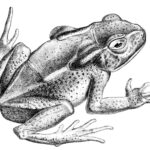
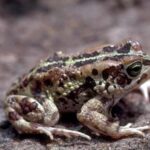
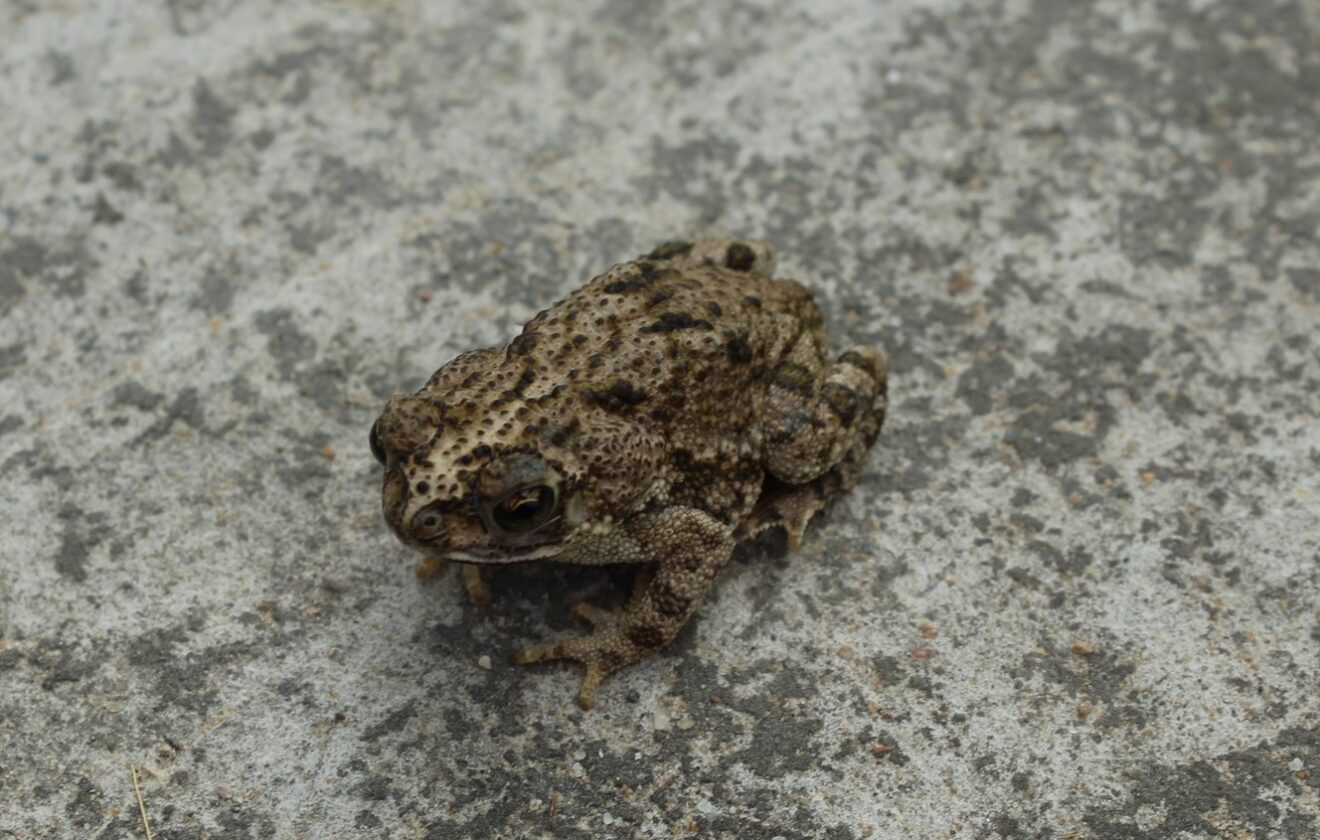
Though modest in size—typically measuring just 30-50 millimeters in adult length—Rhinella beebei presents a fascinating blend of subtle coloration and adaptive morphological characteristics that facilitate seamless navigation within its environment. The toad’s body presents a spectrum of brown, greenish, or olive tones, sporadically dappled with darker mottling, merging effortlessly with moist brown leaves scattered on the forest floor, creating natural camouflage. Its skin, faintly warted yet smooth enough to reflect only sporadic glints of filtered forest sunlight, aligns perfectly with its inconspicuous lifestyle.
Large, keenly sensitive eyes, edged with traces of golden hues, grant the toad excellent nocturnal awareness—essential for nighttime movements and feeding behaviors. Webbed back feet equipped with subtle yet remarkably effective grip enhance their movement across slick vegetation, enabling agile navigation through damp, uneven terrain.
Behavior and Life Cycle: Secrets of a Cryptic Amphibian#
Feeding Habits and Foraging Behavior#
As crepuscular and nocturnal hunters, Beebe’s toads emerge at dusk, drawn out by changing humidity and temperature conditions as daylight fades. Their diet primarily consists of small invertebrates, including ants, termites, beetles, spiders, and insect larvae. Employing a sit-and-wait predatory strategy, they capitalize effectively on prey passing unwittingly near their leaf-litter hideaways, launching rapid, skillful tongue-flicks—an evolutionary boon that ensures their nourishment while minimizing energy expenditure.
Breeding and Reproductive Habits#
Alongside their subtle charm lies a surprisingly complex reproductive process. During the rainy season, males vocalize from concealed locations close to shallow, temporary pools or flooded depressions on the forest floor, producing short, repetitive chirps and trills. These calls serve as invisible invitations echoing softly through the dark forest, signaling females to choose their mates. Egg deposition occurs in transient, rainwater-filled hollows, further reinforcing the vital relationship existing between amphibians and strict habitat conditions. Tadpoles grow rapidly within these ephemeral aquatic nurseries, racing against evaporation and predation pressures to metamorphose into froglets well-adapted for terrestrial life before their pools vanish.
Such fascinating reproductive specificity illustrates the precarious balance fostered by Rhinella beebei with its rainforest environment, highlighting how sensitive this species is to shifts in weather, climate, and habitat composition.
Ecological Role: Silent Steward of Forest Health#
Though often overlooked, Rhinella beebei quietly fulfills critical ecological functions in its rainforest home. As predators of insects, arachnids, and arthropods, they actively moderate prey population numbers, creating dynamic top-down ecological control—preventing outbreaks of any single insect species and thus maintaining biodiversity balance. Moreover, by serving as prey themselves for a range of forest-dwelling species—from larger amphibians and reptiles to mammals and birds—these humble toads provide nourishment within a broader ecological web, enhancing the intricate interspecies connections essential for ecosystem stability.
As bio-indicators, their presence and collective health can offer valuable insights just as powerfully as their silence warns of habitat degradation. Changes in the population or health of the Beebe’s toad quickly alert researchers to underlying ecological disturbances, testifying to their irreplaceable value within environmental monitoring.
Threats and Conservation Status#
Currently classified as “Least Concern” by the International Union for Conservation of Nature (IUCN), Rhinella beebei nevertheless faces escalating threats, reflecting worrying global patterns of amphibian decline. Habitat destruction remains their gravest challenge, as accelerating human activity such as logging, agriculture, mining, and infrastructural expansion fragments or destroys forest regions inhabited by these specialized amphibians. Pollution, introduced diseases such as chytridiomycosis—a devastating fungal affliction—and climate change exert additional pressures threatening future stability of local populations.
Conservation organizations increasingly emphasize protection and preservation of rainforest habitats critical to this species’ survival, including establishing protected ecological corridors and advocating sustainable human activities. Continued monitoring and study of Rhinella beebei remains paramount in ensuring long-term species resilience and health within an ever-changing ecosystem.
Cultural and Scientific Significance#
Named to celebrate William Beebe’s remarkable contributions to natural science, Rhinella beebei serves as a living symbol of the unique biodiversity that Beebe passionately chronicled. While culturally subtle, its ecological vitality and quiet presence symbolize rainforest preservation’s importance for local Indigenous communities, whose knowledge systems often understand such creatures as integral life-web symbols.
Scientifically, ongoing studies on this species promise further revelations concerning amphibian adaptability, eco-physiology, reproductive strategies, and climate vulnerability, deepening our understanding of ecosystem resilience and biodiversity conservation.
Conclusion: Preserving the Secret Sections of Wild Nature#
Though quiet and frequently hidden from human eyes, the life of Rhinella beebei encapsulates the intrinsic interconnectedness, fragility, and resilience of tropical forests. Safeguarding such delicate species demands collective global recognition and commitment. Stretching beyond mere admiration for their cryptic elegance, our duty to protect these creatures calls us to action, ensuring these gentle stewards persist in maintaining and enriching the lush, mysterious tapestry of life within the still-living heart of the Amazon rainforest.