Exploring the Secretive World of the Atacama Toad (Rhinella atacamensis)#
In the remote, arid landscapes of the Andean foothills lies a remarkable amphibian, resilient enough to defy one of Earth’s harshest environments—the Atacama Desert. Enter Rhinella atacamensis, known commonly as the Atacama toad, a fascinating frog species adapting remarkably well to its rugged home. While most would assume a dry desert to be devoid of amphibian life, this remarkable toad thrives precisely where least expected, underscoring nature’s incredible capacity for adaptation and resilience.
Belonging to the family Bufonidae, this species possesses an astonishing capacity for survival, navigating the thin margins between scarcity and abundance in a land famed for its extremes. Rhinella atacamensis is not just a species adapted to harshness; it embodies the fascinating story of evolutionary strength and ecological perseverance.
Taxonomy and Classification#
The Atacama toad, scientifically known as Rhinella atacamensis, falls within the diverse amphibian family Bufonidae—commonly recognized as the true toads. Within this family, it occupies the genus Rhinella, a well-represented group that spans numerous species across South American landscapes, ranging from tropical forests to mountainous terrain.
Described formally by Cei in 1962, Rhinella atacamensis stands distinct from other toads due to its remarkable adaptability to high-altitude and barren landscapes. Its close relatives within the Rhinella genus, such as Rhinella spinulosa and Rhinella marina, exhibit diverse adaptations of their own, indicative of this genus’ evolutionary versatility. However, Rhinella atacamensis uniquely specializes in dwelling within one of the driest habitats imaginable—an incredible feat for any amphibian reliant on moisture.
Natural Habitat#
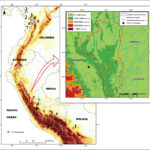
The Atacama toad occupies high-altitude environments around the Andean slopes in northern Chile and adjacent regions in Bolivia and Argentina, where the formidable Atacama Desert stretches its grasp. This area, famous for its austere beauty and stark dryness, presents enormous survival challenges. Still, within this barren wilderness, the toads find their niches, carefully concealed in tiny oases, scattered rocky pools, shallow streams, and temporary watercourses fed by occasional rainfall and snowmelt.
A Life Sculpted by Scarcity#
These amphibians rely on microhabitats, often seeking out areas of high humidity hidden beneath boulders, around ephemeral muddy depressions, or near seepages. Small pockets of vegetation provide vital refuge from harsh solar radiation. The presence of the Atacama toad often signals rare permanent or semipermanent water sources. Their specialized skin plays a major role here, maintaining hydration through efficient moisture retention, and they expertly utilize humidity-rich microclimates.
This environment—the border zone high above the desert floor—is home to an incredible diversity despite a forbidding appearance. Here, Rhinella atacamensis interacts with a fauna shaped by harsh conditions, participating in complex ecosystems that reflect the delicate balance of life in this harsh land.
Physical Characteristics#
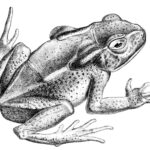
Rhinella atacamensis boasts distinctive attributes finely-tuned for survival in arid settings. Averaging between five to eight centimeters in length, this mid-sized toad exhibits physical adaptations emblematic of a life sculpted by environmental extremes.
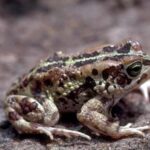
The coloration of the Atacama toad varies greatly depending on its immediate environment, typically adopting muted shades of gray, brown, olive, or sandy beige. These hues often mimic their rocky surroundings perfectly, enhancing their camouflage and dramatically reducing predation risks.
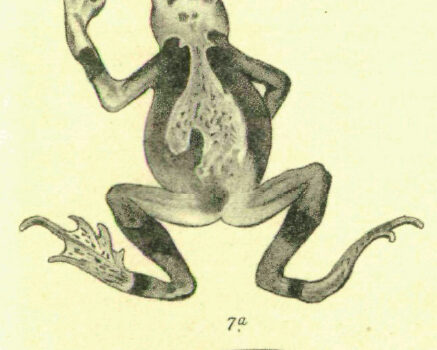
Typically covered by small wart-like bumps (tubercles), their tough textured skin aids in water conservation, preventing moisture loss that other amphibians might suffer. On closer inspection, one notices distinctly raised parotoid glands located behind the eyes, common among toads in the Bufonidae family. These glands produce a mild toxin used to discourage predators, serving as an efficient defensive mechanism vital to survival where hiding spots are few and far between.
Adaptations Born from Necessity#
Beyond the glaring predation risks, the fierce intensity of sunlight, temperature fluctuations, and scarcity of water dictate many features. Robust limbs are essential for burrowing or comfortably sheltering beneath rocks during scorching daytime conditions, emerging for activity predominantly at night. Their hardy skin not only protects them from abrasion but also serves as a crucial interface for gas exchange under challenging conditions.
Behavior and Life Cycle#
Adapted to survive in harsh environments, the behaviors of Rhinella atacamensis reflect an unparalleled resourcefulness. They are primarily nocturnal, emerging after sunset when evaporative losses are significantly reduced and humidity is relatively favorable. The serene silence of nights in the high desert is occasionally punctuated by their low-pitched, rhythmic calls, particularly during mating seasons—a welcome counterpoint to the vast solitude.
Feeding and Hunting Habits#
Due to scarcity, Atacama toads demonstrate impressive opportunism in their dietary habits. They prey primarily on invertebrates—including beetles, termites, spiders, and occasional moths—which they deftly capture with sudden strikes of their sticky tongues. Their nocturnal activity positions them to exploit insects more active and vulnerable at night.
Reproduction and Development#
The arrival of seasonal rainfall, as rare and unpredictable as it may be, cues the beginning of Rhinella atacamensis’ breeding period—a flurry of vocalizations, courtship rituals, and mating behaviors triggered by the fleeting presence of standing water. Though rather subdued compared to tropical amphibians’ explosive breeding displays, Atacama toads congregate quietly but effectively to reproduce rapidly, ensuring offspring benefit from temporary resource-rich conditions.
Females deposit gelatinous strings of eggs in shallow, temporary pools, typically numbering several hundred at a time. Tadpoles hatch swiftly, powered by the urgency imposed by rapid habitat desiccation looming once more on the horizon. Larval development occurs quickly to outpace drying conditions—a race against time etched into their very lifecycle strategy. Juveniles mature with remarkable speed, readying themselves swiftly for the overwhelming challenges they’ll inevitably face.
Ecological Role#
The Atacama toad assumes essential habitat roles, particularly as a pivotal link within desert food webs. As opportunistic insect predators, they help control pest insect populations, inadvertently supporting plant life by reducing herbivorous grazing pressures. Frogs and toads globally serve as bioindicators because permeable skin makes them particularly susceptible to habitat disturbances, pollution, or climatic shifts—thus, stable toad populations signal relatively intact ecosystems, highlighting their indirect utility in ecological assessment.
Conversely, this toad fits prominently into predator diets, nourishing reptiles, birds of prey, and desert-dwelling mammals that find amphibians uniquely nutritious. Thus, this species contributes markedly to the energy flow within its delicate ecosystem, shaping its dynamics in subtle yet important ways.
Threats and Conservation Status#
Despite a remarkable evolutionary resilience, Rhinella atacamensis faces mounting threats. Habitat degradation associated with mining and other extractive industries, climate-driven alterations—particularly severe rainfall unpredictability—and regional contamination from pollutants currently represent urgent conservation priorities. Increasing anthropogenic activities threaten fragile oases crucial to their reproduction and survival.
The International Union for Conservation of Nature (IUCN) presently categorizes Rhinella atacamensis as Least Concern, largely due to its relative adaptability and remote habitats. However, rising ecological threats urge further vigilance, prompting stronger conservation measures, habitat protections, and dedicated monitoring to ensure its ongoing survival.
Cultural and Scientific Significance#
While relatively little-known to the global public, the Atacama toad holds local symbolic significance, intriguingly tied to indigenous narratives that celebrate the remarkable adaptability of life in barren spaces. Scientifically, Rhinella atacamensis captures biologists’ admiration, evoking fascination due to its physiological resilience to extreme climatic conditions—traits potentially helpful in studying amphibian tolerance thresholds and climate adaptability.
Understanding the incredible survival strategies displayed by such animals fundamentally illuminates wider principles of environmental resilience, contributing significantly to broader studies examining the potential impacts of climate instability on biodiversity.
Conclusion#
Rhinella atacamensis, the seemingly understated Atacama toad, quietly narrates a profound story of evolutionary tenacity amidst the desert’s harsh backdrop. Each sighting, each call, each tadpole gracefully transforming beneath the desert moon, underscores the powerful beauty of life’s adaptability and endurance.
As landscapes continue shifting under human influence, this toad remains a stirring reminder that even the most resilient species confront boundaries imposed by environmental exploitation and neglect. For conservation advocates and enthusiasts, Rhinella atacamensis stands as a compelling call to action—an inspiring emblem of nature worth protecting, studiously conserving, and consciously celebrating.