Sclerophrys danielae: Unveiling the Secret World of a Little-Known African Toad#
Deep within the lush forests and savannah woodlands of West Africa, a hidden treasure quietly thrives beneath the canopy, concealed in leaf litter and camouflaged among moss-covered rocks. This unassuming yet fascinating creature, known scientifically as Sclerophrys danielae, stands as a testament to nature’s subtle beauty, resilience, and ecological interconnectedness. A lesser-known amphibian, Sclerophrys danielae captivates scientists and conservationists alike with its understated charm and crucial role in Africa’s biodiverse ecosystems.
Named after herpetologist Daniela Rößler for her dedication and contribution to amphibian research, Sclerophrys danielae remains little-studied and shrouded in mystery—a delightful subject for those captivated by the hidden wonders of nature. Before we journey deeper into its secretive world, let us first unravel the taxonomic threads that connect this intriguing species to its greater family tree.
Taxonomy and Classification#
Sclerophrys danielae belongs to the expansive Bufonidae family, commonly known as true toads. This family comprises a remarkable diversity of species across the globe, thriving in varied habitats from tropical rainforests to arid deserts. Within the genus Sclerophrys, species demonstrate remarkable adaptability, showcasing diverse behavioral and anatomical traits that allow survival in challenging environments.
The genus Sclerophrys itself encompasses numerous African species previously grouped under the extensive genus Bufo. Scientific advances, particularly genetic studies, have refined classifications and improved understanding of how these amphibians evolved and diversified. Closely related species within this group include the well-known African common toad (Sclerophrys regularis) and others that share overlapping ranges and habitats, leading to intriguing questions about interspecies dynamics and ecological niches.
This evolutionary context provides important clues about Sclerophrys danielae and its role within the ecosystem and points the way toward further scientific inquiry—which ultimately enhances its conservation prospects.
Natural Habitat#
Exploring the secluded natural ranges of Sclerophrys danielae brings us into the heart of West Africa. Scientists have documented this species primarily in regions of Côte d’Ivoire and Ghana, two nations where dense forests give way to transitional woodland-savannah landscapes. More specifically, Sclerophrys danielae favors moist, shaded, terrestrial habitats composed of leaf litter, fallen logs, and understorey vegetation—an environment teeming with life governed by cycles of rainfall and shifting seasons.
These preference habitats offer the amphibian ideal conditions for protection against predators and adequate moisture required for their delicate skin. Indeed, the toad’s skin relies on environmental moisture to facilitate respiration and maintain hydration, characteristics common among amphibians. The combination of shelter, moisture, and abundant prey creates ideal microhabitats in which this elusive toad can flourish inconspicuously.
Seasonally flooded forest floors, gently flowing streams, and marshy areas near forest edges all play vital roles in creating the impeccably balanced ecosystems that sustain Sclerophrys danielae. Importantly, the health of these habitats directly indicates the broader ecological health of entire landscapes, reminding us of amphibians’ value as environmental sentinels.
Physical Characteristics#
At first glance, the Sclerophrys danielae does not strike observers with flashy, vivid colors or extravagant sizes. Rather, its beauty lies in subtle forms of camouflage and adaptation—a testament to evolutionary refinement. Typically a modest-sized amphibian, it measures approximately 4 to 6 centimeters in length, enabling unobtrusive dwelling within tight forest spaces dominated by leaf litter and fine twigs.
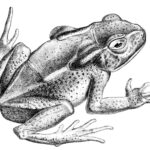
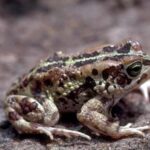
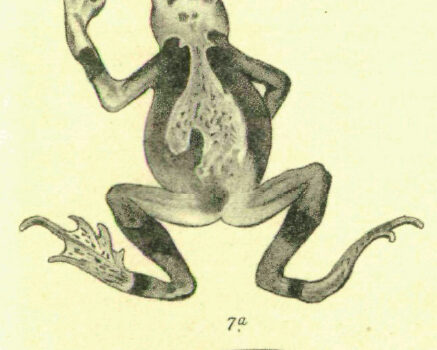
Its skin exhibits complex patterns of browns, grays, and dull greens, intricately designed to blend seamlessly with the forest floor. Textured skin, laced with small wart-like protrusions, renders the toad almost indistinguishable from its environment. Each marking—its varying intensity of coloration, subtle shifts between individual specimens, dark and light patches, and subtle stripes along its back—builds an effective stealth ensemble, crucial for evading the sharp eyes of potential predators.
A closer examination reveals other characteristic traits typical of Bufonidae family members. Large parotoid glands located behind each eye secrete toxins that provide a chemical defense mechanism against predators. While not dangerous to humans, these toxins offer effective deterrence against would-be predators like forest snakes and birds, further highlighting an impressively specialized suite of survival adaptations.
Behavior and Life Cycle#
The secretive toad begins its nocturnal activity in the fading light of West African evenings. Shielded from large daytime predators and drying heat, it emerges to forage in its moist woodland haven. Opportunistic feeders, Sclerophrys danielae specializes in preying upon invertebrates—ants, termites, beetles, spiders, and even small gastropods—helping control populations that, if unchecked, could overwhelm forest ecosystems.
During the wet season, male Sclerophrys danielae position themselves strategically along small water streams or flooded forest areas, chorusing resonant, distinctive calls to attract females. These mating calls—short, repetitive notes echoing amidst rustling vegetation and nocturnal insect sounds—provide a mesmerizing auditory tapestry beneath rainforest canopies on rainy nights.
After females select mates based on vocal attractiveness, egg-laying occurs within still water or slow-running streams. Eggs, often laid in elongated strings, rapidly hatch to release tiny, free-swimming tadpoles that rely on microorganisms and algae for sustenance. Tadpoles further develop rapidly, metamorphosing into miniature toadlets that disperse across damp forest floors, beginning their life cycles afresh in perpetually shifting survival challenges.
Ecological Role#
Imbued with quiet resilience, Sclerophrys danielae occupies essential spaces within West Africa’s vibrant ecosystems. Like many amphibians, they function as robust intermediate predators, critical components linking lower invertebrate prey resources and the larger predators occupying upper food-web positions such as snakes, birds, and small mammals.
Equally significantly, frogs and toads serve as valuable biological indicators, their presence indicative of healthy ecosystems. Changes in populations can hint at broader environmental issues, including pollution, deforestation, and even subtle climatic shifts. The existence and abundance of Sclerophrys danielae thus ultimately reflect the stability and conservation status of their habitats.
Threats and Conservation Status#
As with many amphibians worldwide, Sclerophrys danielae faces numerous threats, primarily stemming from habitat loss and environmental degradation. Rapid economic development, agricultural expansion, logging activities, and urbanization collectively fragment and degrade habitats vital to these amphibians’ survival.
Climate change also emerges as a growing concern. Shifting rainfall patterns, drought frequency, and temperature fluctuations significantly impact amphibian breeding cycles and survival strategies.
Currently, due to limited data and studies performed, Sclerophrys danielae is listed by the International Union for Conservation of Nature (IUCN) as “Data Deficient,” emphasizing the urgent need for ecological surveys and conservation attention. Elevating awareness and increasing focused research constitutes critical steps toward ensuring lasting protection of sensitive habitats and securing the future of this intriguing amphibian.
Cultural and Scientific Significance#
Culturally, indigenous peoples of West Africa have long valued amphibians and toads as symbols in folklore, evocative of fertility, environmental sensitivity, and seasonal transformations. Given relatively recent scientific description, Sclerophrys danielae specifically may contribute powerful insights into amphibian evolution dynamics within African biodiversity hotspots.
Scientifically, researchers highlight the species’ possible roles as bioindicators, signaling forest conditions and environmental changes profoundly reflective of broader ecological trends.
Conclusion: Preserving Nature’s Subtle Wonders#
In its quiet, subtle ways, Sclerophrys danielae reminds us of the profound interconnectedness saturating our natural world. Protecting this elusive yet captivating toad species goes beyond simple conservation; it symbolizes broader commitments to preserving our planet’s spectacular diversity and ecological integrity.
Join the conservation community in safeguarding habitats, supporting research efforts, and advocating policies that prioritize biodiversity preservation. For, ultimately, protecting the inconspicuous wonders like Sclerophrys danielae secures the vibrancy and survival of the very planet we all share.