- Introduction: Meet Rhinella sebbeni, South America's Toad Jewel
- Taxonomy and Classification: Understanding Rhinella sebbeni’s Place in Nature's Tree of Life
- The Natural Habitat: Unveiling the Enchanting Ecosystem of Rhinella sebbeni
- Physical Characteristics: Observations and Adaptations of Rhinella sebbeni
- Behavior and Life Cycle: A Nighttime Character Amidst Chorus Calls
- Ecological Role: An Integral Part of the Forest Web
- Threats and Conservation Status of Rhinella sebbeni
- Cultural and Scientific Significance: Beyond Ecology – Understanding Rhinella sebbeni
- Conclusion: Celebrating and Protecting Rhinella sebbeni
Introduction: Meet Rhinella sebbeni, South America’s Toad Jewel#
Hidden amongst the lush foliage and mossy leaf litter of South America’s vibrant ecosystems lurks a fascinating amphibian, quietly holding together threads in the intricate tapestry of life. Rhinella sebbeni, a mysterious yet captivating toad, embodies the awe-inspiring adaptability and intricate balance of biodiversity that characterizes this region. Known scientifically as Rhinella sebbeni, this unique amphibian species roams primarily within the humid and tropical habitats of South America, playing roles that—even in their silence—speak loudly to conservationists and nature enthusiasts alike.
While amphibians rarely get the spotlight reserved for their charismatic mammalian or avian counterparts, Rhinella sebbeni deserves recognition. With its intriguing mix of cryptic colors, distinctive nighttime calls, and ecological importance, this humble toad is a beautiful reminder of biodiversity’s hidden wonders. Before we dive into the secretive existence of this toad, consider a curious trait—despite its biology closely resembling several closely related species, Rhinella sebbeni can be identified clearly by subtle differences in its anatomical structures and call patterns, making each encounter with it, a moment cherished among herpetologists.
Taxonomy and Classification: Understanding Rhinella sebbeni’s Place in Nature’s Tree of Life#
Classifying amphibians can sometimes feel like solving an evolutionary puzzle. Rhinella sebbeni is no exception, belonging to the Bufonidae family—widely called “true toads.” Within this large amphibian family, Rhinella stands as a remarkably diverse genus, comprising dozens of species adapted across a range of habitats from tropical forests to mountainous grasslands.
Detected as distinct from closely related counterparts only recently, Rhinella sebbeni gained recognition formally in scientific literature due to meticulous efforts by taxonomists in analyzing subtle variations in morphology, behavior, and genetic markers. Researchers distinguished Rhinella sebbeni formerly misidentified populations of Rhinella margaritifera—a visually similar but biologically different sister species complex. This revelation significantly impacted our understanding of biodiversity distributions and demonstrated clearly how intricate nature’s evolutionary network can be.
The Natural Habitat: Unveiling the Enchanting Ecosystem of Rhinella sebbeni#
Geographic Range and Habitat Preferences#
Rhinella sebbeni is primarily found in Brazil’s rich, sprawling ecosystems, often ranging across moist tropical lowlands and humid river basins, with some populations found extending into Paraguay and parts of northern Argentina. Within these lush settings, the species chooses environments flourishing with dense vegetation, muddy riverbanks, forest litter, and fallen, decaying logs—a microhabitat at once rich in prey species and guaranteed safe shelter.
Exploring this toad’s habitat feels like stepping into a green cathedral—thick forest canopies diffuse sunlight into gently shifting patterns of light and shadow. Constant humidity coats the air, carrying the scent of earth, moss, and warm decay. Here, Rhinella sebbeni occupies terrestrial niches, occasionally wandering towards marshes, temporary ponds, and shallow pools during its breeding season, drawn by nature’s ancient calendar of rains and moisture.
Adaptations to their Environments#
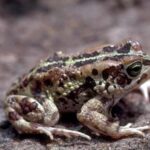
This choice of environment is not coincidental; Rhinella sebbeni has evolved impeccably to harness the habitat’s resources and overcome its daily challenges. Its cryptic coloration—comprising mottled grays, browns, greens, and earthy reds—mirrors leaf-litter carpets and damp soil, providing remarkable camouflage against predators. Its slightly granular, wart-covered skin complements the textural complexity of the forest floor, allowing for seamless concealment beneath leaves or inside tree-root hollows.
Physical Characteristics: Observations and Adaptations of Rhinella sebbeni#
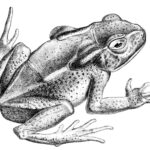
A closer look at Rhinella sebbeni reveals a creature uniquely adapted for its hidden lifestyle. Adults typically boast a modest size, commonly measuring between five and seven centimeters from snout to vent. The species displays sexual dimorphism—with females usually growing slightly larger and more robust-bodied compared to males. This robust build provides room for eggs carried seasonally, a critical reproductive adaptation.
At first glance, Rhinella sebbeni might appear humble or understated, but its anatomical adaptations speak volumes about potential dangers it navigates daily. Paratoid glands, prominently placed behind its eyes, secrete toxins highly potent to deter many local predators. These toxin-producing glands represent a line of defense honed through natural selection, aiding survival against threats from reptiles, birds, and mammals.
The eyes of Rhinella sebbeni are large and expressive. Positioned atop its head, this strategic adaptation allows for effective panoramic vision—a crucial feature for detecting predators and prey alike. Meanwhile, powerful hind limbs provide effective propulsion for jumping short distances and enable quick escapes when threatened.
Behavior and Life Cycle: A Nighttime Character Amidst Chorus Calls#
Diet and Feeding Behaviors#
As twilight cloaks the forests, Rhinella sebbeni becomes active, leaving daytime shelters to hunt invertebrate prey. Ants, beetles, spiders, and termites make up most meals. The toad employs sit-and-wait predation tactics, remaining perfectly still, ambushing insects drawn by humid warmth and dense vegetation. Upon encountering prey, the toad’s lightning-fast, sticky tongue flicks outward, securing meals with impressive efficiency.
Breeding and Developmental Patterns#
Rhinella sebbeni, like its congeners, shows breeding patterns closely synchronized with rainy seasons in its tropical habitats. After the first heavy rains, males assemble near temporary breeding ponds, forming choruses of resonating calls—a deep, rhythmic sound cutting softly through nighttime silence. Females select mates based upon calling strength and frequency, showing preference indicative of healthier genetics and greater vigor—invaluable for the survival probability of offspring.
Once mating occurs, the female deposits gelatinous strings containing hundreds to thousands of eggs. Larvae, or tadpoles hatch quickly, capitalizing on a short developmental window before these temporary ponds dry entirely. Tadpoles feed voraciously on algae, detritus, and small microorganisms, rapidly undergoing transformation. In a fascinating metamorphosis, tiny tadpoles develop limbs, lose gills, and transition entirely from aquatic life, becoming miniature terrestrial toads prepared to tackle the forests’ challenges.
Ecological Role: An Integral Part of the Forest Web#
The ecological significance of Rhinella sebbeni within its tropical habitat is substantial. As an insectivore, the species contributes significantly to controlling insect populations, providing ecological balance and protection against potential agricultural pests. Simultaneously, Rhinella sebbeni constitutes an important prey item for a variety of predators, thus maintaining equilibrium at multiple levels.
Additionally, as amphibians possess semi-permeable skin sensitive to environmental pollutants, Rhinella sebbeni serves as a valuable indicator species—its population trends and health indicating broader ecosystem wellness. By conserving their habitat and populations, we implicitly maintain integrity of entire ecosystems, safeguarding countless species directly or indirectly.
Threats and Conservation Status of Rhinella sebbeni#
Currently, formal IUCN evaluations specifically focusing on Rhinella sebbeni are still underway due to its relatively recent taxonomic distinguishability. However, habitat fragmentation, deforestation, agricultural expansion, and contamination from pesticides present obvious ecological threats. These pressures act subtly yet critically, diminishing suitable habitats, fragmenting populations, and critically impacting species survivability.
Conservation needs center firmly on habitat protection. Maintaining protected areas, implementing ecological corridors linking habitat fragments, and promoting sustainable agricultural techniques around critical breeding areas can bolster Rhinella sebbeni’s chances for future survival.
Cultural and Scientific Significance: Beyond Ecology – Understanding Rhinella sebbeni#
From indigenous folklore depicting toads as symbols of adaptation, fertility, or transformation to modern scientific research using amphibians as environmental health indicators, species like Rhinella sebbeni enrich cultural narratives and contribute meaningfully towards scientific understanding. Additionally, study of their skin secretions holds potential pharmacological discoveries, ranging from novel anesthetic compounds to promising antibacterial agents—underscoring the invaluable preservation rationale of biodiversity.
Conclusion: Celebrating and Protecting Rhinella sebbeni#
In celebrating Rhinella sebbeni, we cultivate deeper appreciation towards subtle yet significant creatures inhabiting our planet’s fragile ecosystems. Their quiet presence beckons us to protect lush habitats, mitigate human impacts, and join active conservation efforts. By committing to conserving biodiversity hotspots inhabited by creatures like Rhinella sebbeni, we acknowledge interconnectivity across life’s incredible web, safeguarding both wildlife’s and humanity’s futures.
We invite every nature enthusiast and conservation supporter to learn more, get involved, and explore this amphibian species further. Together, we can protect Rhinella sebbeni and sustain Earth’s hidden biological treasures.