- The Curious Case of the Amazonian Rhinella proboscidea: Exploring the Life of the Long-Nosed Toad
- Taxonomy and Classification
- Natural Habitat: Life in Amazonia
- Physical Characteristics: A Distinctive Presence
- Behavior and Life Cycle: Nighttime Melodies and Remarkable Resilience
- Ecological Role: A Key Link in the Amazonian Web of Life
- Threats and Conservation Status: Challenges in an Ever-Changing Environment
- Cultural and Scientific Significance: A Frog of New Discoveries
- Conclusion: Protecting Amazonia's Subtle Treasures
The Curious Case of the Amazonian Rhinella proboscidea: Exploring the Life of the Long-Nosed Toad#
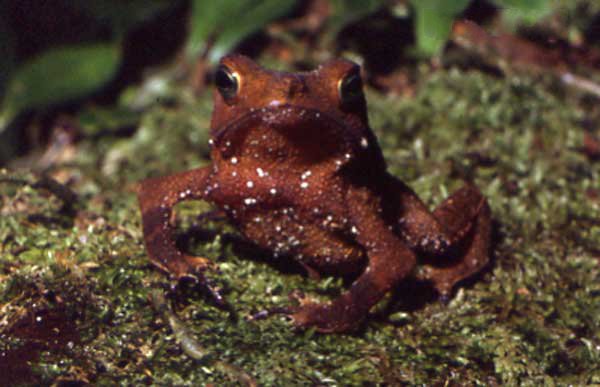
In the lush, shadow-dappled rainforests of the Amazon Basin lurks one of the most intriguing amphibian residents—Rhinella proboscidea, also known affectionately as the “Long-nosed Toad.” To the casual observer who stumbles upon this peculiar creature in their nocturnal wanderings, it appears almost surreal; a frog that sports a distinctive snout reminiscent of a miniature elephant’s trunk. Indeed, its scientific name, proboscidea, directly hints at this unusual proboscis—a charming anomaly that immediately catches one’s attention.
Although not widely celebrated as brightly-colored tree frogs or poisonous dart frogs typically featured in documentaries, Rhinella proboscidea possesses a mystique all its own, quietly contributing to the vibrancy, balance, and biotic richness of the Amazon rainforest ecosystem. This amphibian, though subtle in appearance and elusive in nature, holds essential ecological significance, thriving in realms few outside avid naturalists and scientists have genuinely explored.
Taxonomy and Classification#
Rhinella proboscidea sits comfortably within the diverse toad family, Bufonidae. Known colloquially as true toads, the members of this family are characterized by their rough, wart-covered skin and prominent parotoid glands, which often secrete toxins as defense mechanisms. Within this family, Rhinella serves as a genus home to numerous species recognized by their terrestrial behaviors, resilience, and wide-ranging habitats across Central and South America.
The distinctiveness of Rhinella proboscidea is amplified by its closest relatives, such as Rhinella marina (the infamous cane toad), though it showcases unique adaptations that elevate it to a niche species of particular ecological interest. Its morphological peculiarities separate it distinctly within its genus, ensuring an unmistakable identity even among seasoned amphibian enthusiasts.
Natural Habitat: Life in Amazonia#
Native to the humid expanses of the Amazon rainforests in Brazil, Peru, Ecuador, Colombia, and parts of Bolivia, Rhinella proboscidea thrives beneath towering canopies and amidst dense terrestrial vegetation. This forest-floor dweller has adapted masterfully to its shadowy surroundings, preferring the leaf-strewn substrate near slow-moving streams, shallow water pools, and seasonally-flooded forest floors known as “várzea.”
In these intricate habitats, life pulses in an ever-evolving rhythm. By day, the Long-nosed Toad remains concealed, expertly burrowing beneath detritus or sheltering beneath large leaves to conserve moisture and evade predators. Revealing itself under the cover of dusk, Rhinella proboscidea actively patrols its chosen territories, seamlessly blending into its environment, camouflaged amid fallen foliage and earth hues.
Adaptations for Survival#
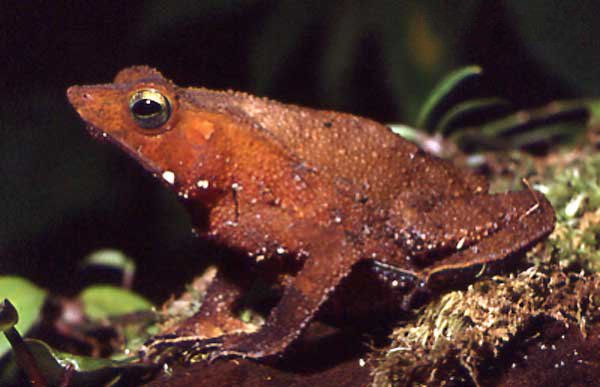
The rainforest floor, bustling with biodiversity, demands careful adaptation. To thrive amid this competitive world, Rhinella proboscidea relies heavily on its cryptic coloration, superbly evolved for effective concealment. Its hues of browns, ochres, and subtle greens perfectly mimic dead leaves or tree bark, providing critical protection from voracious predators who constantly surveil forest grounds.
Additionally, this amphibian capitalizes upon the frequent rainfall and humidity inherent to its habitat for moisture management, absorbing necessary hydration through its highly permeable skin. Such cunning adaptations have shaped Rhinella proboscidea into an attentive survivor in one of Earth’s most complex ecosystems.
Physical Characteristics: A Distinctive Presence#
At first glance, the Long-nosed Toad’s most striking feature is undoubtedly its protruding proboscis. Mature males typically sport a notably elongated and tapered snout, giving the species a uniquely comical, yet elegant visage. While this feature is prominent in males, females usually have less pronounced snouts, offering a subtle but definitive sexual dimorphism.
Adult Rhinella proboscidea varies in size, typically measuring between 4 and 7 centimeters in length. Their skin texture, akin to intricately patterned leather, is rough yet beautifully adorned with wart-like glands. These glands not only contribute to their camouflage but also produce potent toxins as defense, deterring would-be predators with a bitter, acrid secretion if attacked or threatened.
Behavior and Life Cycle: Nighttime Melodies and Remarkable Resilience#
Hunting, Feeding, and Diet#
Like many of its terrestrial relatives, Rhinella proboscidea engages in ambush predation. Under the cover of darkness, these frogs enact patient vigilance, motionless and observant. Their large eyes and remarkably sensitive skin allow for keen perception, detecting the movements and vibrations of small prey such as insects, spiders, ants, and beetles. In a sudden burst of motion, the frog lunges swiftly, capturing prey with exceptional precision using its adhesive, protruding tongue before retreating to its waiting spot.
Reproductive Behaviors: Song Beneath the Canopy#
The Amazonian night is rarely silent; among its orchestrated nocturnal calls are those of male Rhinella proboscidea, emanating in rhythmic choruses during breeding periods—typically following the heavy rains that flood portions of the forest floor. Males select suitable breeding pools, vigorously calling using distinct resonances, their elongated snouts perhaps amplifying their vocalizations to maximize attraction.
Females, attracted by such elaborate serenades, arrive to select their mates, participating in prolonged, careful courtship rituals. Egg-laying ensues within shallow, aquatic environments. Embryos develop rapidly, with tadpoles hatching and maturing quickly—an evolved resilience that helps them remain flexible in the face of unpredictable inundations and drying pools.
Ecological Role: A Key Link in the Amazonian Web of Life#
While Rhinella proboscidea seems inconspicuous amidst the grandeur of the Amazon rainforest, its role within the ecosystem cannot be overstated. Their predation of invertebrates ensures ecological balance, regulating insect populations that could otherwise burgeon exponentially, disrupting forest equilibrium. Moreover, these frogs provide vital sustenance to an array of predators, including birds, snakes, and mammals, thus sustaining an intricate food web.
Amphibians generally function as effective bioindicators, responding rapidly to environmental changes. The sensitivity of Rhinella proboscidea to moisture and habitat quality makes them crucial indicators of ecosystem health, signaling alterations in environmental stability and alerting conservationists to potential issues.
Threats and Conservation Status: Challenges in an Ever-Changing Environment#
Currently classified by the International Union for Conservation of Nature (IUCN) as Least Concern, Rhinella proboscidea enjoys relative abundance within its extensive Amazonian range. Nevertheless, the species faces growing threats, primarily from widespread deforestation, illegal logging, mining, agriculture, and climate change-induced habitat alterations. Such pressures increasingly fragment their range, restrict breeding sites, and diminish suitable habitats.
Conservation efforts aimed at preserving vast stretches of intact forest, alongside tighter regulations on resource extraction, represent critical priorities moving forward. Initiatives striving to uphold broad biodiversity protections indirectly safeguard the Long-nosed Toad and many other overlooked rainforest inhabitants whose hidden presence remains integral to ecological balances.
Cultural and Scientific Significance: A Frog of New Discoveries#
Rhinella proboscidea embodies an intriguing intersection between nature, culture, and science. Indigenous communities residing in Amazonia historically recognized amphibians for their indicative prowess regarding weather shifts, reflecting their inherent ecological sensitivity. Scientifically, this species offers valuable insights into evolutionary adaptations, amphibian ecology, and defense toxin potency—fields ripe for deeper exploration and potential medicinal breakthroughs in modern science.
Conclusion: Protecting Amazonia’s Subtle Treasures#
Rhinella proboscidea is a shining example of the hidden wonders of biodiversity, emblematic of the complexity and fragility of rainforest ecosystems. By understanding, appreciating, and protecting such captivating species, we secure the delicate ecological balance of the Amazon and, in turn, the health of our shared planet.
Let us remain curious, advocate passionately for conservation, and encourage further exploration of the amphibious wonders nestled within the depths of Earth’s most vital ecosystems. The preservation of Rhinella proboscidea symbolizes much more than the survival of one peculiar toad—it’s emblematic of our shared dedication to the intricate magnificence of life on Earth.