- Peltophryne lemur: The Enigmatic Puerto Rican Crested Toad and Its Fight for Survival
- Exploring Its Taxonomy and Classification
- A Fragile Home: Natural Habitat and Distribution
- Distinctive Physical Characteristics: Beauty in Subtlety
- A Life Shaped by Water and Drought: Behavior and Life Cycle
- A Vital Community Member: Ecological Roles and Interactions
- Peril and Perseverance: The Fight for Survival of a Rare Toad
- Cultural and Scientific Reverence: Beyond Ecology Alone
- A Future Together: Awakening Hope through Conservation
Peltophryne lemur: The Enigmatic Puerto Rican Crested Toad and Its Fight for Survival#
Deep within the sheltered corners of Puerto Rico’s dry forests lies an amphibious enigma cloaked in mystery—a small frog whose mere presence whispers secrets of survival and resilience. The Puerto Rican Crested Toad, scientifically known as Peltophryne lemur, is more than just an elusive amphibian; it’s a living symbol of the intricate balance that sustains island biodiversity. Its story is one that intertwines scientific intrigue and conservation valor, commanding attention far beyond its diminutive frame and secretive behaviors.
This elusive amphibian holds the delicate title of the only native toad species native to Puerto Rico—a creature defined not only by its rarity but also by its peculiar appearance. Fascinatingly, its name “crested” is derived from the distinctively shield-like crests above its eyes, lending it an almost mythological appearance reminiscent of tiny, earthbound dragons from folklore. As stewards of nature, its survival hinges on our awareness and conservation action.
Exploring Its Taxonomy and Classification#
The Puerto Rican Crested Toad, Peltophryne lemur, belongs to the Bufonidae family, commonly known as ‘true toads.’ It falls within the genus Peltophryne, a small but captivating group of Neotropical toads endemic primarily to the Caribbean region. Within this genus, the oddly elusive P. lemur retains a rare distinction, closely related to species like Peltophryne guentheri and Peltophryne fluviatica, each adapted uniquely to island ecosystems.
Its scientific nomenclature, having evolved from earlier classifications such as Bufo lemur, reflects improvements in DNA sequencing and morphological research, highlighting its categorization and underscoring the importance of accurate scientific understanding to help safeguard its existence. Despite its taxonomic clarity, the crested toad has often fallen beneath the public’s radar, overshadowed by more charismatic species. But its understated biology offers unique windows into island evolution and amphibian ecology alike.
A Fragile Home: Natural Habitat and Distribution#
The Puerto Rican Crested Toad was historically abundant across northern and southern coastal lowlands of Puerto Rico and even recorded on the neighboring Virgin Islands. Today, however, it has retreated dramatically to isolated pockets, predominantly within select sites such as Guanica Dry Forest and other scattered locales harboring temporary freshwater pools amid seasonal rains.
A Toad that Chooses Aridity—A Surprising Ecological Preference#
Unlike many amphibians thriving in dense, mist-covered forests, Peltophryne lemur favors the sparse yet biologically diverse dry coastal forests. Here, amid craggy limestone terraces, scrubby vegetation, and cacti, temporary freshwater pools emerge seasonally, signaling the toad’s nightly gatherings. Carefully adapted to surviving extended droughts, these creatures bury themselves in moist underground refuges known as aestivation chambers. It is a remarkable scene: bursts of rain finally breaking dry spells, bringing forth dozens or hundreds of toads virtually overnight from hidden sanctuaries, converging upon pristine pools like participants at an ancient ritual.
This unique and nuanced ecological behavior emphasizes the fragility of their habitat—and its susceptibility to human disturbance. Every nuanced aspect of their life cycle—from seasonal rains to underground refuges—must unfold precisely, presenting significant challenges amidst shifting climates and expanding development.
Distinctive Physical Characteristics: Beauty in Subtlety#
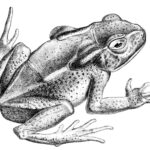
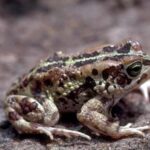
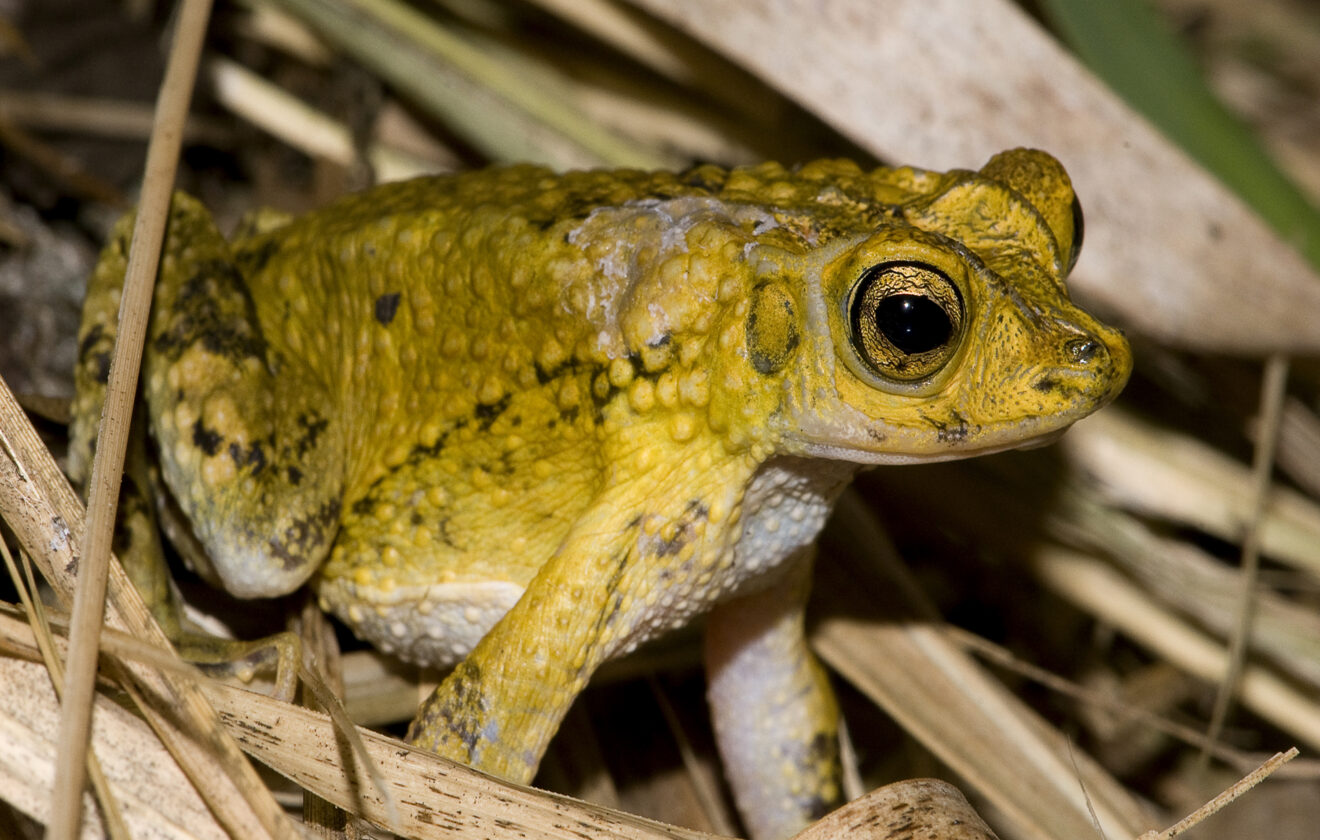
Adult Puerto Rican Crested Toads, though small—with average lengths ranging just around 7 to 12 centimeters—carry a striking appearance perfectly matched to their semi-arid habitats. Their bodies, sculpted by evolutionary pressures, are notably robust and equipped with stout legs ideal for hopping rapidly when threatened. Beneath each warted, mottled brown and gray exterior lies the secret to their discreet camouflage—each marking precisely mirroring the dry forest floor dappled with fallen leaves, pebbles, and passing shadows.
Their most iconic feature, the namesake crest of sharp, cranially positioned protrusions, adorns their heads and gives them a dignified, ‘dragon-like’ appearance rarely found among amphibians. Coupled with large, alert eyes possessing dark elliptical pupils, the Puerto Rican Crested Toad is an amphibian that, once seen, lingers in the memory long after it retreats into carefully concealed refuges.
Moreover, their skin harbors potent glands releasing substances that deter predators, an evolutionary innovation offering protection in their harsh, predator-rich habitats. This subtle yet formidable defense mechanism reinforces their survival, even in today’s dwindling populations.
A Life Shaped by Water and Drought: Behavior and Life Cycle#
The life story of the Puerto Rican Crested Toad is intricately shaped by periods of water and prolonged drought. Throughout most of the year, when surface waters dry up, adults employ an extraordinary moisture conservation strategy: burrowing into soft, loamy soil and sheltering beneath stone outcroppings, entering a state of physiological rest called aestivation. Here, safely withdrawn from the surface struggle, their metabolism slows down remarkably, allowing survival for long drought periods until seasonal rains reanimate the dry, silent forest.
Rain Brings Forth New Life—A Dramatic Nighttime Gathering#
When heavy rains finally drench the parched landscapes—often stirred by tropical storms or hurricanes—adult toads emerge en masse from their underground chambers, embarking on vigorous migrations toward newly refilled temporary pools. Males vocalize energetically, their gentle trilling echoing through darkened forests, beckoning females toward communal breeding arenas.
Female Puerto Rican Crested Toads deposit gelatinous strands containing thousands of eggs in ephemeral pools, a reproductive strategy adapted specifically to temporary water availability. Tadpoles hatch rapidly and race against drying pools to complete their metamorphosis into tiny toadlets, usually in under 21 days. These newly transformed juveniles, no larger than a thumbnail, disperse quickly amid leaf litter, each tiny hop signifying a struggle against formidable odds of survival and future reproduction.
A Vital Community Member: Ecological Roles and Interactions#
Within its unique ecosystem, the Puerto Rican Crested Toad plays roles both subtle and fundamental. As efficient predators, adult toads consume an impressive range of insects and other small invertebrates, thus helping regulate populations critical to forest health. In turn, committed to the fragile balance of predator and prey, they themselves feature regularly as staple components within the diets of birds, reptiles, and small mammals, thereby contributing greatly to the intricate food web of Puerto Rico’s dry coastal ecosystems.
Perhaps most poignantly, Peltophryne lemur functions as a powerful ecological indicator. The presence, health, and breeding success of this sensitive amphibian species reveal essential environmental conditions, its very survival strongly affected by ecological disturbances and habitat quality.
Peril and Perseverance: The Fight for Survival of a Rare Toad#
Lamentably, despite adaptive marvels, the Puerto Rican Crested Toad remains critically endangered according to the International Union for Conservation of Nature (IUCN). Habitat loss from expanding human developments, climate unpredictability, invasive species pressures, and diseases, most notably chytrid fungus, threaten its future profoundly. Conservation biologists and volunteers tirelessly labor against time, racing to restore fragile populations and habitats.
This earnest quest has given birth to captive breeding programs, conservation reintroductions, and comprehensive habitat preservation efforts. Carefully coordinated captive populations in zoos and environmental groups now serve as reservoirs for replenishing wild populations, highlighting the collective dedication to preserving this emblematic, fragile amphibian.
Cultural and Scientific Reverence: Beyond Ecology Alone#
Ecological value aside, the Puerto Rican Crested Toad symbolizes more deeply human connections to nature. Within Puerto Rican culture, amphibians often represent themes of renewal and ecological vitality, reflecting society’s relationship with nature’s rhythms. Scientifically, Peltophryne lemur serves as a living textbook, contributing significantly to studies exploring amphibian reproductive ecology, adaptation, genetics, and disease resistance.
A Future Together: Awakening Hope through Conservation#
As stewards of biodiversity, we must not allow the remarkable Puerto Rican Crested Toad to slip quietly into extinction. Instead, let its quiet calls echo as a rallying point for conservation action. Support reputable environmental groups and governmental initiatives committed to island biodiversity recovery, or simply spread awareness; each effort counts powerfully towards safeguarding this hidden wonder for future generations.
Through our collective efforts, perhaps someday soon we might experience the privilege of witnessing, beneath a starlit coastal forest, the mesmerizing nocturnal voice of a thriving community of crested toads once again filling Puerto Rico’s air—a stirring testament to conservation victories and a harmonious relationship between humanity and the natural world.