- Exploring Rhinella pombali: Brazil's Enigmatic Forest Toad
- Taxonomy and Classification of Rhinella pombali
- Natural Habitat: Life in Brazil's Atlantic Rainforest
- Physical Characteristics: Subtle Beauty and Adaptive Traits
- Behavior and Life Cycle: Quiet Lives, Fascinating Rhythms
- Ecological Role: An Integral Part of Brazil's Forest Ecosystem
- Threats and Conservation Concerns: Preserving Delicate Balance
- Cultural and Scientific Significance
- A Call to Nature Advocates: Conservation Begins With Understanding
Exploring Rhinella pombali: Brazil’s Enigmatic Forest Toad#
Deep amidst the vibrant, humid embrace of Brazil’s Atlantic Forest, a creature with subtle beauty and remarkable resilience quietly thrives. Its name—Rhinella pombali—is unfamiliar to many, yet this gentle amphibian plays an essential role in the complex tapestry of its lush ecosystem. Often overshadowed by more flamboyant rainforest inhabitants, this humble forest toad holds secrets that science is only beginning to unravel.
Named in honor of esteemed Brazilian herpetologist José Perez Pombal Jr., Rhinella pombali is more than just another inconspicuous frog hidden within dense foliage. While it may not flash vivid colors or demonstrate dramatic behaviors typically featured in nature documentaries, this unassuming toad’s life story is brimming with fascinating surprises.
Let’s embark on an imaginative journey, following its shy footsteps through dark leaf litter carpets, and discover why this amphibian truly merits our attention, respect, and conservation efforts.
Taxonomy and Classification of Rhinella pombali#
Rhinella pombali belongs to the expansive Bufonidae family, commonly known as “true toads.” The Bufonidae family, distinguished by thousands of species worldwide, is characterized by their dry, warty skin and robust build. Within this sprawling family rests the genus Rhinella, a group unique to Central and South America, noted for its ecological diversity and adaptive versatility.
Identified through detailed morphological analysis backed by molecular genetic data, this particular species was formally described relatively recently, highlighting scientists’ ongoing efforts to catalog biodiversity in rapidly disappearing habitats. Taxonomically, it finds close relatives in species such as Rhinella crucifer and Rhinella ornata, yet Rhinella pombali stands apart with its distinct morphological nuances and ecological behaviors, underscoring the extraordinary diversity within the genus.
Natural Habitat: Life in Brazil’s Atlantic Rainforest#
Traveling southward through the winding trails and dense underbrush of Brazil’s rainforests, we encounter the ideal home of Rhinella pombali—the lush, humid expanse known as the Mata Atlântica (Atlantic Forest). This unique habitat, sprawling alongside Brazil’s Atlantic coastline, is among the most biologically diverse yet severely threatened ecosystems on Earth.
Unlike open grasslands or riverbanks commonly associated with toads, Rhinella pombali prefers the shadowed, leaf-covered floors of mature tropical and subtropical forested slopes. Beneath thick canopies entwined with bromeliads and dangling vines, it carefully navigates leaf litter, seeking moisture, shade, and safety from predators.
An Environment of Constant Interactions#
This carefully hidden microhabitat suits the toad exceptionally well. Humidity is constantly high, and leaf litter teems with abundant insect life, providing ample sustenance. Small puddles formed by rainfall and tree-root depressions scattered through the forest floor supply essential breeding sites, ensuring offspring survival. Beyond food and shelter, the complex vegetation layout prevents desiccation—one of the most critical risks faced by amphibians around the globe.
The forest’s structural complexity is not merely background; it’s an active participant, shaping the evolutionary journey of the toad. The forest canopy captures sunlight, which enables photosynthesis, while decomposing leaf litter beneath continually replenishes nutrients, sustaining countless organisms—including insects, microbes, and small vertebrates like our subject, Rhinella pombali.
Physical Characteristics: Subtle Beauty and Adaptive Traits#
Rhinella pombali is modestly sized among amphibian standards. Adults generally measure between 40 to 60 millimeters from snout to vent, comfortably resting within human palms. Despite its modest appearance, careful inspection reveals adaptive precision refined by evolutionary pressures.
A Master of Camouflage#
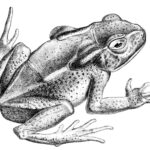
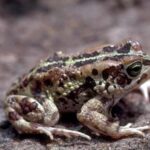
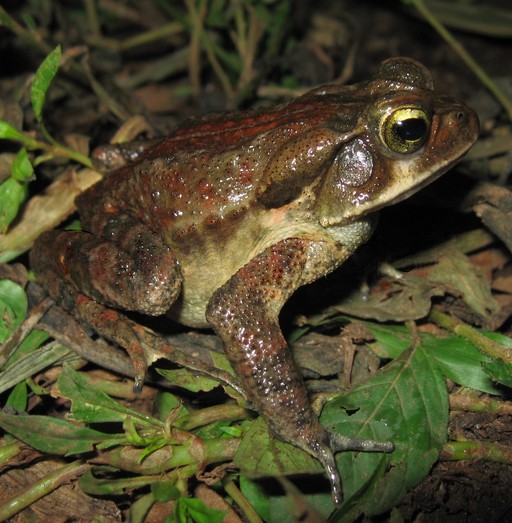
Its skin, adorned with an array of cryptic colors ranging from earthy browns and muted ochre to delicate tracings of mossy greens, blends remarkably well among the decomposing leaf litter. Each toad features unique subtle patterns of darker mottling that resemble decaying foliage, making it nearly invisible to predators such as snakes, birds, and mammals scouring the forest floor in search of prey.
Form and Function#
Typical to many Bufonids, its skin is rough-textured, populated by small glands capable of secreting chemicals used defensively against predators. Powerful hind limbs are designed not for dramatic leaps—like some tree-dwelling frogs—but for steady, deliberate jumps and controlled movements through dense underbrush.
The toad’s slightly bulbous eyes, finely tuned for low-light conditions of the dense forest understory, also hint at its nocturnal nature, efficiently tuned to detect subtle movements of crawling insects beneath the dense blanket of leaves.
Behavior and Life Cycle: Quiet Lives, Fascinating Rhythms#
Interestingly nocturnal, Rhinella pombali emerges at dusk from sheltering leaf piles and burrowed hiding spots, actively foraging amidst leaf litter as evening deepens. Their diet typically consists of insects, arthropods, and even small invertebrates—preying skillfully on the abundant inhabitants of their unique microhabitat.
Mating Rituals and Mysterious Communications#
Breeding occurs seasonally, coinciding with rainy seasons in their habitat. During these periods, the usually discreet males transform into surprisingly vocal creatures. Their breeding calls—soft, pulsating notes barely audible above the nightly hum of the forest—guide receptive females towards small, temporary breeding pools formed after substantial rainfall. The gentle, rhythmic chorus is a mesmerizing nocturnal soundscape unique to these Brazilian forests.
The Miracle of Metamorphosis#
After fertilization, females lay gelatinous strings of eggs in shallow waterbodies. Within days, tiny tadpoles emerge, quickly dispersing within the crowded pools. Over subsequent weeks, an exquisite transformation unfolds: External gills recede, limbs sprout delicately, and the tail gradually shortens before disappearing entirely—a breathtaking transformation that symbolizes renewal and resilience.
Ecological Role: An Integral Part of Brazil’s Forest Ecosystem#
Despite its humble presence, Rhinella pombali occupies a pivotal niche, serving both as predator and prey. By consuming insects and other invertebrates, it regulates pest populations, indirectly contributing to forest health and stability.
As prey, juvenile and adult individuals provide sustenance to many bird, mammal, reptile, and even large insect species. Beyond predator-prey dynamics, these frogs possess significant ecological importance as biological indicators. Because amphibians respond quickly to environmental changes, researchers use their health and population trends to gauge overall habitat quality and ecological viability.
Threats and Conservation Concerns: Preserving Delicate Balance#
While not yet extensively studied, preliminary observations suggest Rhinella pombali faces significant threats, primarily from habitat destruction due to agriculture, logging, urban expansion, and fragmentation. Additionally, global warming and habitat fragmentation have intensified dry periods, altering rainfall patterns essential to amphibians’ lifecycle.
These cumulative threats have raised concerns among conservationists, who advocate intensified research and habitat protections. To date, the species remains without a formal IUCN assessment, underlining the urgent need for deeper investigation into its population ecology and conservation needs.
Cultural and Scientific Significance#
In honoring José Perez Pombal Jr., Rhinella pombali underscores collaborative efforts among scientists dedicated to unveiling the intricacies of Brazilian biodiversity. Though currently less prominent in folklore and cultural narratives, the biodiversity-rich Atlantic Forest continues to inspire profound respect culturally, scientifically, and spiritually, positioning this humble forest toad as a potential focal point for local conservation initiatives.
A Call to Nature Advocates: Conservation Begins With Understanding#
The hidden narrative of Rhinella pombali circulates beneath the leaf litter, echoing softly in nighttime choruses gently filling Brazil’s endangered Atlantic rainforests. By understanding these quiet stories, we can appreciate biodiversity’s full spectrum—from charismatic megafauna down to small, subtle amphibians whose survival is vital to ecological harmony.
As nature enthusiasts and concerned conservationists, learning about and advocating for species like Rhinella pombali can help safeguard their habitats, promoting broader initiatives that maintain biodiversity, resilience, and balance for generations yet unborn. Let this gentle forest toad inspire you towards deeper exploration, advocacy, and lasting commitment to preserving our shared planet.