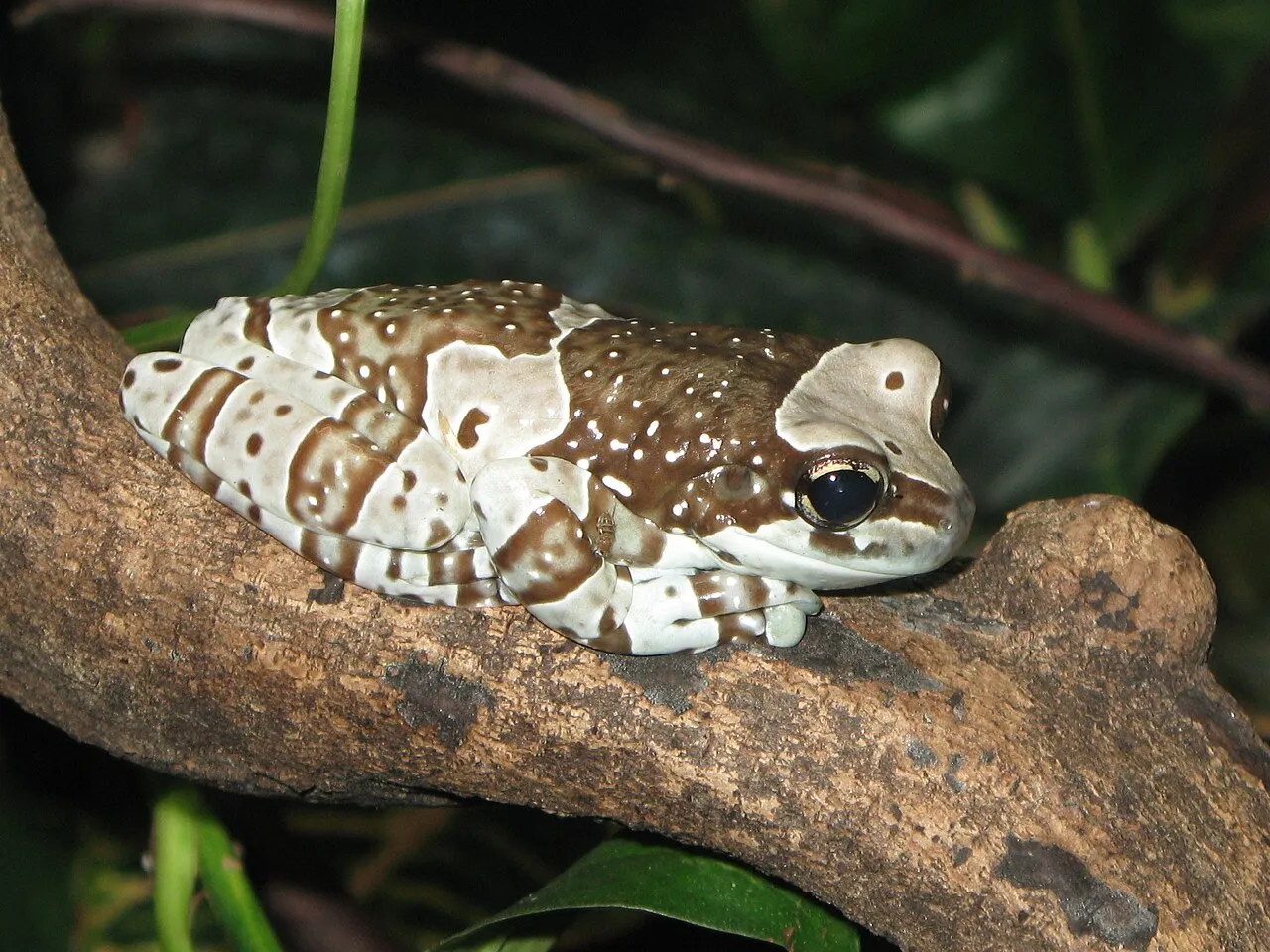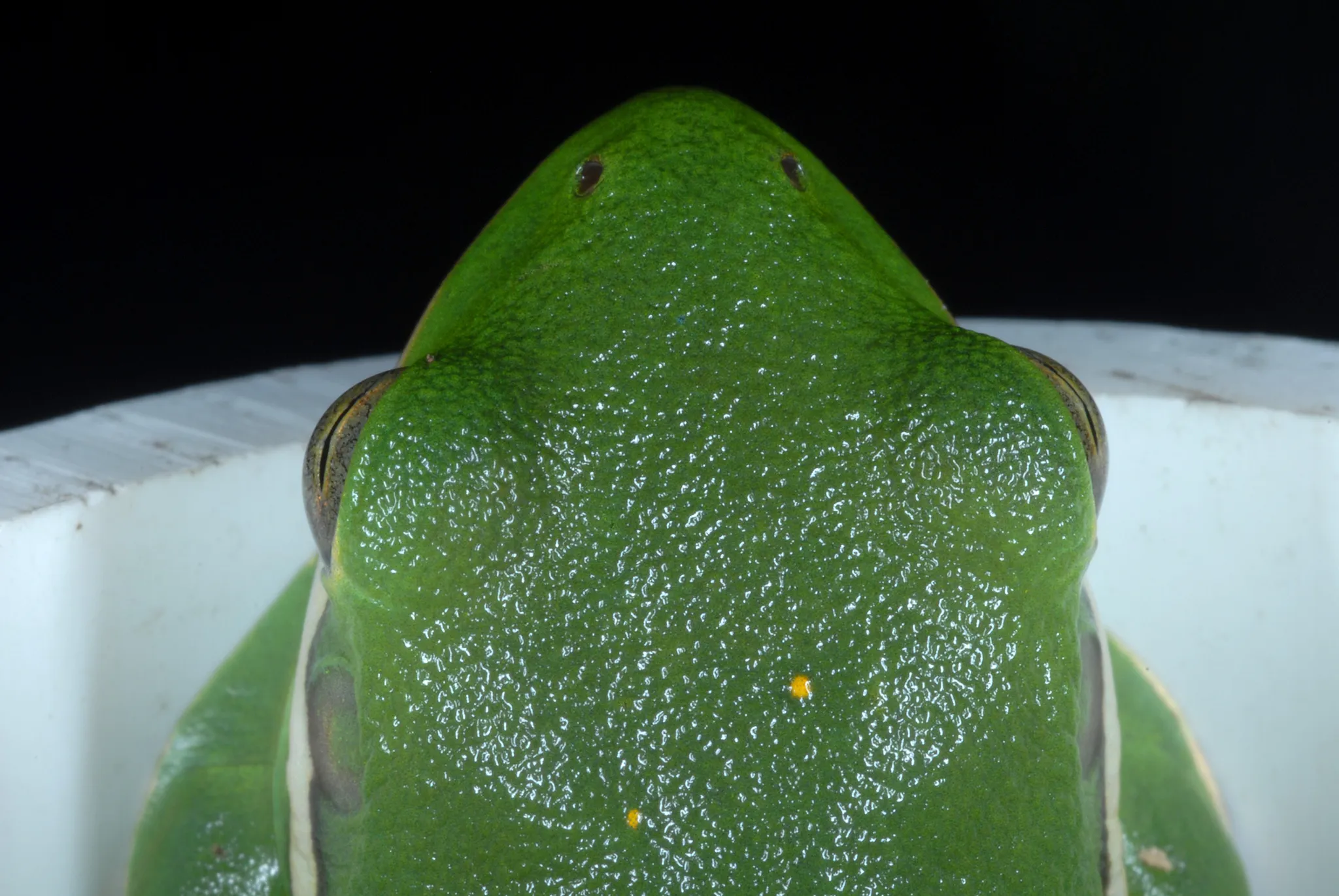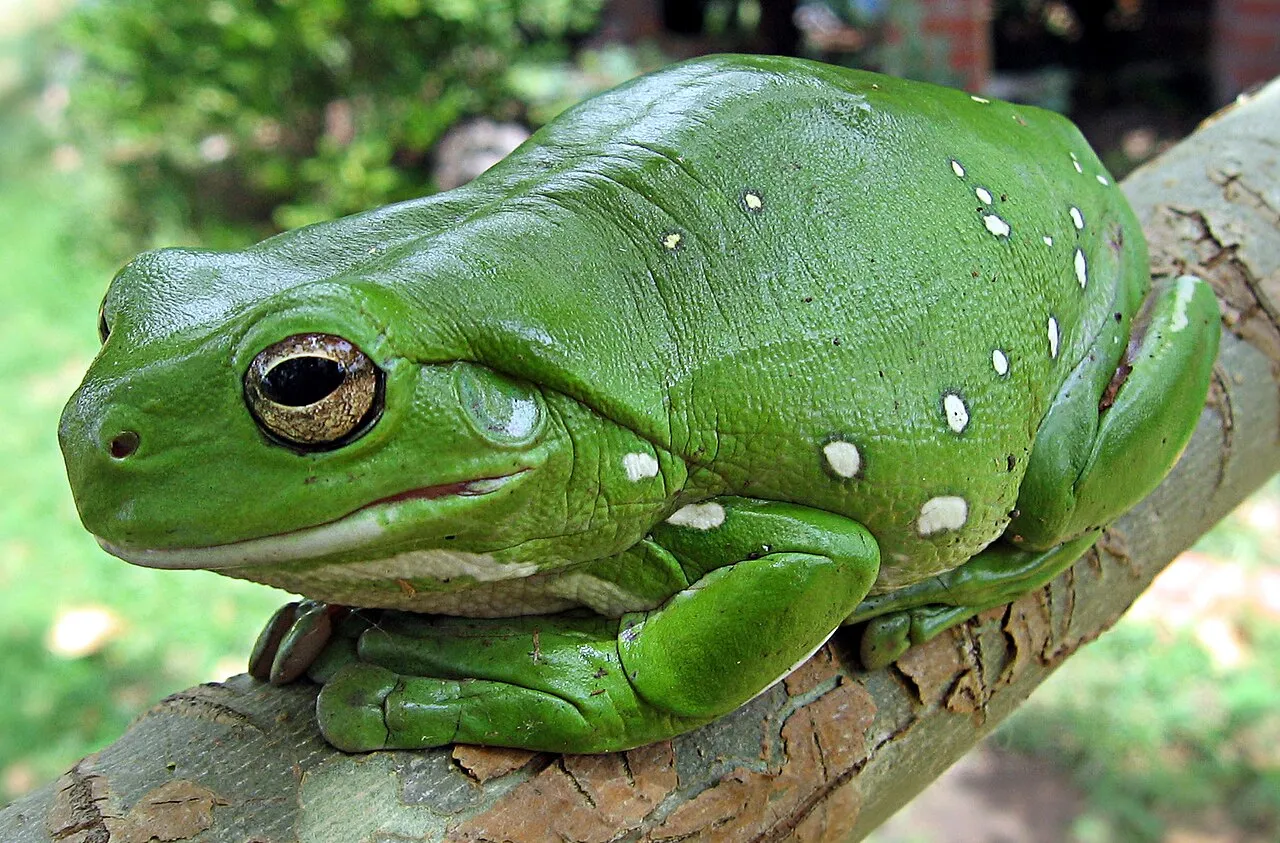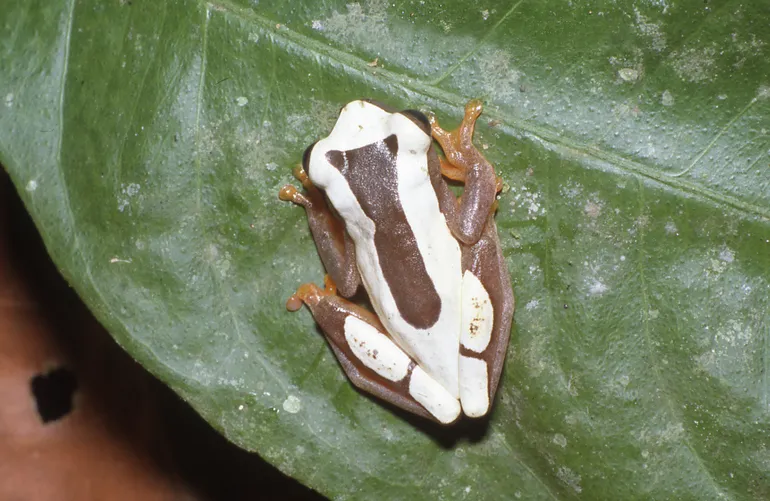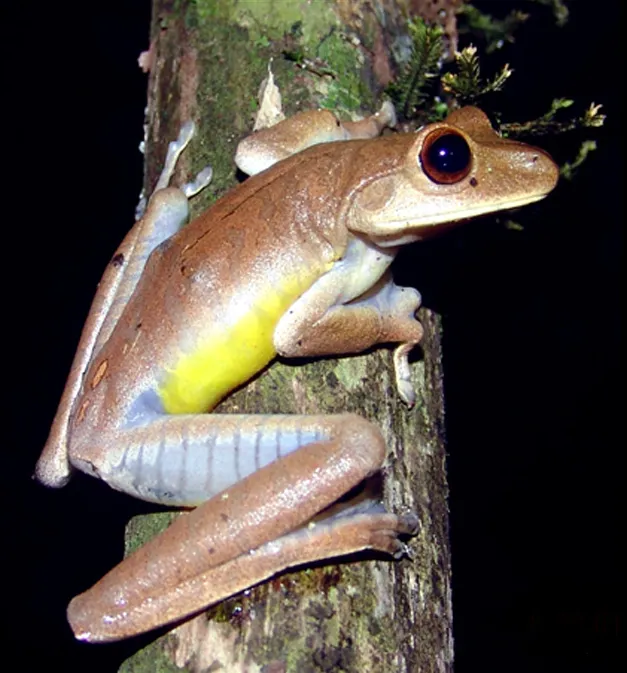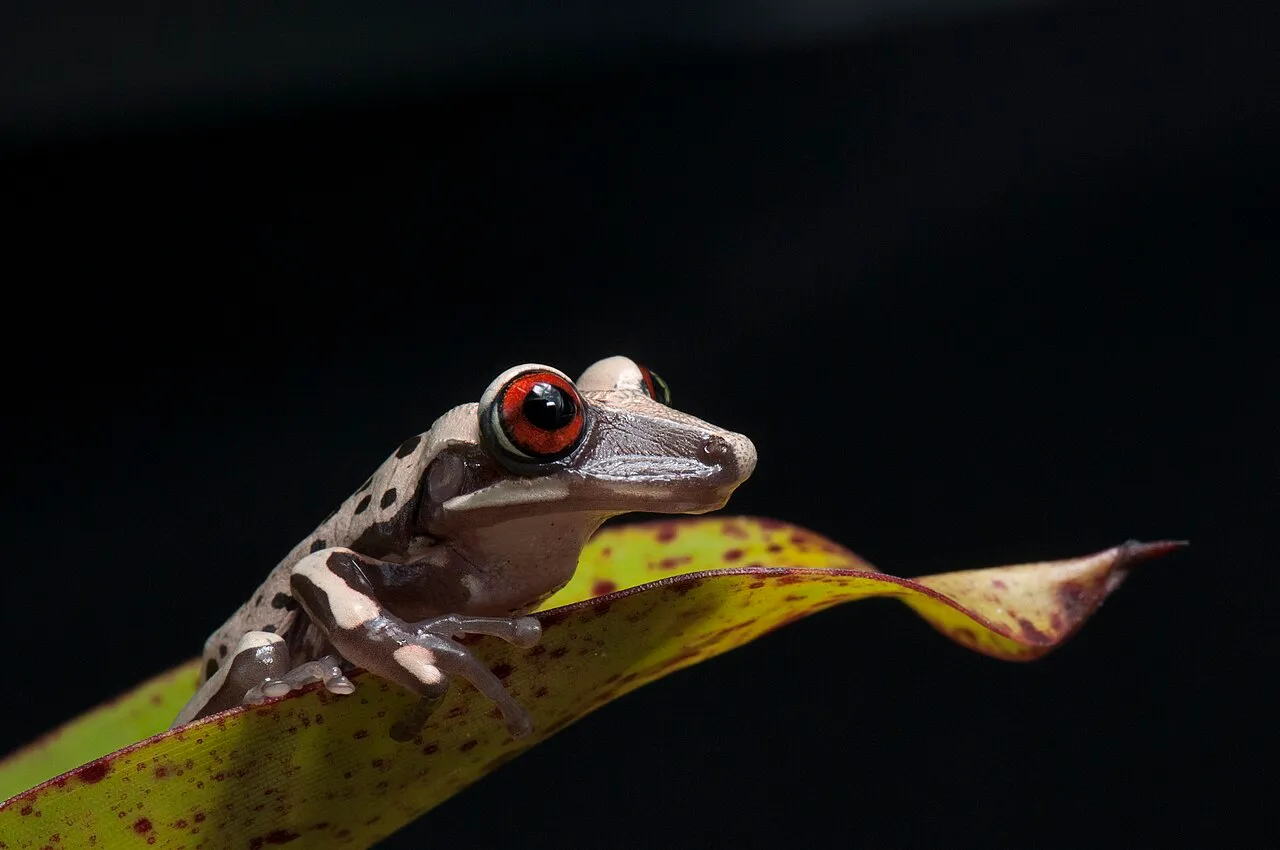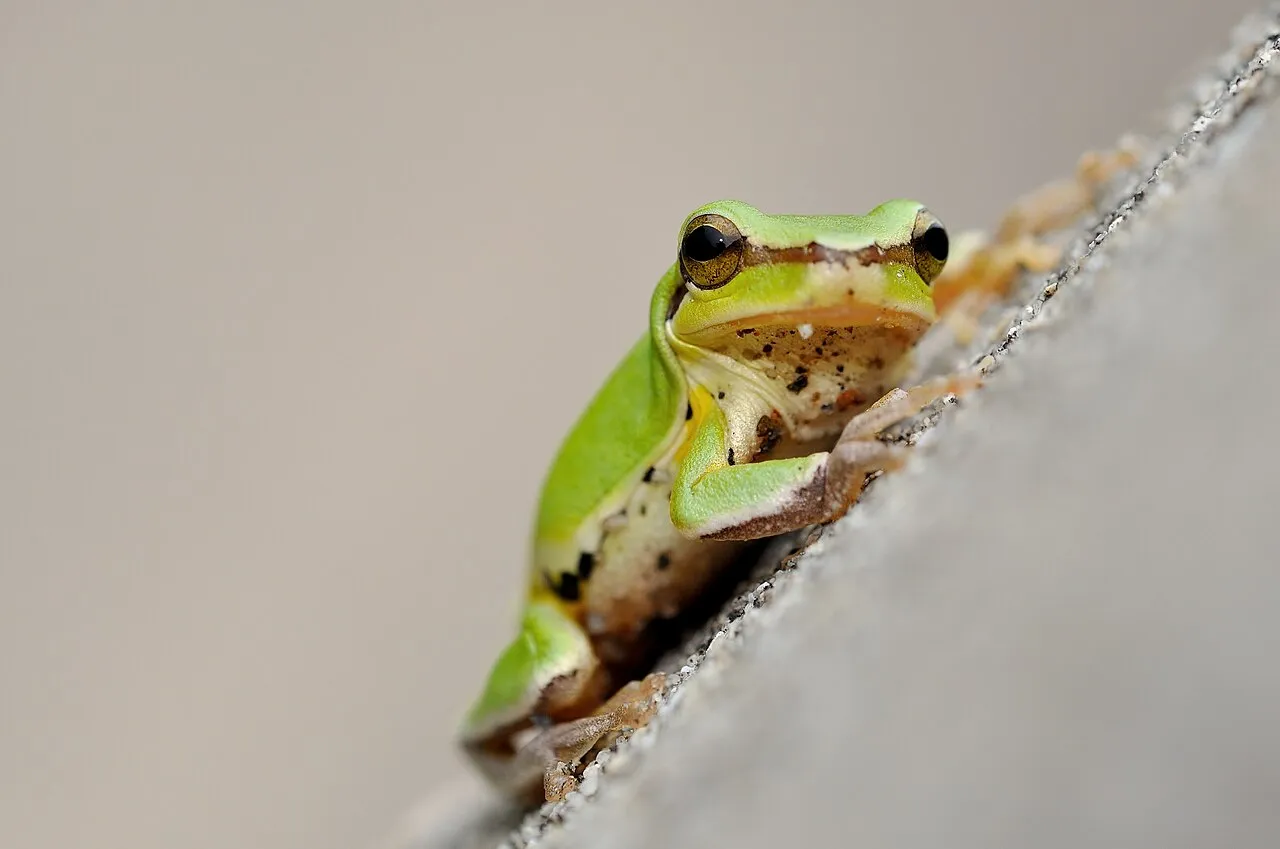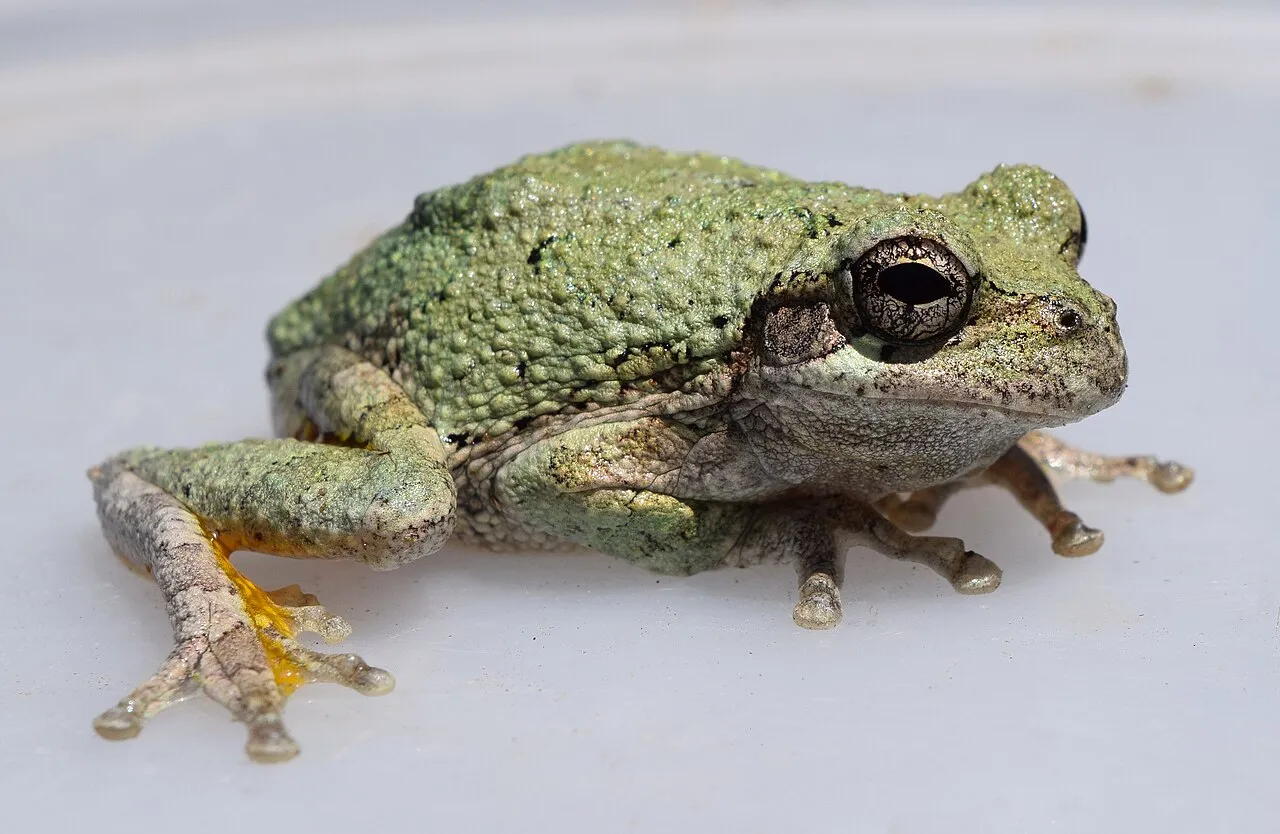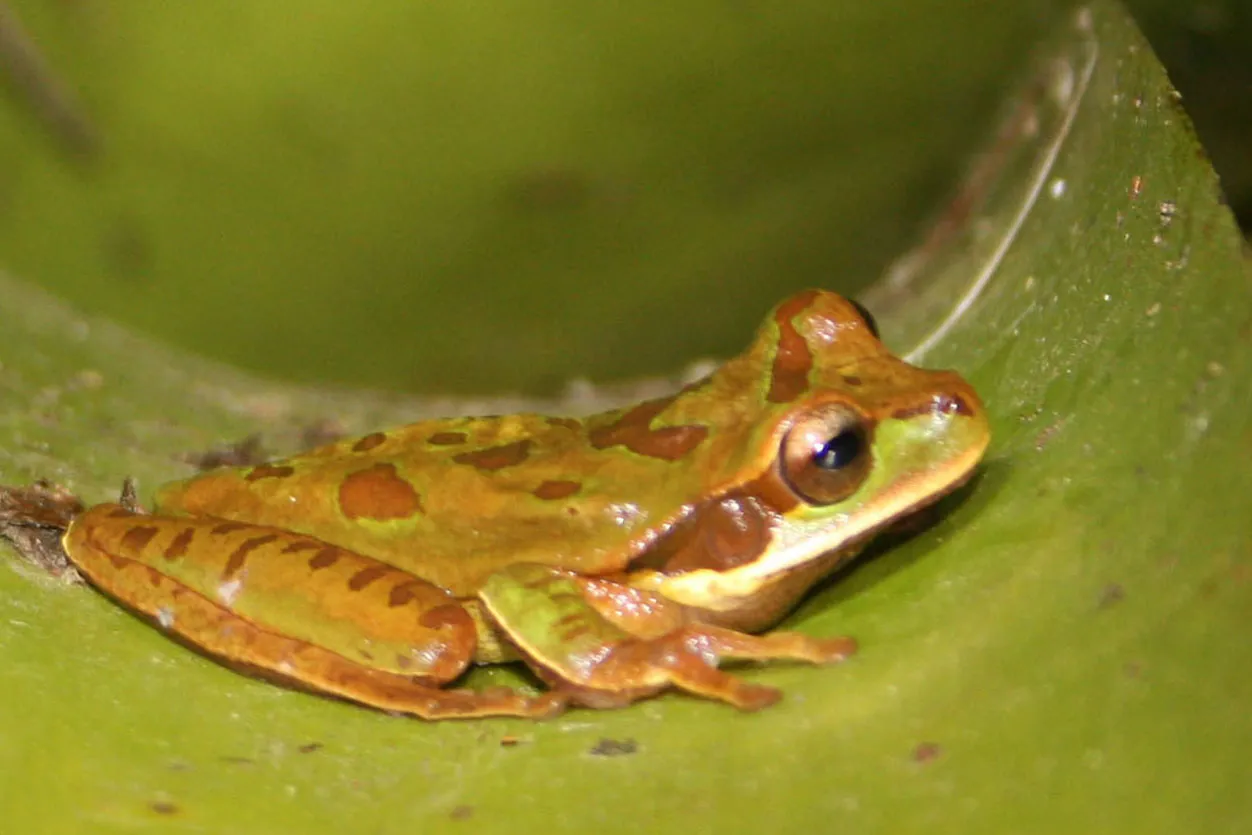
The New Granada cross-banded treefrog, Smilisca phaeota, is a frog of the family Hylidae, also known as the masked tree frog. It occurs in Colombia, Costa Rica, Ecuador, Honduras, Nicaragua and Panama. The nickname comes from dark markings covering the eye1, which run from the nose back along the face towards the ear.
Identification
S. phaeota is a large Smilisca, males to about 65 mm and females to about 78 mm in snout-vent length. The back is pale green to tan and the belly creamy white, with dark spots or blotches on the back. A broad dark brown or black mark runs back from the eye over the eardrum to above the base of the arm, and the upper lip is silvery white. The frog can change its back from green to brown in a short time. Because the mask crosses the eye, it can help with camouflage1, as many predators find prey by their open eyes. Recently metamorphosed young measure 12.7–16.7 mm, averaging 14.3 mm2 in eleven specimens.
Habitat and range
Its habitats include moist lowland forest, rivers and freshwater marshes1, and also plantations, rural gardens, urban areas, heavily degraded former forest, ponds, canals and ditches. Duellman and Trueb described it as a frog of humid lowland tropical forest that seldom climbs above 1,000 m2 into the foothills.
Behaviour and breeding
By day the frogs rest near water, in elephant ear plants and bromeliads. Males usually call from secluded spots at the edge of water, on the ground and usually hidden beneath an overhanging leaf or other cover; they do not sit in the open. Most calling males and clasping pairs have been found at small pools or shallow ditches, and only occasional individuals at the edges of large ponds or streams. Calling males have been reported in Panama in January, March, July, August and October, but the authors found that the length of the breeding season cannot be determined definitely; the earliest date eggs have been found is 23 May. Eggs are laid in loose clumps among vegetation in the water, and hatchling tadpoles are 8.7–10.6 mm in total length2.
Conservation
The species is assessed as Least Concern3 in the 2022.2 edition of the IUCN Red List.
Similar species
- Smilisca baudini occurs alongside S. phaeota, and both sometimes breed in like places. Its lips are strongly barred with brown and creamy tan, whereas S. phaeota has a silvery white lip stripe and no vertical bars on the lips. Males of S. baudini also call from open situations, not from secluded places2.
- Smilisca cyanosticta is closely related, but its flanks are dark brown with large pale blue spots, whereas S. phaeota has pale green or pale tan flanks with fine dark venation. The ranges of the two species are widely separated2.