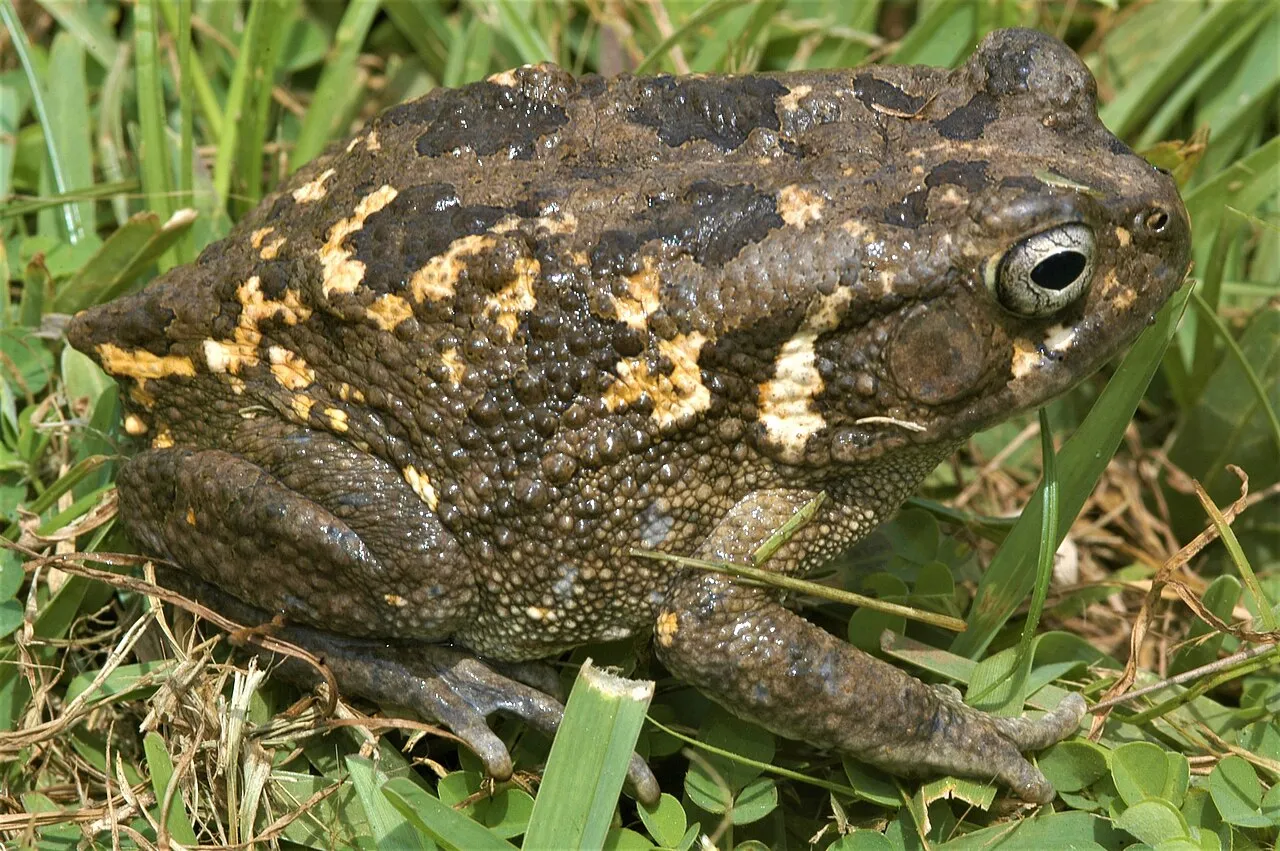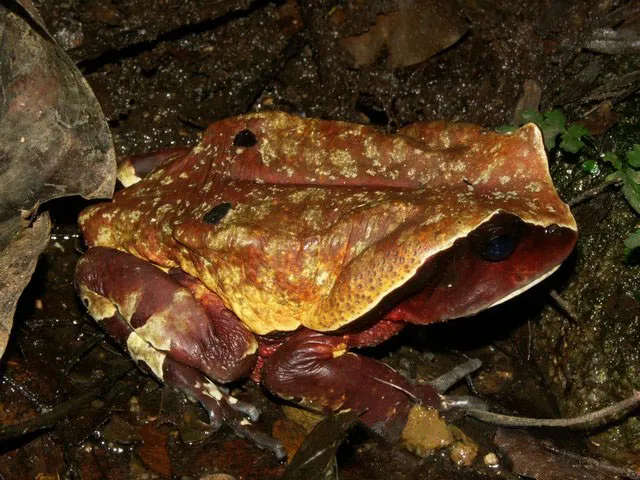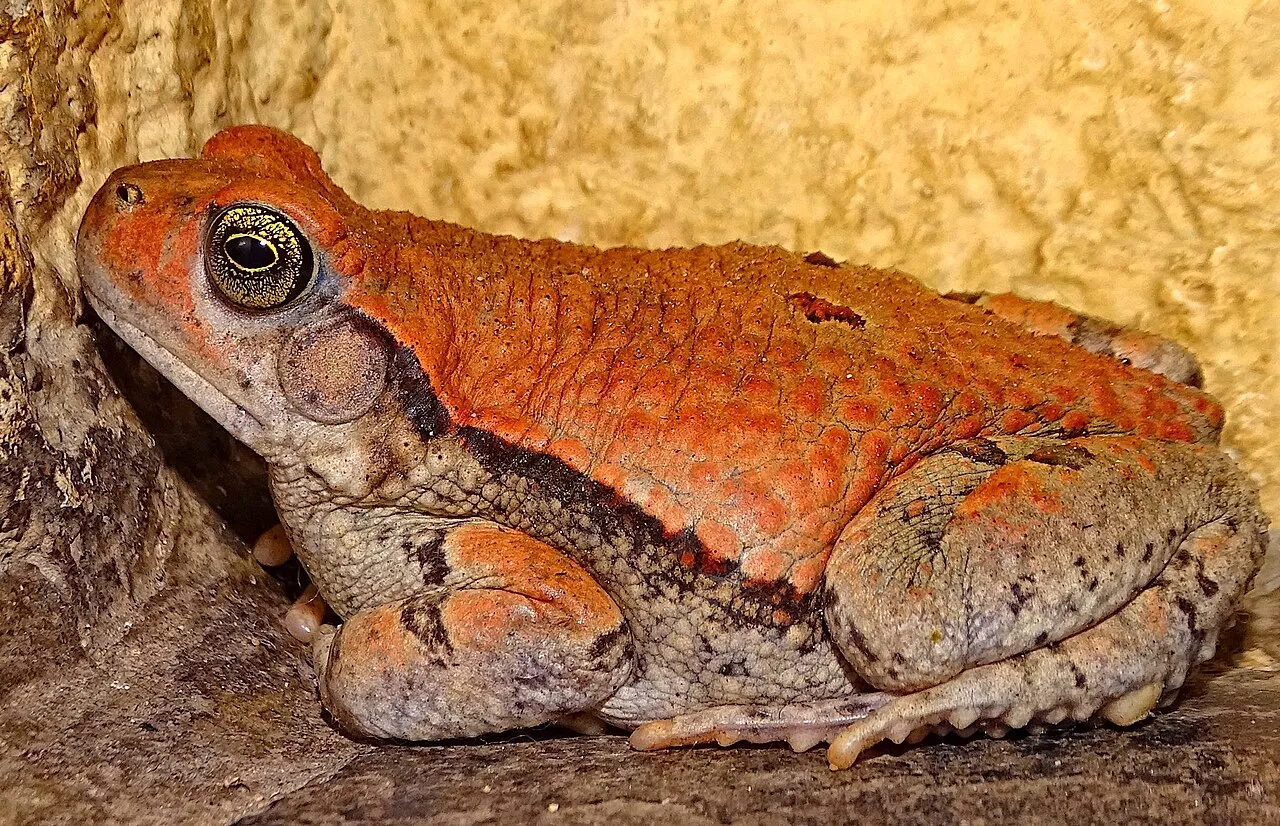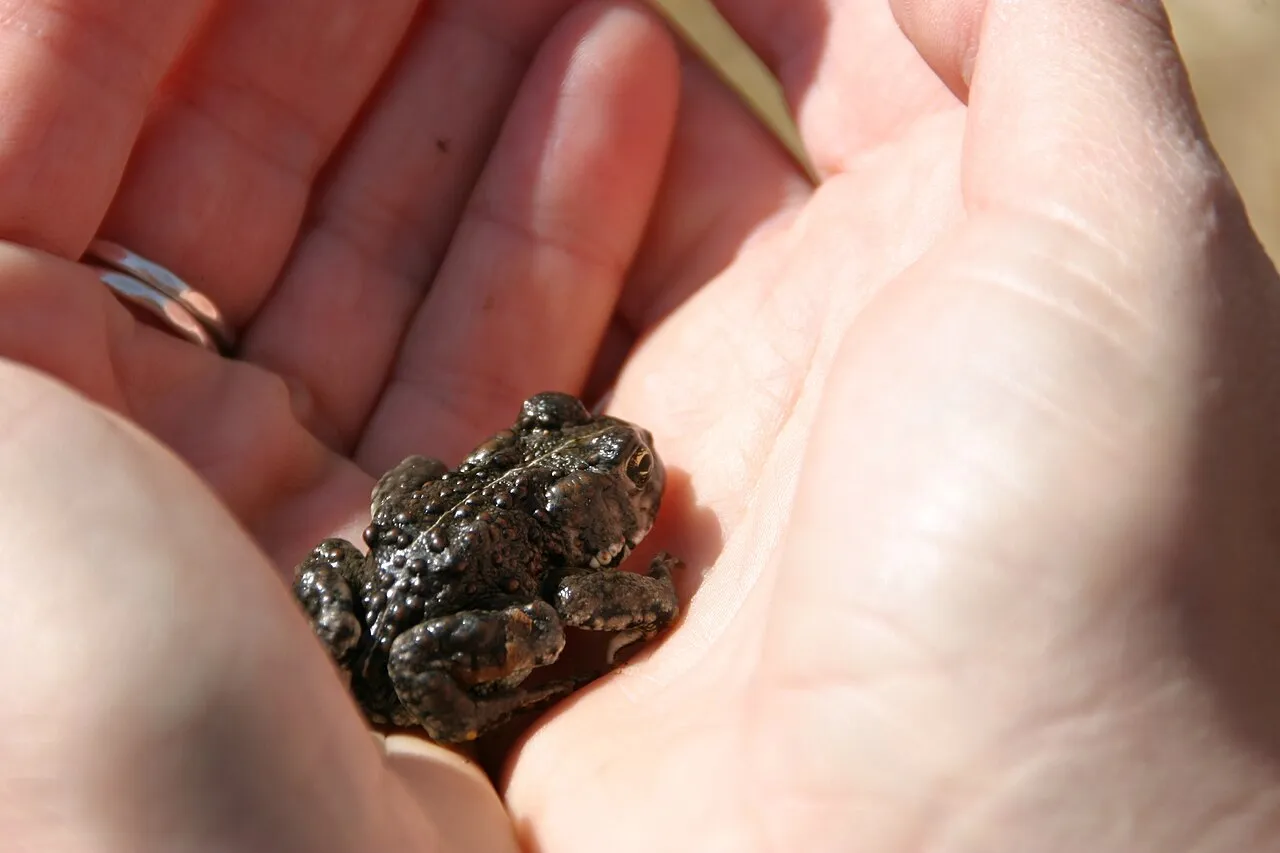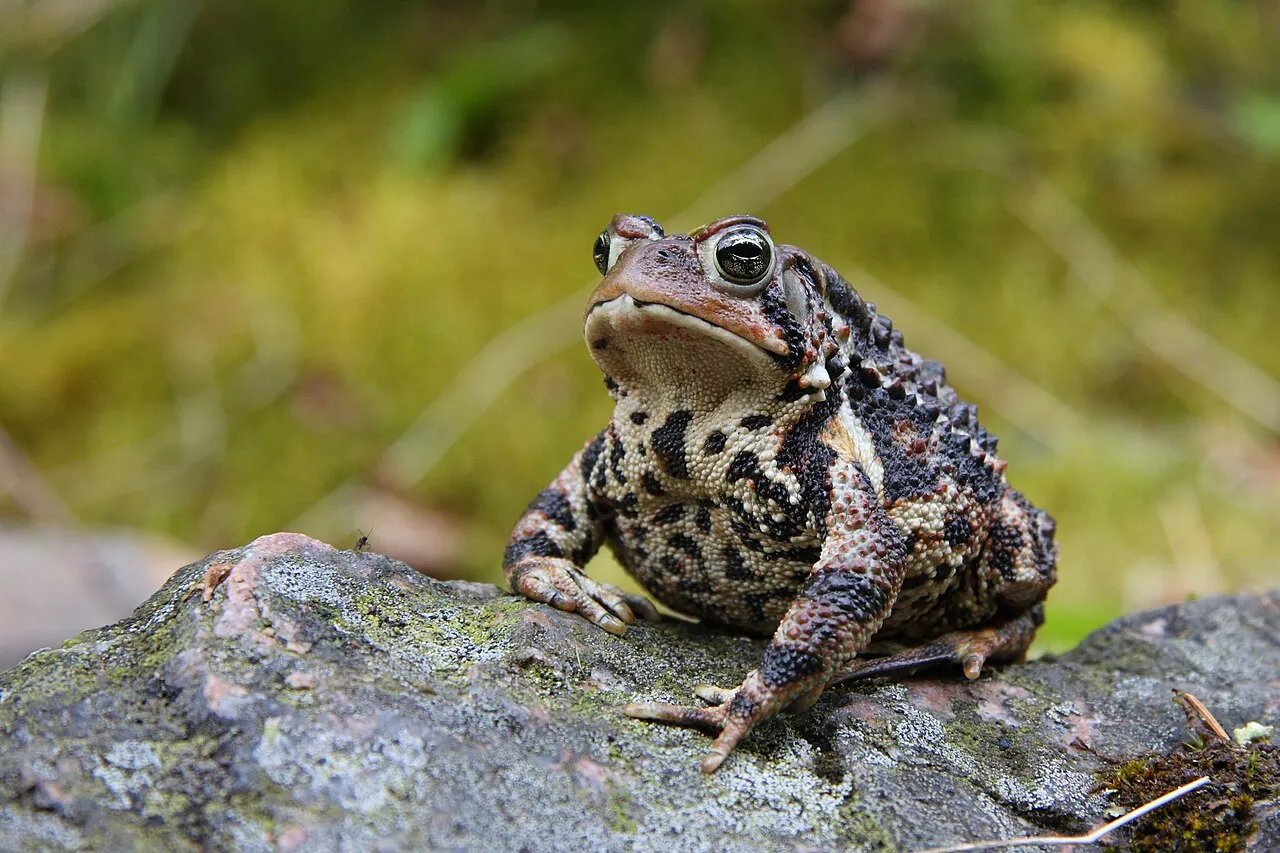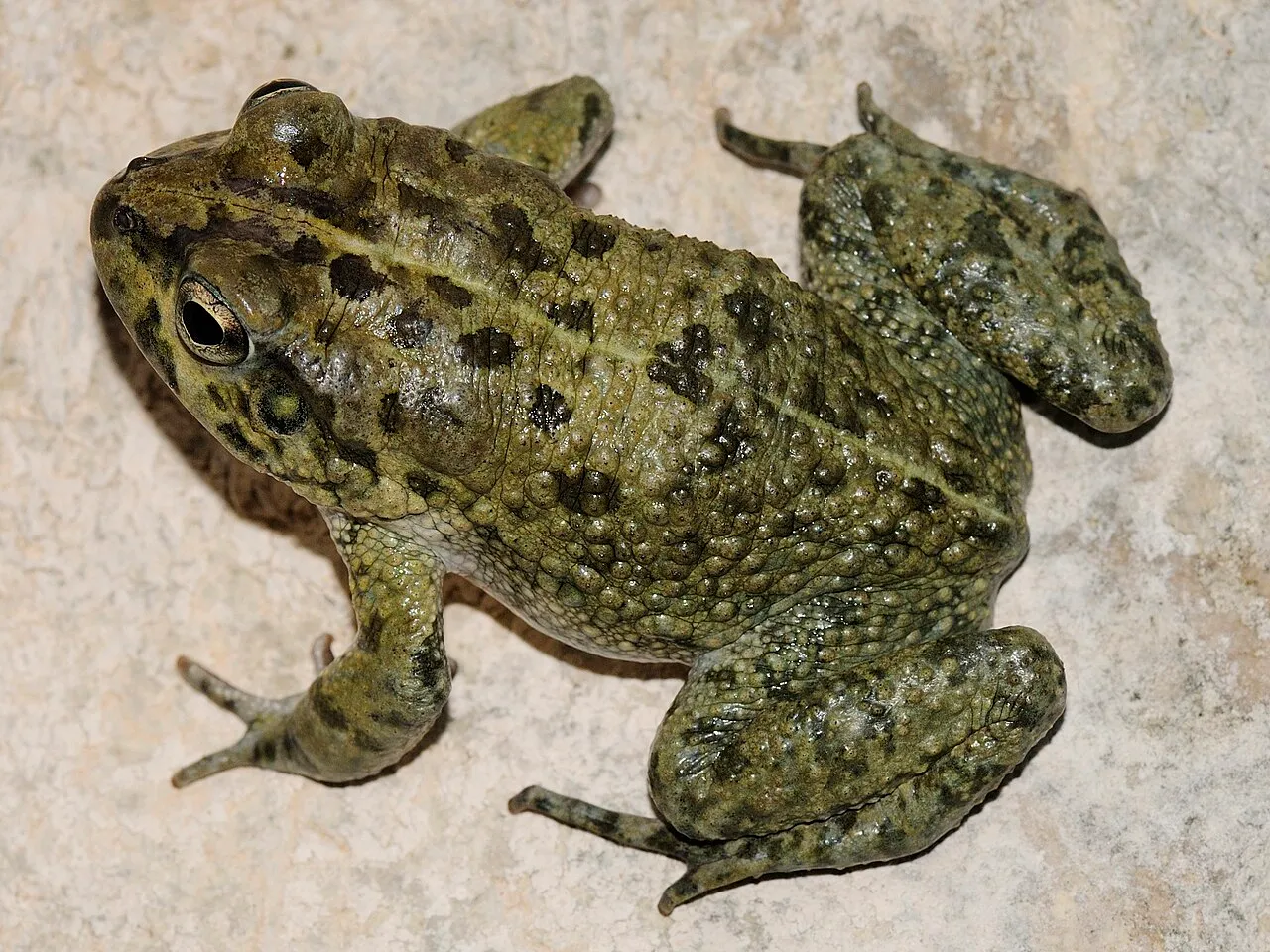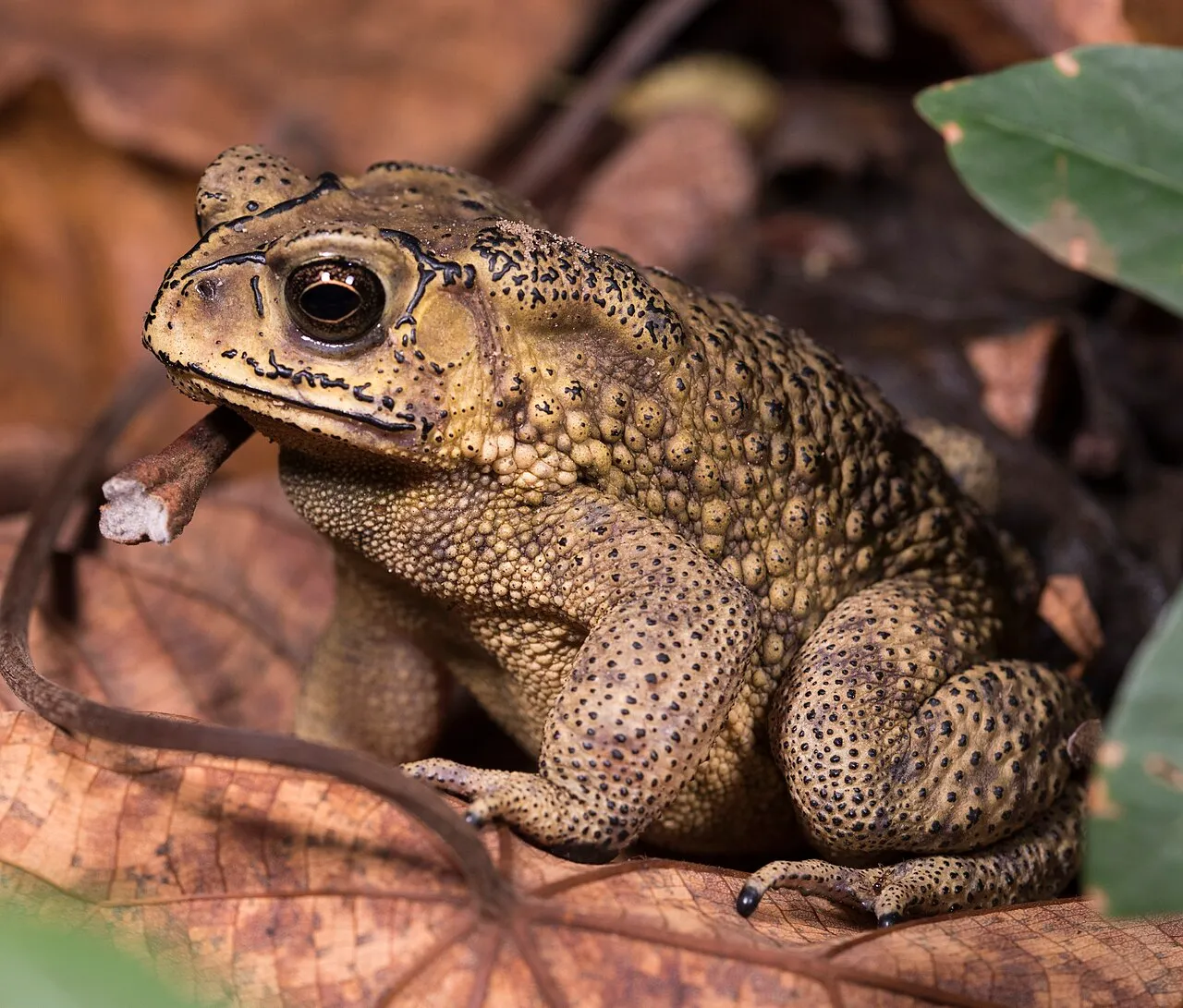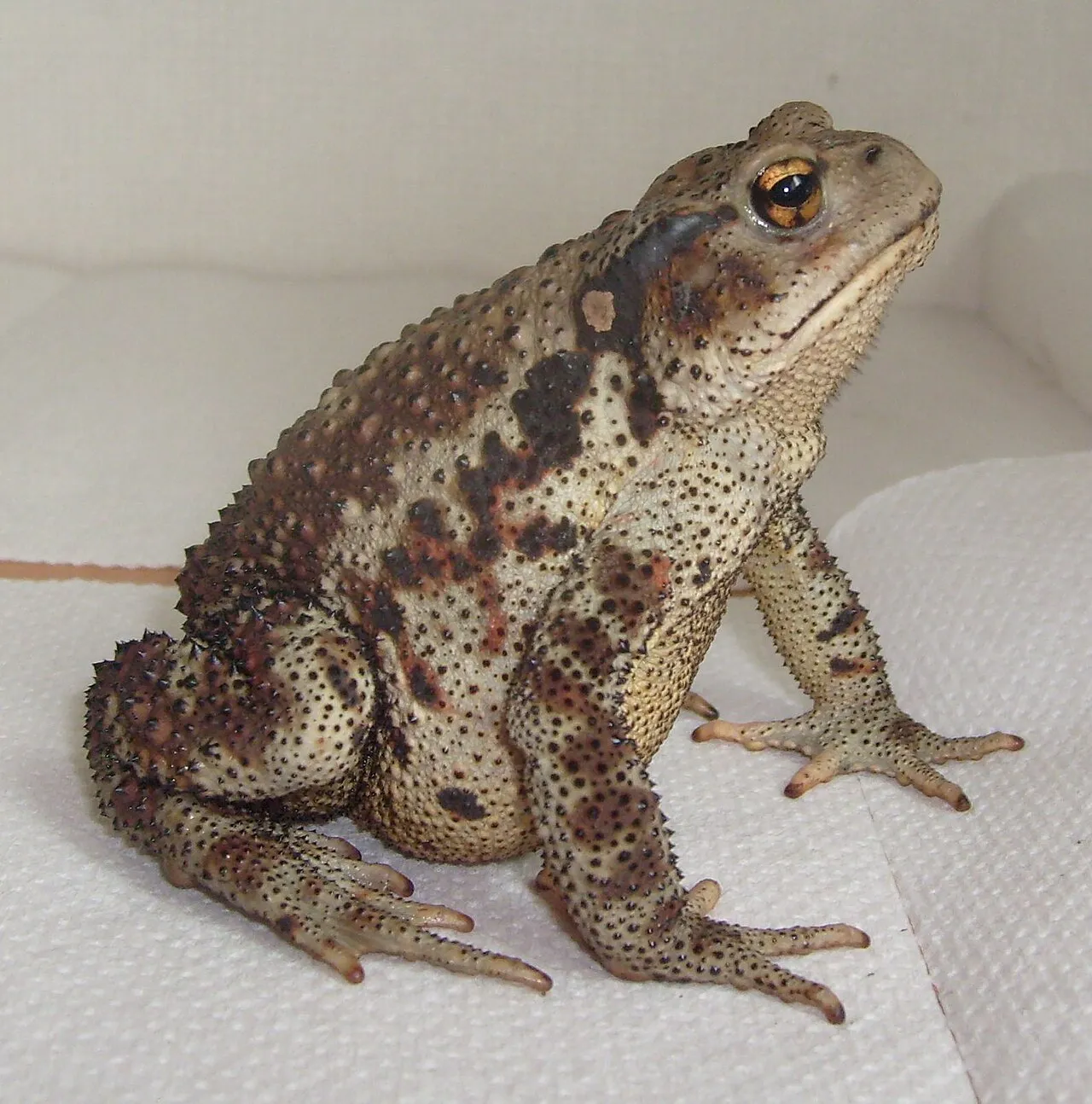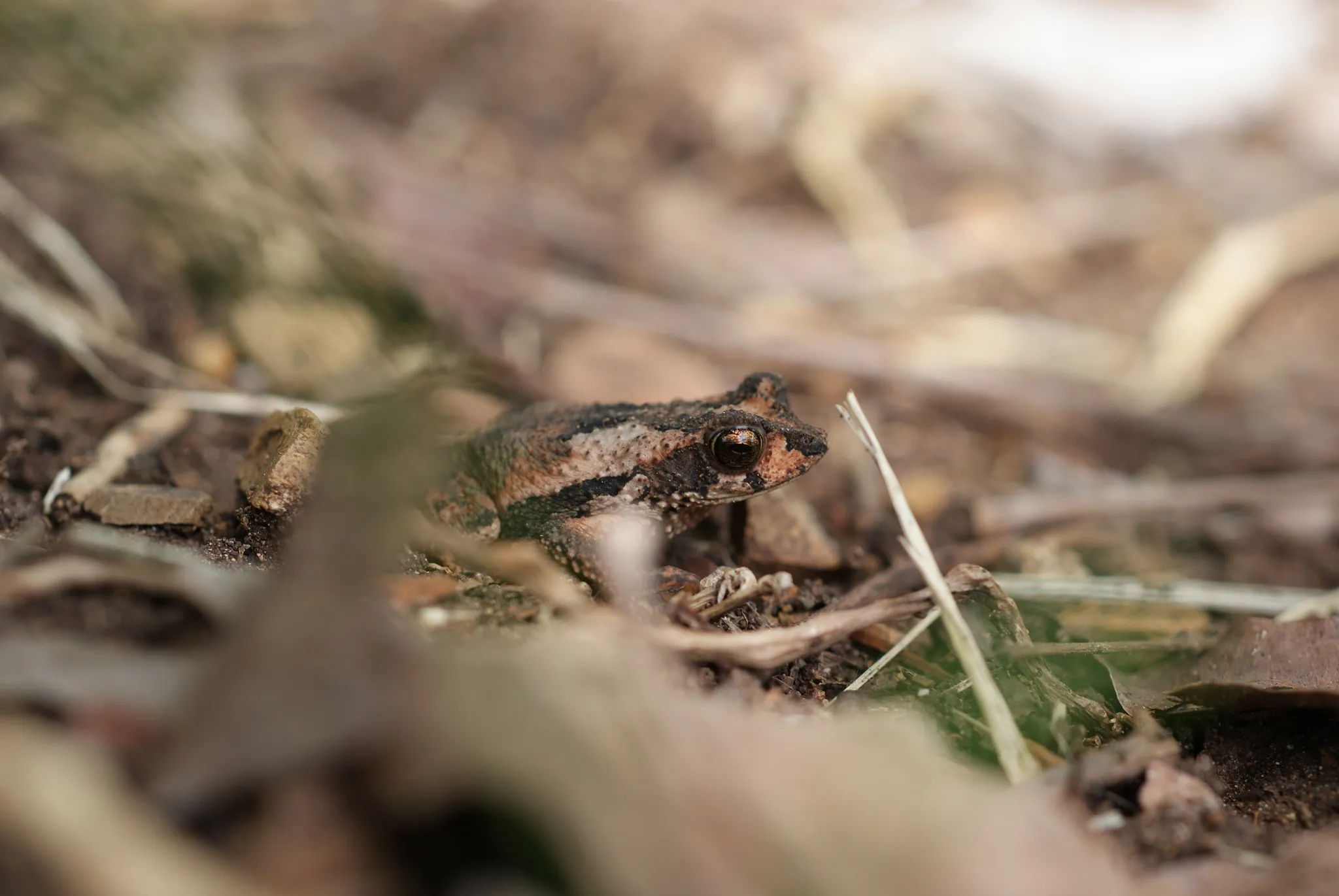
Peltophryne lemur, the Puerto Rican crested toad, is a toad of the family Bufonidae that is endemic to Puerto Rico and the Virgin Islands. It is the only native toad on the island2 of Puerto Rico. Locally it is called sapo concho3, a name also used for the cane toad; by 2018 the recovery working group had changed this species’ name to sapo concho puertorriqueño1.
The toad was described by Cope in 18693, and scientists thought it extinct from 1932 to 19661.
Identification
The species is named for the distinct bony crests on its head. Adults are medium-sized, 64 to 120 mm from snout to vent1, and females are larger than males. The Potter Park Zoo gives females an average length of 4 inches2 against 3 inches for males, and the Detroit Zoo gives a weight of 2 to 6 ounces4.
The snout is turned up, described by Potter Park as a distinctive, long, upturned snout2. The back is brown to yellow brown with black-brown blotches, the underside cream with dark spots, and the eyes gold with black flecks. Juveniles carry a chevron pattern on their backs1 and a rust to salmon colour on the back and sides.
The sexes differ. Breeding males are olive green and gold, while females are a darker brown with rougher skin and larger crests. Females have a high crest above the eye2, while the crest on males is less defined. In the breeding season males have yellow sides and nuptial pads1 on the first and second digits of the front feet.
Habitat and range
The toad lives in subtropical dry forest in the south, with less than 750 mm of rain a year, and subtropical moist forest in the north. It occurs from sea level to 50 m above sea level. In the Guánica Commonwealth Forest it uses upland deciduous and semi-evergreen forests as well as scrub forest1.
The species formerly occurred in Virgin Gorda3 and along the southern and northern karst of Puerto Rico. The northern population at Quebradillas was last reported in 1991 and is apparently extirpated. As of 2018, the natural southern population, not counting reintroduced ones, was found in 3 subpopulations1: the Guánica Commonwealth Forest, Ciénaga in Yauco, rediscovered in 2010, and the Punta Ventana pond in Guaynilla, discovered in 2008.
Behaviour and breeding
The toad is semi-fossorial and nocturnal, spending the day in cavities and lying dormant in the dry season. It climbs vertical rock to openings 45 cm up in the karst limestone, reuses the same cavities and blocks the openings with the top of its head. At the Detroit Zoo it can almost completely flatten its body4 to fit into tiny crevices. It is largely solitary, and the breeding season is the only time1 it gathers in groups.
Adults eat ants, beetles, spiders, millipedes and other small invertebrates of the leaf litter; tadpoles eat algae and have been seen to scavenge dead tadpoles. Juveniles are eaten by cane toads1, and feral dogs, cats, mongoose, anoles, ground lizards, crabs and herons are other potential predators.
Breeding is set off by heavy rain: in Guánica at least 2 inches of rain appear to be needed, and a drop in air pressure from a hurricane or tropical storm can also send toads to the ponds. Males go to temporary ponds and call. Breeding has been seen in all months except March, most suitably in April and May and in the hurricane season from August to October. Females lay long black strands of up to 150,000 eggs in aquatic plants during amplexus. The eggs hatch in about 24 hours, and metamorphosis takes 14 to 21 days or longer. Toadlets then move into forest and upland areas and shelter in groups of 15 to 301.
Life in the wild is poorly known; in captivity the species reportedly lives about 10 years1.
Conservation
The species is assessed as Endangered5 on the IUCN Red List (2022.2). The US Fish and Wildlife Service lists it as threatened3 because of habitat loss and introduced species. Numbers have fallen through habitat loss and introduced cane toads, which compete for breeding sites, food and shelter and eat young crested toads. Breeding ponds are drained for agriculture and development and mosquito management1, and predation from introduced rats and mongoose2 has added to the decline.
The toad became the first amphibian SSP animal2 of the Association of Zoos and Aquariums, a programme that began in 1984. Zoos breed the toads and send tadpoles to Puerto Rico; by 2016 312,000 tadpoles and 1,546 toadlets1 had been reintroduced. The Detroit Zoological Society has worked on the species since 19954, and in June 2026 it sent 6,855 tadpoles3 for release at Rio Encantado, near Manatí.