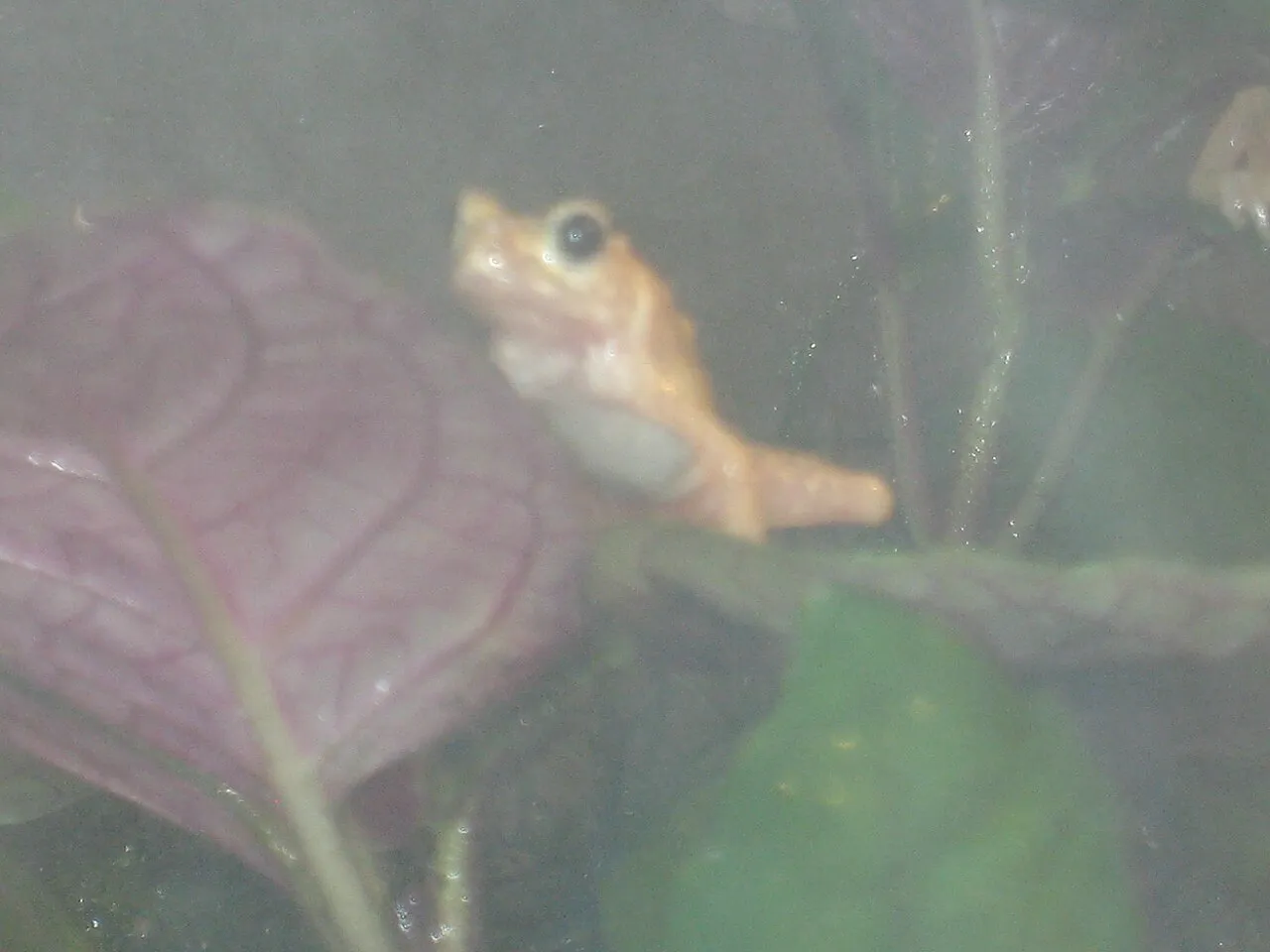
Nectophrynoides asperginis, the Kihansi spray toad, is a very small toad in the family Bufonidae, genus Nectophrynoides. It was historically endemic to a roughly two-hectare (5-acre) spray zone at the base of the Kihansi River waterfall on the Udzungwa escarpment in Tanzania, one of the smallest natural ranges known for any vertebrate. The species is now extinct in the wild, and reintroduction trials have been returning captive-bred toads to the Kihansi gorge since 2012.
Identification
The Kihansi spray toad is tiny even by the standards of its genus. Females grow up to about 29 mm long, while males reach only about 19 mm, making females the noticeably larger sex. Its small size and pale, mottled skin suit life clinging to wet vegetation in constant mist, rather than the open, drier ground many other toads use.
Habitat and range
The species lived in wetland vegetation, including Panicum grasses and clubmosses, kept constantly wet by waterfall spray, with near-constant temperature and 100% humidity. That microhabitat depended entirely on the volume of water going over the Kihansi Falls; it largely disappeared after a hydropower dam reduced the waterfall’s flow, removing the spray that kept the vegetation saturated and cool. Because the whole population lived in that one two-hectare zone, a single change upstream was enough to collapse the habitat for the entire species.
Behaviour and breeding
Unlike most frogs and toads, Nectophrynoides asperginis does not lay eggs. It is viviparous: fertilization is internal and females retain developing larvae inside the oviduct until live young are born. Gravid females show translucent abdominal skin through which the developing offspring can be seen, a visible sign of this live-bearing reproduction that is shared with other members of its genus.
Conservation
The Kihansi spray toad has been listed as Extinct in the Wild by the IUCN since May 2009, following the loss of its spray-zone habitat to the dam. About 6,200 individuals survive in captive-breeding programmes, chiefly at the Bronx Zoo and Toledo Zoo, the assurance population that has kept the species from disappearing entirely. Since 2012, reintroduction trials have released captive-bred toads back into the Kihansi gorge. Its survival outside zoos depends on restoring enough of that spray-fed wetland.
Similar species
Nectophrynoides asperginis belongs to a genus of small, live-bearing African toads found largely in the Eastern Arc Mountains of Tanzania, each typically restricted to its own narrow highland or spray-zone habitat in the same way the Kihansi spray toad was confined to its single waterfall. That same narrow habitat specificity, shared across the genus, puts several of its relatives at similar risk, and some are already lost from the wild.