- Sclerophrys pentoni: The Enigmatic Frog of Africa's Hidden Habitats
- Taxonomy and Classification
- Natural Habitat
- Physical Characteristics: Silent Masters of Camouflage
- Behavior and Life Cycle: From Silent Hunters to Vocal Romantics
- Ecological Role: Quiet Guardians of Ecosystem Balance
- Threats and Conservation Status: Navigating a Changing Landscape
- Cultural and Scientific Significance: Amphibians Through Human Eyes
- Conclusion: A Call for Appreciation and Conservation Action
Sclerophrys pentoni: The Enigmatic Frog of Africa’s Hidden Habitats#
In the secretive landscapes of sub-Saharan Africa, nestled quietly among leaf litter, marshy reeds, and moist savanna burrows, lives a relatively modest creature whose subtlety conceals fascinating behaviors and important ecological roles. This creature is none other than Sclerophrys pentoni, commonly known as Penton’s toad. Despite its humble existence, this amphibian is an essential component of its ecosystem, plays an intriguing role in local folklore, and continually piques the scientific curiosity of herpetologists and conservationists alike.
At first glance, one might overlook Sclerophrys pentoni, mistaking its subtle coloration and cryptic behavior for ordinariness. Yet beneath its quiet demeanor lies a fascinating life story packed with astonishing survival strategies, intricate mating rituals, and an intimate connection to the biodiversity around it. Within this article, we dive deep into the intriguing world of Penton’s toad—to discover, appreciate, and protect a species whose quiet presence speaks volumes about the greater health and stability of our planet’s biodiversity.
Taxonomy and Classification#
Scientifically known as Sclerophrys pentoni, Penton’s toad belongs to the Bufonidae family, a diverse group commonly referred to as the true toads. Bufonids contain more than 600 species worldwide, each adapted uniquely to their given environments. Sclerophrys pentoni was once classified under the genus Bufo, but recent genetic and morphological studies led herpetologists to reposition this species, and related African species, under the genus Sclerophrys.
This taxonomic clarification not only helps to distinguish Sclerophrys pentoni from its relatives but also heightens our understanding of its evolutionary adaptations, ecological requirements, and conservation priorities. Closely related species include Sclerophrys regularis and Sclerophrys maculata, and while these cousin species may share some characteristics, it is the subtle differences in biology, habitat choice, and behavior that make Penton’s toad uniquely adapted to its distinct corner of the African ecosystem.
Natural Habitat#
Distribution Across the African Continent#
The homeland of Sclerophrys pentoni spans varying regions across West and Central Africa, such as Burkina Faso, Nigeria, Senegal, Gambia, Togo, Benin, Chad, Cameroon, Sudan, and parts of the Central African Republic. Preferring warm climates and a blend of habitats, Penton’s toad often thrives in savanna woodlands, grasslands, agricultural regions, and wetlands that generally receive seasonal rains.
The Hidden Life Among Leaf and Marsh#
Zigzagging through dense grasses and hiding beneath decaying leaves, Penton’s toad cleverly remains undetected to predators and curious human eyes alike. While this species demonstrates adaptability, it typically prefers areas of standing water or ephemeral ponds, vital for breeding and larval development. Such habitats provide safety from desiccation but simultaneously rely carefully on seasonal rainfall patterns, highlighting a fragile balance between adaptation and vulnerability.
Because of this dependency on fluctuating wet and dry seasons, Sclerophrys pentoni is an excellent example of phenological synchrony—an evolutionary ballet tightly coordinated with nature’s climatic rhythms.
Physical Characteristics: Silent Masters of Camouflage#
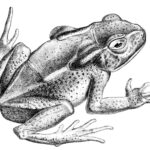
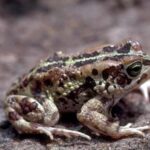
Penton’s toad may not dazzle with vibrant colors or flamboyant patterns. Instead, it has evolved traits tailored to blend seamlessly into its surroundings, becoming a perfect embodiment of camouflage. Adult individuals typically range from 5 to 8 centimeters in length, displaying stout, robust bodies with rough and warty skin—a characteristic shared among many toads.
The earthy tones of its coloration extend from olive-green to brownish-grey, often interspersed with darker blotches or spots that mimic leaves and pebbles. Such coloration enables the amphibian to evade the watchful gaze of hungry avian predators and vigilant reptilian hunters. Its large, expressive eyes protrude slightly, crowned by horizontal pupils perfect for scanning the landscape silently, accurately detecting insects or sudden movements approaching from various angles.
This remarkable disguise, combined with its nocturnal habits, allows Sclerophrys pentoni to maintain a low profile even where numerous threats exist. Evolution has not equipped it with potent toxins like some tropical frog species, but rather, the artful combination of stealth, subtlety, and opportunism ensures its survival.
Behavior and Life Cycle: From Silent Hunters to Vocal Romantics#
Nighttime Feasters and Dietary Habits#
Shortly after dusk settles on the African landscape, Penton’s toad emerges from daytime burrows, shelters beneath logs, or leaf cover. The cooler evening air signals its time to hunt, tapping into an impressive sensory array adapted specifically for nocturnal living. Navigating the darkness, Sclerophrys pentoni wanders cautiously yet purposefully among materials littering its habitat floor, skillfully tracking unsuspecting prey—primarily ants, termites, beetles, worms, and other small invertebrates crawling along.
Its moist, sticky tongue flickers out expertly, capturing prey swiftly and efficiently, a fundamental ecological skill that solidifies Penton’s toad status as an indispensable biological pest controller. By curbing insect populations, this species quietly contributes toward agricultural health and maintains the delicate ecological balance within its habitats.
Mating Choruses by Moonlit Pools#
With seasonal rainfall, ephemeral pools and wetlands in their habitat spring to life, signaling another essential rhythm for the species—breeding. Male Penton’s toads congregate near suitable pools, creating resonating calls that fill the African nights with characteristic choruses. These calls not only attract receptive females but stir the nocturnal calm into a vibrant spectacle, highlighting nature’s beautiful rituals.
Once attracted to the chorus, female Penton’s toads lay strings of gelatinous eggs—long threads containing hundreds of potential offspring. Like all amphibians, amphibian eggs are highly susceptible to environmental condition changes, predation, and habitat alteration. Thus, choosing appropriate breeding locations, using communal breeding behaviors, and adjusting timing precisely with environmental cues are critical adaptations that ensure reproductive success.
Ecological Role: Quiet Guardians of Ecosystem Balance#
Pentons’s toads assume multiple ecological responsibilities that keep the African ecosystems healthy. As voracious insectivores, they naturally control insect populations that, uncontrolled, could cause significant agricultural losses or insect-borne illnesses. This quiet creature also plays a crucial intermediary role in the food web, filling a unique niche as both predator and prey. Sclerophrys pentoni frequently becomes prey for larger organisms like snakes, lizards, small carnivores, and birds, further demonstrating its importance as an energy-transfer conduit within its ecosystem.
Threats and Conservation Status: Navigating a Changing Landscape#
Currently, the International Union for Conservation of Nature (IUCN) categorizes Sclerophrys pentoni as “Least Concern,” primarily due to its wide distribution and presumed large populations. Nevertheless, the species faces growing threats, particularly habitat loss caused by agriculture expansion, pollution, urbanization, deforestation, and climate changes disrupting essential weather patterns necessary for breeding.
Cultural and Scientific Significance: Amphibians Through Human Eyes#
Beyond its ecological importance, Penton’s toad and related species offer unique perspectives in traditional folklore and community stories, affirming toads as symbols of fertility, renewal, and natural bounty among various cultures. Additionally, amphibians like Sclerophrys pentoni hold significant scientific value as indicators—telling us about ecosystem health, water quality, and biological diversity.
Conclusion: A Call for Appreciation and Conservation Action#
Sclerophrys pentoni may at first seem ordinary, even unremarkable. Yet beneath its camouflage lies elegance—fulfilling critical ecological functions, providing important insights into ecosystem health, and compelling us through quiet beauty and intimate evolutionary adaptations. Recognizing Penton’s toad reminds us of the incredible diversity and complexity hidden right beneath our feet.
As nature enthusiasts and conservation advocates, it falls upon us to protect not only charismatic or dramatic species but the subtler, quieter components of our planet’s biodiversity. Supporting amphibian conservation means safeguarding habitats, advocating responsible land-use policies, and ensuring that delicate ecological balances remain intact. By appreciating and preserving species like Sclerophrys pentoni, we reinforce our shared responsibility to this remarkable world.