- Sclerophrys lemairii: The Fascinating Tale of Central Africa's Remarkable Toad
- Taxonomy and Classification
- Natural Habitat: A Journey into Central Africa's Wild Heart
- Physical Characteristics: Nature's Subtle Artwork
- Behavior and Life Cycle: A Symphony of Amphibian Survival
- Ecological Role: Guardians of a Fragile Balance
- Threats and Conservation Status: A Call For Awareness and Action
- Cultural and Scientific Significance: Deepening Connections and Curiosity
- Conclusion: Celebrating Sclerophrys lemairii, A Toad Worth Knowing and Protecting
Sclerophrys lemairii: The Fascinating Tale of Central Africa’s Remarkable Toad#
Under moonlit skies within the lush tropical forests and humid savannas of Central Africa, a humble yet remarkable amphibian prowls beneath tangled vegetation, its earthy coloration blending seamlessly with fallen leaves and damp soil. Meet Sclerophrys lemairii, commonly known as Lemaire’s Toad, a captivating yet often overlooked representative of Africa’s rich amphibian diversity.
Scientifically classified under the family Bufonidae, this fascinating toad has quietly captivated naturalists and conservationists alike. Although not as iconic as some colorful rainforest frogs, Sclerophrys lemairii harbors fascinating behaviors, essential ecological roles, and an intriguing narrative as absorbing as any charismatic megafauna. Journey with us deep into the heart of Central Africa as we unravel the captivating story of Sclerophrys lemairii, the enigmatic dweller of shaded, soulful terrains.
Taxonomy and Classification#
The scientific journey of understanding Lemaire’s Toad starts with taxonomy, a structured way of classifying life to reveal biological connections and evolutionary history. Officially described in scientific literature as Sclerophrys lemairii, this amphibian was initially described by Belgian zoologist George Albert Boulenger in 1901.
The toad belongs to the family Bufonidae, one of the largest families of true toads worldwide, comprising diverse species known for rough skins, warty appearances, and robust bodies. Within its genus, Sclerophrys lemairii shares genetic commonalities and ecological niches with close relatives such as the African common toad (Sclerophrys regularis) and other species spread across Sub-Saharan regions. Recent genetic information and molecular studies have reinforced its classification within this unique genus, shedding new insight into its evolutionary journey.
Natural Habitat: A Journey into Central Africa’s Wild Heart#
The remarkable tale of Lemaire’s toad unfolds across a broad expanse of ecosystems scattered through Central Africa. From southern Cameroon and across the Democratic Republic of the Congo, extending into Angola, Zambia, and parts of Rwanda, Burundi, Uganda, Tanzania, and Kenya, this amphibian is impeccably adapted to a variety of habitats, ranging from tropical rainforests and wooded savannas to riverbanks and moist grasslands.
An Amphibian Hidden in Plain Sight#
Preferring regions that provide ample humidity, shaded concealment, and opportunities for aquatic reproduction, Lemaire’s Toad frequently thrives near water bodies such as marshes, slow-moving streams, pools, and seasonal wetlands. Here, under dense foliage and tangled roots, its cryptic coloration and texture grant it remarkable camouflage, safeguarding it from predators and enabling stealthy hunting opportunities.
The richness of the amphibian’s adaptive versatility is manifest in its resilience. Throughout its expansive range, it takes advantage of microhabitats including leaf litter beds, rotting logs, and damp crevices to protect itself from environmental extremes. Thus, the presence or absence of Sclerophrys lemairii becomes evidence of ecological health—the species often acts as an indicator of habitat quality, moisture availability, and environmental stability.
Physical Characteristics: Nature’s Subtle Artwork#
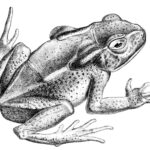
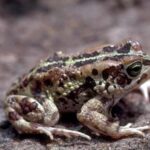
Lemaire’s toad is, at first glance, an understated presence, yet a closer look reveals subtle elegance. Adult toads generally measure between 55 to 75 millimeters in length, with females typically slightly larger than males. Its skin, roughened by granular warts and adapted for terrestrial life, provides camouflage and moisture retention in a varied, sometimes drying climate.
Coloration patterns are remarkable examples of evolutionary subtlety, evolving tones that range from rich ochre and deep gray-brown to olive and muted greens. Darker markings juxtapose light-brown blotches, creating uneven patches skillfully mimicking the forest floor’s intricate patterns of fallen leaves, detritus, and shadow. This cryptic coloration reduces visibility not only to predators but equally facilitates stealthy ambushes on unsuspecting prey.
Adaptations for Survival#
As is characteristic of most bufonids, Lemaire’s toad possesses parotoid glands behind the eyes. These prominent toxin-secreting glands produce a bitter, noxious secretion that deters predators, providing a reliable defense mechanism against mammals, birds, and reptiles alike. Although harmless in casual human interaction, this toxin serves as the amphibian’s natural protection, reinforcing its impressive adaptation and resilience.
Behavior and Life Cycle: A Symphony of Amphibian Survival#
When twilight descends upon Central Africa’s forests, Sclerophrys lemairii awakens to a nocturnal lifestyle. Under cover of darkness, it actively seeks prey, patiently waiting near leaf litter and shallow streams with stealth and patience that rival large predators’ hunting strategies. Its diet primarily consists of small invertebrates, including beetles, ants, termites, spiders, crickets, and other insects abundant in its rich habitat. Employing a surprisingly rapid, projectile tongue strike, this toad is an efficient and effective hunter.
The Call of Life: Courtship and Reproduction#
The wet season catalyzes significant transformations in the habits of Lemaire’s toads. Heavy rains trigger compelling calls from males—distinctive resonant trills delicately punctuating humid evening air. Males congregate along small ponds and temporary water bodies, their croaks echoing softly beneath the thick rainforest canopy, drawing female attention while asserting territorial dominance.
After courtship rituals and successful mating, female Lemaire’s toads lay gelatinous strings of eggs submerged in shallow pools and streams. The translucent necklace-like strands adhere underwater, concealed amongst vegetation and submerged twigs. Within days, tadpoles emerge, well-adapted to aquatic life. Metamorphosis progresses rapidly, and within weeks, tiny juvenile toads—miniature echoes of the adults—leave their watery nurseries, venturing onto land to grow and begin the cycle anew.
Ecological Role: Guardians of a Fragile Balance#
Sclerophrys lemairii, though modest in scale, carries responsibility far surpassing its size. As predator, prey, and biodiversity indicator, Lemaire’s Toad significantly influences local ecological interactions. By controlling invertebrate populations, this amphibian assists in regulating pest species, contributing to ecosystem stability and agricultural health in proximal human settlements.
In turn, it sustains higher trophic levels as prey for various predators, including snakes, birds, and mammals. Through such intricate interactions, the species demonstrates the irreplaceable interconnectedness of organisms within its ecosystem. Its vitality or decline thus demonstrates broader ecological health, marking it an invaluable sentinel species worthy of conservation attention.
Threats and Conservation Status: A Call For Awareness and Action#
Currently assessed as Least Concern by the International Union for Conservation of Nature (IUCN), Lemaire’s Toad enjoys relatively stable population trends due to its adaptable nature and wide geographic distribution. However, escalating habitat destruction due to logging, agriculture, and urban expansion poses new challenges, fragmenting forests, drying wetlands, and restricting available breeding sites.
Climate change represents another shadow looming over Sclerophrys lemairii’s habitat, altering rainfall patterns and moisture regimes crucial for reproductive success. Additionally, emerging fungal diseases such as chytridiomycosis threaten amphibian biodiversity worldwide, presenting a severe but currently poorly understood risk.
Maintaining healthy, unfragmented ecosystems through protected areas, sustainable land management practices, and focused research remains key to securing a future for this amphibian ambassador and countless other species interconnected within its shared landscape.
Cultural and Scientific Significance: Deepening Connections and Curiosity#
Beyond ecological roles, amphibians like Sclerophrys lemairii have cultural resonance, deeply embedded within indigenous folklore. In some Central African communities, amphibians symbolize fertility, transformation, and connection—a vivid testament to life’s cyclical renewal in environments continually refreshed by rains and rivers.
Scientifically, ongoing studies into amphibian ecology, toxins, and disease resistance continually grant new understandings of environmental health, medicinal opportunities, and evolutionary biology. Each discovery underscores the priceless nature of amphibian biodiversity, encapsulated poignantly in a humble yet remarkable toad from Central Africa.
Conclusion: Celebrating Sclerophrys lemairii, A Toad Worth Knowing and Protecting#
In the vast, tangled tapestries of Central Africa’s habitats, Sclerophrys lemairii exemplifies the subtle beauty and resilience found within nature’s hidden corners. It reminds us that amidst celebrated megafauna, thousands of extraordinary tales quietly unfold—stories worthy of attention, appreciation, and sustained conservation action.
Embrace your newfound understanding and respect for Lemaire’s toad—efforts of protection arise not only from scientific discovery but genuine compassion, curiosity, and care. Let us champion the conservation of habitats, support ongoing research, and encourage responsible interactions with our shared ecosystems, ensuring that remarkable frogs like Sclerophrys lemairii continue their wondrous nocturnal journey beneath luminous African moons.