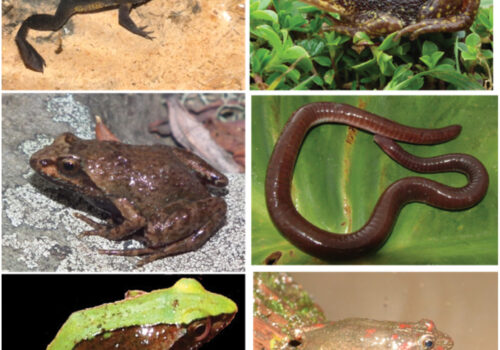
- Sclerophrys kisoloensis: Uncovering the Secrets of Africa's Agile Forest Toad
- Taxonomy and Classification of <em>Sclerophrys kisoloensis</em>
- A Home Veiled in Mystery: Natural Habitat and Range
- Physical Characteristics: Master of Forest Camouflage
- Life in the Shadows: Behavior and Life Cycle
- An Integral Cog: Ecological Importance
- Hidden Challenges: Conservation Status and Threats
- Cultural Symbolism and Scientific Importance
- Conclusion: A Call for Awareness and Action
Sclerophrys kisoloensis: Uncovering the Secrets of Africa’s Agile Forest Toad#
Glistening silently beneath layers of leaves within the dense montane forests of East Africa, a small but fascinating amphibian thrives. Known scientifically as Sclerophrys kisoloensis, commonly referred to as Kisolo’s toad or the Kisolo forest toad, this elusive species harbors secrets crucial to comprehending the complex web of rainforest life. Despite its somewhat modest demeanor, this toad wields subtle power within the ecosystem, serving as both predator and prey, and reflecting the overall health of its delicate habitat. Yet, as captivating and vital as this unique amphibian is, our knowledge about its behavior, habitat, and conservation status remains limited—inviting wildlife enthusiasts and nature lovers alike to step deeper into its murky realm.
Join me on a journey into the damp, shadowy world of Sclerophrys kisoloensis, where you’ll encounter a delicate portrait of an amphibian whose story resonates far beyond its humble forest home.
Taxonomy and Classification of Sclerophrys kisoloensis#
Sclerophrys kisoloensis belongs to the Bufonidae family, commonly identified as true toads. Within the Bufonidae, this remarkable amphibian sits comfortably under the genus Sclerophrys, which comprises numerous African terrestrial toads adapted to diverse habitats ranging from savannahs to montane forests. Historically placed within the expansive Bufo genus, recent molecular analyses and morphological assessments have provided compelling evidence prompting its migration into the specialized genus of Sclerophrys.
Closely related to species such as Sclerophrys funerea and Sclerophrys pardalis, Kisolo’s toad represents a unique lineage associated explicitly with higher-altitude, moisture-rich forest environments, highlighting remarkable evolutionary adaptations that pave the way for its survival amid lush and challenging ecosystems.
A Home Veiled in Mystery: Natural Habitat and Range#
Geographic Range and Distribution#
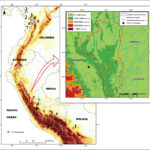
The Kisolo’s toad predominantly dwells deep within Eastern Africa’s mountainous and submontane forests. Its known range stretches across Uganda, Rwanda, Burundi, the eastern highlands of the Democratic Republic of Congo, with scattered populations reported in isolated highland forest patches. Favored by the dense vegetation cover and constant humidity present in these elevated ecosystems, the species epitomizes specialization to mountainous rainforests at altitudes ranging typically from 900 to 2,400 meters above sea level.
Despite their relatively broad regional distribution, sightings of Kisolo’s toad are infrequent, largely due to their elusive nature and tangled forest habitats which render field study challenging.
Habitat Preferences and Adaptations#
Adapted specifically to the damp, shaded lifeworld beneath a thick canopy layer, Sclerophrys kisoloensis is usually encountered near slow-flowing freshwater streams, marshy glades, and humid leaf litter scattered along forest slopes. Its survival hinges upon the cooling shade provided by dense forest cover, the moisture seeping gently from moss-covered logs and rocks, and stable humidity vital for its delicate amphibious skin.
It’s fascinating to note how these frogs benefit from their juxtaposition against moss-covered logs and lichen-adorned branches—subtle colors and textured skin blend effortlessly into the mottled lights filtering through leaf canopies, providing exceptional camouflage against both predators and prey.
Physical Characteristics: Master of Forest Camouflage#
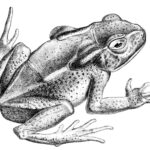
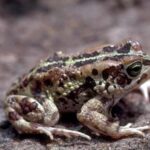
Measuring between 40 to 56mm from snout to vent, Kisolo’s toad is a relatively modest amphibian by tropical standards. It exhibits typical robust Bufonidae characteristics: stout limbs, relatively granular and rough-textured skin adorned with numerous tubercles, and noticeable parotoid glands situated behind each eye, which secrete protective chemicals. Coloration generally varies between shades of muted olive, tan, grey, and dark brown, oftentimes speckled or marked irregularly to match their forest floor habitat impeccably.
Its horizontally oriented golden eyes—characteristically Bufonid—endow the Kisolo’s toad with keen depth perception required when navigating through densely interwoven vegetative growth or stalking elusive prey through the leaf litter.
Adaptations for Survival#
The toad’s well-developed parotoid glands produce toxins, deterring would-be predators from snakes to small carnivorous mammals. Additionally, their stout bodies and short, muscular hind limbs afford strength for brief, powerful leaps through dense vegetation, an efficient escape tactic when immediate threats loom.
Life in the Shadows: Behavior and Life Cycle#
Feeding Ecology and Predatory Behavior#
Sclerophrys kisoloensis plays the role of a determined opportunistic predator, meticulously navigating leafy debris and damp habitats to forage predominantly on small invertebrates—beetles, spiders, termites, and earthworms—essentially regulating insect community structures crucial within montane forest ecosystems. Active primarily around twilight hours, their crepuscular behavior allows them efficiency in preying upon nighttime-active invertebrates, capitalizing fully on their terrain-specific adaptation.
Reproduction, Breeding Practices, and Development#
Rainfall signals breeding time—a phenomenon commonly documented in Bufo-species across habitats. Males emit soft yet persistent mating calls near shallow forest pools or slow-moving streams, their resonant croaks gently punctuating the secluded montane nightscape. Upon successful mating, females deposit gelatinous egg strings adhering securely to underwater vegetation or submerged debris.
The ensuing tadpoles exhibit resilience to varying water quality and light conditions prevailing in forest streams or ponds. Development spans several weeks to months, gradually transforming these aquatic larvae into fully terrestrial and highly adapted adults ready to venture into their upland habitats.
An Integral Cog: Ecological Importance#
Despite their quiet existence, Kisolo’s toad occupies a central ecological niche in mountainous forest ecosystems. They act both as predators of insects, controlling pest populations naturally, and as a prey source for larger vertebrate species such as birds, reptiles, and mammals, thus ensuring ecosystem balance and nutrient recycling. Additionally, their highly sensitive skin makes them exceptional bioindicators, heralding subtle yet significant shifts in environmental health.
Hidden Challenges: Conservation Status and Threats#
Current Population Trends and Conservation Status#
Though currently designated as Least Concern by the International Union for Conservation of Nature (IUCN), ongoing habitat fragmentation, extensive logging activities, and rapid agricultural expansion across mountainous eastern Africa raise serious concerns about future survival. Climate change further compounds these threats, impacting precipitation patterns and seasonal flooding vital to their reproduction cycles.
Efforts Toward Protection and Preservation#
To date, specific targeted conservation programs for Sclerophrys kisoloensis are limited but instrumental steps have been initiated to conserve forest habitats regionally. Protected areas encompassing national parks and reserves in Uganda, Rwanda, and Democratic Republic of the Congo provide significant refuges where populations can flourish unhindered by human intervention. However, establishing continuous ecological corridors to connect fragmented habitats remains a pressing need for conservationists hoping to safeguard long-term survival.
Cultural Symbolism and Scientific Importance#
Although not widely featured directly within local folklore or legend, amphibians like Sclerophrys kisoloensis collectively symbolize fertility, renewal, and intricate connectivity within nature-rich African cultures. Scientifically, continued study focusing on this species’ chemical secretions from defensive glands offers potent insights into biochemical innovation, potentially spurring novel pharmaceutical applications beneficial to human health.
Conclusion: A Call for Awareness and Action#
Sclerophrys kisoloensis, often overlooked yet ecologically significant, exemplifies the hidden facets of tropical forest life. Providing insight into ecosystem intricacies, amphibian biodiversity conservation couldn’t be timelier. Appreciating Kisolo’s toad demands greater awareness, research investment, and strengthened habitat safeguards to ensure its survival.
As enthusiastic naturalists, conservationists, and concerned global citizens, your engagement—including appreciating biodiversity, promoting habitat restoration, supporting conservation efforts, and sharing knowledge—remains powerful. Every endeavor to learn about and honor remarkable species such as the enigmatic Kisolo’s forest toad illuminates not merely a frog but an entire world hidden in shadows, fundamental yet exquisite in its subtlety and worth celebrating through conscientious action.