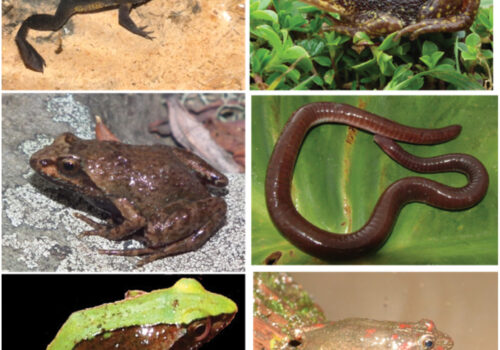
Sclerophrys djohongensis: The Enigmatic Toad of Central Africa’s Hidden Streams#
Amidst the lush, forested valleys and serenely flowing rivers of Central Africa dwells a remarkable creature—a toad little-known yet fascinating in every respect. Sclerophrys djohongensis, often overshadowed by more charismatic species, silently claims its critical place within intricate ecosystems. Unearthed from the quiet leaf-litter and beneath the dappled shade, this amphibian holds tales of resilience, adaptability, and ecological importance waiting for discovery.
While frogs and toads often captivate human imagination due to their multiplicity of colors, ribbiting choruses, and intriguing adaptations, Sclerophrys djohongensis echoes an understated beauty, adapted precisely to the habitats it calls home. Join us on this immersive journey exploring the life, adaptations, challenges, and significance of one of Central Africa’s more elusive amphibious inhabitants.
Taxonomy and Classification#
Belonging to the Bufonidae family, commonly known as “true toads,” Sclerophrys djohongensis is scientifically placed within the genus Sclerophrys, a diverse group encompassing many of Africa’s distinctive toad species. Originally classified within the extensive Bufo genus, taxonomic revisions have since illuminated finer distinctions, offering Sclerophrys djohongensis a clearer identity and categorization.
This species, first described by the herpetologist Jean-Louis Amiet in 1977, is named for its type locality near Djohong, Cameroon. Neighboring species within the genus, such as Sclerophrys funerea or Sclerophrys camerunensis, share overlapping distributions at boundary edges, facilitating valuable comparative studies on evolutionary ecology. Unveiling the precise genetic relationships within the genus continues to be a source of exciting scientific investigation and discovery.
Natural Habitat#
Geographic Distribution and Range#
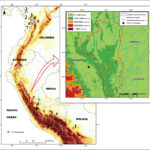
Sclerophrys djohongensis occupies a specific ecological niche within the Central African landscape, found primarily in regions of Cameroon, Central African Republic, and neighboring zones, potentially extending into adjacent territories. Its known localities hint at populations widespread yet patchy, lurking quietly beneath a cloak of secrecy retained by rainforests, mountainous ferns, and secluded streams.
Remarkably adapted for a specific range of environmental conditions, this species notably inhabits subtropical or tropical moist lowland forests, montane regions, and riparian habitats where quiet, clear water streams slowly course beneath dense canopy cover. These habitats offer a delicate blend of moisture, humidity, shade, and abundant prey resources that precisely cater to this amphibian’s ecological demands.
Hidden Homes Beneath the Canopy#
Under the damp shade provided by lofty trees draped with vines and mosses, Sclerophrys djohongensis shelters beneath decaying logs, leaf litter, and occasional rock formations that border slowly moving streams. During the rainy seasons, gentle rivulets transform into vibrant breeding grounds teeming with life, where countless tadpoles twist and swirl in shallow pools. This unique balance between terrestrial shelters and aquatic nurseries illustrates perfectly the subtle beauty of specialized adaptation.
Physical Characteristics#
Appearance and Size#
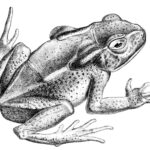
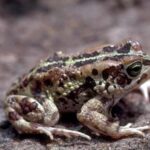
Observing Sclerophrys djohongensis up close reveals subtle yet striking morphological features. Adults typically measure between 40 and 60 millimeters in length, with females slightly larger than their male counterparts. The overall form resembles what many recognize as the classic “toad-like” build, characterized by a robust and squat physique, well adapted to terrestrial navigation in dense forest underbrush.
The dorsal skin has distinctive wart-like glands or granules, which notably secrete mild defensive toxins to deter potential predators. These warts vary from dark olive green to earthy browns, flecked with lighter markings and providing exceptional camouflage against the forest-floor background. This cryptic coloration allows individuals to blend seamlessly into leaf litter, a survival essential for avoiding predation in the biodiverse habitats they occupy.
Eyes and Sensory Adaptations#
Eyes are prominent and golden-bronze in coloration, with wide horizontal pupils bestowing excellent low-light vision for nighttime foraging expeditions. Enhanced visual sensitivity helps individuals capture prey efficiently and alertly evade potential dangers encountered within their densely vegetated homes.
Behavior and Life Cycle#
Feeding Habits and Hunting Techniques#
Adept predators, individuals of Sclerophrys djohongensis emerge mainly after dusk, conducting their nocturnal hunts beneath the forest canopy. They capitalize on an abundant availability of small invertebrates, such as insects, spiders, and occasionally small gastropods. Motion sensitive, the toads remain poised, patiently watching for passing prey. Swift and accurate tongue projections ensure successful captures, an essential adaptation for efficient energy maintenance in humid rainforest environs.
Mating Behavior and Reproduction#
During the onset of heavy rains, adult males gather close to the sheltered waters of forest streams, emitting low but melodious calls, resonating softly beneath thick foliage and echoing subtly through the still night. These gentle choruses attract females, initiating courtship behavior where pairs engage in amplexus—a mating embrace lasting several hours during egg laying.
Egg clutches are deposited in quiet eddies, wrapped meticulously around submerged vegetation or branches, providing a nursery environment relatively safe from swift water currents or predation. Tadpoles hatch shortly thereafter, initiating complex shifts from solely aquatic larvae to terrestrial juveniles over several weeks of delicate transformation.
Ecological Role#
Beyond their understated appeal, Sclerophrys djohongensis individuals hold critical ecological responsibilities. Their persistent patrol for insect prey plays an essential regulation role, indirectly supporting flora by controlling herbivorous insects. Furthermore, as part of a broader food web, they serve as prey for various birds, snakes, and small carnivorous mammals, integrating seamlessly into complex forest trophic interactions.
Perhaps most crucially, their amphibious nature positions these toads as valuable bioindicators, signaling changes in environmental quality, water purity, or ecosystem stability. Their responses to minimal fluctuations in habitat conditions provide invaluable warnings that support conservationists and scientists alike in maintaining biodiversity balance.
Threats and Conservation Status#
Pressures of Habitat Changing Environments#
Despite adaptability, Sclerophrys djohongensis faces increasing ecological pressures from deforestation and habitat fragmentation driven by expanding agriculture, logging, and human settlement. Forest clearing, pollution of waterways, and disruption to seasonal rainfall patterns due to climate change contribute negatively to the stability of habitats essential for breeding and juvenile development.
Added threats such as chytridiomycosis, a devastating amphibian fungal disease, further underline conservation concerns. Thankfully, currently IUCN categorizes Sclerophrys djohongensis under “Least Concern,” yet vigilance remains crucial as threats mount steadily across the region.
Conservation Efforts and Future Directions#
Local conservation initiatives focused on habitat conservation, riparian clarity maintenance, and community-involved forest stewardship programs provide a protective foundation. Scientific research aimed at thoroughly mapping distributions, monitoring population trends, and developing informed management strategies strengthen protection further. Strengthening protected areas and fostering local ecological education also reveal positive directions moving forward.
Cultural and Scientific Significance#
Though modestly occupying public imagination, amphibians such as Sclerophrys djohongensis represent subtle miracles of adaptability and biotic resilience. Within local folklore, frogs and toads often symbolize abundance, fertility, and environmental purity—a cultural acknowledgment reflecting deeper ecological truths.
Scientifically, studying their toxin secretions offers pharmacological promise, potentially informing bioactive compound discovery for medicinal applications. Each step closer to understanding such amphibian biology provides invaluable insights into complex evolutionary histories and future conservation pathways.
Conclusion—Celebrating a Humble Forest Dweller#
In the gentle hush beneath Central Africa’s biodiverse canopy, Sclerophrys djohongensis quietly persists, fascinating those willing to pause and notice its subtle magnificence. Its presence is a delicate reminder of nature’s intricacies and the significance of the seemingly unspectacular species that maintain ecological balance.
Through raising awareness, supporting conservation efforts, and inspiring appreciation of these humble yet extraordinary amphibians, we ensure that Sclerophrys djohongensis continues thriving, enriching ecosystems beyond our sight—silent guardians and gentle symbols of thriving forests yet loved and protected.