- Sclerophrys cristiglans: Secrets of Africa’s Enigmatic Crested Toad
- Taxonomy and Classification: A Noble Lineage
- Natural Habitat: Guardians of the Forest Floor
- Physical Characteristics: Master of Camouflage
- Behavior and Life Cycle: Unveiling Subtle Secrets
- Ecological Role: Quietly Influential
- Threats and Conservation Status: On Fragile Ground
- Cultural and Scientific Significance: Beyond Mere Survival
- Conclusion: Guardianship for Crested Treasures
Sclerophrys cristiglans: Secrets of Africa’s Enigmatic Crested Toad#
Deep beneath the star-dappled canopy of Central Africa’s lush rainforests dwells a quiet sentinel of the leaf-littered forest floor—a creature whose cryptic nature lends it an air of mystery. This is Sclerophrys cristiglans, more commonly known as the African Crested Toad. With a striking blend of subtle colors, a robust physique, and a gentle, almost contemplative demeanor, this fascinating amphibian embodies the subtle allure and ecological delicacy present within its forest habitat.
Unlike flashy, neon-colored dendrobatids or impressively giant ranid frogs, the crested toad’s charm lies in subtlety and resilience. Despite its secrets, Sclerophrys cristiglans captures the imagination of conservationists, herpetologists, and nature enthusiasts alike. So, let us step quietly into the shaded understory and unravel the intriguing story behind the enigmatic African Crested Toad.
Taxonomy and Classification: A Noble Lineage#
Sclerophrys cristiglans belongs to the Bufonidae family, broadly recognized as “true toads.” Within this diverse family, exquisite variations abound, each adapted to distinct ecological niches. This particular toad was historically placed within the genus Bufo, yet recent phylogenetic studies resulted in its current classification within the genus Sclerophrys.
The genus name Sclerophrys blends Greek roots meaning “hard eyebrow,” referencing prominent cranial crests characteristic of many of its members, including S. cristiglans. Among its closest cousins are species like Sclerophrys maculata and Sclerophrys regularis, common African toads known for their resilience and widely distributed ranges. However, the African Crested Toad maintains uniqueness defined by subtle morphological features, behavioral traits, and strictly localized distribution.
Natural Habitat: Guardians of the Forest Floor#
The elusive habitat of Sclerophrys cristiglans is deeply tied to dense, humid rainforests of Central Africa, particularly within regions of eastern Democratic Republic of Congo and adjacent Uganda and Rwanda. Here, beneath towering mahogany and ebony trees, amid layered vegetation strewn across rich, damp soil, these toads quietly live out their days, barely betraying their presence to visitors or even careful scientific observers.
While many amphibians prefer wetlands or open habitations, the African Crested Toad thrives specifically in cooler microhabitats within dense shade. Here, decomposing leaves and organic matter accumulate in thick carpets—ideal for camouflage and providing abundant insects and small invertebrates, the primary prey for this skilled hunter. Small ephemeral water bodies and slow-moving forest streams offer favorable breeding conditions, creating the perfect microecosystems necessary for their reproductive lifecycle.
The survival of this species depends intricately on the preservation of its natural habitat. Any disruption, whether through deforestation, agricultural expansion, or climate-induced drying of streams, represents a direct threat, making habitat protection paramount to its future.
Physical Characteristics: Master of Camouflage#
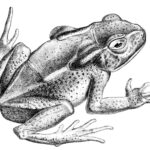
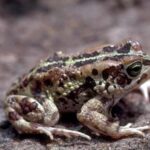
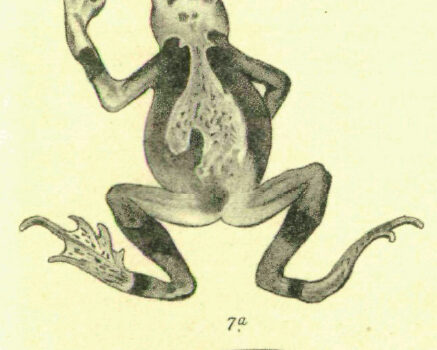
The African Crested Toad possesses an appearance perfected over millions of years of evolutionary fine-tuning. Adults usually measure between 4 to 7 centimeters, showcasing a robust, sturdy build, characteristic of bufonids. Their skin presents as rough and heavily textured, adorned with warts and glands across the dorsum, an adaptation essential for minimizing water loss in humidity-sensitive amphibians.
Coloration echoes that of fallen forest leaves—deep shades of rusty brown, muted olive greens, subtle blacks, and earthy grays intertwine seamlessly. This carefully muted color palette complements dense vegetation and decomposed organic matter, offering near-perfect camouflage from predators such as tropical birds or snakes sweeping through the understory.
A defining trait lies in pronounced cranial ridges that form a distinctive crest between its prominent eyes, lending the species its scientific and common names. Such raised crests likely serve visual or tactile roles in reproduction and territorial behavior, clearly differentiating S. cristiglans from closely related toads within its region.
Behavior and Life Cycle: Unveiling Subtle Secrets#
Dwellers of leaf litter rarely live flamboyantly, and this holds true for the African Crested Toad. Primarily nocturnal, these toads spend daylight hours resting beneath fallen leaves, logs, or hidden within natural crevices. As dusk slips into night, a cautious emergence unfurls—a muted, slow-paced procession in search of meals consisting primarily of arthropods, beetles, ants, and termites.
The breeding season summons male crested toads to soggy forest pools or slow-moving streams where they emit melodic yet soft calls reminiscent of a whispered trill. These calls, often heard shortly after the onset of seasonal rains, attract females, initiating delicate courtship routines. Egg-laying occurs in shallow water bodies, where clusters of eggs are carefully deposited beneath sheltering vegetation or entwined with underwater roots and grasses. Within a matter of weeks, tadpoles emerge—first as fragile, almost translucent beings gradually gaining pigmentation and complexity as they metamorphose into terrestrial juveniles and eventually become elusive forest-floor adults.
While parental care is not profoundly exhibited, the very selection of oviposition sites suggests evolutionary adaptations toward ensuring offspring safety and survivability in challenging rainforest environments.
Ecological Role: Quietly Influential#
The ecosystem niche held by Sclerophrys cristiglans goes far beyond mere existence; as voracious insect predators, they maintain a crucial balance between insect populations and forest plant health. By consuming large quantities of insects and controlling overpopulations of potentially harmful arthropods, this quiet predator ensures the overall integrity and ecological stability of its habitat.
Simultaneously, toads themselves serve as crucial prey items for numerous rainforest predators—birds, mammals, snakes—establishing a finely balanced predator-prey dynamic intrinsic to maintaining ecosystem health and species biodiversity. The presence of sensitive amphibians like the African Crested Toad additionally indicates environmental quality, making them essential bioindicators of ecological disturbances or habitat degradation.
Threats and Conservation Status: On Fragile Ground#
Despite their ability to hide masterfully among foliage and debris, African Crested Toad populations face pressures from accelerating habitat destruction and fragmentation. Logging operations, agricultural expansion, and human settlements steadily erode their fragile habitats, drastically reducing vital breeding grounds and safe havens.
Additional threats include climate change, altering rainfall patterns, water availability, and humidity regimes necessary for their survival. Amphibian chytridiomycosis, a fungal disease that has impacted amphibian populations globally, also remains an underlying concern requiring vigilant monitoring.
The International Union for Conservation of Nature (IUCN) currently lists Sclerophrys cristiglans as Data Deficient, indicating the need for more detailed ecological assessments. Precisely because this toad often remains hidden from view, concerted research efforts are urgent to determine population trajectories and conservation needs clearly.
Cultural and Scientific Significance: Beyond Mere Survival#
While not overtly prominent within traditional folklore, amphibians like the African Crested Toad embody powerful symbols of ecological interconnectedness and vulnerability. Scientifically, toads within Sclerophrys provide researchers with a window into amphibian physiology, habitat specialization, and adaptation to increasingly pressured environments.
Understanding this secretive species enriches scientific knowledge, potentially unlocking insights into amphibian resilience, toxin properties inherent in skin glands, or adaptive strategies for humidity regulation—knowledge that can inform both ecological conservation and broader biological research.
Conclusion: Guardianship for Crested Treasures#
The enigmatic African Crested Toad, Sclerophrys cristiglans, symbolizes the quiet but critical beauty lying obscured within complex ecosystems. Its subtle adaptation, important ecological roles, and quiet charisma urge us toward responsibility—urging us to study carefully, protect decisively, and treasure reverently. By protecting this listed amphibian and its home, we safeguard the nuanced tapestry of biodiversity that keeps our planet alive and beautifully complex.
To support amphibian conservation, consider learning more from reputable organizations like the Amphibian Survival Alliance, and let us uphold the gentle voice of the crested toad, ensuring their quiet song echoes through the forests for generations to come.