- The Enigmatic Rhinella vellardi: Unveiling the Secrets of a Little-Known South American Toad
- Taxonomy and Classification
- Natural Habitat: South America's Hidden Corners
- Physical Characteristics: Modestly Beautiful Camouflage
- Behavior and Life Cycle: Quiet Lives of Purposeful Simplicity
- Ecological Role: Guardians of Forest Equilibrium
- Threats and Conservation Status: Navigating an Uncertain Future
- Cultural and Scientific Significance
- Conclusion: Discover, Understand, Conserve
The Enigmatic Rhinella vellardi: Unveiling the Secrets of a Little-Known South American Toad#
Cradled within the lush, verdant landscapes of South America resides an unassuming amphibian with a story still largely untold; Rhinella vellardi, a toad whose quiet resilience and subtle mystery have captivated the curiosity of biologists and nature enthusiasts alike. Often overshadowed by its more flamboyant cousins in the amphibious world, Rhinella vellardi piques our interest precisely because of its elusive nature, fascinating behaviors, and critical role in maintaining ecological balance.
Known scientifically as Rhinella vellardi, this intriguing species belongs to the Bufonidae family, an extensive grouping commonly referred to as true toads. While its name may not evoke the colorful imagery of dendrobatid frogs or the dramatic stature of horned toads, Rhinella vellardi nonetheless possesses a subtle charisma and ecological significance that deserves careful exploration. Let’s journey together into the misty depths of its natural habitat, unravel its complex behaviors and lifecycle, and consider the urgent conservation concerns affecting its survival.
Taxonomy and Classification#
Within the intricate mosaic of the amphibian world, Rhinella vellardi occupies a defined yet relatively understated taxonomic position. Classified under the family Bufonidae, colloquially known as true toads, this family comprises species characterized by their stout bodies, dry and often warty skin, and remarkable adaptation to terrestrial habitats.
At the genus level, Rhinella is considerably diverse, encompassing numerous species spread across Central and South America. Rhinella vellardi was initially identified and described by researchers Leviton and Duellman in 1978, recognizing its distinctiveness in morphology, habitat specificity, and ecological adaptations. Related closely to other Rhinella species, the evolutionary pathways leading to Rhinella vellardi’s divergence highlight adaptive strategies tailored to its specific environmental niche.
Natural Habitat: South America’s Hidden Corners#
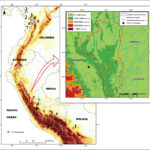
Deep within the tropical forests and montane landscapes of South America, Rhinella vellardi has carved out a specialized niche, often remaining subtly out of sight. The species primarily inhabits montane forests and cloud forests situated at moderate elevations, predominantly found scattered through regions within Ecuador and Peru.
Imagine a habitat cloaked in perpetual mist, where gentle rains nurture moss-covered branches, and sunlight filters sparingly through dense foliage. Rhinella vellardi thrives precisely in such conditions; forest floors blanketed by leaf litter and moisture-rich microenvironments offering ideal camouflage and feeding grounds. These specialized environments present both challenges and advantages, as surviving in such habitats demands precise physiological and behavioral adaptations.
Such cloud forest habitats offer stable humidity, moderate temperatures, and shelter from environmental extremes. Here, Rhinella vellardi blends seamlessly into a world shaped by moisture and shadows, an important, though often unnoticed, member of the forest community. Its affinity for specific altitudinal zones and microhabitats makes these toads invaluable indicators of ecological health, signaling habitat changes or degradation significantly sooner than other, less sensitive species.
Physical Characteristics: Modestly Beautiful Camouflage#
Rhinella vellardi does not boast the vivid colorations or starkly dramatic patterns of more extravagant amphibians. Instead, it embodies a subdued yet refined beauty—each aspect of its appearance expertly adapted for life concealed amongst leaf litter and damp soil.
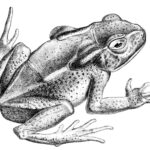
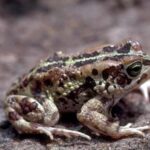
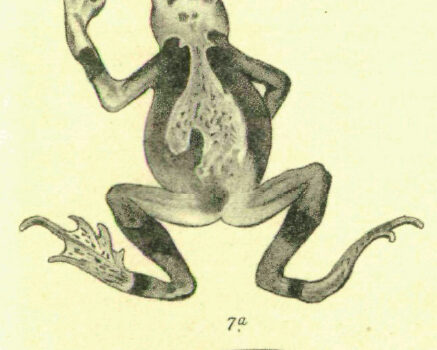
This small toad generally measures between three and five centimeters in length, possessing a robust, somewhat angular body structure typical of its family. Its rather rough skin displays shades ranging from rich brown to muted gray, frequently interspersed with darker markings and blotches that cleverly imitate the dappled patterns of decomposing leaves, bark, and forest debris.
The toad’s eyes are notably pronounced and golden-hued, betraying its discreet presence only briefly before it retreats again into camouflage invisibility. A critical adaptive success for Rhinella vellardi, this nuanced camouflage serves dual purposes: reducing detectability from predators and enhancing its ability to patiently ambush an unsuspecting insect wandering too close.
Just behind the eyes lie specialized glands—commonly known as parotoid glands—which secrete alkaloid toxins, providing the toad a line of defense against potential predators. While not lethally toxic to humans, this potent secretion effectively deters would-be attackers, adding another layer of defensive adaptation.
Behavior and Life Cycle: Quiet Lives of Purposeful Simplicity#
The lives of Rhinella vellardi unfold quietly and methodically, marked by purposeful behaviors honed through evolutionary pressures. Primarily crepuscular or nocturnal, this species rests in concealed retreats during the daylight, emerging cautiously in humid evenings to hunt and explore its small territory.
Feeding Habits: Silent Hunters of the Forest Floor#
Employing patience and stealth, Rhinella vellardi feeds primarily on small arthropods such as ants, beetles, and other insects that cross its path. Like a skilled hunter awaiting opportune moments, the frog often remains motionless, strategically positioned amid debris. Suddenly, its sharp tongue darts forth, capturing prey with impressive accuracy and speed. This ambush tactic conserves energy and avoids unnecessary exposures to predators.
Breeding Rituals: Songs, Streams, and Seasonal Synchronization#
Breeding seasons for Rhinella vellardi typically coincide with rainy periods, capitalizing on increased humidity and availability of temporary water bodies. Males gather beside small streams or pools, emitting soft but distinguishable mating calls that resonate subtly through moist, moonlit nights.
After mating, females deposit strands of eggs carefully hidden in protected water locales. Tadpole development follows an intriguing pattern—these larvae mature in localized aquatic environments, feeding predominantly on algae, detritus, and microscopic life forms. Tadpoles undergo metamorphosis gradually, growing limbs, reducing tails, and eventually emerging onto land—a fascinating transformation mirroring the broader cycles and interconnectedness of the ecological system.
Ecological Role: Guardians of Forest Equilibrium#
The hidden lives of Rhinella vellardi embody an essential ecological function. From their discreet position within food webs, these amphibians regulate insect populations, providing natural pest control thus maintaining essential ecological balances.
Conversely, Rhinella vellardi also serves as vital prey items for a variety of predators, including birds, snakes, and larger amphibians. In this delicate balance, the survival of Rhinella vellardi reveals broader insights into the condition and stability of its complex ecosystem. As sensitive environmental indicators, any declines in populations can represent early warning signs about ecosystem health, habitat integrity, or shifting climate conditions.
Threats and Conservation Status: Navigating an Uncertain Future#
Unfortunately, little-known amphibians like Rhinella vellardi increasingly face threats exacerbated by human activities. Despite scant specific data regarding this species’ conservation status, habitat destruction due to agriculture, logging, and urban development poses significant risks. Fragmentation of cloud forests disrupts vital habitat corridors, limiting their movement, decreasing genetic diversity, and altering their access to optimal breeding and feeding grounds.
Moreover, climate change poses an additional threat. As weather patterns fluctuate unpredictably, the habitats’ delicate humidity and precipitation levels shift, jeopardizing dependent amphibians’ survival. Diseases such as chytridiomycosis, a fungal infection decimating amphibians globally, also constitute potential hazards to such vulnerable populations.
Currently, Rhinella vellardi is classified as “Data Deficient” by the International Union for Conservation of Nature (IUCN), highlighting the urgent need for strategic field studies, monitoring efforts, and conservation initiatives tailored specifically for protecting its habitat and securing its longevity.
Cultural and Scientific Significance#
Though not prominently featured in folklore, Rhinella vellardi, like other toads across many cultures, symbolizes survival, renewal, and adaptability—qualities amplified by its astonishing ability to quietly thrive amidst numerous hidden perils.
From a scientific perspective, the species is invaluable for researchers. Studying their sensitivity can help biologists understand broader ecosystem functions and monitor environmental changes, guiding effective ecosystem management and global conservation strategies.
Conclusion: Discover, Understand, Conserve#
Rhinella vellardi epitomizes the quiet marvel and ecological significance inherent to countless overlooked yet captivating species. As we broaden our exploration, curiosity, and understanding of such unusual amphibians, we are reminded of the intricate, interwoven matrix that sustains life. Engaging further in appreciating, studying, and protecting Rhinella vellardi will enrich our awareness, deepen our conservation commitment, and perhaps inspire collective action to preserve the multifaceted beauty of our natural world.
Now more than ever, let’s encourage support for conservation initiatives, research programs, and awareness efforts focused on Rhinella vellardi and the ecosystems it inhabits. In protecting this humble toad, we ultimately safeguard an entire realm of hidden biodiversity, enriching nature and preserving biological heritage for generations yet unborn.