Espadarana andina: Discovering the Secrets of the Andean Glass Frog#
Amid the shifting tapestry of misted montane forests, hidden among moss-draped branches and leaves that shimmer with dew, lives a marvel of evolution—Espadarana andina, the Andean Glass Frog. Like tiny jewels scattered across verdant leaves, these frogs offer a glimpse into nature’s ingenuity. With transparent bellies, luminous eyes, and delicate limbs poised as gracefully as dancers, Espadarana andina embodies the captivating beauty and intricate adaptations of amphibian life in the cloud forests of South America.
Native to the humid slopes and steamy valleys of the Andes, the Andean Glass Frog remains a creature both mysterious and captivating. While it may seem otherworldly, Espadarana andina plays an essential ecological role, acting as both predator and prey and serving as an indicator of environmental health in its delicate montane ecosystem. As threats mount from habitat destruction, climate change, and pollution, understanding this remarkable species becomes not merely rewarding, but critical for its continued survival.
Taxonomy and Classification#
Belonging to the family Centrolenidae—the acclaimed glass frogs—Espadarana andina represents a brilliant example of specialized adaptation in amphibians. Centrolenidae, a family renowned for species possessing translucent skin revealing internal organs, includes frogs that are both visually stunning and scientifically insightful. Within this family lies the genus Espadarana, characterized by their delicate bodies, forward-facing emerald eyes, and distinct vocalizations.
Until relatively recently, Espadarana andina was classified within a broader genus grouping. However, advanced genetic methods and rigorous taxonomic studies brought clarity, revealing subtle yet significant differences that justified its distinct categorization. Such reclassifications demonstrate how molecular approaches can enhance our understanding and appreciation of amphibian biodiversity.
Natural Habitat#
Geographic Range and Distribution#
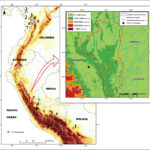
Espadarana andina specifically inhabits the Andean mountain slopes and cloud forests of northwestern South America, notably within Ecuador and Colombia. Their range spans elevations from approximately 600 to 1,800 meters above sea level, placing these frogs firmly within mid-elevation forest belts that feature continuous moisture and stable climates ideal for amphibian populations.
An Ecosystem in the Clouds#
The cloud forest habitat of Espadarana andina is nothing short of magical. Thick banks of clouds drift slowly through forests rich in plant life, fostering lush vegetation and creating habitats teeming with life. Trees here are veiled in mosses, lichens, orchids, and bromeliads, especially adapted to high humidity and cooler temperatures. It is within this setting—balanced perfectly between rainfall, humidity, and elevation—that the Andean Glass Frog flourishes.
Specifically drawn to dense vegetation along streams and clear-running rivulets that crisscross the forest floor, these frogs often inhabit foliage overhanging freshwater bodies. Here, the combination of cover, humidity, and ample insect prey creates an ideal microhabitat to sustain healthy populations of Espadarana andina. The delicate balance of moisture, shelter, and temperature enables these fascinating amphibians to thrive, breed, and evade predators.
Physical Characteristics#
The Fragile Elegance of Transparency#
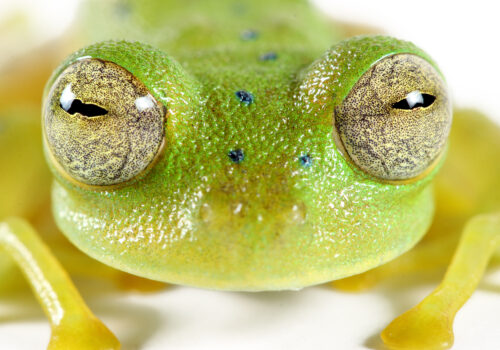
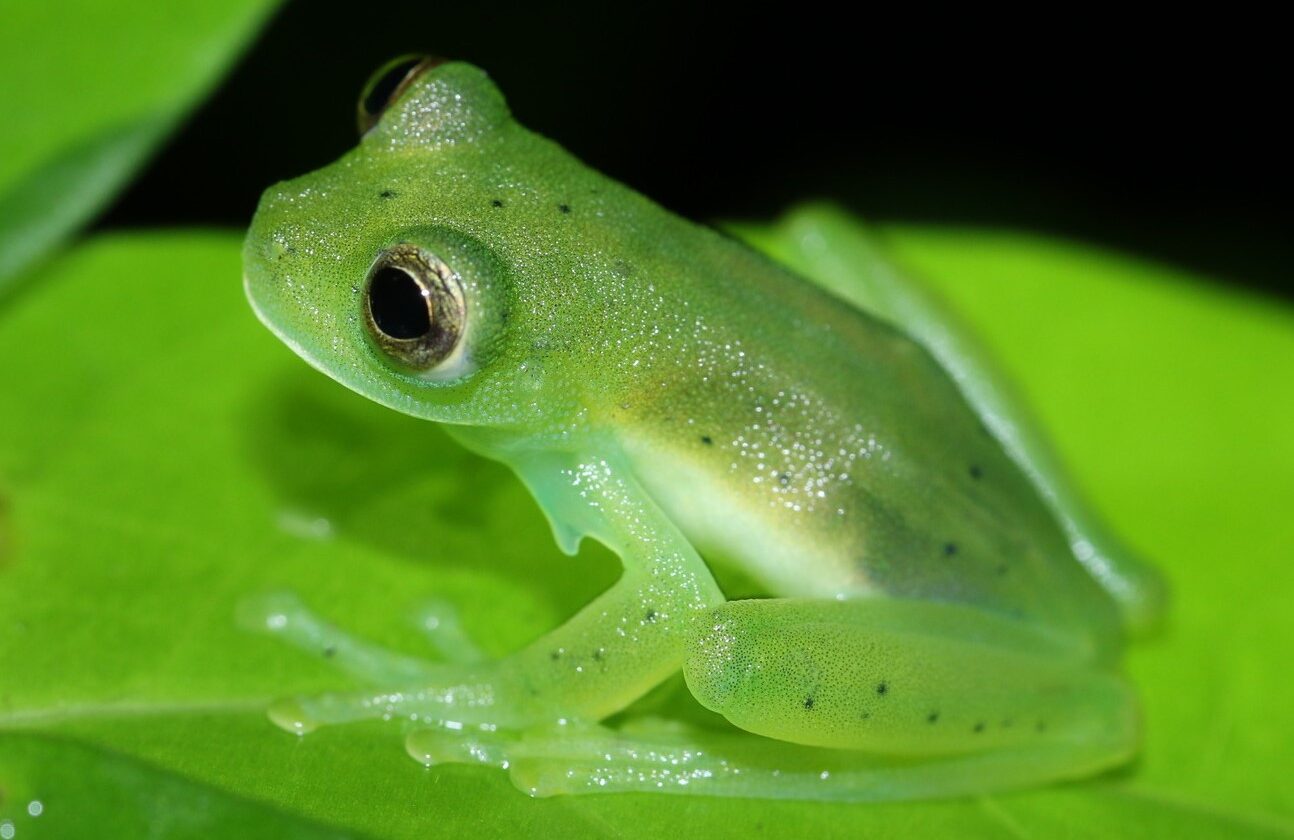
Espadarana andina immediately captivates even casual observers with its paradoxically beautiful transparency. Averaging just 20 to 28 millimeters in length, this species is delicately small—small enough to sit comfortably upon the pad of a fingertip. Their skin is smooth, almost gelatinous in appearance, and exhibits a striking translucency, especially along the abdominal region. Through their undersides, observers gain a rare insight into biological mysteries: the beating of tiny hearts, the rhythmic workings of lungs, and veins pulsing beneath translucent flesh.
This astounding transparency serves multiple purposes. Primarily, as a camouflage strategy, transparency helps Espadarana andina avoid detection by predators beneath a leaf canopy illuminated by filtered sunlight. By blurring their outlines and allowing subtle penetration of ambient light through their bodies, glass frogs become nearly indistinguishable from the background of their leafy habitat.
Eyes that Glow Like Emeralds#
Above their transparent bodies sit two large, incomparable emerald-green eyes that grant them excellent nocturnal vision—crucial for navigating branches and foliage under cover of darkness. The size and position of their eyes assist them not only in hunting insects but also in assessing potential threats from predators or competitors. These distinctive eyes reflect ambient moonlight or starlight, occasionally giving observers the enchanting illusion that the frogs themselves radiate a soft green luminescence.
Behavior and Life Cycle#
Diet and Foraging Strategies#
The diet of Espadarana andina primarily consists of small insects and invertebrates inhabiting their foliage-rich environment. Their feeding strategy is predominantly ambush-like; poised silently upon leaves, these frogs utilize their exceptional eyesight and agile tongues. A strike happens in the blink of an eye, with the prey ensnared quickly, efficiently, and quietly. Such effectiveness derives from evolutionary pressures to minimize movements that might attract predatory attention.
Courtship and Mating Rituals#
As the rainy season descends over cloud forests, Espadarana andina embarks upon its unique and melodious courtship rites. Males congregate in vegetation near streams, staking out prime locations from which to serenade females with subtle, distinctive calls. Their vocalizations, composed of short, pulsating notes, gently pierce nocturnal silence amidst the dripping foliage. Each male’s song serves not only to attract a mate but also to establish territorial boundaries with rival suitors.
Egg-Laying and Tadpole Development#
Female Espadarana andina will carefully deposit clutches of eggs upon leaves or directly above streams. Eggs receive moisture from nightly rains, creating a delicate nursery suspended in mid-air. The translucent eggs themselves also camouflage effortlessly amidst their environment, offering protection from potential predators. Once hatched, the tadpoles—tiny and initially aquatic—slide gently into the waters below, continuing their aquatic metamorphosis sheltered among submerged vegetation and stones.
Ecological Role#
The Andean Glass Frog plays a vital role as a predator and prey, forming a crucial link within the delicate food webs of cloud forest ecosystems. As consumers of insects, they control pest populations naturally, an essential service in an environment teeming with life. Conversely, they also serve as sustenance for larger predators including birds, snakes, and even small mammals, thereby maintaining balance within the forest’s predator-prey dynamics.
Espadarana andina is especially valuable as an environmental indicator species, sensitive to changes in habitat quality, water purity, or climate fluctuations. Declines in their populations may provide valuable early warnings of broader ecological imbalances, alerting scientists and conservationists to potential threats facing the entire montane system.
Threats and Conservation Status#
Currently, Espadarana andina faces multiple threats that endanger its long-term survivability. Deforestation, agricultural encroachment, and road construction fragment their natural habitats, reducing available breeding and hunting grounds. Climate change further exacerbates habitat instability by altering precipitation patterns and temperature regimes, making their specialized microhabitats less predictable.
Though Espadarana andina is listed by the IUCN as “Least Concern” due to relatively stable present populations, researchers urge cautious optimism. The reality of cloud forest dynamics means that stable population assessments can quickly change if pressures intensify rapidly, thus highlighting the importance of vigilance and proactive conservation measures.
Initiatives seeking to protect cloud habitats benefit this and myriad other species dependent on healthy mountain ecosystems. Local conservation efforts frequently involve habitat preservation, environmental education, and research, which collectively ensure that unique amphibians like Espadarana andina continue to thrive.
Cultural and Scientific Significance#
Indigenous groups and local communities in Andean regions often hold frogs in esteem, viewing them symbolically as carriers of rain, renewal, and forest health. Stories handed down through generations often celebrate frogs as guardians of water and symbols of environmental harmony.
Scientifically, Espadarana andina holds significant value as researchers study its transparent skin and circulatory systems, unlocking secrets that inspire medical advancements in fields such as cardiovascular health. Additionally, their sensitivity to environmental changes makes them remarkable natural laboratories, providing insights into climate impacts, pollution detection, and ecosystem stability.
Conclusion: A Call for Conservation Engagement#
Espadarana andina proves the enchanting complexity of life in cloud forest ecosystems. By appreciating their fragile beauty, extraordinary adaptations, and ecological roles, we grow more connected to these hidden yet vibrant ecosystems. As individuals, we must advocate for conservation, become informed about habitat protection, and support organizations committed to safeguarding these delicate creatures.
Together, we have the power to ensure that future generations will also witness the luminous emerald eyes and translucent elegance of Espadarana andina, continuing nature’s delicate dance in the mist-shrouded forests of the Andes.