- Into the Hidden World of the Venezuelan Glass Frog: Discovering Centrolene venezuelense
- Taxonomy and Classification: A Precious Member of Centrolenidae
- Natural Habitat: The Emerald Realm of Venezuelan Rainforests
- Physical Characteristics: Nature’s Transparent Wonder
- Behavior and Life Cycle: A Delicate Dance of Survival
- Ecosystem Connections and Ecological Role
- Threats and Conservation Status: Navigating an Uncertain Future
- Cultural and Scientific Importance: Beyond Biological Interest
- Conclusion: Conserving a Fragile Wonder
Into the Hidden World of the Venezuelan Glass Frog: Discovering Centrolene venezuelense#
Deep within the lush, cascading forests of Venezuela, where ancient trees whisper their secrets to attentive listeners, dwells an exquisite living jewel hidden among foliage and mist. The Venezuelan Glass Frog, scientifically named Centrolene venezuelense, is an enigmatic blend of translucent skin, delicate limbs, and captivating emerald hues. This creature is more than just an intriguing curiosity for naturalists and enthusiasts; it serves as a vital bio-indicator, providing crucial insights into the health of our planet’s vanishing rainforests.
When first confronted with this elusive amphibian, many find themselves captivated not just by its peculiar transparency, but by a mysterious appeal that blends fragility with resilience. Whether you’re drawn to herpetology, intrigued by unique adaptations in nature, or simply inspired by the subtle wonders of wildlife, the tale of Centrolene venezuelense offers a glimpse into a fascinating and intricate world—and highlights the delicate balance that exists between thriving ecosystems and the perils of environmental disruptions.
Taxonomy and Classification: A Precious Member of Centrolenidae#
Centrolenidae, commonly known as glass frogs, comprises a family of amphibians famed for their near-transparent undersides, revealing the rhythmic beating of their hearts. Within this larger family, Centrolene venezuelense occupies a distinct niche, belonging specifically to the genus Centrolene. Described originally by respected amphibian specialist Rivero in 1968, this species has intrigued biologists with its remarkable transparency and elusive behaviors.
Closely related species, like Centrolene buckleyi or C. prosoblepon, share many traits, emphasizing an important evolutionary legacy adapted for arboreal life in pristine rainforest habitat. Yet, each member of this genus maintains unique traits and distinctive ecological habits, reinforcing the importance of precise scientific inquiry when studying delicate and cryptic attendees of our planet’s rainforests.
Natural Habitat: The Emerald Realm of Venezuelan Rainforests#
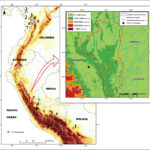
The Venezuelan Glass Frog flourishes uniquely in Venezuela’s northern regions, particularly within the richly biodiverse mountain ranges of Cordillera de la Costa, and the lush evergreen environments of Sierra de Aroa. These verdant highlands offer the ideal combination of elevation, humidity, shade, and cool mountain streams that define the lifestyle of Centrolene venezuelense.
A Home among the Leaves and Streams#
Unlike many terrestrial amphibians, this glass frog does not dwell on forest floors but thrives in arboreal sanctuaries. Perched carefully on broad, waxy leaves, often directly above streams and rivers, their nightly chorus marks their territory clearly within these shaded corridors of biodiversity. Rippling streams below provide ample moisture and essential habitat for their delicate larvae, ensuring the future generations’ survival.
Cloud-enshrouded canopies protect this sensitive species, creating microclimates in which humidity and temperature remain stable. Any alteration in such habitats can spell disaster for the frog—a truth reinforcing the sensitivity of glass frogs to the slightest ecosystem disturbances.
Physical Characteristics: Nature’s Transparent Wonder#
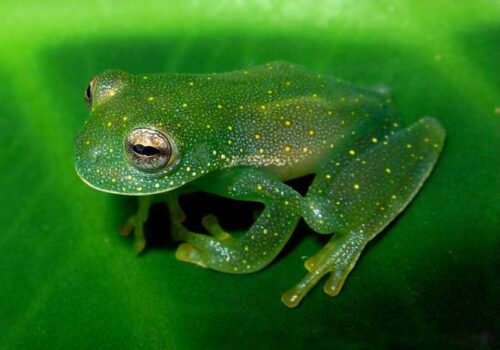
A close encounter with the Venezuelan Glass Frog reveals a spectacle that seems almost magical in its delicacy. Adults typically measure just under 3 centimeters, their bodies fully formed in miniature perfection. Vivid green pigments pepper their backs, helping them effortlessly blend into vibrant leaves and lush vegetation, while their ventral undersides remain strikingly transparent. The unsettling visibility of their tiny digestive systems, beating hearts, and internal organs never ceases to astonish first-time observers.
Camouflage and Transparency: Survival Strategies#
For the glass frog, transparency goes beyond a simple gimmick. It serves as a sophisticated survival adaptation, reducing the silhouette against leafy backgrounds, making predation more challenging for birds and reptiles that rely heavily on visual prey detection. Coupled with their emerald pigmentation and thoughtful selection of leafy perches, this combination of blending and transparency creates remarkable camouflage, allowing them to avoid detection even when predators pass alarmingly close.
Behavior and Life Cycle: A Delicate Dance of Survival#
The mysteries of glass frog behavior unravel slowly and gently within their nocturnal realms. Emerging only as night settles over shaded forests, male Venezuelan Glass Frogs initiate their melodious calls, each individual seeking to attract a suitable mate through the night’s humid air. Their calls—not loud like those of many tropical frogs—are more tentative, soft whistles intertwined with gentle chirps that permeate the darkness subtly.
Courtship and the Ceremony of Eggs#
When successful pairings occur, the female selects a leaf perched strategically over flowing water, carefully depositing her egg clutch underneath its surface. This oviposition behavior, fascinating and precise, ensures a good chance of survival for the offspring. These gelatinous egg clusters—typically less vulnerable to terrestrial predators—are positioned perfectly above the stream, providing the developing embryos with moisture and securing a safe journey into the aquatic world below.
Upon hatching, the gentle rains tip hatched tadpoles directly into flowing waters, marking a stark transition from arboreal egg canopy to aquatic juvenile development. Growing under the cover of shaded streams, the young tadpoles swiftly mature until fully developed, ready to emerge once again onto the moist, shadowed banks and begin their new lives as arboreal adults.
Ecosystem Connections and Ecological Role#
As arboreal insectivores, Venezuelan Glass Frogs help regulate insect populations within their forest habitats. Their diets include ants, spiders, flies, and other invertebrates plentiful in rainforest ecosystems. In turn, they themselves serve as prey for larger insectivorous and carnivorous birds, reptiles, and small mammals, maintaining essential balance within the food web.
Glass Frogs as Indicators of Environmental Health#
In ecological communities, amphibians often serve as robust indicators—early warning systems for environmental disturbances, owing to their permeable skin and complex life cycles encompassing aquatic and terrestrial phases. A sudden population decline in glass frogs often parallel underlying environmental issues like habitat fragmentation, chemical contaminants, or climate change-induced alterations in ecosystem stability.
Researchers pay close attention to changes in the populations and behaviors of Centrolene venezuelense, critically assessing ecosystem health and tracking subtle yet significant alterations within their dynamic forest environments.
Threats and Conservation Status: Navigating an Uncertain Future#
Centrolene venezuelense faces considerable threats, primarily from deforestation and habitat fragmentation due to human encroachment, agriculture, and urban expansion. Pollution, particularly pesticide and chemical runoff contaminating freshwater habitats, presents even more considerable challenges, given their delicate, permeable skin.
Despite these pressing concerns, comprehensive studies about the exact population numbers remain relatively limited. Currently classified by the International Union for Conservation of Nature (IUCN) as a species with “Data Deficient” status, conservationists stress an urgent need for detailed field research to appropriately assess their vulnerability and refine effective conservation protocols.
Cultural and Scientific Importance: Beyond Biological Interest#
In Venezuelan traditions, amphibians like the glass frog symbolize environmental purity and indicate with clarity the health of their habitat. Deep-rooted in indigenous narratives, creatures resembling Centrolene venezuelense have historically embodied the delicate harmony between nature and humanity—reminding local communities of their interconnectedness with the natural realm.
From a scientific standpoint, the glass frog has inspired biological research in diverse fields, from evolutionary biology and development to toxicology and even biomedical research in skin permeability. Their unique adaptations contribute broadly to understanding ecological balance, while highlighting delicate ecosystems’ vulnerability in changing global climates.
Conclusion: Conserving a Fragile Wonder#
Few species capture imagination quite like the Venezuelan Glass Frog. Fragile yet resilient, transparent yet safeguarded, it embodies the beauty, wonder, and profound environmental complexity our natural world holds. As habitats continue to shrink and ecosystems are increasingly threatened, our responsibility grows clearer—to protect these quietly profound wonders and safeguard the intricate forests that shelter them.
By delving deeper into the life and challenges of Centrolene venezuelense, we subtly embrace a larger truth—the health of a single delicate amphibian is inherently tied to broader ecological well-being. Let us not simply admire their captivating transparency from afar, but rather commit ourselves to preserving the lush, vibrant ecosystems that make their continued existence possible.