- Centrolene solitaria: Exploring the Enigmatic Glass Frog of the Cloud Forests
- Taxonomy and Classification: Where Does Centrolene solitaria Belong?
- A Home Among the Clouds: Natural Habitat of Centrolene solitaria
- The Beauty of Translucence: Physical Appearance and Adaptations
- The Secret Life of a Cloud Forestfrog: Behavior and Life Cycle
- Ecological Role: Guardians and Indicators of Stream Health
- A Species on the Brink: Threats and Conservation Status
- Cultural and Scientific Significance: Beyond Biological Marvels
- Conclusion: Cherishing Centrolene solitaria, Safeguarding Its Future
Centrolene solitaria: Exploring the Enigmatic Glass Frog of the Cloud Forests#
In the mist-shrouded slopes of the Andean cloud forests, concealed beneath dripping leaves and moss-curtained branches, lives one of nature’s most enigmatic amphibians. Introducing Centrolene solitaria, an elusive species of glass frog whose translucent skin and secretive habits captivate the imagination of scientists and nature enthusiasts alike. This remarkable creature, known often simply as the Lonely Cochran Frog, holds within its delicate appearance stories of ecological significance, evolutionary wonder, and conservation urgency.
Glass frogs, known for their famously transparent ventral skin, are delicate ambassadors of biodiversity. Yet even within this extraordinary group, Centrolene solitaria stands out. Named for its notably isolated existence in often inaccessible streams high in the cloud forests, this tiny amphibian invites us to peer closely and wonder deeply at life’s complexities.
Taxonomy and Classification: Where Does Centrolene solitaria Belong?#
Scientifically classified under the family Centrolenidae, commonly known as glass frogs, Centrolene solitaria was first formally described by zoologists in the early 1990s. Within this fascinating family, it is part of the genus Centrolene, a group known for having species that prefer subtropical and temperate montane streams. Related species include Centrolene buckleyi and Centrolene heloderma, each possessing their subtle variations but sharing general behaviors and habitat preferences.
The genus name “Centrolene” stems from Greek roots, indicating the central positioning of the webbing between toes—a characteristic that aids these frogs remarkably in their dynamic, stream-bound habitats. The species epithet “solitaria,” Latin for solitary, aptly reflects the frog’s typically isolated habits and remote distribution.
A Home Among the Clouds: Natural Habitat of Centrolene solitaria#
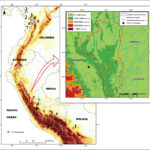
Exploring the natural range of Centrolene solitaria places us squarely within the Andean foothills, particularly within regions of Colombia and parts of Ecuador. Elevationally restricted, these glass frogs typically inhabit altitudes between approximately 1,500 to 2,500 meters, regions characterized by perennial mist and cool temperatures—a landscape aptly referred to as cloud forest.
Its precise habitat remarkable in its lushness, comprises vibrant ecosystems where every branch drips with lichens, mosses densely carpet stone faces, and cascading streams furnish a melodic background score of whispering waters. Centrolene solitaria, like many glass frogs, chooses habitats close to clear, fast-flowing streams. It specifically favors vegetation and leaf structures that overhang streams, providing safe havens both from terrestrial predators and a convenient breeding ground.
The moisture-rich microenvironments of these ecosystems suit their delicate physiology perfectly. Environmental moisture and temperature stability ensure that their unique form of respiration—cutaneous respiration or skin-breathing—is adequately supported, and the ambient humidity prevents their vulnerable membranes from desiccating.
The Beauty of Translucence: Physical Appearance and Adaptations#
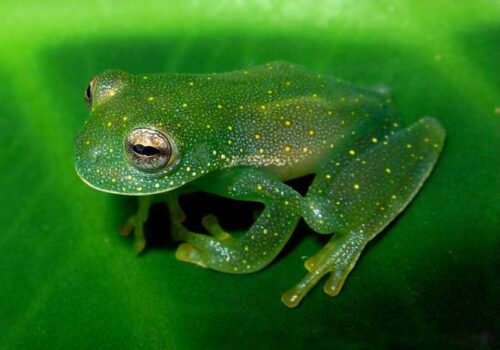
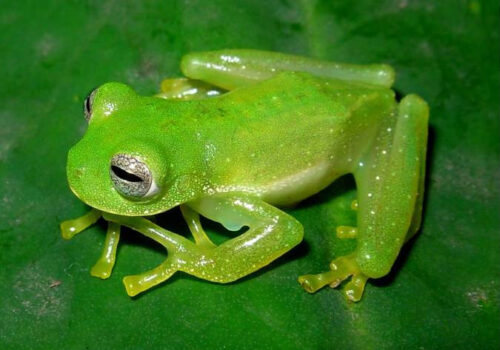
The first glimpse one catches of Centrolene solitaria is usually astonishing—a poetic interplay of simplicity and complexity embodied in a frog no larger than the tip of your thumb. Adult individuals typically span between 20 to 30 millimeters in length, making their exquisite translucence all the more astounding when viewed up close.
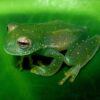
The dorsal surface often showcases brilliant shades of emerald green, decorated occasionally by subtle white flecks or dots, camouflaging expertly among wetted leaves and algae-coated foliage. But the true marvel unveils itself when viewed from below: transparent ventral skin reveals the delicate inner workings of the frog’s anatomy—heartbeats, intestinal movements, and the crimson rush of blood through delicate vessels are remarkably observable to the naked eye.
This exceptional transparency isn’t merely aesthetic but an evolutionary adaptation, contributing profoundly to the frog’s survival. Against forest predators peering from below, such as snakes or predatory insects, the amphibian’s translucent belly renders them virtually invisible. By allowing diffuse light to permeate and reduce shadow formations, the frogs minimize their outlines, blending seamlessly within their environment.
The Secret Life of a Cloud Forestfrog: Behavior and Life Cycle#
A Delicate Diet: Hunting in Twilight Hours#
Primarily nocturnal predators, Centrolene solitaria delicately maneuvers through leaf litter and tree branches after dusk descends, preying predominantly on tiny invertebrates. Their nocturnal humming habitats teem with small moths, flies, ants, and spiders—essential components of their diet. Patiently, they adopt strategic ambush positions on the underside of leaves or branches, launching sudden, precise attacks, flicking forth their tongues rapid as lightning.
Romance by the Streams: Mating and Reproduction#
Breeding activities center around cloud forest streams during rainy seasons. Male Centrolene solitaria frogs enter into gentle-but-persistent choruses, calling from favored perches, their melodious notes interwoven with the sounds of dripping vegetation and rushing waters. Females, attracted by these calls, approach cautiously. Mating pairs eventually assemble on vegetation situated directly above streams, laying clutches of eggs beneath overhanging leaves.
Such positioning ensures safety from terrestrial predators and offers an ideal microclimate to safeguard developing tadpoles. Interestingly, glass frogs exhibit notable parental investment behavior. While specifics for Centrolene solitaria remain understudied—observations of closely related Centrolene species indicate males guard their egg masses vigilantly, defending them from predators and diligently hydrating them to sustain optimal moisture levels.
An Aquatic Childhood: Tadpole Development#
Upon hatching, tadpoles plummet gently into the streams below, adeptly adapting to the aquatic lifestyle. While adult glass frogs showcase extraordinary translucency, tadpoles typically assume a cryptic brownish hue, hiding effectively amongst mossy rocks and submerged botanical debris, evading predation during this vulnerable developmental phase. The metamorphosis from tadpole to juvenile frog signifies not merely physiological transformation but symbolic passage—transitioning from a liquid realm into arboreal habitats, ascending into weights and textures of cloud forest foliage with a fully terrestrial respiratory system.
Ecological Role: Guardians and Indicators of Stream Health#
In their serene habitats, Centrolene solitaria holds a unique ecological significance. As predators, they regulate insect populations, contributing to the balance that characterizes healthy cloud forest ecosystems. Simultaneously, their tadpoles, as herbivorous and detritivorous feeders, maintain aquatic communities by controlling algae growth and recycling nutrients.
Perhaps most critically, glass frogs—including Centrolene solitaria—function as indicators of environmental health. Due to their sensitivity to changes in humidity, temperature, and water quality, populations decline quickly if streams become polluted or forests experience destruction. Scientists therefore closely monitor them, interpreting their presence as a reassuring affirmation of ecosystem integrity and resilience.
A Species on the Brink: Threats and Conservation Status#
Unfortunately, like many amphibian species worldwide, Centrolene solitaria faces significant conservation threats. Habitat destruction emerges as primary peril, stemming from timber extraction, agriculture expansion, mining, and road construction fragmenting their scarce cloud forest habitats. Moreover, global climate change compounds difficulties, disrupting the stable temperature and moisture conditions vital to their survival.
The International Union for Conservation of Nature (IUCN) currently classifies Centrolene solitaria as Vulnerable, reflecting population declines and habitat degradation urgency. Amphibian chytrid fungus (Batrachochytrium dendrobatidis) represents an additional concern, devastating global amphibian populations.
Internationally supported conservation incentive programs focus dedicatedly on habitat safeguarding, management programs, and extensive research initiatives aimed at better comprehending this enigmatic frog. Education and local community involvement serve as critical cornerstones, emphasizing sustainable ecotourism practices and local stewardship.
Cultural and Scientific Significance: Beyond Biological Marvels#
Though culturally little known beyond scientific circles, Centrolene solitaria and its glass frog relatives have increasingly become iconic symbols of ecological purity and fragility. Scientifically, glass frogs provide insights into evolutionary adaptations, transparency mechanics, and offer potential medical advances, inspiring continued zoological and ecological research efforts worldwide.
Conclusion: Cherishing Centrolene solitaria, Safeguarding Its Future#
Exploring the life history, habitat, significance, and conservation of Centrolene solitaria reveals a narrative of intricate dependency, extraordinary adaptation, and pressing vulnerability. Let us celebrate the delicate, transparent elegance of this diminutive organism—but remain unwaveringly committed to addressing the urgent threats it faces. In recognizing and championing this humble glass frog, we foster an essential role in preserving the dazzling biodiversity and ecological integrity of our shared planet.